What are the A sizes?
A0 is defined as a sheet with an area of one square meter in that ratio. Every subsequent size is A0 halved again.
| Size | Millimetres | Approximate inches | Common use |
|---|---|---|---|
| A0 | 841 x 1189 | 33.1 x 46.8 | Large format posters |
| A1 | 594 x 841 | 23.4 x 33.1 | Posters, plans |
| A2 | 420 x 594 | 16.5 x 23.4 | Posters, notices |
| A3 | 297 x 420 | 11.7 x 16.5 | Menus, spreads |
| A4 | 210 x 297 | 8.3 x 11.7 | Letters, flyers |
| A5 | 148 x 210 | 5.8 x 8.3 | Leaflets, booklets |
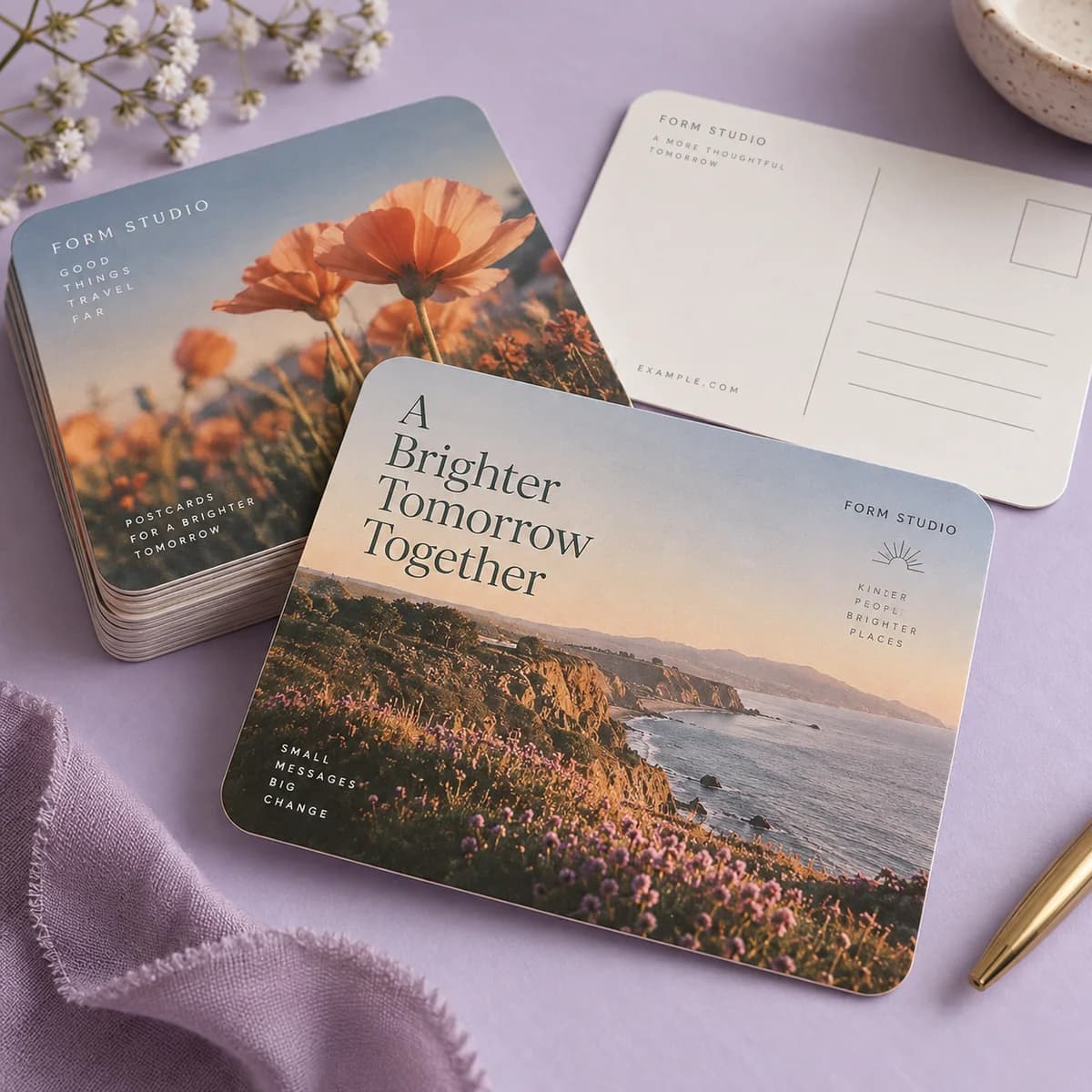
| A6 | 105 x 148 | 4.1 x 5.8 | Postcards, invitations |
The practical value is scaling. Enlarging A4 artwork to A3 is a single factor of about 1.414 in each direction, and reducing A3 to A4 is the same factor the other way. Nothing crops, and margins scale with the page.
What are the B and C series for?
The B series sits between the A sizes, giving intermediate formats when an A size is slightly too small or too large. B5, for example, is a common book and booklet size that falls between A5 and A4.
The C series is for envelopes. A C size is designed to hold the matching A size: a C4 envelope takes an unfolded A4 sheet, C5 takes A4 folded once, and C6 takes A4 folded twice. That relationship is the reason the three series exist together, and it is why specifying a C number is faster than quoting envelope dimensions.
In the United States, envelopes follow their own conventions instead, which the existing envelope size guide covers.
Why do US sizes behave differently?
Because they were not derived from a single ratio. US Letter at 8.5 x 11 inches, Tabloid at 11 x 17 and the next step at 17 x 22 do halve neatly in area, but their proportions change as they go: 8.5 x 11 is roughly 1 to 1.29, while 11 x 17 is roughly 1 to 1.55. Move a design between them and the shape of the page changes, so margins, photographs and columns all need attention.
That is the same problem described in the guide to A4 and US Letter, which covers the specific pair most people meet and why fit to page quietly shrinks a layout.
Which system should you specify?
Use the system of the country the print will be produced and used in. Paper, presses, folders, envelopes, binders, frames and filing cabinets are all built around one system or the other, and fighting that is expensive.
- Printing and distributing in the United States: use inch formats.
- Printing in Europe, most of Asia, Africa, Latin America and Oceania: use ISO sizes.
- Distributing in both: build two layouts, not one scaled file.
- Sending a PDF that recipients will print themselves: consider which paper they have loaded.
- Designing digital files that may be printed anywhere: keep content well inside the margins.
Writing the format into the brief in unambiguous terms saves the most common argument. Say A4, 210 x 297 mm, portrait rather than just A4, and say US Letter, 8.5 x 11 in, portrait rather than just letter.
Does bleed change between the systems?
The principle does not. Bleed is an allowance beyond the trim, so it is added to whichever finished size you chose. The number itself follows the printer's specification, commonly an eighth of an inch or 3 mm.
What does change is the arithmetic you do around it. If you are working in millimeters, keep everything in millimeters rather than converting inch specifications part way through, because rounding errors accumulate in exactly the place you cannot afford them. The bleed calculator takes either set of numbers and returns the artwork dimensions.
How does this affect posters and folded work?
ISO sizes make series work easy. A poster designed at A2 scales to A1 and A3 without touching the layout, which is useful when the same campaign appears in a window, on a wall and on a noticeboard.
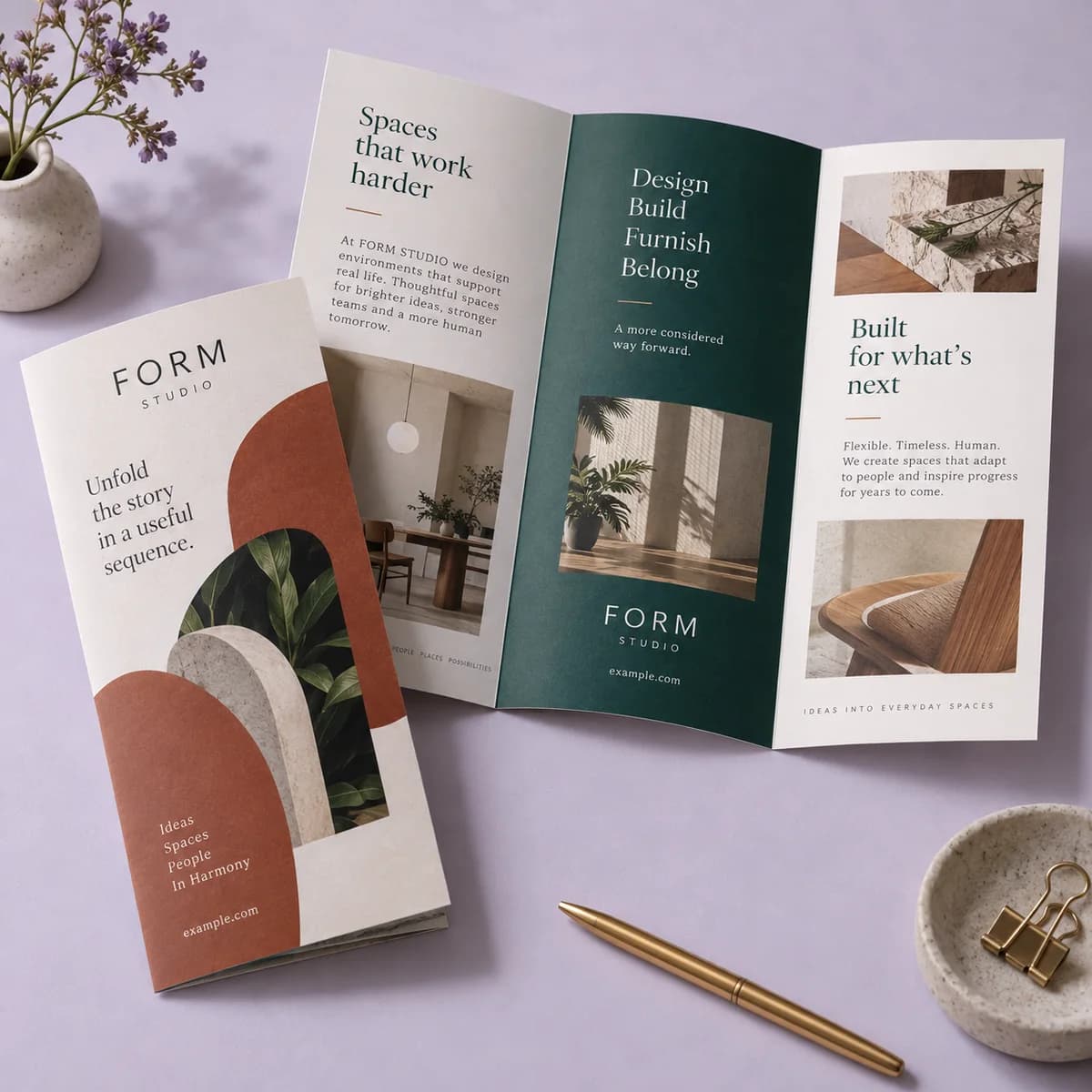
Folded work benefits even more. An A4 sheet folded twice gives three panels of 99 x 210 mm, and the maths stays clean at every size in the series. US formats give a friendlier panel width on Letter, which is why the American trifold is so common, but the sizes above it do not follow the same pattern. The guide to fold types covers how panel widths are actually calculated.
What is the paper size checklist?
- Decide the system from where the piece will be printed and used.
- Write the format, the dimensions and the orientation into the brief.
- Use the C series to specify envelopes for ISO sheets.
- Do not scale a layout between systems: rebuild it.
- Keep all measurements in one unit through the whole file.
- Add bleed to the chosen finished size, following the product specification.
- Check that frames, folders and binders exist for the size you picked.
Frequently asked questions
Why is A4 the size it is?
It descends from A0, defined as a sheet of one square meter with a width to length ratio of 1 to the square root of two. Halving A0 four times gives A4 at 210 x 297 mm. The ratio is the point: because it is preserved at every step, any A size enlarges or reduces to another without changing shape.
What is the difference between the A, B and C series?
A is the main series for documents and printed matter. B sits between the A sizes for cases where an A size is slightly wrong, and is common for books and booklets. C is for envelopes, sized so a C envelope holds the matching A sheet: C4 for a flat A4, C5 for A4 folded once, C6 for A4 folded twice.
Can I just scale a US Letter design to A4?
Not cleanly. The two have different proportions, so scaling to fit leaves extra margin on one pair of edges or crops the other. Fit to page in a print dialog shrinks the whole layout to compensate, which quietly reduces type size and margins. For anything that matters, build a separate layout for each format.
Which paper size should I use for international print?
The system used where the piece is printed and used. ISO sizes across most of the world, inch formats in the United States. Everything downstream, including envelopes, folders, frames and filing, is built around one system, so choosing the local one avoids a chain of small incompatibilities.
Sources & specification notes
The references below support the relevant technical or product details in this guide. Examples and checklists are not claims of practical testing or universal supplier requirements. Confirm the current specifications for your chosen product before production.
- ISO 216:2007, Writing paper and certain classes of printed matter, trimmed sizes, A and B series ↗
The standard that specifies the trimmed A and B series sizes for administrative, commercial and technical use.
- University of Cambridge (Markus Kuhn): International standard paper sizes ↗
Reference summary of the A, B and C series dimensions, the square root of two ratio and the envelope relationship.