What does booth hardware actually weigh?
Published weights vary by model, so use the specification on the product you are ordering rather than a category average. The figures below are from our own product pages and give a sense of the range.
| Piece | Stated weight | Notes |
|---|---|---|
| Curved pop up display | About 23 to 26 lb total | Includes wheeled travel bag |
| Fabric pop up counter | About 22.25 lb | Countertop rated to 30 lb |
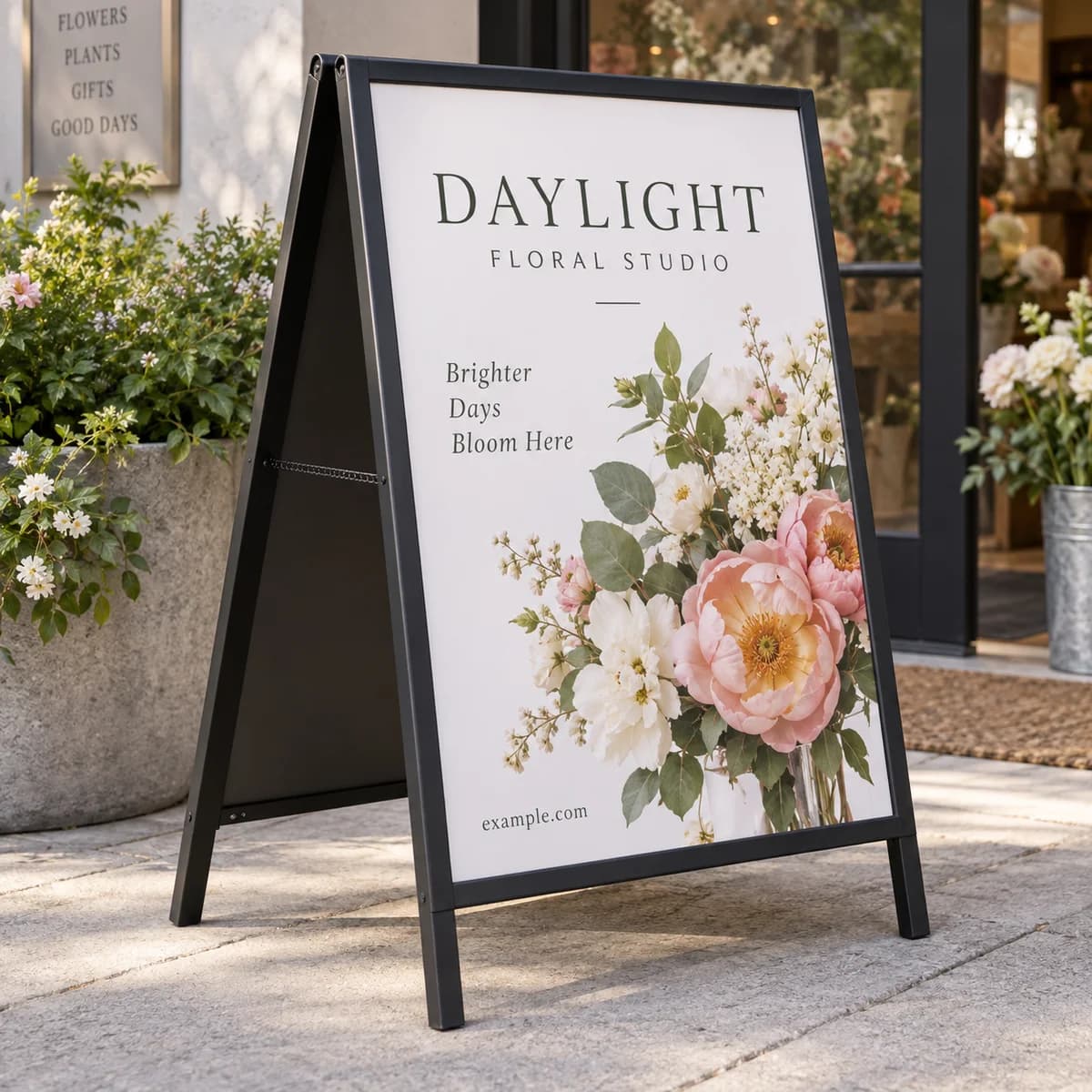
| Round podium counter | About 11.64 lb | Full wrap graphic panel |
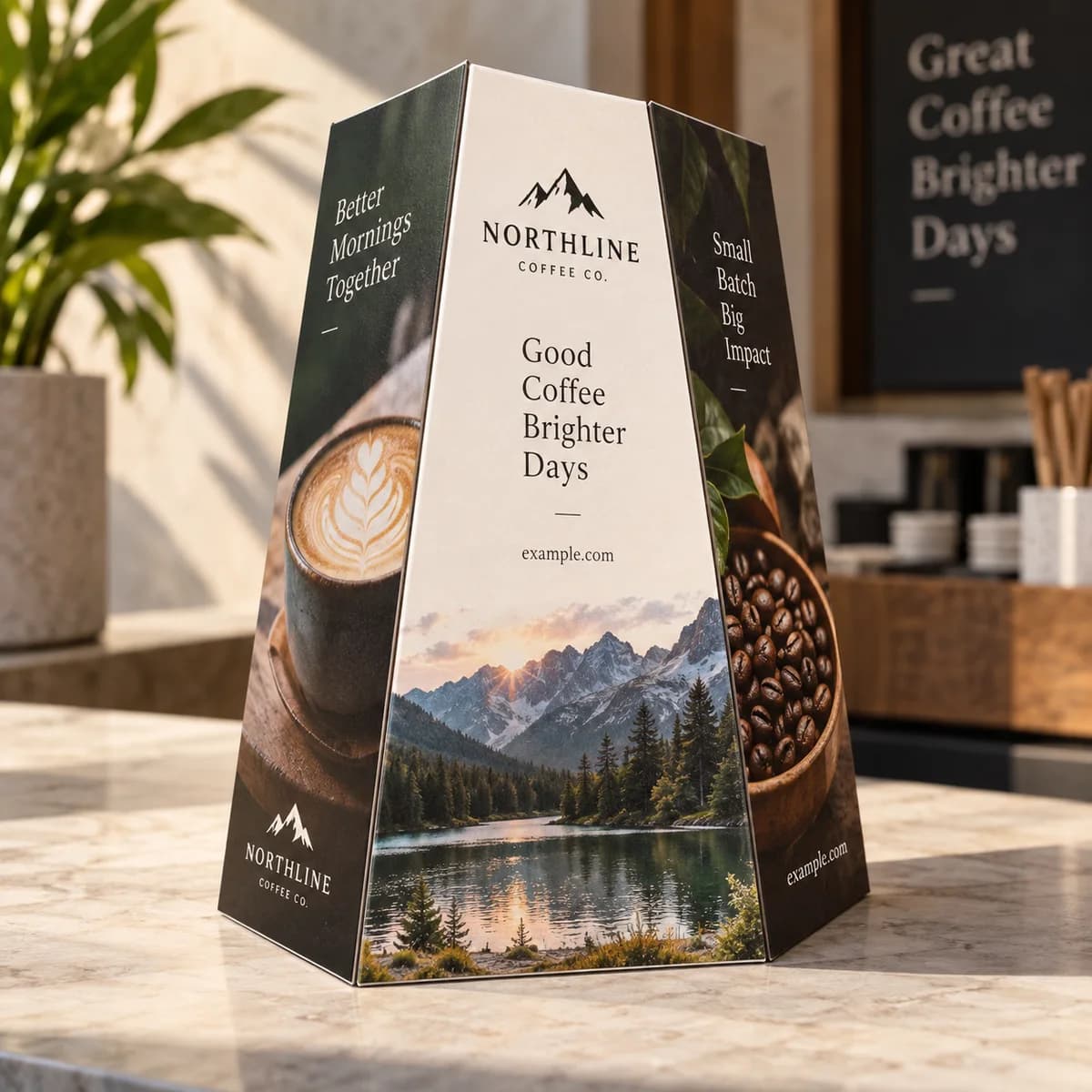
| Triangular point of sale display | About 4 lb | Ships flat, indoor use |
| Parking sign post base | About 33 lb | Cast iron base, outdoor stability |
| Menu board frame and sign | About 3.65 lb plus 6.35 lb | Wall mounted |
The pattern is that fabric systems are light and anything designed to resist wind or hold weight is heavy. A 10 x 10 built from a fabric wall, a counter and two roll up banners typically lands under 100 pounds in three or four cases. The same booth with rigid panels and a weighted base can double that.
Why does case count matter more than total weight?
Because you carry cases, not totals. Four 25 pound cases are manageable by one person with a trolley. One 100 pound crate is not, and it usually triggers material handling charges at the venue.
Plan a case list before you order.
- One wheeled bag for the back wall system.
- One case for banners, ideally the hard tube each banner ships with.
- One collapsible case for the counter.
- One soft bag for fabrics: table covers and tent walls fold small.
- One box for print, giveaways and tools.
Label every case on two sides with your company name, booth number and a case number such as 2 of 5. Cases get separated, and a case labelled only on the lid is invisible in a stack.
Should you ship to the advance warehouse or direct to the show?
Most shows offer both, with different deadlines and different pricing. The choice is about risk, not cost.
Shipping to the advance warehouse means your freight arrives weeks early, is checked in, and is waiting in the booth when you arrive. It usually costs more per pound and has an earlier deadline, often around two to three weeks before the show.
Shipping direct to the show floor means delivery inside a narrow window on specific dates. It is cheaper and later, but a late truck or a queue at the dock can leave you setting up with no materials.
For a first show, or any show where the booth is the entire reason for the trip, the advance warehouse is worth the premium. For a small, light booth you can carry, hand carrying may be allowed for limited items: check the show's own rules, since many halls restrict what an exhibitor may bring in without labour.
How do you plan a setup one person can finish?
Write the setup as a sequence and time it in your own office before the show.
Start with the back wall, because it needs the most floor space and everything else references it. Then place the counter, then banners, then the table and cover, then print and giveaways. Finish with a walk out to the aisle to look at the booth the way a visitor will.
Time each step honestly. If the back wall takes 25 minutes at home with good light and no noise, budget 40 on site. Tool free systems that use hook and loop or spring frames remove the step where you cannot find the right screwdriver, which is most of the lost time in a small booth.
What should go in the tool kit?
A small kit prevents most setup emergencies and weighs very little.
- Scissors, a utility knife and spare blades.
- Wide clear tape, gaffer tape and double sided tape approved for the venue's floors.
- Zip ties and a few S hooks.
- A tape measure and a small level.
- A multi tool and a screwdriver with interchangeable bits.
- Lint roller and a microfibre cloth for fabric and acrylic.
- Spare business cards and a marker.
Add the flame resistance certificates for your fabrics, covered in the guide to booth fire retardancy rules, and a printed copy of your booth plan.
How do you get everything home again?
Most damage happens at teardown, when people are tired and the hall is being dismantled around them. Pack in the reverse order of setup, put graphics back in their own sleeves rather than loose in a case, and never roll a fabric graphic around hardware.
Before you leave, photograph the packed cases and note anything that needs replacing. A banner with a bent foot or a scuffed panel is a small purchase now and a visible problem at the next show.
What is the logistics checklist?
- Add up hardware weight and case count before choosing a display system.
- Keep individual cases light enough for one person to move.
- Label every case on two sides with company, booth number and case number.
- Choose advance warehouse for anything you cannot afford to be late.
- Write and time the setup sequence at home before the show.
- Pack a small tool kit and the fabric certificates in the same case.
- Pack down in reverse order and photograph the result.
Frequently asked questions
How much does a trade show booth weigh?
It depends entirely on the system. Fabric back walls, pop up counters and roll up banners are light: our curved pop up displays are stated at about 23 to 26 pounds including the travel bag and a fabric pop up counter at about 22 pounds. Rigid panels, weighted bases and anything built for wind resistance can multiply that, so read the stated weight on each product before ordering.
Should I ship my booth to the advance warehouse?
If the show is important and the booth is not something you can replace locally, yes. Advance shipping costs more per pound and closes earlier, but your freight is checked in and waiting in the booth. Direct to show shipping is cheaper and later, with the risk that a delayed truck leaves you setting up with nothing.
Can I carry my own booth into the hall?
Sometimes, within limits set by the show and the venue. Many halls restrict what an exhibitor may hand carry and require labour for anything beyond that. Check the exhibitor kit for the hand carry rule before assuming you can wheel in four cases yourself.
How long does it take to set up a 10 x 10 booth?
With a tool free fabric system, a counter and two banners, a practiced person can do it in 45 to 60 minutes on site. Time it at home first, then add about half again for the noise, queues and lighting of a live setup. Anything requiring tools or two people will take considerably longer.
Sources & specification notes
The references below support the relevant technical or product details in this guide. Examples and checklists are not claims of practical testing or universal supplier requirements. Confirm the current specifications for your chosen product before production.
- IAEE: Guidelines for Display Rules and Regulations, North American update ↗
Reference for booth configurations and the exhibitor kit conventions that govern setup, hand carry and installation rules.