What is NFPA 701?
NFPA 701 is the Standard Methods of Fire Tests for Flame Propagation of Textiles and Films. It measures how a textile or film behaves when a flame is applied, specifically whether flame spreads beyond the area exposed to the ignition source. The standard covers materials used widely in interiors and events, including curtains, draperies, table linens, textile wall hangings, and fabrics used in awnings, tents, tarpaulins and banners.
Two points matter for exhibitors. First, NFPA 701 is a test method, so a material either has test results or it does not. Second, it applies to fabrics and films, not to rigid plastics, foams or timber, which are judged under other rules.
What do venues actually require?
Enforcement is local. The published fire marshal guidelines for the Orange County Convention Center, for example, require that materials used in the construction of covered exhibits and all decorative materials within an exhibit be non combustible or limited combustible, ask that documentation of flame resistance be available for review on request, and reserve the right to request samples of the material.
That pattern repeats across venues with local variations. Practically it means three things.
- Bring a certificate or test report for every fabric item, including table covers, banner fabric and tent walls.
- Expect the marshal to ask for it during setup rather than in advance.
- Expect a field test on a sample if you cannot produce documentation.
Read the exhibitor kit for your show, then read the venue's own fire guidelines, because the two documents are not always identical.
Which booth items are usually in scope?
Use this as a first pass, then confirm against your venue.
| Item | Usually in scope | What to have ready |
|---|---|---|
| Fabric back wall or tension graphic | Yes | Test report or certificate for the fabric |
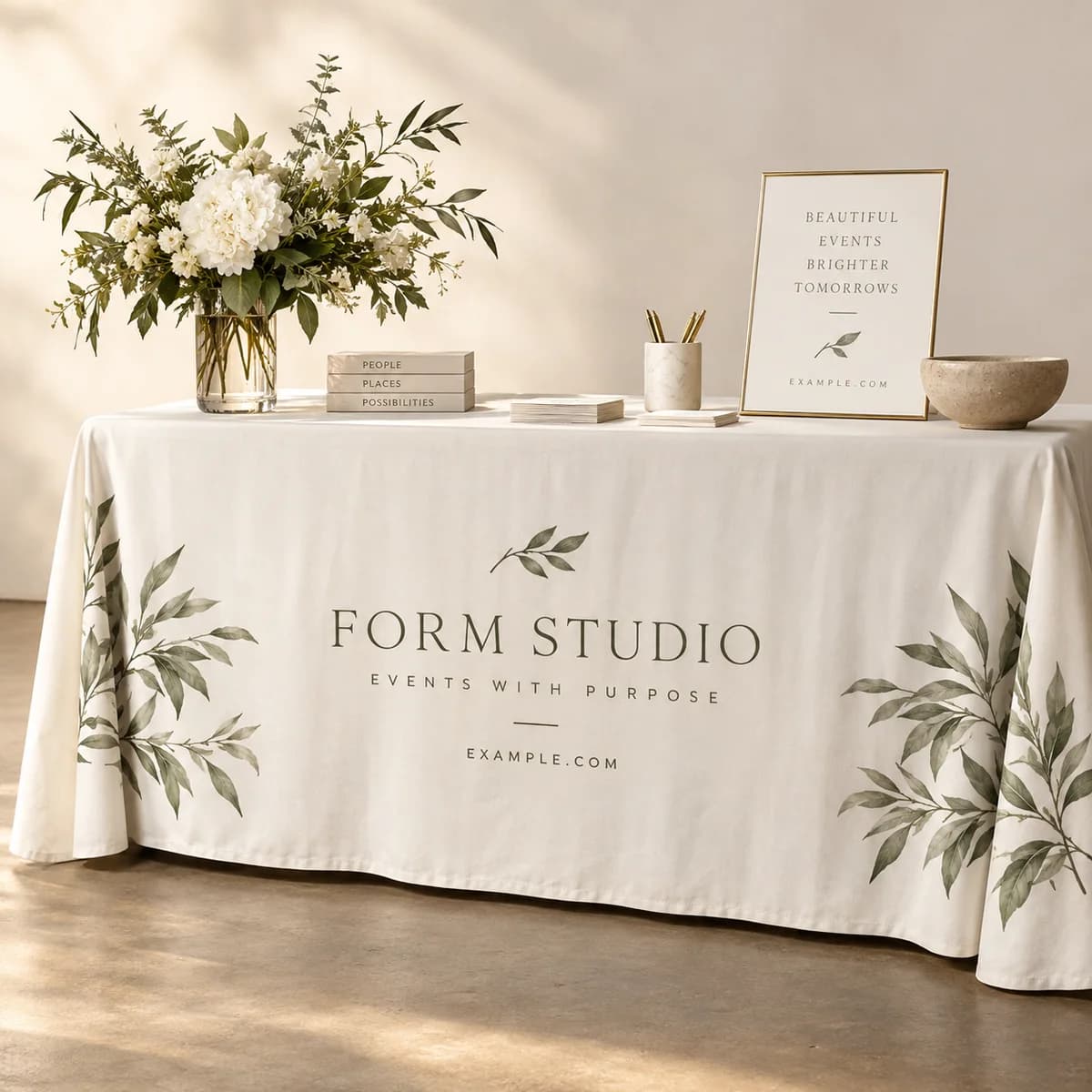
| Table cover or skirt | Yes | Certificate naming the standard |
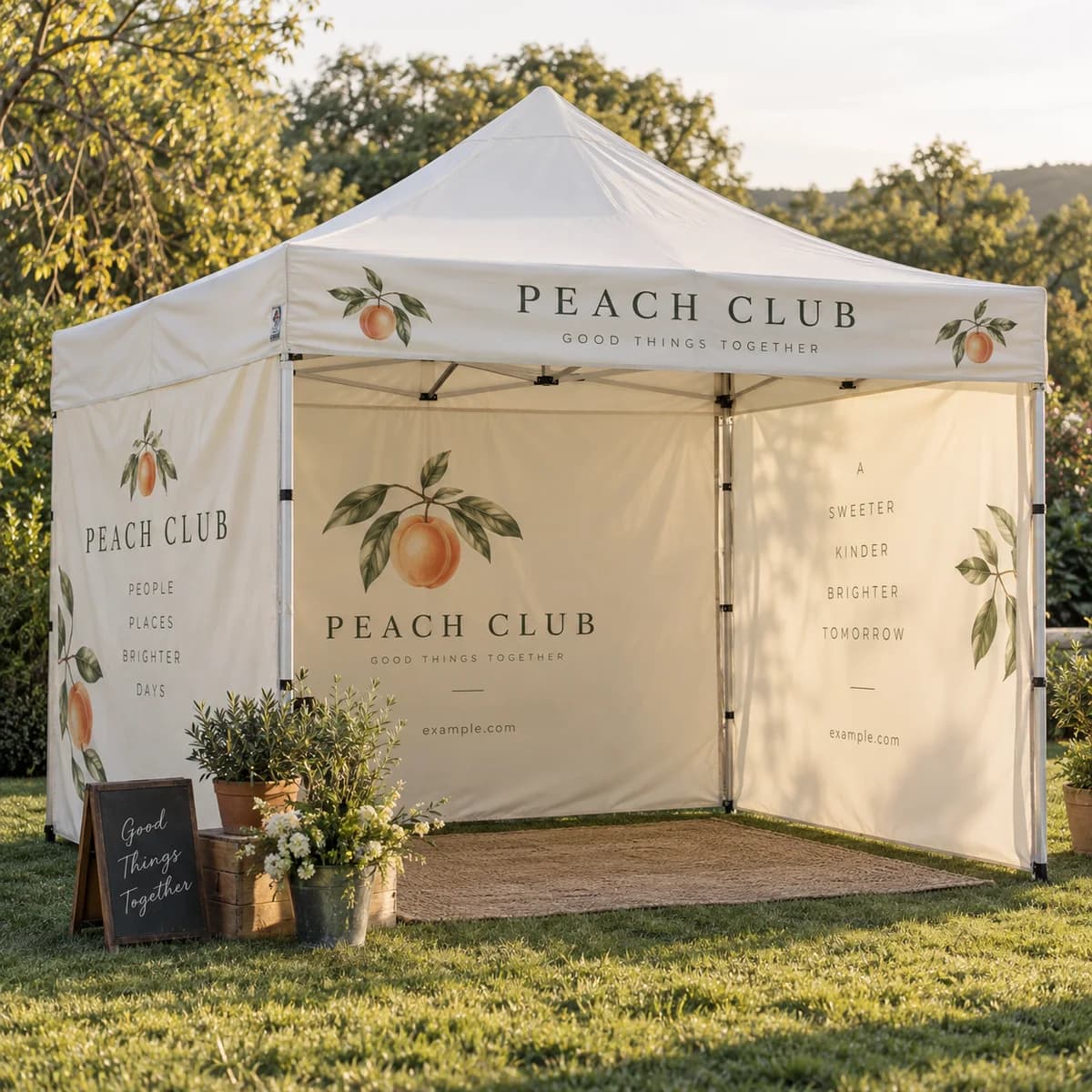
| Tent or canopy walls | Yes | Manufacturer certification |
| Vinyl banner | Often | Material data or certificate |
| Paper literature and handouts | Normally exempt in reasonable quantity | Keep bulk stock in closed cases |
| Rigid signage and boards | Judged under other rules | Material specification |
| Drapes and curtains you supply | Yes | Certificate |
Quantities matter for paper. Many venues restrict how much combustible literature can be stored in the booth and require the rest to be kept in closed containers.
What does an acceptable certificate show?
A usable document names the material, names the test standard and edition, names the laboratory or manufacturer making the statement, and carries a date. A line in a marketing brochure saying flame retardant is not documentation.
If a fabric has been treated rather than inherently flame resistant, the treatment has its own paperwork and, in some cases, its own expiry. Treated goods can lose performance after washing, so if a table cover is machine washable, ask whether laundering affects the certification and keep the answer in writing.
It is worth noting what a printer can and cannot tell you. Product pages state the certification a material carries: our canopy tent walls are described as NFPA 701 certified, and our table covers as flame resistant to CAN/ULC S109. Those statements describe the material. They are not a permit for your specific booth, and they do not replace whatever document your venue asks to see, so request the certificate for the item you ordered and carry a copy.
What about tents, cooking and anything with a flame?
Any open flame, heating element, cooking appliance or pressurised cylinder is a separate permit conversation with the local fire authority, often with its own application form and lead time measured in weeks. Outdoor canopies at street events frequently need their own documentation and weights or anchors.
If your booth involves cooking, candles, hot tools, fog, or any battery system larger than a laptop, contact the venue's exhibitor services before you design the booth, not after.
How do you build a documentation pack?
Treat it as part of the shipment, not paperwork.
- Ask for the flame resistance certificate at the time of order for every fabric item.
- Save a PDF copy in the same folder as the print files for that show.
- Print one paper copy and put it in the case with the hardware.
- Keep a labelled offcut of each fabric in the case for field testing.
- Note the expiry or laundering limits beside each certificate.
- Re request certificates when you reorder a graphic, since materials change.
What is the fire compliance checklist?
- Read both the show exhibitor kit and the venue fire guidelines.
- List every fabric, film, drape and decorative item in the booth.
- Obtain a dated certificate naming the standard for each one.
- Keep bulk literature in closed cases, not stacked in the open.
- Ask about permits separately for flame, cooking, heat or cylinders.
- Carry paper copies and fabric offcuts in the shipping case.
- Confirm nothing blocks an aisle, exit or fire equipment when set up.
Frequently asked questions
Do trade show booths have to be fire retardant?
Almost always, for fabrics and decorative materials. Venue fire guidelines commonly require booth construction and decorative materials to be non combustible or flame resistant, and ask that documentation be available for review during setup. The exact wording and the items in scope vary by venue and by local fire authority, so read the published guidelines for your hall.
What does NFPA 701 certified mean?
It means the material has been tested under NFPA 701, the standard methods of fire tests for flame propagation of textiles and films, which assesses whether flame spreads beyond the area exposed to the ignition source. It is a statement about the material, not an approval of your booth, so you still need whatever documentation your venue requests.
Who gives me the flame resistance certificate?
The supplier of the material, usually passed on from the manufacturer or test laboratory. Ask for it when you place the order rather than before the show, and store the PDF with the print files. If the fabric was treated rather than inherently flame resistant, ask whether washing affects the certification.
Can the fire marshal test my booth on site?
Yes. Venue guidelines commonly reserve the right to request samples of questionable material, which is why a labelled offcut of each fabric in the shipping case is useful. Producing a dated certificate is faster and less disruptive than having material tested during setup.
Sources & specification notes
The references below support the relevant technical or product details in this guide. Examples and checklists are not claims of practical testing or universal supplier requirements. Confirm the current specifications for your chosen product before production.
- NFPA: NFPA 701, Standard Methods of Fire Tests for Flame Propagation of Textiles and Films ↗
Scope of the standard: test methods assessing propagation of flame beyond the area exposed to the ignition source, for textiles used in curtains, table linens, wall hangings, tents, tarpaulins and banners.
- Orange County Convention Center: Fire Marshal Guidelines ↗
Example venue requirement that exhibit construction and decorative materials be non combustible or limited combustible, with documentation of flame resistance available for review and samples on request.