What are the main label families?
| Family | Typical sizes | Job | Usual format |
|---|---|---|---|
| Address | About 1 x 2.6 in, 2 x 4 in | Return and recipient addresses | Sheets |
| Shipping | 4 x 6 in | Carrier labels with barcode | Sheets or rolls |
| Product | 2 to 4 in wide, shape varies | Brand, contents, required text | Sheets or rolls |
| Seal and closure | 1 to 2 in circles | Closing bags, boxes and tissue | Rolls |
| Identification | 0.5 to 1.5 in | Batch codes, asset tags, sizes | Rolls |
The families explain the sizes. A 4 x 6 inch shipping label exists because it holds a carrier barcode with the clear space around it that scanners need. A 1 x 2.6 inch address label exists because it fits a line of address text at a readable size and tiles neatly onto a letter sheet.
Once you know which family you are in, the choice narrows to two or three sizes and the decision becomes easy.
How do you choose within a family?
Measure the surface, then subtract.
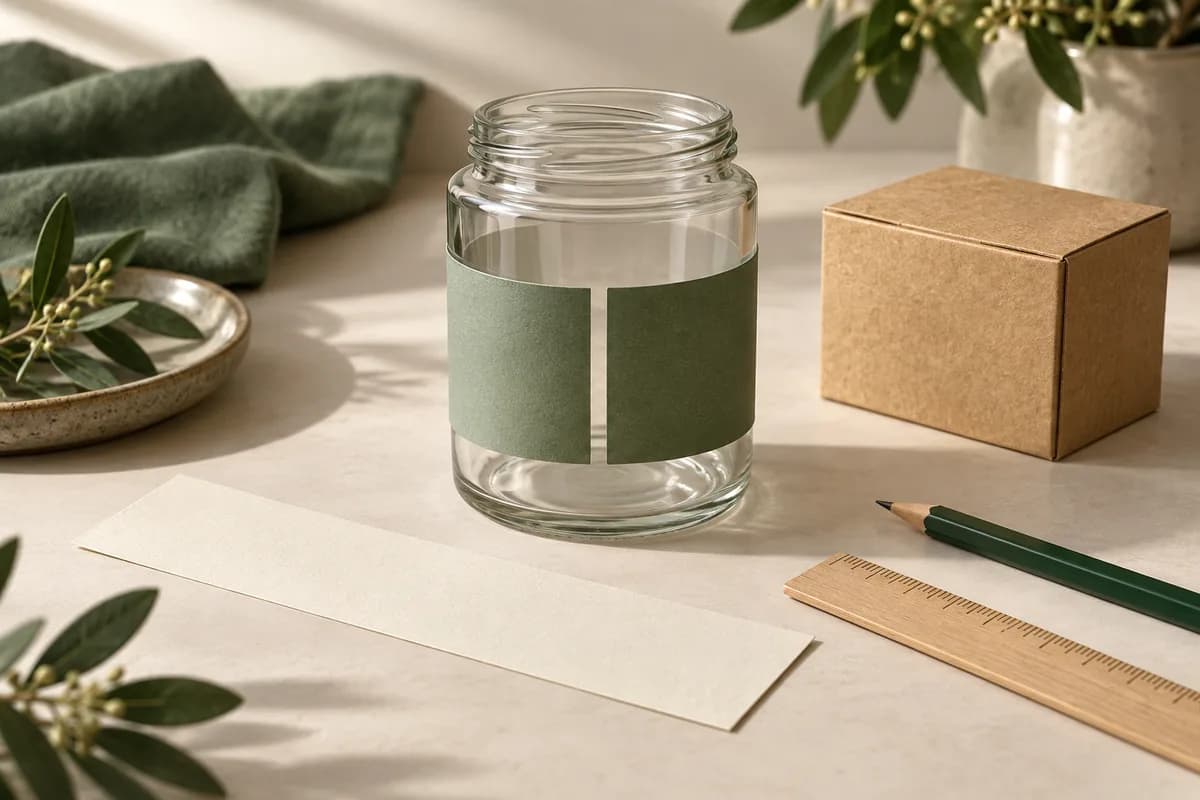
For a product label, measure the flat area of the container, not its circumference, unless the label wraps. Leave a margin around the label so it is not applied over a seam, a curve or the edge of a panel. On a cylindrical container, a label wider than about a third of the circumference starts to be hard to apply without wrinkles by hand.
For a shipping label, the constraint is the flattest face of the box. A 4 x 6 label needs a flat area comfortably larger than that, and it must not cross a seam or a tape line, because a scanner cannot read across a step.
The existing guide to sticker size planning for jars and boxes works through the measuring process in detail.
Does the shape matter as much as the size?
It changes how much usable area you get. A circle of a given width holds noticeably less text than a rectangle of the same width, because the corners taper away.
- Rectangles and rounded rectangles hold the most text and suit required information.
- Circles suit seals, logos and short names.
- Ovals suit two lines of text and a mark, and look softer on curved bottles.
- Squares are efficient for icons and short product names.
- Custom shapes cost layout time and usually reduce usable area.
Our product label sheets are offered in 18 size options across circle, oval, rounded rectangle and rounded square shapes, plus custom shapes, which covers most of the product family. If a design cannot hold its required text on a circle, change the shape rather than the type size.
Sheets or rolls?
This is a question about how the label is applied, not how it is printed.
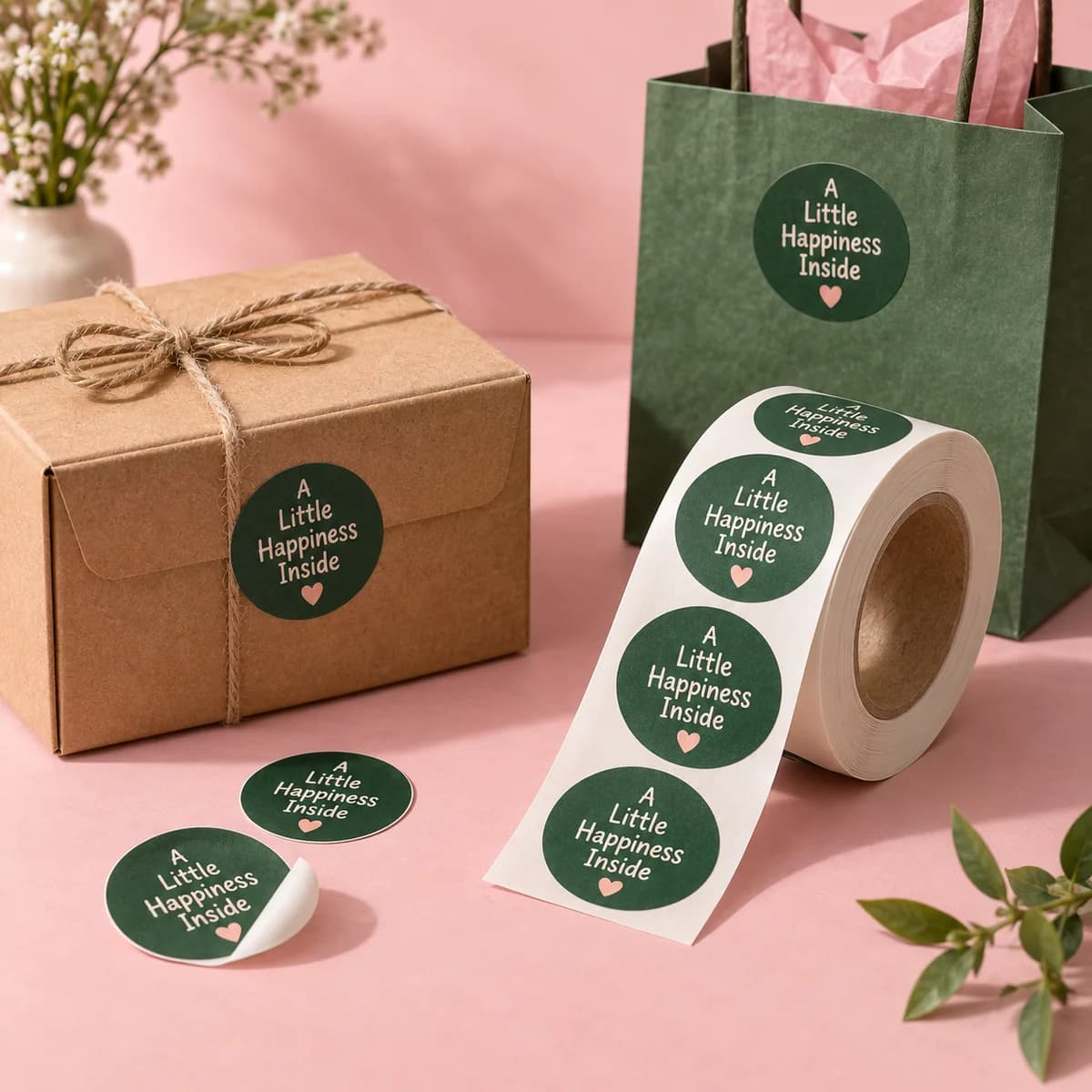
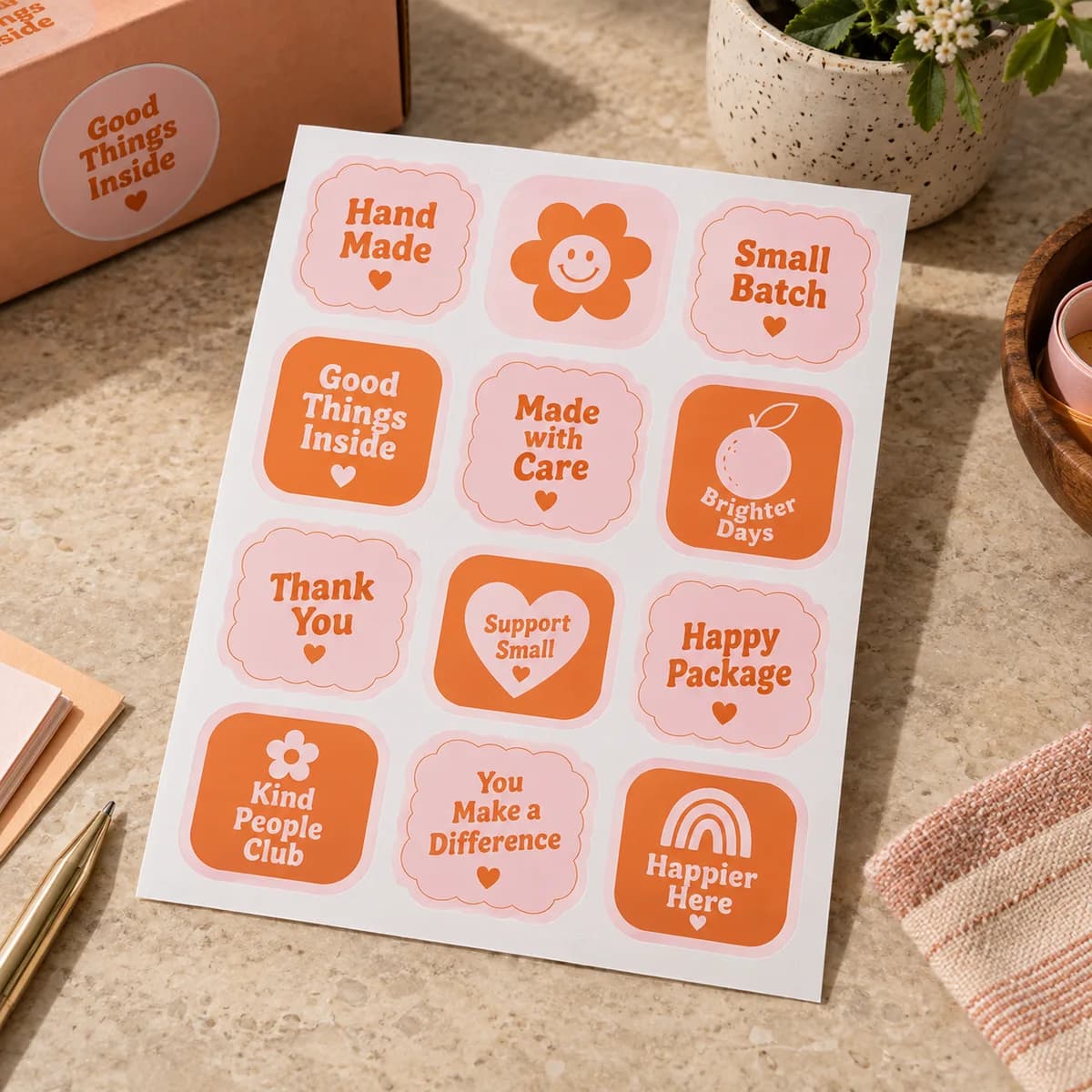
Sheets suit small runs applied by hand, mixed designs and anything you will print or apply in batches at a desk. Rolls suit higher volumes, repeat applications and any use of an applicator or dispenser, and they keep labels clean and in order.
The existing comparison of roll labels and sheet labels covers the cost and handling differences. As a rule of thumb, once you are applying more than a few hundred of the same label, rolls save more time than they cost.
How does required text change the size?
On regulated products, the text decides the label, not the other way around. FDA guidance for packaged food sets out required statements including the statement of identity, net quantity, ingredient list, allergen declaration and the business name and address, and some of those carry placement and minimum type height requirements.
The practical consequence is to write the required lines first, set them at the minimum permitted size, and measure the block. If it does not fit the label you wanted, you need a bigger label or a two label layout with a front label for brand and net quantity and a back label for the detail. Shrinking required text to fit a pretty size is not an option.
What about barcodes and codes on labels?
Both need clear space and both fail for the same reasons. A retail barcode needs quiet space either side and enough height to be scanned at an angle, printed dark on a light background. A QR code needs a clear margin of at least four modules on all sides.
Do not place the two next to each other without separation, and do not place either across a curve, a seam or the label edge. On small labels, the codes often decide the minimum size of the whole label, so place them on the layout before the decorative elements.
What is the label format checklist?
- Identify the family: address, shipping, product, seal or identification.
- Measure the flat area of the surface and leave a margin.
- Write the required text first and measure the block before choosing a size.
- Choose the shape by how much text has to fit, not by taste alone.
- Use sheets for small hand applied runs and rolls for volume.
- Place barcodes and QR codes on the layout before decoration.
- Order the smallest quantity and apply one before committing to a run.
Frequently asked questions
What are the standard label sizes?
There is no single standard list, but sizes cluster by job. Address labels are commonly around 1 x 2.6 or 2 x 4 inches, shipping labels are usually 4 x 6 inches to hold a carrier barcode, product labels vary by container, and seals are typically 1 to 2 inch circles. Identify the family first and the choice narrows to two or three sizes.
How do I choose a label size for a jar or bottle?
Measure the flat, usable area of the container rather than the full circumference, and leave a margin so the label does not sit over a seam or a sharp curve. On a cylinder, a label much wider than about a third of the circumference becomes difficult to apply without wrinkles by hand.
Should I use label sheets or rolls?
Sheets suit small runs applied by hand, mixed designs and desk based work. Rolls suit repeat application, higher volumes and anything using a dispenser or applicator, and they keep labels clean and in order. Once you are applying more than a few hundred identical labels, rolls usually save more time than they cost.
Does required label text affect the size I need?
It decides it. For packaged food, required statements include identity, net quantity, ingredients, allergens and the business name and address, and several carry placement or minimum type height rules. Set that block at the minimum permitted size, measure it, then choose a label that fits it, or split the design across two labels.
Sources & specification notes
The references below support the relevant technical or product details in this guide. Examples and checklists are not claims of practical testing or universal supplier requirements. Confirm the current specifications for your chosen product before production.
- USPS Domestic Mail Manual 202: Elements on the Face of a Mailpiece ↗
Sets out address placement, barcode clear zones and shipping label placement standards that shape the address and shipping label families.
- FDA: Guidance for Industry, Food Labeling Guide ↗
Summarises the required statements and placement rules that determine how much space a regulated product label must provide.