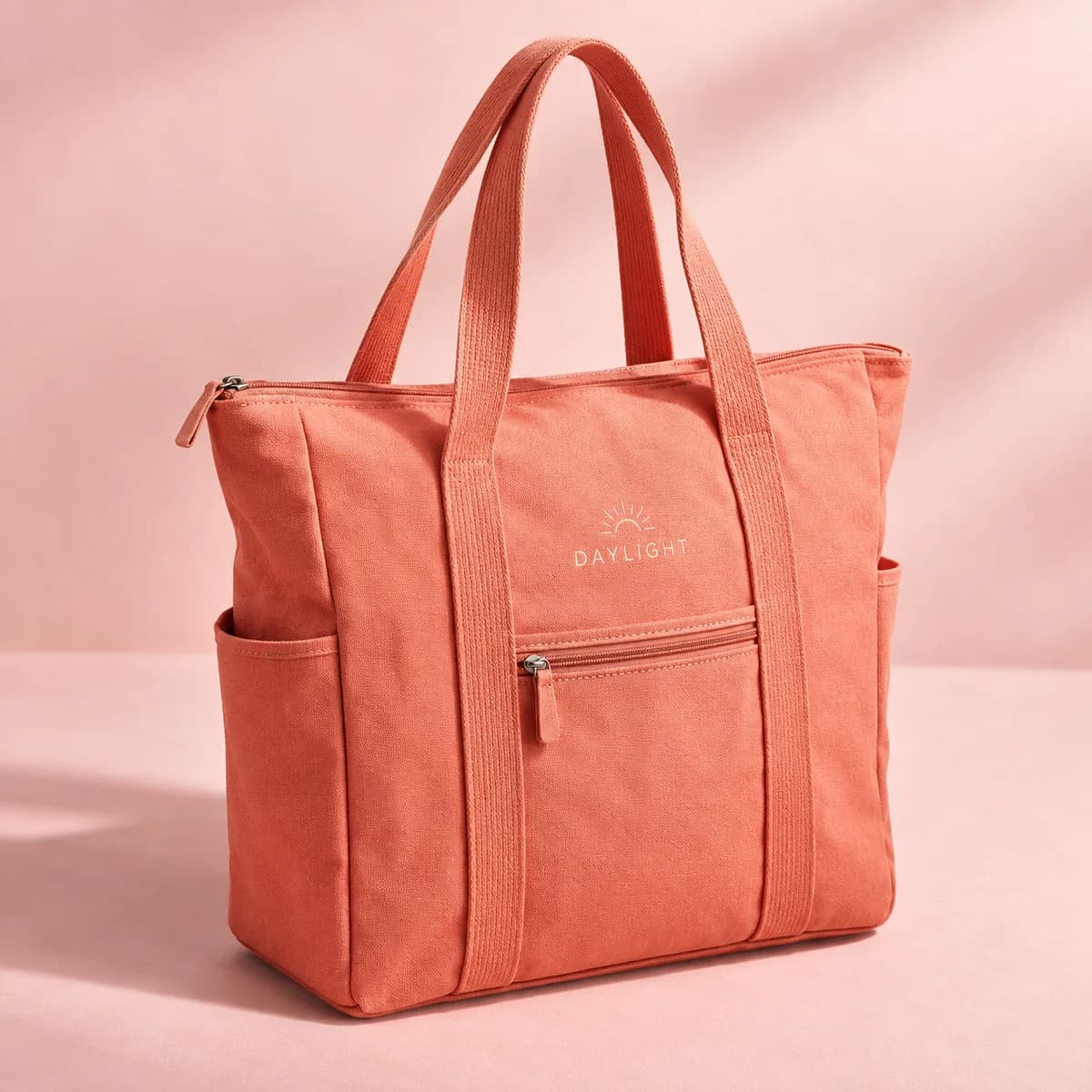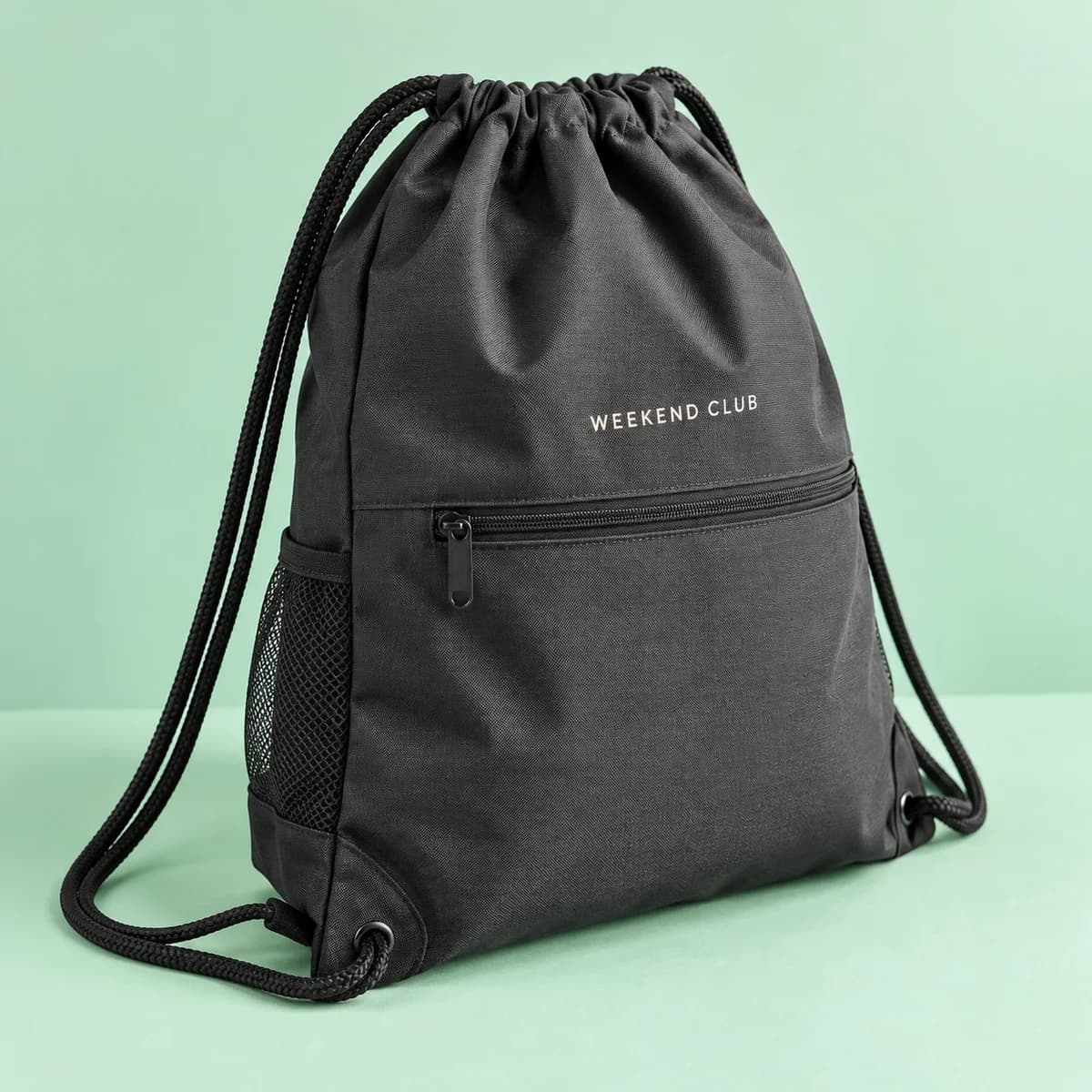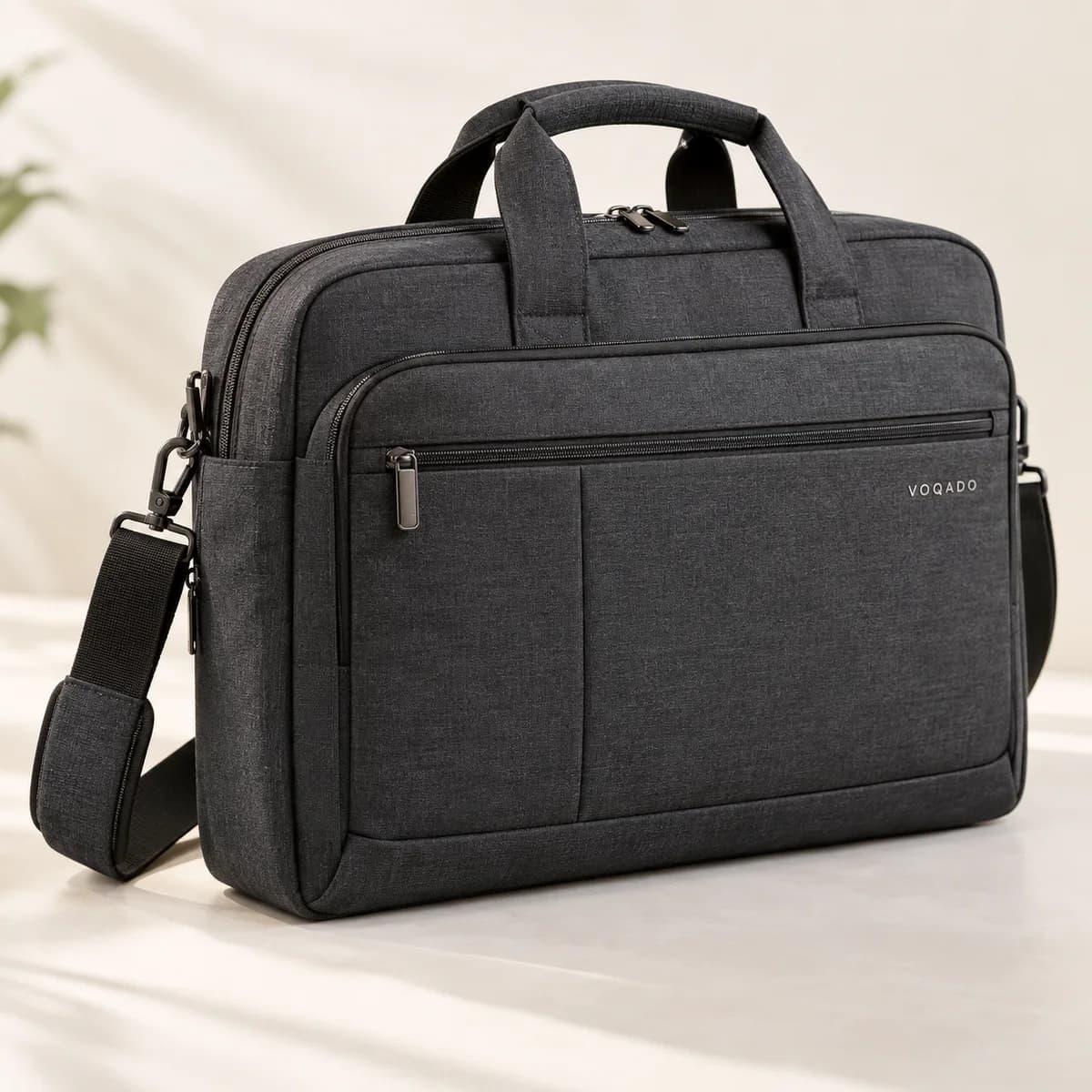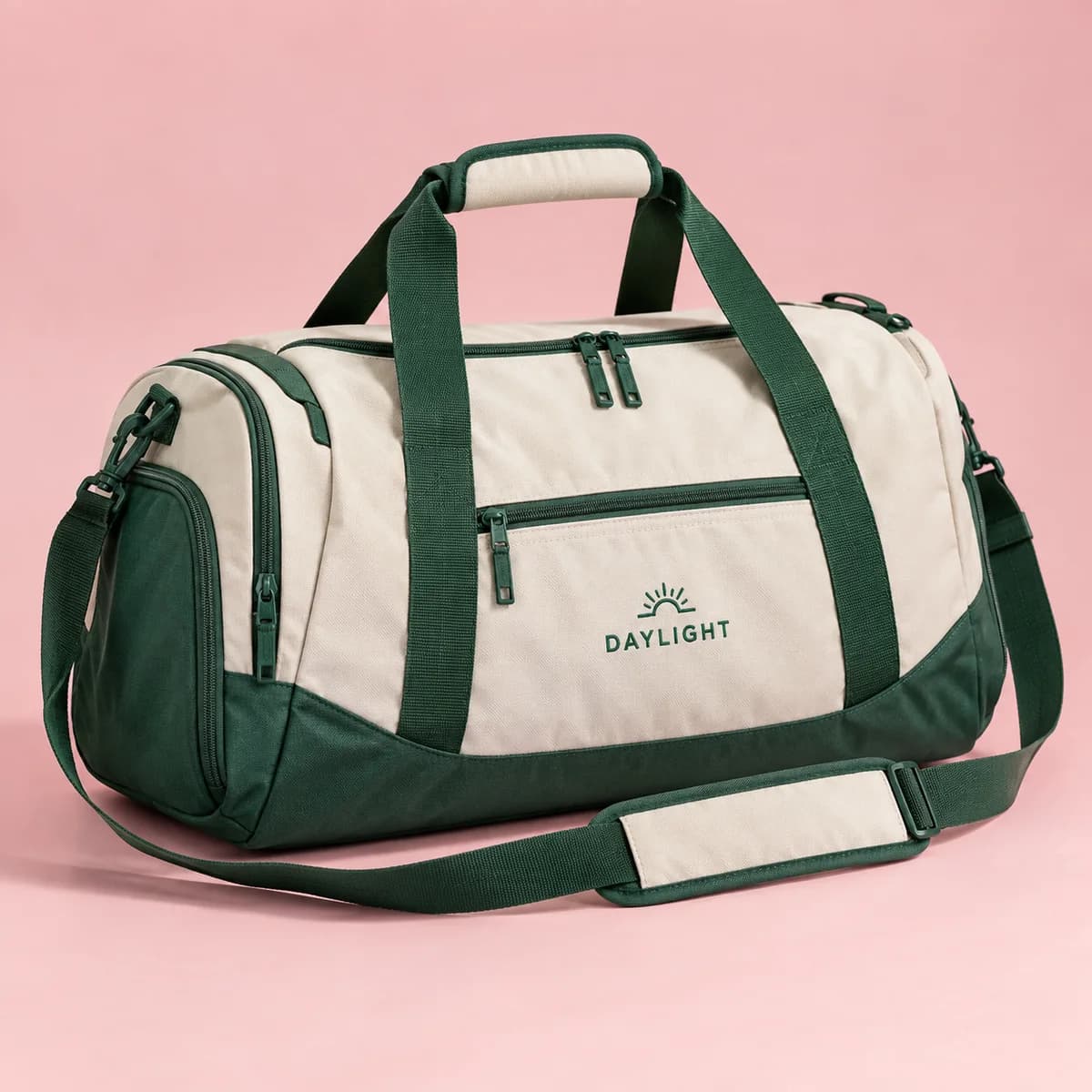
The handle types in this range
| Handle | Found on | Carries | Notes |
|---|---|---|---|
| Double carry handles | Cotton tote bags | Light everyday loads | Simple, prints clear of them |
| Double handles plus shoulder strap | Travel and gym bags | Up to 22 lbs | Two carry positions |
| D shaped wrapped webbing plus shoulder strap | Cooler bags | Heavy, wet, unstable loads | Wrapped webbing is kinder on hands |
| Adjustable shoulder strap | Messenger bags, briefcases, laptop bags | Laptops and paperwork | Length adjustment does the fitting |
| Padded back and adjustable straps | Backpacks | Distributed load | Also chest strap and trolley strap |
| Drawstring that doubles as straps | Drawstring bags | Kit, shoes, a towel | Closure and carry in one |
| Adjustable strap with buckle | Waist packs | Phone, keys, cards | Worn at the waist or crossbody |
| Twisted paper handles | To go bags | 10 to 20 lbs, one trip | Add about 3.75 to 4 in to listed height |
Load is not the only question
A handle has to do four things, and people only ever specify the first one.
It has to hold the weight. Travel and gym bags here state a 22 lb capacity, and the to go bag range carries 10 lbs at the smallest size up to 20 lbs at the largest. Those numbers are the bag as a system, not the handle alone.
It has to be comfortable at that weight. A thin cord carrying 20 lbs cuts into a hand within a minute. This is why cooler bags use D shaped wrapped webbing rather than bare strapping, and why backpacks use a mesh padded back with adjustable straps.
It has to suit the distance. A handle is fine for a walk across a car park. Anything carried for twenty minutes wants a shoulder strap, and anything carried for an hour wants two straps on a back.
And it has to survive being put down. Handles wear where they rub the shoulder and where they fold at the attachment point. A bag that is set down and picked up forty times a day fails at the fold.
Drop length, and why it matters
Drop is the distance from the top of the bag to the top of the handle arc. It decides whether the bag can be carried on a shoulder or only in a hand.
A short drop of a few inches means a hand carry only. A drop of around 9 to 11 in clears most shoulders over a coat. Adjustable straps sidestep the question, which is why messenger bags, briefcases, laptop bags and cooler bags here all have one.
The practical failure is a bag sized for a shoulder that will not go over one. If the bag will be carried while hands are busy, and it is not adjustable, check the drop before the color.
What handles do to your artwork
The handle attachment is reinforced, often bar tacked, and it makes the top two to three inches of the panel unusable for decoration. On a bag with self handles cut from the same panel, the top of the bag is also where the fabric is doubled.
So the print sits lower than a mockup suggests, and a design centered on the panel will look slightly low on the finished bag. Plan the mark to sit in the middle of the usable area rather than the middle of the bag. The guide to bag print areas has the clearances to work to.
Handles also block the press. A platen has to come down flat on the panel, and a handle lying across it is in the way. On some constructions the handle can be folded aside and on some it cannot, which is one of the things the product's decoration template resolves.
Twisted paper handles are a different animal
Paper handles on a retail or takeaway bag are engineered for a single trip with a stated capacity, and they are glued rather than stitched. They are excellent at that job and they have two quirks worth planning for.
First, they add height. The to go bags here note that twisted paper handles add roughly 3.75 to 4 in to the listed height, which matters if the bag has to fit a shelf, a crate or a delivery bag.
Second, they are the first thing to fail if the bag gets wet. A paper handle on a bag holding a hot soup container is a known risk, which is why food businesses double bag or use a rigid container inside.
Matching handle to use in one line each
- Conference giveaway, light contents, printed both sides: double self handles on cotton canvas.
- Weekly shopping with tins: webbing handles on a heavier canvas.
- Laptop and paperwork, carried across a city: adjustable shoulder strap on a structured bag.
- Gym kit thrown in a locker: drawstring that doubles as straps.
- Cans, ice and a wet towel: wrapped webbing plus a shoulder strap.
- Hands free at an event: an adjustable buckle strap on a waist pack.
- Takeaway handed over a counter: twisted paper handles, sized with the handle height included.
Care at the failure point
The attachment point is where a bag dies, and it is also where cleaning matters least and inspection matters most. Tell recipients to check the stitching rather than to wash the bag, because the printed panels here are spot clean only: tote bags say to skip the washing machine, drawstring bags say sponge clean only, and messenger bags and briefcases recommend hand washing.
Handle selection checklist
- Specify the load, the comfort at that load, the distance and the frequency.
- Check the drop if the bag is not adjustable and must go on a shoulder.
- Leave the top two to three inches of the panel clear of artwork.
- Include handle height when the bag must fit a shelf or a crate.
- Treat paper handles as single trip and keep them away from moisture.
- Inspect the attachment stitching rather than washing the bag.
Frequently asked questions
What handle type is strongest on a tote bag?
Webbing stitched through the panel with a reinforced bar tack, rather than a handle cut from the panel itself. For heavy or unstable loads, wrapped webbing is also kinder on hands, which is why the cooler bag here uses D shaped wrapped webbing plus an adjustable shoulder strap. The attachment matters as much as the strap.
What is handle drop and what length do I need?
Drop is the distance from the top of the bag to the top of the handle arc. A few inches means hand carry only; around 9 to 11 inches clears most shoulders over a coat. Adjustable straps avoid the question entirely, which is why messenger bags, briefcases, laptop bags and cooler bags here all have one.
How much weight can a paper bag handle carry?
The to go bags in this range state 10 lbs for the smallest size up to 20 lbs for the largest, with twisted paper handles. Treat that as a single trip figure, and keep the handles dry: paper handles are glued rather than stitched and are the first thing to fail when a bag gets wet.
Do handles limit where a logo can go?
Yes. The attachment is reinforced and often bar tacked, so the top two to three inches of the panel are unusable, and a handle lying across the panel can block the press platen. Plan the mark to sit in the middle of the usable area rather than the middle of the bag, and confirm against the decoration template.
Sources & specification notes
The references below support the relevant technical or product details in this guide. Examples and checklists are not claims of practical testing or universal supplier requirements. Confirm the current specifications for your chosen product before production.
- ASTM D5034: Standard Test Method for Breaking Strength and Elongation of Textile Fabrics (Grab Test) ↗
Supports the statement that fabric strength is measured by gripping only the centre of a specimen, which is the same concentrated loading a handle attachment applies to a bag panel.
- ASTM D3776/D3776M: Standard Test Methods for Mass Per Unit Area (Weight) of Fabric ↗
Supports comparing panel and webbing fabrics on a measured weight basis rather than on description alone.