Start with what the bag has to carry
A tote is a shape, not a product category. The same word covers a giveaway bag that holds a brochure and a shopping bag that holds groceries, and those are different objects.
Write down the heaviest and the most awkward thing the bag will hold. A ream of paper is heavy and rigid. A laptop is heavy, rigid and needs protecting. Six cans are heavy and unstable. A conference programme is none of those. That single line decides the material and the handle before you look at a single price.
The materials and what each does
| Material | Character | Best at | Weak at |
|---|---|---|---|
| Cotton canvas | Natural, soft, printable both sides | Everyday carry, giveaways, brand feel | Wet loads, machine washing after printing |
| Recycled polyester, RPET | Tough, water shedding, dimensionally stable | Laptops, commuting, daily use | Natural hand feel |
| Recycled PU with RPET | Structured leather look | Work carry, professional settings | Casual settings, hot washing |
| Kraft paper | Cheap, recyclable, retail ready | Point of sale and takeaway | Any repeated use, any rain |
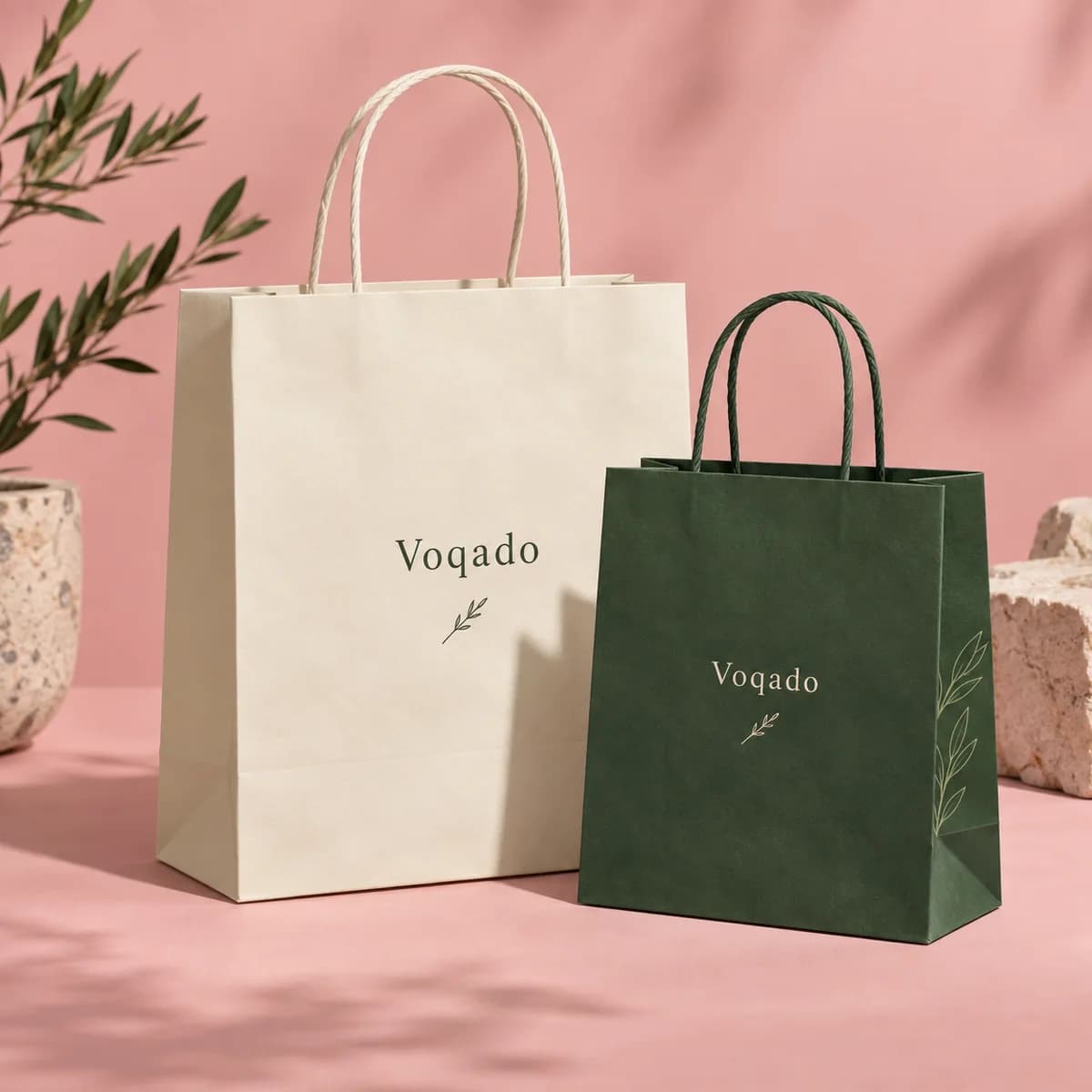
In this range that maps to real products. Tote bags are 100 percent cotton canvas. Laptop bags are 600D polyester made from recycled polyester with a padded 15 in sleeve, dual side pouches and an adjustable carry strap at 17.3 in high by 12.5 in wide. Briefcases and messenger bags are 55 percent recycled PU leather with 45 percent RPET. Paper shopping bags and to go bags cover the retail and takeaway end.
Read the finished size properly
Bag dimensions are usually quoted as width by height, sometimes with a depth, and the handle is usually excluded. That matters more than it sounds.
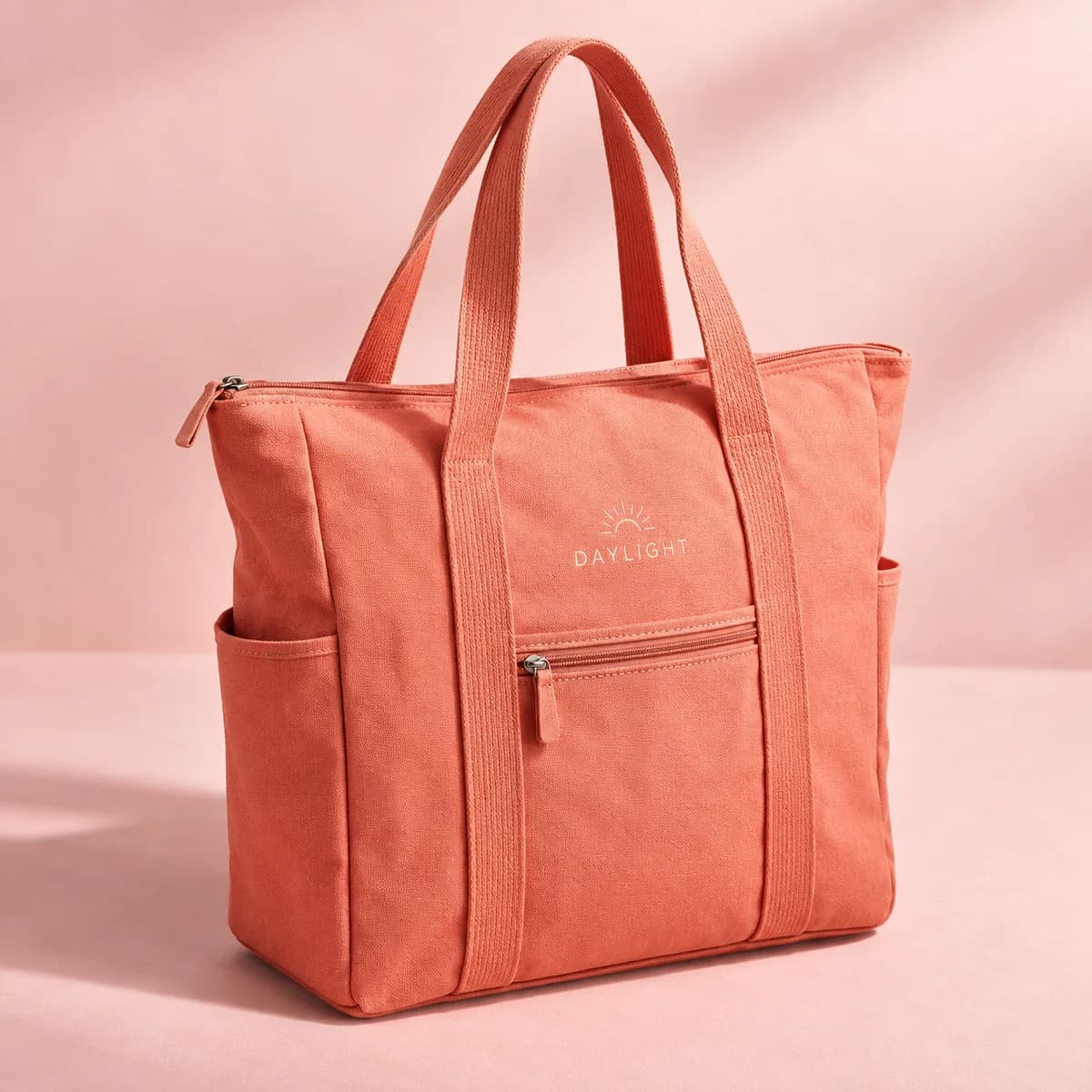
The cotton tote here is 13.4 in by 13.4 in with a 2.4 in depth and weighs 4.09 oz empty. A square bag that size holds a laptop sleeve, a folder and a water bottle comfortably. Drawstring bags are 13.38 in wide by 17.71 in high with a 20 liter capacity. The to go bag range runs from 5.5 by 3.25 by 8.25 in up to 14 by 9.65 by 16 in, with twisted paper handles that add roughly 3.75 to 4 in to the listed height.
That handle note is the practical trap. If a bag has to fit a shelf, a crate or a display, measure with the handles, not without.
Depth is the difference between flat and useful
A flat tote with no gusset holds a book and a jumper. Add a couple of inches of depth and the same bag holds a lunch, a bottle and a laptop without everything pressing against the front panel.
Depth also changes the print. On a bag with a gusset, the front panel is narrower than the overall width, and a design sized to the full width will wrap onto the gusset. Design to the panel, not to the bag.
Handles and straps
The handle carries the weight, so it is the part that fails. Look for how the handle is attached rather than how it looks.
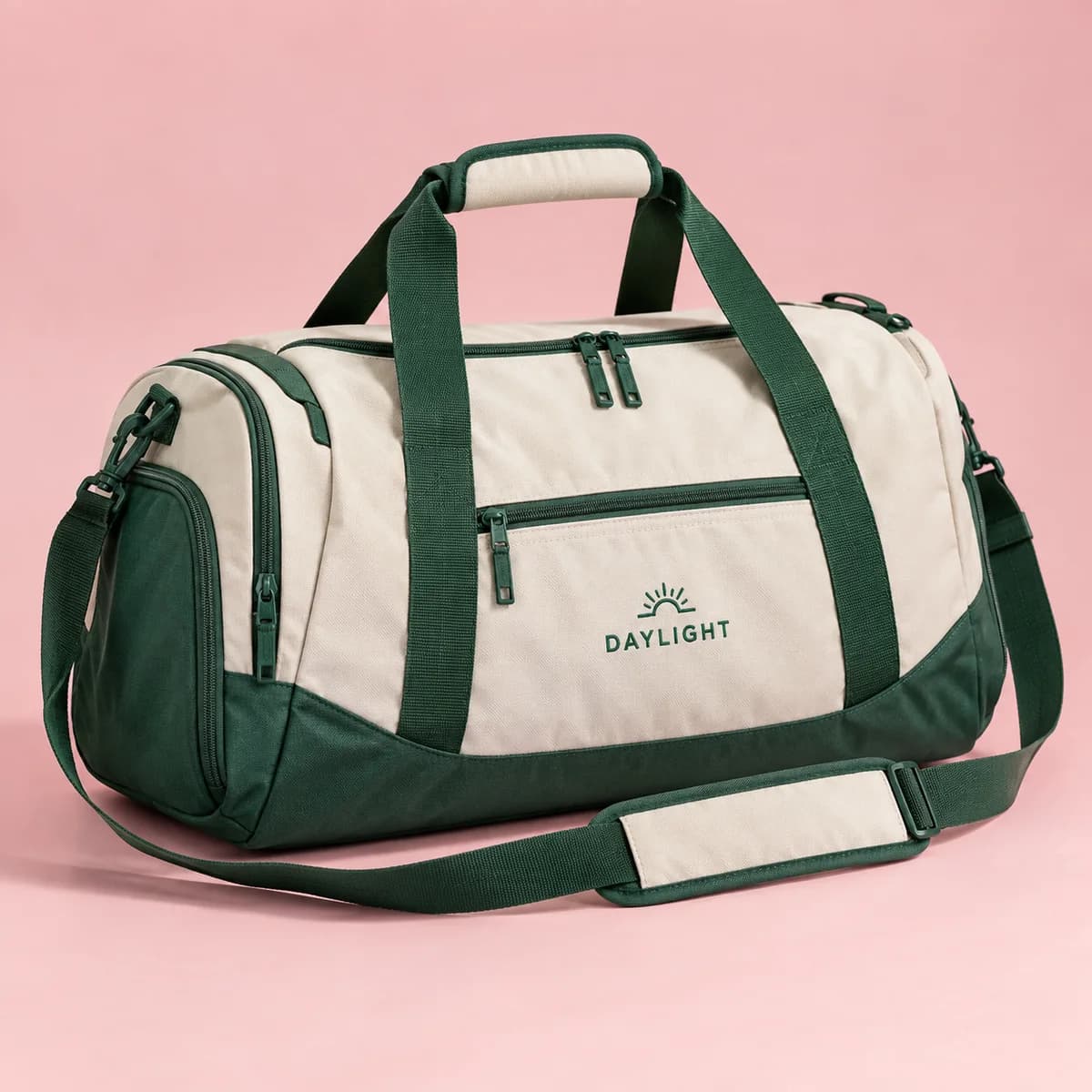
The cotton tote has double carry handles. Travel and gym bags have double handles plus an adjustable shoulder strap, hold up to 22 lbs and have a 22.5 liter capacity. Cooler bags use D shaped wrapped webbing handles plus an adjustable shoulder strap. Waist packs use an adjustable strap with a buckle, worn at the waist or crossbody. The guide to handle and strap types works through the tradeoffs.
Decoration: what the panel will take
This is where bag orders go wrong, because a bag is not a flat sheet. Seams, gussets, pockets, zips and lining all constrain where a mark can go.
The catalogue is specific where it knows. Tote bags print your design on both sides. Drawstring bags take heat transfer or direct to garment and are made in White or Black. Messenger bags and briefcases take embroidery or heat transfer and are made in Black only. To go bags take single color logo printing on the front, or come blank.
Everything else here does not publish a decoration method, and the site says so rather than implying one: the decoration template is sent before production, and the placement and method are confirmed with you after you order. A logo concept does not confirm pocket, seam or fabric compatibility, which is exactly the point.
Care, and why bags are stricter than shirts
Decorated bags carry conservative care lines for a good reason: a bag's own hardware abrades its printed panel inside a washing drum. Tote bags say to skip the washing machine to keep the print bold. Drawstring bags say sponge clean only. Messenger bags and briefcases recommend hand washing.
Tell recipients that, in writing, when you hand the bag over. It costs nothing and it is the difference between a bag that looks good for two years and one that looks tired in three months.
Reusable bag rules
If the tote is being sold or given at a retail checkout, there may be law involved. Roughly a dozen states plus the District of Columbia regulate carryout bags, with bans, fees and definitions of what counts as reusable. New York defines a reusable bag as one made of cloth or other machine washable fabric with handles, or a durable bag with handles designed for multiple reuse. California has restricted point of sale bags to recycled paper with minimum postconsumer content. The guide to reusable bag laws covers what to check.
Tote bag specification checklist
- Write down the heaviest and most awkward thing the bag must carry.
- Choose the material from that line, not from the price.
- Read the finished size, note the depth, and measure with handles if it must fit somewhere.
- Design to the front panel width, not the overall bag width.
- Confirm the decoration method and placement against the product's template.
- Pass on the care line, because bags are stricter than garments.
- Check state carryout bag rules if the bag is used at a checkout.
Frequently asked questions
What material is best for a custom tote bag?
Cotton canvas for brand feel, everyday carry and printing on both sides. Recycled polyester for laptops, commuting and anything that meets rain. Recycled PU with RPET for a structured professional look. Kraft paper only for point of sale and takeaway, because paper does not survive repeated use or moisture.
What size is a standard tote bag?
There is no single standard, but the cotton canvas tote here is 13.4 inches high by 13.4 inches wide with a 2.4 inch depth. That comfortably takes a folder, a laptop sleeve and a bottle. Drawstring bags are 13.38 by 17.71 inches with a 20 liter capacity, which suits kit rather than paperwork.
Can you print on both sides of a tote bag?
The cotton canvas tote here states that your design is printed on both sides. Other bags vary, and most do not publish a decoration method at all, in which case the decoration template is sent before production and the placement is confirmed with you. Design to the front panel width rather than the overall bag width.
Can you wash a printed tote bag?
The care line for these tote bags says to skip the washing machine to keep the print bold, and drawstring bags say sponge clean only. A bag's handles and hardware abrade the printed panel inside a drum. Spot clean with a damp cloth and mild soap, and let the bag dry flat rather than in a dryer.
Sources & specification notes
The references below support the relevant technical or product details in this guide. Examples and checklists are not claims of practical testing or universal supplier requirements. Confirm the current specifications for your chosen product before production.
- New York State DEC: Bag Waste Reduction Law ↗
Supports the definition of a reusable bag as one made of cloth or other machine washable fabric with handles, or a durable bag with handles designed for multiple reuse.
- CalRecycle: Single Use Carryout Bag Ban ↗
Supports the statement that California has restricted point of sale carryout bags and sets postconsumer recycled content requirements for recycled paper bags.
- ASTM D5034: Standard Test Method for Breaking Strength and Elongation of Textile Fabrics (Grab Test) ↗
The grab test measures breaking strength and elongation of woven and nonwoven fabrics, which is how bag fabrics and their load ratings are compared.