What denier measures, exactly
Linear density of yarn is determined by standard test methods such as ASTM D1907, which covers all types of yarn in package form and expresses the result in the traditional numbering systems. Denier is one of those systems: grams per 9000 meters. It is among the most common units for industrial yarn and thread.
Because it describes the yarn rather than the cloth, denier tells you nothing on its own about how tightly the yarn is woven, what coating has been applied, or how much the finished fabric weighs. A loosely woven 600D and a densely woven 600D are different fabrics made of the same thread.
| Denier | Common use | Character |
|---|---|---|
| 210D | Linings, packable bags | Light, thin, rustles |
| 300D | Light promotional bags | Everyday, modest abrasion resistance |
| 420D | Cooler bags, sports bags | Tougher, holds shape |
| 600D | Laptop bags, work bags | The common workhorse |
| 1000D and up | Heavy duty and tactical | Stiff, heavy, very abrasion resistant |
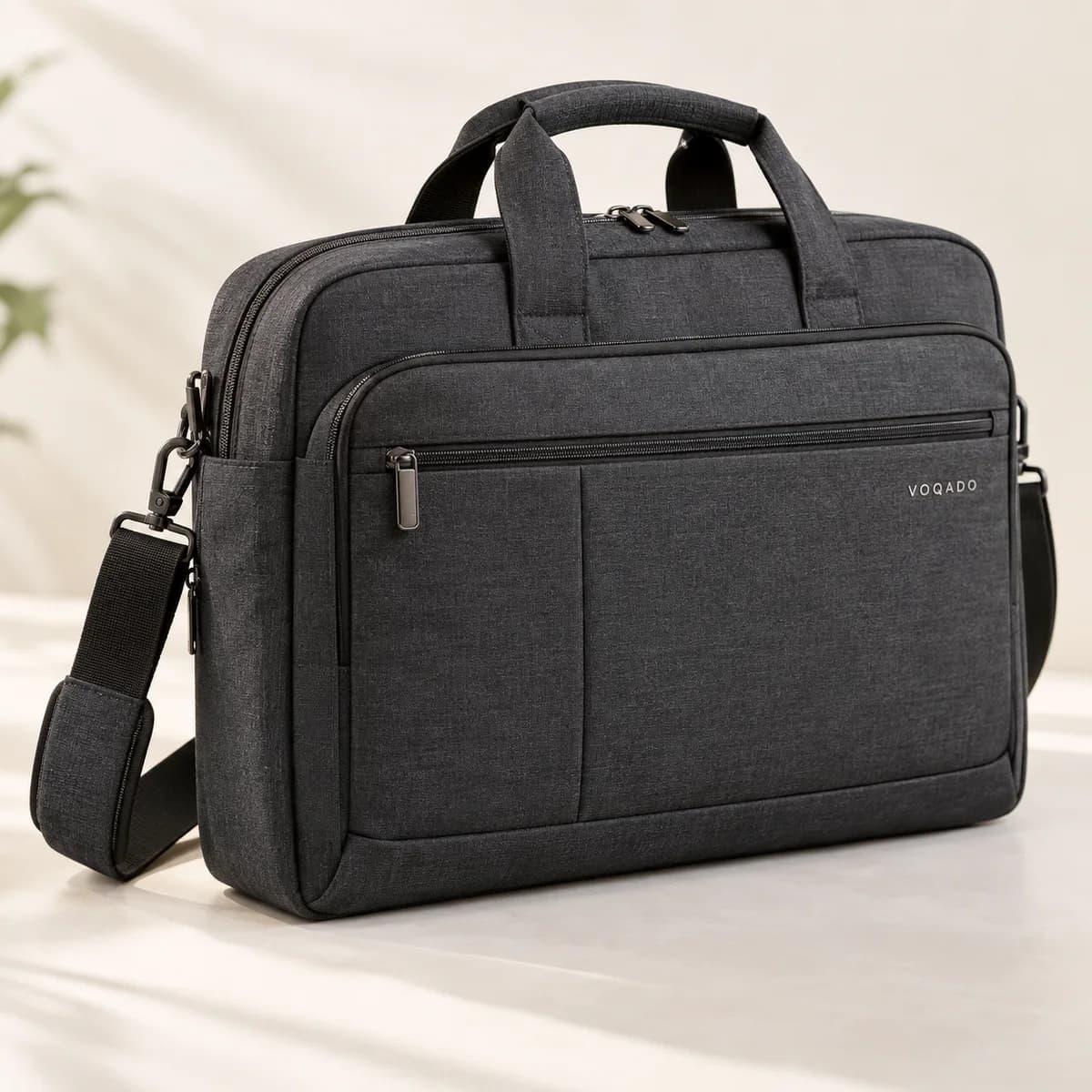
In this range that maps directly. Cooler bags use a 420D polyester exterior. Laptop bags use 600D polyester made from recycled polyester. Waist packs use 600D polyester.
What denier does and does not predict
It predicts abrasion resistance reasonably well. A higher denier bag dragged along a pavement or crammed under a seat survives longer. It predicts stiffness and hand feel: higher denier fabrics feel more substantial and hold a shape.
It does not predict waterproofness, which comes from a coating or a laminate, not from yarn thickness. It does not predict tear strength on its own, which is measured by fabric tests such as the grab test in ASTM D5034. And it does not predict weight in the sense a canvas buyer means, which is mass per unit area measured by ASTM D3776.
So when you compare two bags, read three numbers if you can get them: denier for the yarn, a fabric weight, and any coating. One number alone is marketing.
What RPET adds
RPET is recycled polyester, made from post consumer plastic, most often bottles. Mechanically it behaves much like virgin polyester at the same denier, which is why it has become the default for promotional bags where a recycled content claim matters.
In this catalogue the recycled content is stated with some precision. Backpacks have a 100 percent recycled plastic shell. Laptop bags are 600D polyester made from recycled polyester. Messenger bags and briefcases are 55 percent recycled PU leather with 45 percent RPET. Travel and gym bags are 55 percent recycled cotton with 45 percent polyester.
That level of detail is exactly what an environmental claim needs. The FTC Green Guides cover general principles for environmental marketing claims, how consumers are likely to interpret particular claims, and how marketers can qualify claims so they are not deceptive. A stated percentage applied to a stated component is defensible; the word eco on its own is not.
PEVA, foam and what insulation is
Insulated bags add layers behind the denier. The cooler bag here is a 420D polyester exterior over a PEVA interior with 12 mm of foam insulation, water resistant, holding 24 cans, with a nylon zipper closure.
Three things follow. The bag is heavier than its exterior fabric suggests, at 4 lbs empty. The interior is a wipe clean liner rather than a fabric, which is what makes it usable with ice. And the panel is multi layer, which limits both the decoration area and the method, because foam compresses unevenly under a press platen.
If you are ordering insulated bags for food, note that the liner keeping food cold and a material approved for direct food contact are different questions. The FDA regulates substances that come into contact with food, and each food contact substance used to produce a food contact article has to be authorized through one of several routes. Confirm the food contact specification for the actual product rather than assuming it from the category.
Coatings, zips and the parts that leak
Water gets into a bag through the seams and the zip long before it gets through the fabric. That is why the messenger bags and briefcases here specify waterproof zippers, and why the cooler bag is described as water resistant rather than waterproof.
Read those words carefully. Water resistant means it survives a shower and a spill. Waterproof, applied to a whole bag rather than to a component, is a much bigger claim that requires sealed seams and a closure to match. If the bag has to protect a laptop in real rain, say so and confirm the specification.
Choosing a denier
- Light promotional bag, one or two uses a week: 300D is enough.
- Sports or cooler bag, knocked about outdoors: 420D.
- Laptop bag or work bag used daily: 600D.
- Site or tool bag: higher, and expect weight.
Then check the coating, the zip and the panel construction, because those decide whether the bag keeps its contents dry and whether your logo can go where you want it.
Denier and RPET checklist
- Denier is yarn weight in grams per 9000 meters, not fabric weight.
- Higher denier predicts abrasion resistance and stiffness, not waterproofness.
- Ask for denier, a fabric weight and any coating before comparing bags.
- State recycled percentages and what component they apply to.
- Expect insulated multi layer panels to limit decoration area and method.
- Confirm food contact specification for the product rather than the category.
Frequently asked questions
Is 600D polyester better than 420D?
It is thicker yarn, so the fabric is usually more abrasion resistant and stiffer. Whether that is better depends on the job: 420D suits a cooler or sports bag, 600D suits a laptop or work bag used daily. Denier says nothing about the weave density, the coating or how waterproof the finished bag is.
What does the D stand for in 600D?
Denier, a yarn linear density unit equal to the weight in grams of 9000 meters of the yarn. It is measured by standard methods such as ASTM D1907 and is one of the most common units for industrial yarn and thread. Because it describes yarn, it is not a fabric weight or a strength rating.
What is RPET in a bag?
Recycled polyester, usually made from post consumer plastic bottles. It behaves much like virgin polyester at the same denier. In this range, backpacks state a 100 percent recycled plastic shell, laptop bags state 600D polyester made from recycled polyester, and messenger bags and briefcases state 55 percent recycled PU leather with 45 percent RPET.
Is a 600D bag waterproof?
Not because of its denier. Water resistance comes from a coating or laminate, and real waterproofing needs sealed seams and a matching closure. The cooler bag here is described as water resistant, and the messenger bags and briefcases specify waterproof zippers as components. If a bag must protect a laptop in rain, confirm the specification explicitly.
Sources & specification notes
The references below support the relevant technical or product details in this guide. Examples and checklists are not claims of practical testing or universal supplier requirements. Confirm the current specifications for your chosen product before production.
- ASTM D1907/D1907M: Standard Test Method for Linear Density of Yarn (Yarn Number) by the Skein Method ↗
Supports the definition of denier as a yarn linear density expressed in grams per 9000 meters, measured on yarn in package form across the traditional numbering systems.
- ASTM D5034: Standard Test Method for Breaking Strength and Elongation of Textile Fabrics (Grab Test) ↗
Supports the point that fabric breaking strength is a separate measured property from yarn thickness.
- FDA: Packaging and Food Contact Substances (FCS) ↗
Supports the statement that substances used in food contact articles must be authorized through a listed route such as 21 CFR regulation, GRAS status, a threshold of regulation exemption or a food contact notification.
- FTC: Green Guides ↗
Supports the advice to state recycled percentages and the component they apply to rather than making an unqualified environmental claim.