Measure the wrapper, not the mold
A chocolate bar is rarely naked in its box. There is usually a foil or film wrap, sometimes a paper band, sometimes a heat sealed flow wrap with fin seals that stand proud. Every one of those adds thickness, and the fin seal in particular adds width at the ends.
Measure three wrapped bars from an actual production batch and take the largest reading on each dimension. Chocolate molds and hand wrapping both vary, and a box sized on the smallest sample is a box that will not close on a busy day.
- Length: the longest point including any folded wrapper ends.
- Width: across the bar at the widest point, including a fin seal if present.
- Thickness: at the thickest square, not at the scored channels.
- Tolerance: add roughly 1/16 in on each dimension so the bar slides rather than jams.
If the bar will sit in the box with an insert card, a desiccant, or a second bar, measure the stack rather than the single bar.
Temperature changes the fit
Chocolate is one of the few products where the packing room temperature matters to sizing. A bar packed cool and stored warm softens and spreads slightly, and a wrapper that was flat can bloom outward. A box sized with no tolerance in a cool room can bulge in a warm one.
The practical response is the tolerance above plus a real test: pack a few boxes, leave them at the warmest temperature the product will realistically see, and check whether they still close flat. If the glue tab lifts or the tuck bows, size up.
Box styles that suit a bar
A chocolate bar is a thin rectangle, which is a shape most carton styles handle badly. Two work well.
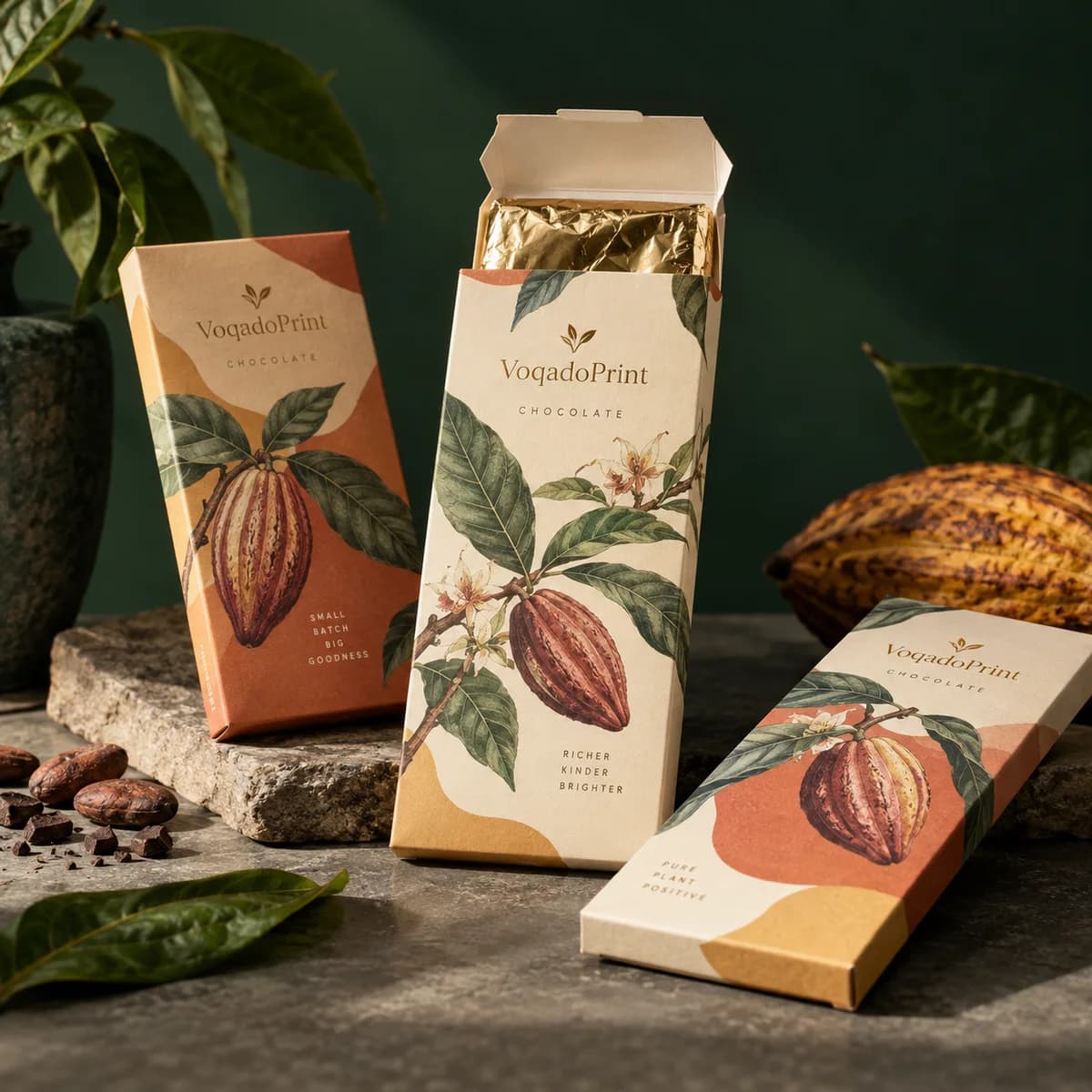
A sleeve style, where the bar slides through an open ended printed tube, gives a premium feel, uses less board and lets the foil show at the ends. It is fast to pack and hard to reseal, so consider a sticker seal if tamper evidence matters.
A fully enclosed carton with tuck ends protects the bar better, keeps light off it and gives you two more printable panels for the required information. It costs more board and takes a moment longer to pack.
The catalog chocolate bar boxes come in two box types across five sizes, in 19 pt coated white paperboard with matte, gloss or soft touch lamination and full color outside printing. The stated sizes are interior dimensions, which is why measuring the wrapped bar is the whole job.
Finish, and why soft touch is common here
Chocolate is bought partly by hand. Soft touch lamination gives a velvety surface that reads as premium the moment someone picks it up, which is why so much craft chocolate uses it. Matte suits an understated, ingredient led brand. Gloss makes photography and saturated color sing, and it is the most forgiving of handling marks.
The tradeoff is fingerprints and scuffing. Soft touch shows oil from hands more than gloss does, and it scuffs where boxes rub in a shipper. If your bars travel in bulk cartons rather than individually, consider matte or gloss, or specify a separator.
Lamination also stiffens the board slightly, so a fully laminated soft touch carton can feel tighter on the bar than an unlaminated sample did. Test the finish you will actually buy.
What has to go on the box
Chocolate sold in the United States is a food, so the label has to carry the information required for packaged food, including the statement of identity, net quantity, ingredient list, allergen information and the name and place of business of the manufacturer, packer or distributor. Requirements change and vary by category, so check the current rules for your product before printing rather than copying another brand's panel.
Plan that content on the back and side panels before you finalise the front. Ingredient lists for chocolate with inclusions get long, allergen statements are mandatory, and a barcode needs a flat, quiet area. The guide to product label design covers building a hierarchy that fits.
Set it up on the dieline
A carton is folded and assembled from a flat blank, and a rectangle cannot show which panel is which, where the folds and glue tabs fall, or which faces end up inside. Nothing on a design canvas is a cut, fold or crease line. Ask us for this product's dieline and lay your artwork out on it, then send print ready artwork on that file so our team can check the panels with you before production.
Two specifics for bars. First, the front panel on a bar box is long and narrow, so a logo designed for a square looks lost on it; design for the proportion you actually have. Second, on a sleeve style there is no back panel, so all required information has to fit on the remaining faces, and that constraint should shape the design from the first sketch.
Sizing checklist
- Measure three wrapped bars from a real batch and take the largest reading.
- Include fin seals and folded wrapper ends in the width and length.
- Add about 1/16 in on each dimension as insertion tolerance.
- Test closure at the warmest temperature the product will see.
- Choose sleeve for feel and speed, enclosed carton for protection and panel space.
- Match lamination to how the bars will travel, not only to how they look.
- Plan required food information before finalising the front panel.
- Order the single custom sample and pack a real bar in it.
Frequently asked questions
What size box do I need for a chocolate bar?
Measure the wrapped bar at its longest, widest and thickest points and add about 1/16 in on each dimension, then choose the nearest interior size. A common molded bar at 5.5 x 2.5 x 0.4 in wrapped usually needs an interior near 5.6 x 2.6 x 0.5 in.
Should I measure the bar or the wrapper?
The wrapper. Foil, film and paper bands all add thickness, and a flow wrap fin seal adds width at the ends. Measure three wrapped bars from a real production batch and size on the largest reading, not the average.
Is a sleeve or a full carton better for chocolate?
A sleeve uses less board, packs faster and lets the foil show, which many craft brands prefer. A full carton with tuck ends protects the bar from light and handling and gives you extra panels for ingredients, allergens and a barcode.
Which lamination is best for a chocolate bar box?
Soft touch feels premium in the hand and is popular for craft chocolate, but it shows finger oils and scuffs in transit. Matte suits understated ingredient led branding, and gloss is the most forgiving of handling while making color and photography vivid.
Sources & specification notes
The references below support the relevant technical or product details in this guide. Examples and checklists are not claims of practical testing or universal supplier requirements. Confirm the current specifications for your chosen product before production.
- U.S. Food and Drug Administration: Food Labeling Guide ↗
Federal guidance on the information required on packaged food labels in the United States, including identity, net quantity, ingredients and allergens.
- FEFCO: the code developed by FEFCO and adopted by ICCA ↗
International code for naming sleeve and carton constructions when specifying a style with a supplier.