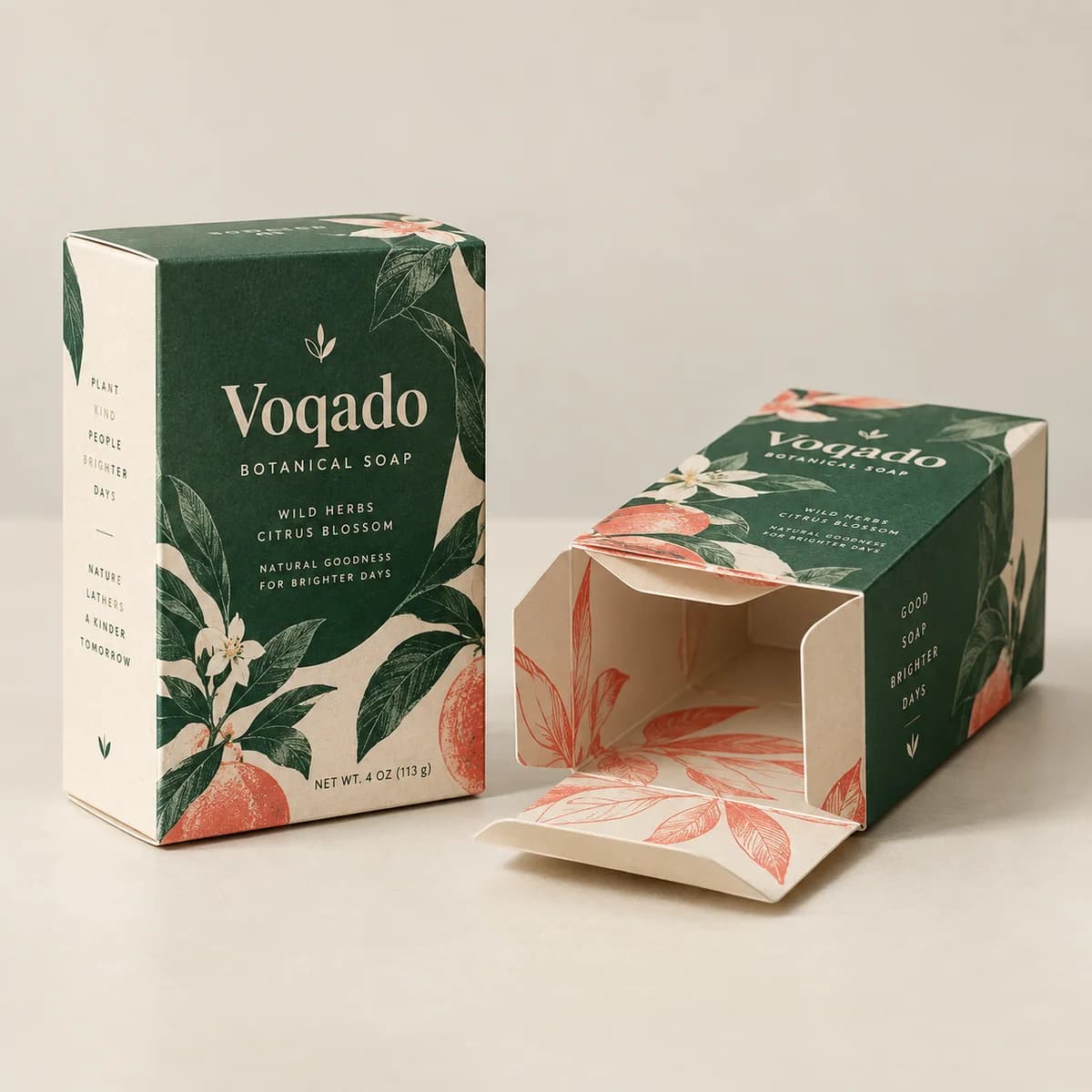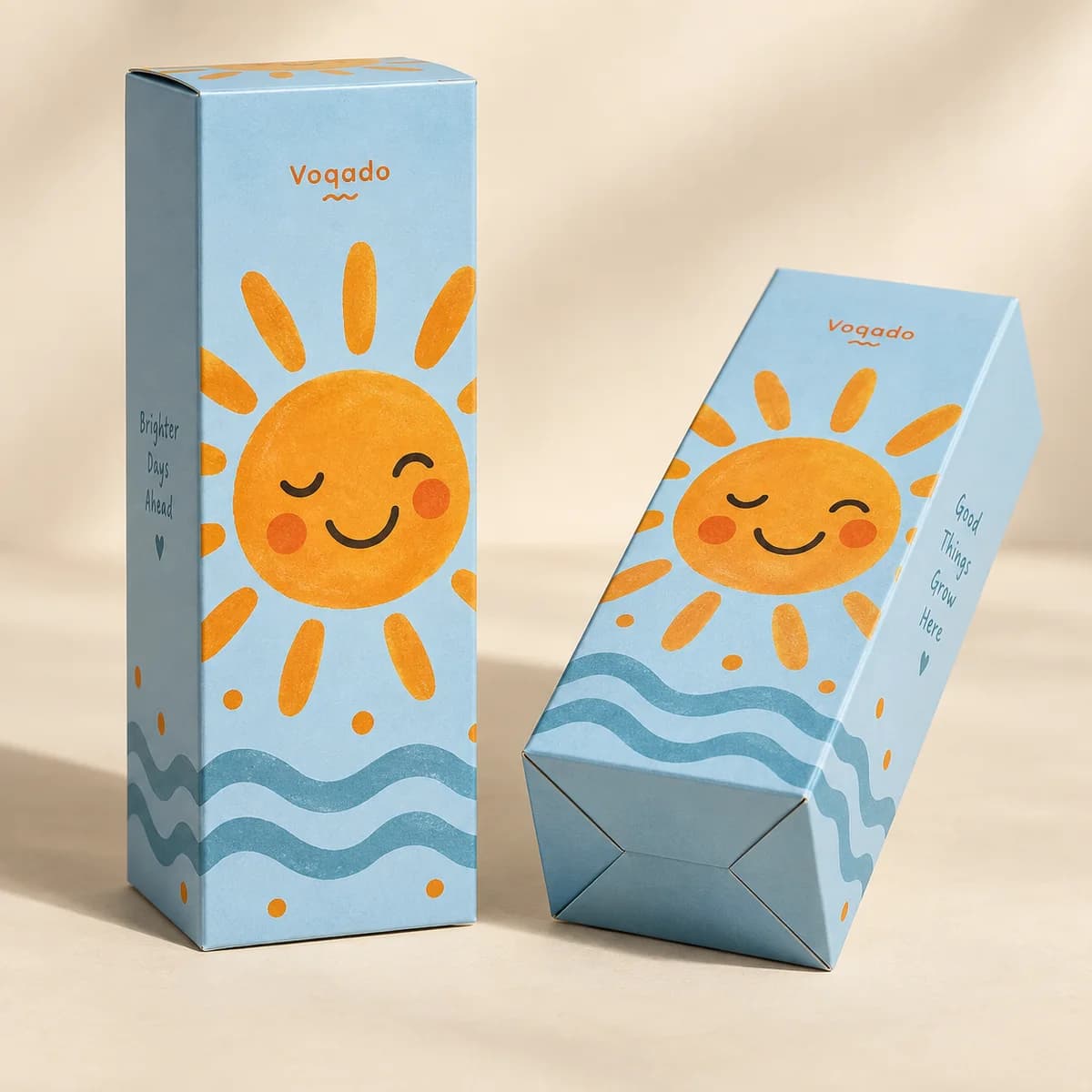
How each base works
A lock bottom, sometimes called a snap lock or a 1 2 3 bottom, has four flaps cut so that each one holds the next. You fold them in sequence and the last one tucks under the first. Nothing is glued at the base; the geometry holds it. It is strong, and it uses less board than a glued alternative.
An auto lock bottom, also called a crash lock, has some of those flaps pre glued at the converter so the base is already partly assembled in the flat blank. Push the two side creases together and the base swings into place and locks itself. The packer never touches the bottom.
| Factor | Lock bottom | Auto lock bottom |
|---|---|---|
| Assembly | Fold four flaps by hand | Squeeze and it opens |
| Seconds per box | Several | Around one |
| Base strength | Strong, holds heavier goods | Strong, slightly less board free |
| Unit cost | Lower | Higher, because of the gluing step |
| Flat pack storage | Yes | Yes |
| Best for | Lower volume, heavier items | Higher volume, repeat packing |
The arithmetic that decides it
The honest way to choose is to time it. Have someone assemble twenty of each and take an average. Then multiply the difference by your monthly order count and compare with the difference in unit price.
If a lock bottom takes six seconds to assemble and an auto lock takes one, that is five seconds per order. At 500 orders a month that is about 42 minutes of labor. If the auto lock bottom costs meaningfully more per box, five seconds may not be worth it. At 5,000 orders a month it is seven hours, and the answer usually flips.
The second factor is who packs. A trained packer folding the same box all day gets fast at a lock bottom. A founder packing between other work, or a rotating team of seasonal helpers, does not. Auto lock bottom removes a step that gets done wrong when people are rushing, and a base folded in the wrong sequence is a base that opens in transit.
Where each construction fits
Use a lock bottom when the product is heavy for its size, such as glass, ceramics, hardware or dense food, and when volume is modest. The interlocking flaps give a base that resists a downward load well, and the lower unit price matters more when you are not packing thousands.
Use an auto lock bottom when you pack often and quickly, and when the base is load bearing but not extreme. Subscription products, cosmetics, supplements and anything filled on a repeating cycle are the natural fit.
Use neither if the product is light and the box is small. A reverse tuck box is cheaper again and perfectly adequate for a lipstick, a tea sachet or a card. Tuck bottoms are only a problem when weight pushes on them.
Coating, lamination and the base
All three constructions here are 19 pt coated white paperboard with a choice of matte, gloss or soft touch lamination and full color exterior printing. Lamination changes how the base behaves.
A heavy lamination stiffens the board, which makes a lock bottom slightly harder to fold and an auto lock bottom slightly more resistant to popping open. It also matters where glue meets board. On the auto lock, the pre glued areas need a clean bonding surface, so keep ink, varnish and lamination off any area the dieline marks as glue. Closure and reinforcement methods are standardized precisely because the bonded surface determines how the closure performs in distribution.
Soft touch in particular rewards a check. Ask for a single custom sample, assemble it, fill it with the real product and leave it standing for a day before committing to a run.
Sizing to the product
Measure the product and specify interior dimensions. The catalog sizes for these boxes are interior dimensions, which is the number that matters when you want the product to fit but not rattle. Measure width, depth and height of the product at its largest point, add a small allowance for any wrap or sleeve, and choose the nearest size.
Do not size to the outside of the product and then hope. A carton 1/8 in too small will not close, and a carton 1/2 in too big lets the product slide, which is what turns a sealed carton into a rattling one.
Design it on the dieline
These boxes are folded and assembled from a flat blank, so a rectangle cannot show which panel is which, where the folds and glue tabs fall, or which faces end up inside. Nothing on a design canvas is a cut, fold or crease line. Ask us for this product's dieline, lay your artwork out on it, and send print ready artwork on that dieline so our team can check the panels with you before production.
On a lock bottom in particular, the base flaps are an odd interlocking shape on the blank, and artwork that runs across them looks broken when the box is flat. It does not matter once assembled, but it is worth knowing before you see the press proof.
Choosing checklist
- Time twenty of each construction with your own packers.
- Multiply the time difference by monthly volume and compare it with the price difference.
- Choose lock bottom for heavier goods at lower volume.
- Choose auto lock bottom for repeat packing and rotating staff.
- Use a simple reverse tuck when the product is light and small.
- Keep ink and lamination off every marked glue area.
- Order a single sample, fill it and leave it standing before the full run.
- Specify interior dimensions taken from the product itself.
Frequently asked questions
What is an auto lock bottom box?
A paperboard carton whose base flaps are pre glued at the converter, so squeezing the flat blank makes the bottom swing into a locked position ready to fill. It removes the assembly step entirely, which is why it suits high volume repeat packing.
Is a lock bottom box stronger than a tuck bottom?
Yes, for downward load. The interlocking flaps of a lock bottom distribute weight across the base, while a tuck bottom relies on one flap held by friction. Use a lock bottom or auto lock bottom when the product is heavy for its size.
Is an auto lock bottom worth the extra cost?
It depends on volume and who packs. Time twenty boxes of each style, multiply the difference by monthly orders, and compare with the price difference. At low volume the saving rarely covers it; at high volume, or with rotating seasonal staff, it usually does.
Do lock bottom boxes come flat?
Yes. Both lock bottom and auto lock bottom cartons ship flat packed, which keeps storage and inbound freight low. The difference is only how much assembly happens at your packing table.
Sources & specification notes
The references below support the relevant technical or product details in this guide. Examples and checklists are not claims of practical testing or universal supplier requirements. Confirm the current specifications for your chosen product before production.
- ASTM D1974/D1974M: Methods of Closing, Sealing, and Reinforcing Fiberboard Boxes ↗
Standard practice for box closing and sealing methods, cited for the principle that closure performance depends on the bonded surface.
- FEFCO: the code developed by FEFCO and adopted by ICCA ↗
International code naming box constructions, including the folder and tray series used to specify bottom styles precisely.