What the flute actually does
The waves are structural arches. They hold the two liners apart, which is what gives corrugated board its stiffness for its weight, and they create air gaps that absorb shock and insulate a little. Taller flutes mean more cushioning and more stacking strength. Shorter flutes mean a flatter, smoother printing surface and a thinner, lighter box.
That is the whole tradeoff. Every flute decision is a trade between print quality and thinness on one side, and cushioning and compression strength on the other.
| Flute | Approximate thickness | Strength | Print surface | Typical use |
|---|---|---|---|---|
| F | Under 1/16 in | Lowest | Excellent | Small retail packs, food boxes |
| E | About 1/16 in | Low to moderate | Very good | Mailer boxes, coffee sleeves, retail |
| B | About 1/8 in | Moderate | Good | Tuck top boxes, pizza boxes, gable boxes |
| C | About 3/16 in | High | Fair | Shipping cartons, bulk, palletized goods |
| BC double wall | About 5/16 in | Highest | Fair | Heavy, fragile or long haul freight |
Those thickness figures are the industry convention and vary slightly between mills. Take the exact caliper from the product specification, because it changes the dieline and therefore the finished dimensions.
How flute affects print
Print quality falls as flute height rises. On a taller flute the liner sags very slightly between the glue lines, which shows up as faint vertical banding across a solid area. The effect is called washboarding, and it is most visible in large flat blocks of color and in fine reversed out type.
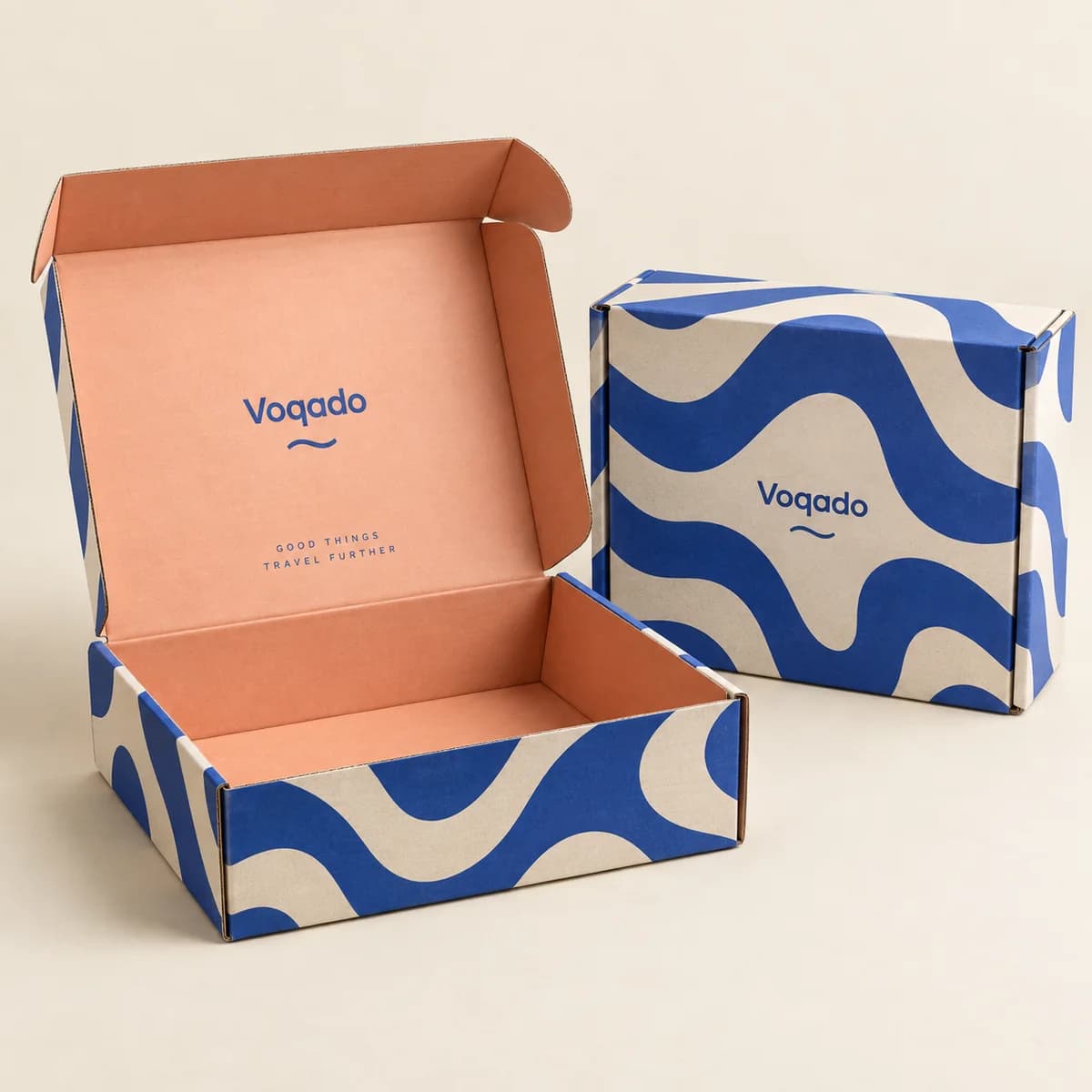
E and F flute are thin enough that washboarding is minimal, which is why they are the choice when a corrugated pack has to look like a retail carton. Mailer boxes here use 1/16 in white E flute at a 32 ECT rating and can be printed inside, outside or both.
If you must run full coverage color on B or C flute, design for it. Avoid huge flat panels of a single dark color, break large areas with texture or pattern, and keep reversed out text larger and bolder than you would on paperboard.
How flute affects strength
Stacking strength is measured with the edge crush test, which compresses a short column of board on edge, parallel to the flutes, and reports a value in pounds per lineal inch. Research relates that edgewise compressive strength, combined with board stiffness and box dimensions, to the top to bottom compressive strength of the finished container.
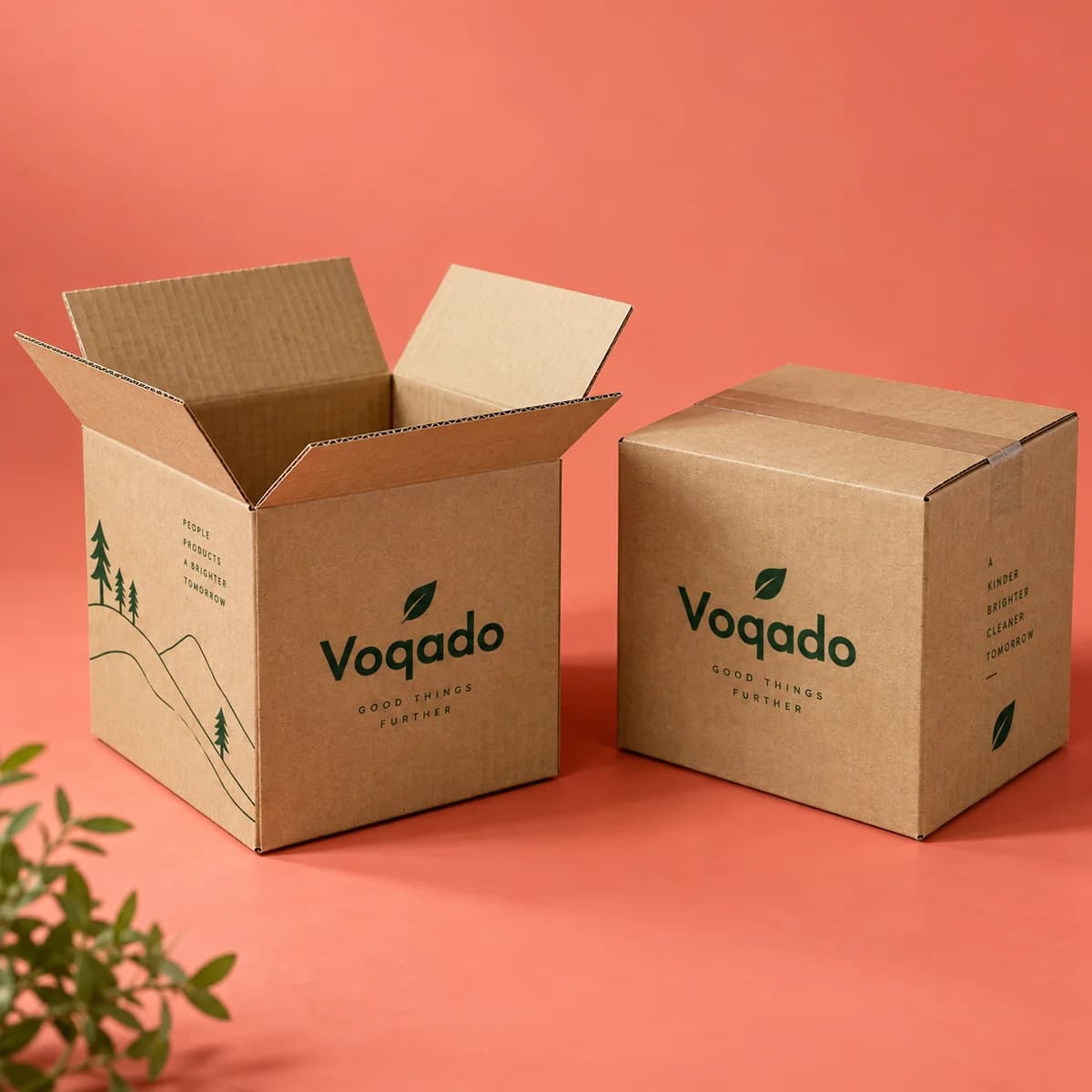
That is why a spec reads as something like 32 ECT rather than as a paper weight. Both the E flute mailer boxes and the C flute shipping boxes here are rated 32 ECT, but they get there differently, and the thicker C flute board gives more stiffness and more cushioning for the same rating.
For practical purposes: if boxes will be stacked on a pallet, in a warehouse or inside a larger carton, ask about the ECT rating and the stack height. If boxes travel one at a time through a parcel network, cushioning and puncture resistance matter more than stacking figures.
Choosing a flute by job
- Single item ecommerce order, light, opened by a customer: E flute mailer box.
- Small retail pack that sits on a shelf and must look premium: F or E flute, or coated paperboard instead.
- Food takeaway that must resist grease and crushing: B flute, as used in pizza boxes and gable boxes.
- Heavier single item that still opens without tape: B flute tuck top box.
- Bulk order, wholesale or palletized: C flute shipping box.
- Heavy, fragile or long haul: double wall, specified with your supplier.
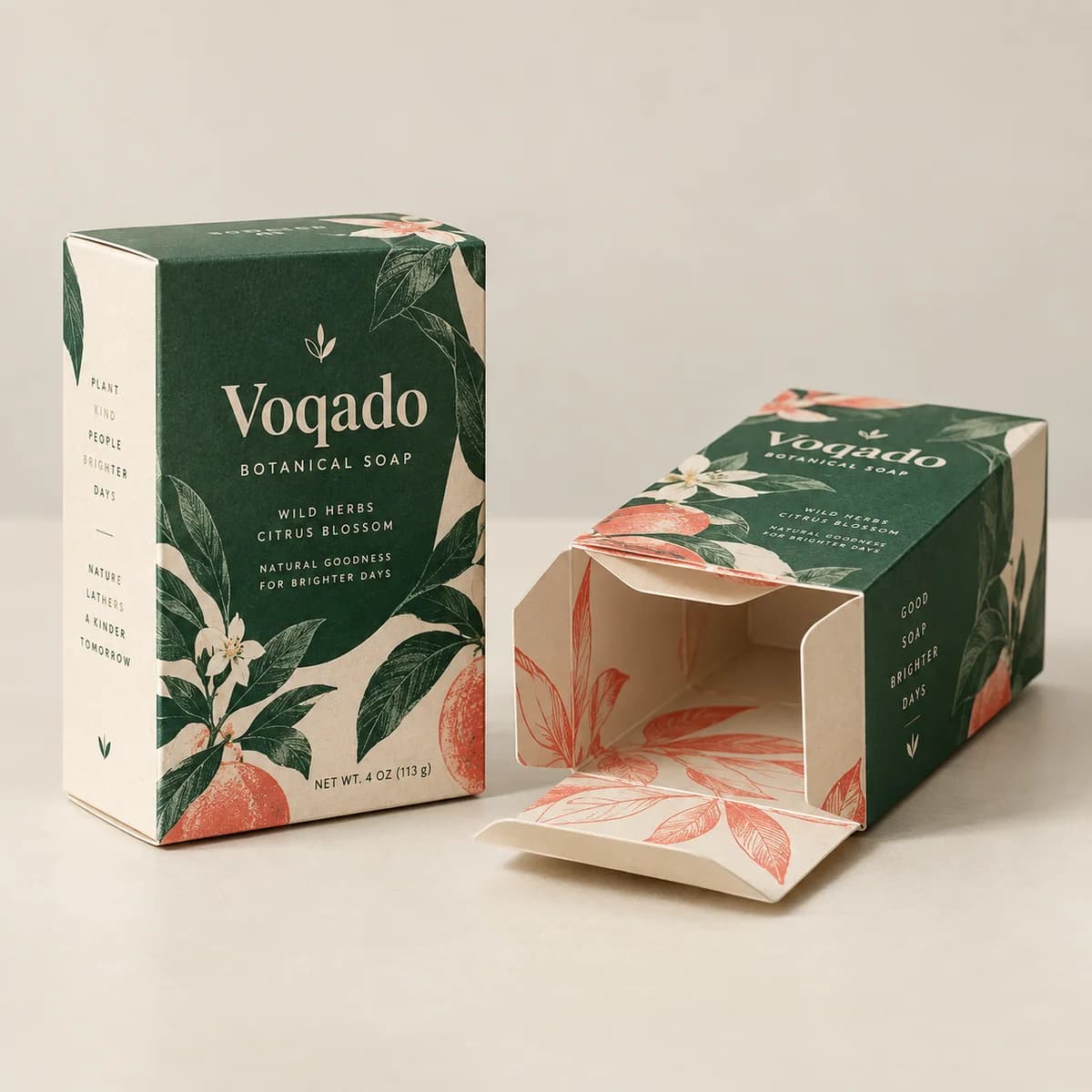
When a package is under about 8 in on its longest side, paperboard cartons often beat corrugated entirely: a 19 pt coated white paperboard reverse tuck or lock bottom box prints better and costs less, and the product inside is protected by an outer shipper anyway.
Flute direction matters too
Flutes run in one direction across a sheet, and they are strongest in compression when they run vertically in the finished box, because that is when the arches stand as columns. A dieline is laid out with flute direction in mind, which is another reason to work on the supplied drawing rather than on a rectangle. It is also why a box scored across the flutes folds crisply while one scored along them can crack the liner.
If you are specifying a nonstandard construction, state the flute direction alongside the flute letter. If you are ordering a catalog product, it is already set.
Flute selection checklist
- Decide first whether print quality or stacking strength leads this package.
- Use E or F flute when the corrugated surface has to look like retail packaging.
- Use B flute for food and for heavier items that still open without tape.
- Use C flute or double wall for bulk, stacking and freight.
- Ask for the ECT rating whenever boxes will be stacked.
- Avoid huge flat areas of dark color on B and C flute.
- Take the exact caliper from the product specification, because it changes the dieline.
Frequently asked questions
What is the difference between E flute and B flute?
E flute is about 1/16 in thick with a smooth surface that prints well, which suits mailer boxes and retail packs. B flute is about 1/8 in, roughly twice as thick, with more cushioning and more crush resistance, which suits food boxes and heavier tuck top packaging.
Which corrugated flute is strongest?
Among common single wall flutes, C flute carries the most compression at about 3/16 in thick, and double wall constructions such as BC are stronger again. Strength in practice is specified by an ECT value rather than by the flute letter alone.
What does 32 ECT mean?
ECT is the edge crush test, which compresses a short column of corrugated board on edge parallel to the flutes and reports the peak load in pounds per lineal inch. A 32 ECT board withstood 32 pounds per lineal inch, and that value relates to how much stacking load the finished box can carry.
Which flute is best for printed mailer boxes?
E flute. At about 1/16 in it gives a flat enough surface for crisp logos and fine type with minimal washboarding, while staying rigid enough for a parcel network. F flute is thinner still and suits small retail packs that need an almost paperboard finish.
Sources & specification notes
The references below support the relevant technical or product details in this guide. Examples and checklists are not claims of practical testing or universal supplier requirements. Confirm the current specifications for your chosen product before production.
- TAPPI T 811: Edgewise compressive strength of corrugated fiberboard ↗
Defines the short column edge crush test for single, double and triple wall board and its relation to container compressive strength.
- FEFCO: the code developed by FEFCO and adopted by ICCA ↗
The international system for naming corrugated box constructions, used when specifying a style alongside a flute.