The practical differences
| Factor | Mailer box | Shipping box |
|---|---|---|
| Board | Thin E flute, about 1/16 in | Thicker C flute, about 3/16 in |
| Closure | Front tuck, no tape needed | Taped top and bottom |
| Inside, outside or both | Exterior print areas | |
| Opening | One motion, presentation surface | Cut or peel the tape |
| Best for | Single and small multi item orders | Bulk, heavy and wholesale orders |
| Storage | Flat packed | Flat packed |
Both arrive flat and assemble by hand, and both are widely recyclable corrugated. The differences that matter in practice are board thickness, how the box closes, and whether the interior is a design surface or a void to be filled.
When the mailer box is the right call
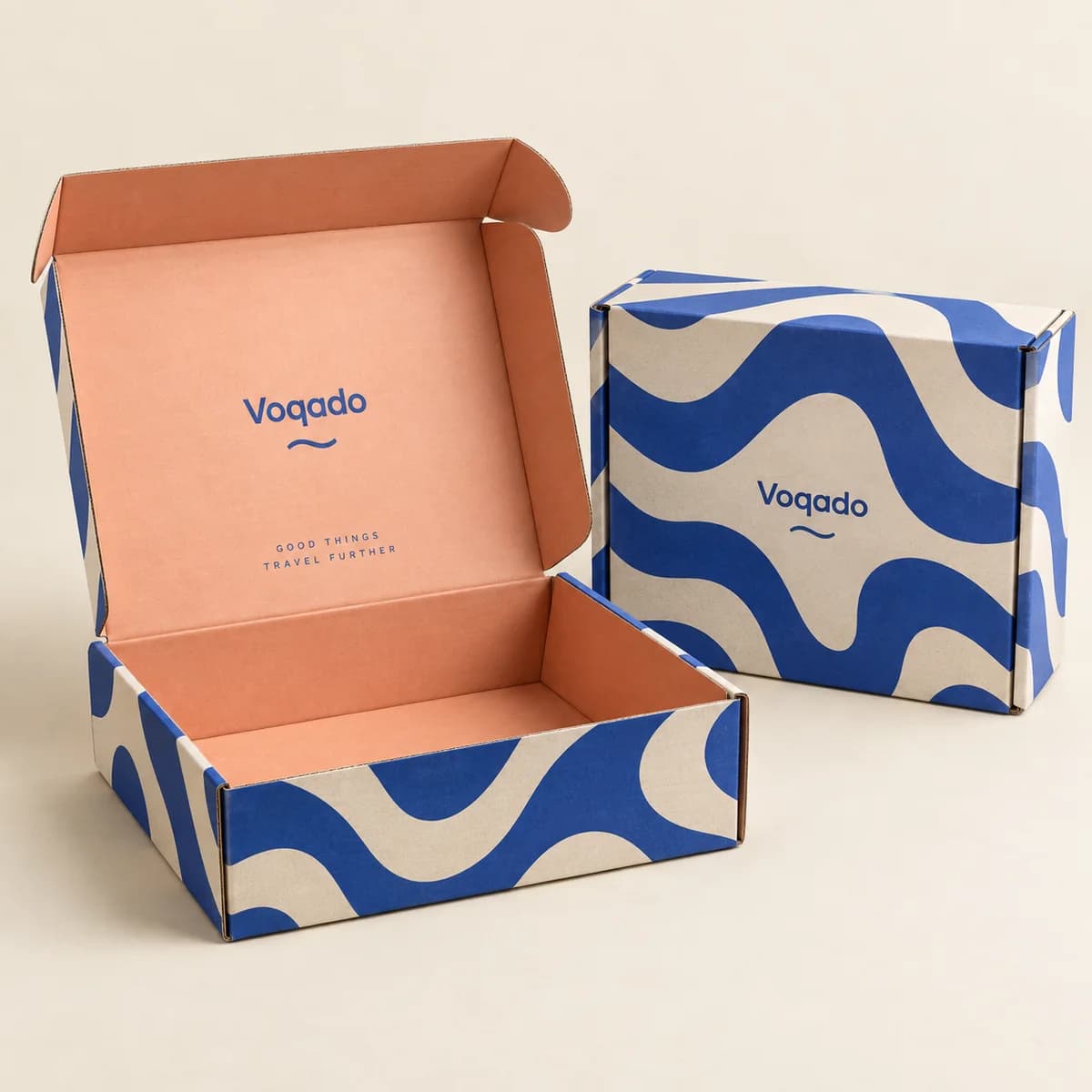
A mailer box earns its cost when a person opens it and the moment matters. Direct to consumer orders, gifts, subscription boxes, launch drops and anything likely to be photographed all benefit from a tuck closure that opens cleanly in one motion and reveals a printed inside panel.
The thinner E flute board is the reason the print looks good. A thin flute gives a flatter surface with less washboarding, so logos and fine type hold up. At a 32 ECT rating the board is still crush resistant enough to survive a normal parcel network, which is why E flute dominates ecommerce mailers.
The practical limits are size and weight. Mailer boxes suit small to mid sized items. Once the contents are heavy or the box gets large, the thin board flexes and the tuck closure stops being enough on its own.
When the shipping box is the right call
A shipping box is the answer for volume, weight and stacking. The thicker C flute board at a 32 ECT rating is designed to ship without an outer container, and the extra caliper gives real compression resistance when boxes are stacked on a pallet or in a warehouse.
That compression figure is the point. The edge crush test measures the edgewise compressive strength of corrugated board, and that value, together with board stiffness and the box dimensions, relates directly to how much load a box carries top to bottom. If your boxes will be stacked, the flute and the ECT value are the specification that matters, not the print.
Shipping boxes also let you brand modestly without paying for full coverage. Exterior print areas can be as small as a side panel logo or as large as a side and top design, and the box can be white outside with kraft inside or kraft throughout.
The middle ground
Several constructions sit between the two. A tuck top corrugated box gives a mailer style closure in thicker B flute board, so it handles a heavier or more fragile item while still opening without tape. A gable box adds a carry handle for treats and favors. A kraft mailer with a bottom gusset is neither a box nor a flat envelope: it expands for bulk, seals with a peel and seal strip and stands up on its own.
If you sell one product type, one box style usually covers it. If you sell across weights, expect to run two: a shallow mailer for the common order and a shipping box for the bulk order.
Cost is not just the unit price
Compare four numbers, not one. The unit price of the box, the labor to pack it, the consumables it needs, and the shipping cost of the volume it occupies.
A shipping box is often cheaper per unit but needs tape, sometimes void fill, and more packing seconds. A mailer box costs more per unit and needs neither tape nor, usually, much fill. Over a thousand orders those differences can reverse the ranking.
Then add dimensional weight. Carriers bill on the greater of scale weight and volume divided by a published divisor, so a box that is one size too deep costs you on every single order. The guide to dimensional weight works through the arithmetic.
Whichever you choose, design on the dieline
Both formats are folded and assembled from a flat blank, and a rectangle cannot show which panel is which, where the folds and glue tabs fall, or which faces end up inside. Nothing drawn on a design canvas is a cut, fold or crease line. Ask us for the dieline for the specific style and size you are ordering, lay artwork out on it, and our team will check the panels with you before production.
For a mailer box in particular, work out what the customer sees in what order. The outside as it arrives, the inside of the lid as it opens, the first layer of tissue or a card, then the product. That sequence is a design decision, and it only makes sense on the dieline.
Choosing checklist
- Decide whether a customer opens this box or a warehouse does.
- Match board to the job: thin E flute for print, thicker C flute for stacking.
- Check the ECT rating if boxes will be stacked or palletized.
- Count tape, fill and packing time in the cost, not just the unit price.
- Choose the shallowest size the contents genuinely fit.
- Consider a tuck top corrugated box or a gusseted kraft mailer for the middle cases.
- Request the dieline before any artwork is started.
Frequently asked questions
What is the difference between a mailer box and a shipping box?
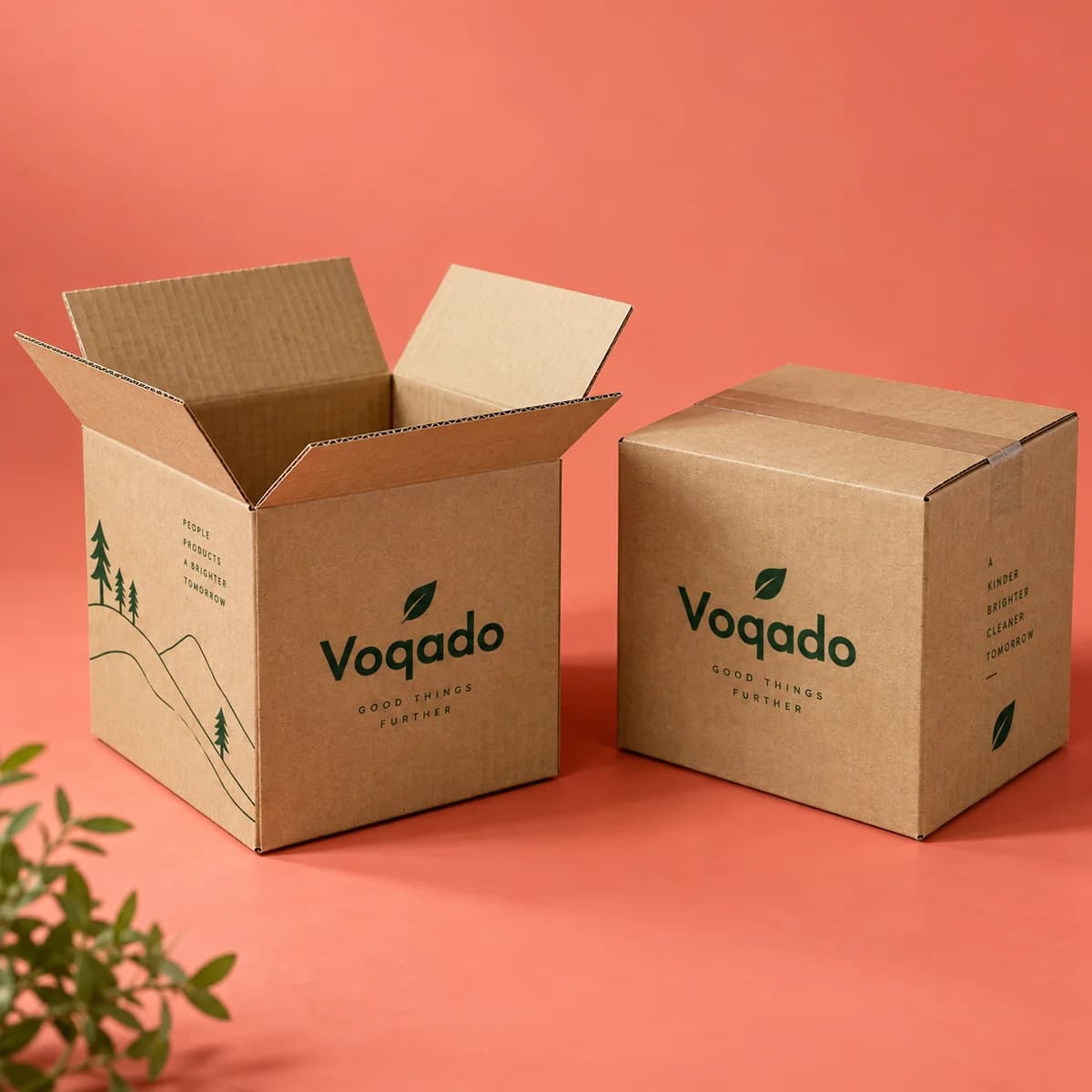
A mailer box is a one piece corrugated box with a front tuck closure, usually in thin E flute, designed to be opened by a customer and printed inside or out. A shipping box is a heavier corrugated carton, typically C flute, taped closed and built to protect and stack.
Do mailer boxes need tape?
Not for the closure itself, because the front tuck holds the lid shut. Many brands add a branded sticker or a belly band as a seal so the box cannot be opened and reclosed unnoticed, which is a presentation and security choice rather than a structural one.
Are mailer boxes strong enough to ship on their own?
For small to mid sized items, yes. These mailer boxes use 1/16 in E flute corrugated at a 32 ECT rating, which is crush resistant for normal parcel handling. For heavy contents, bulk orders or palletized stacking, a thicker C flute shipping box is the right choice.
Which is cheaper, a mailer box or a shipping box?
A shipping box usually has a lower unit price, but it needs tape, often void fill and more packing time. Add those plus the dimensional weight of the volume each box occupies before deciding, because the ranking can reverse over a few hundred orders.
Sources & specification notes
The references below support the relevant technical or product details in this guide. Examples and checklists are not claims of practical testing or universal supplier requirements. Confirm the current specifications for your chosen product before production.
- TAPPI T 811: Edgewise compressive strength of corrugated fiberboard ↗
Defines the edge crush test behind ECT values and its relationship to top to bottom compressive strength of shipping containers.
- FEFCO: the code developed by FEFCO and adopted by ICCA ↗
The international code naming corrugated constructions, including a series added for retail and ecommerce styles.