Match the gift to the moment
Thank you gifts are usually sent for one of four reasons, and each has a natural weight.
| Occasion | What it is thanking | A proportionate gift |
|---|---|---|
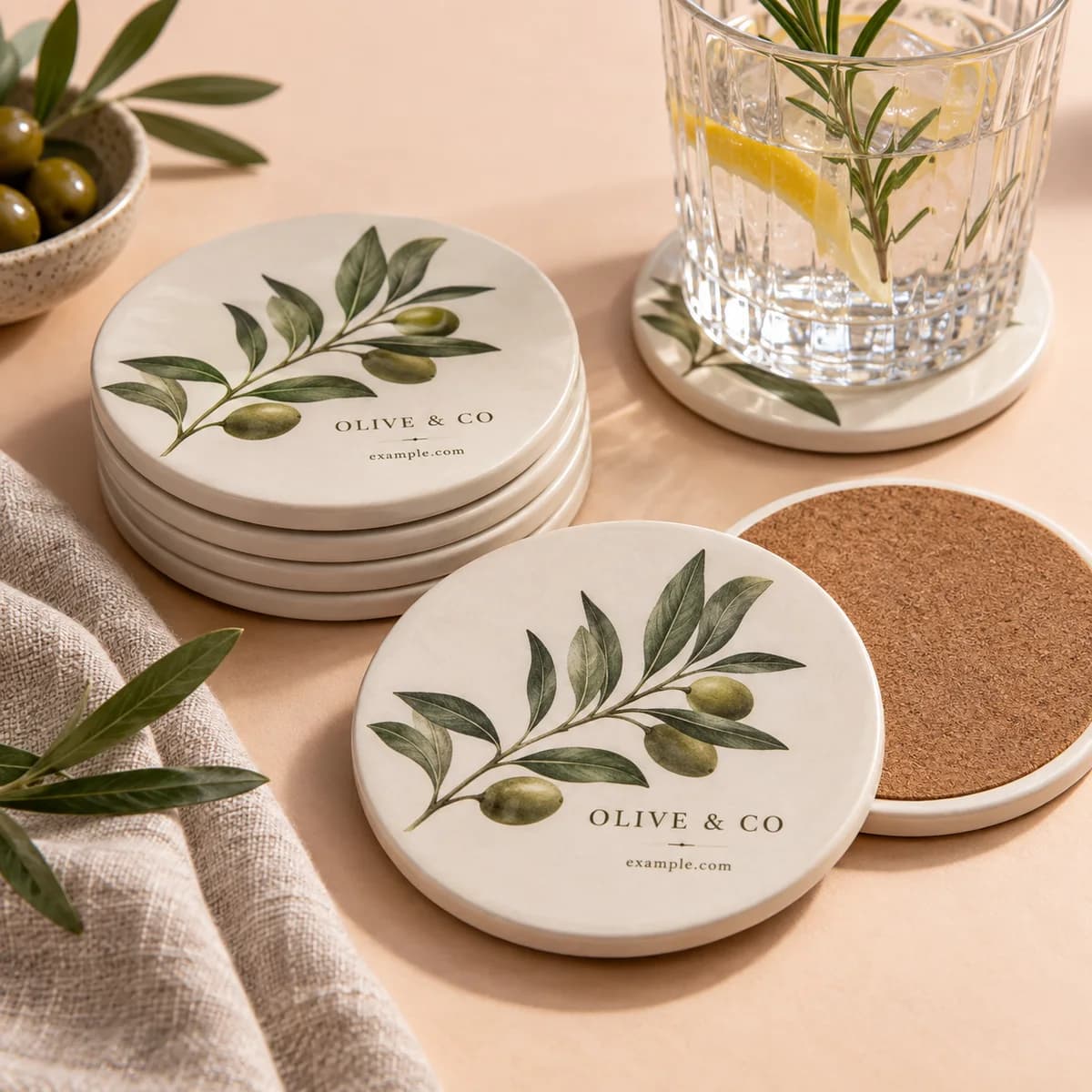
| First project completed | Choosing you | A set of ceramic coasters or a note card |
| Referral or introduction | Personal risk on your behalf | An acrylic photo block or a framed print of something relevant |
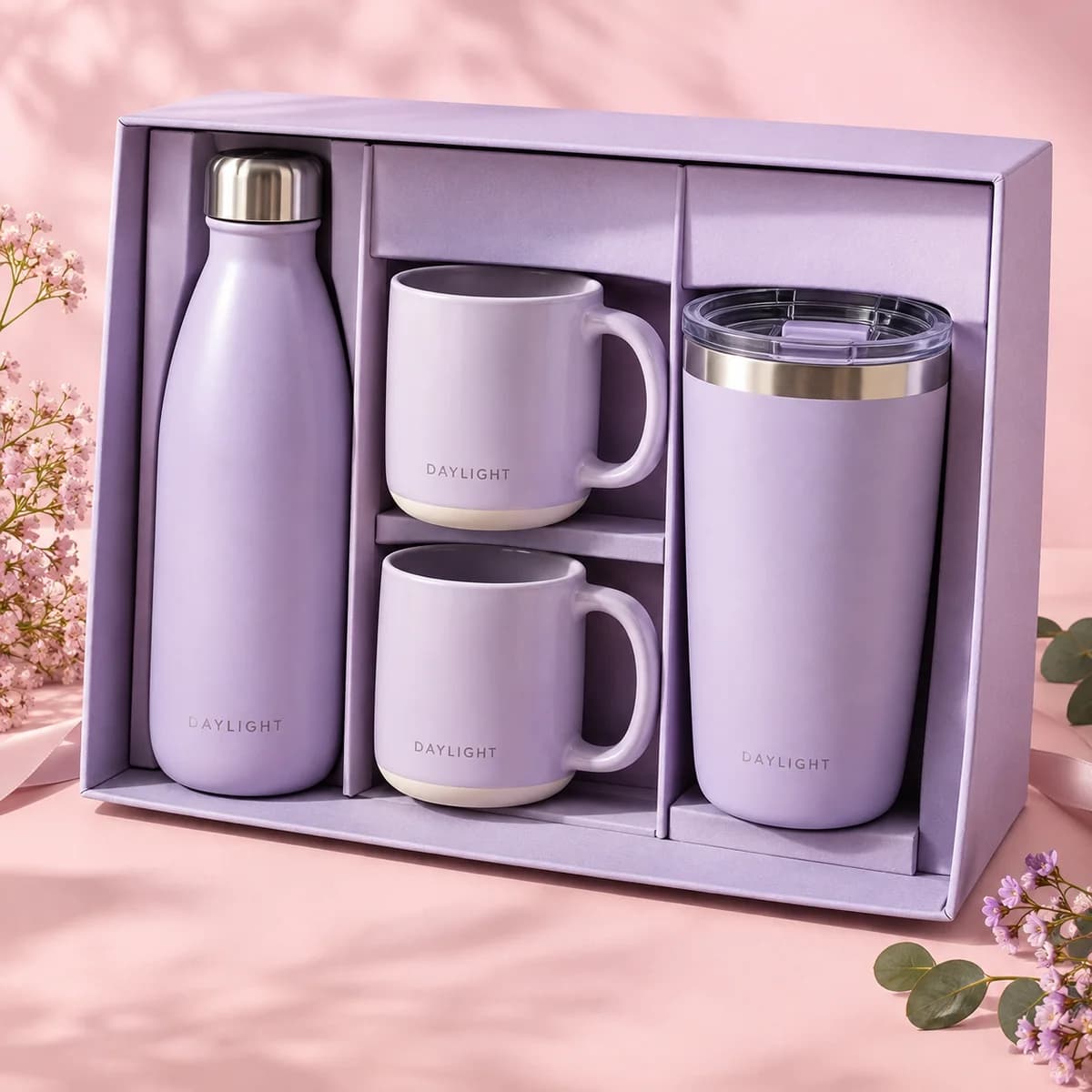
| Contract renewal | Continued trust | Drinkware gift set, boxed |
| Long relationship milestone | Years of work together | Something personal, not branded at all |
The last row is the one people get wrong. At a certain point a branded object becomes less appropriate than an unbranded one, because the relationship is no longer the thing that needs advertising.
Keep your branding quiet
A thank you gift with a large logo on it is marketing wearing a thank you as a costume, and recipients notice.
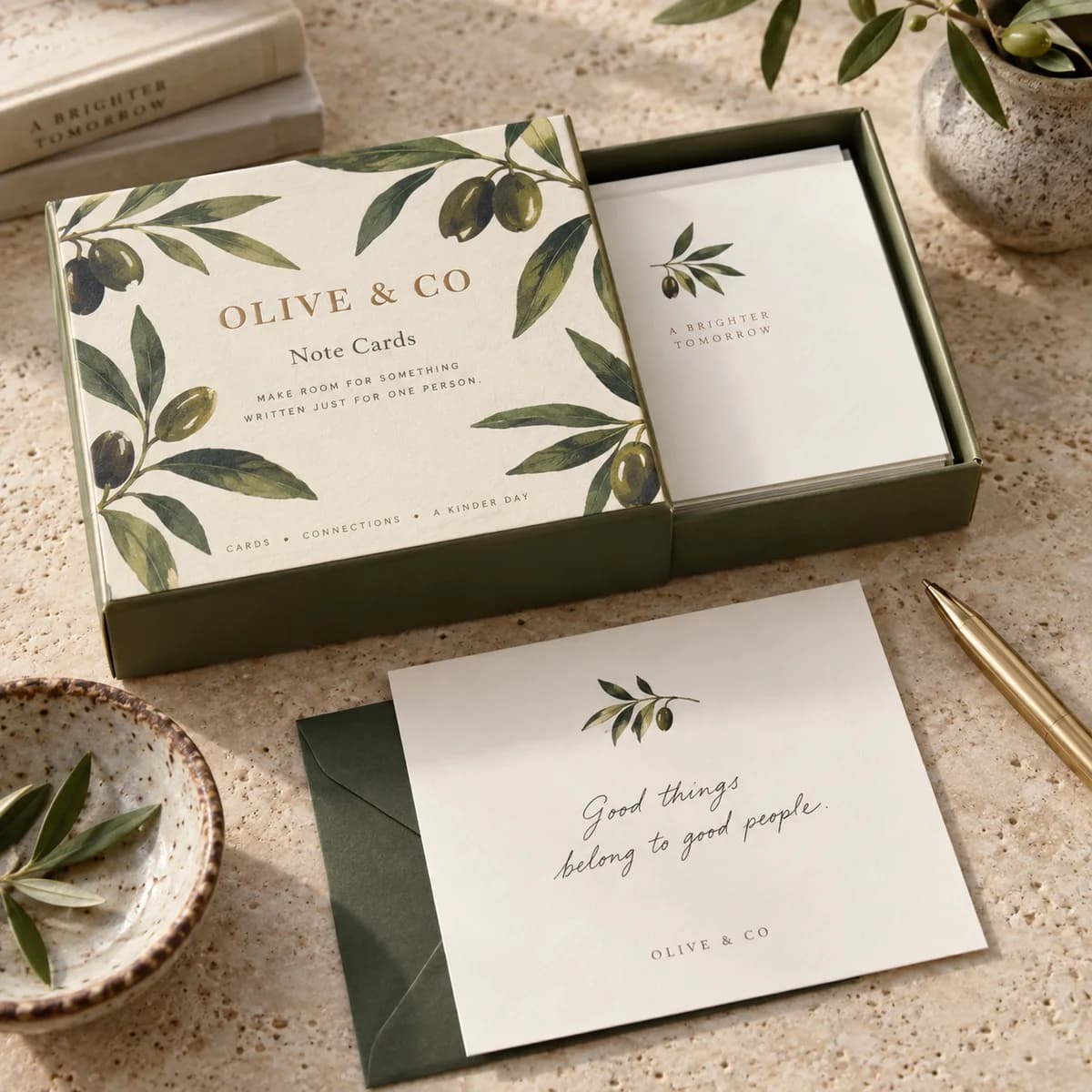
The better structure puts your identity on the card and the packaging, not on the object. A boxed gift, a printed belly band, a note card with your letterhead and a handwritten message: the brand is present throughout, and the object stays the recipient's. Our guide to business thank you cards covers the wording, and our note cards product includes envelopes and offers a writable stock for exactly this.
Where a mark on the object is right, make it small and make it one thing. A monogram etched on a glass is a gift. A logo, tagline and URL printed on a glass is a promotional item.
The tax limit worth knowing
In the United States, business gift deductions are capped. IRS Publication 463 sets a limit of 25 dollars per recipient per tax year for business gifts, with specific rules about incidental costs, promotional items of minimal value and gifts to a spouse of a client.
That figure does not mean you should spend 25 dollars. It means that above it, the extra is not deductible, which is a business decision rather than a rule against generosity. It also means record keeping matters: who received what, when and why. Confirm the current treatment with your accountant, because the detail around branded items of minimal value and entertainment versus gifts changes the answer for specific cases.
Objects that work as thank you gifts
- Ceramic coasters, in a set of four, because they are substantial and order from two units.
- Etched glassware, where a monogram or a date beats a logo.
- Acrylic photo blocks, for a photograph that means something to the recipient.
- Framed prints, where the image is genuinely worth a wall.
- Boxed drinkware gift sets, when the gift needs to feel like an occasion.
- A photo book, for a long project with a visual record.
What generally does not work: anything with an event date, anything that only makes sense inside your industry, and anything the recipient has to assemble or install.
The card does the work
The object is the vehicle. The message is the gift.
A handwritten note that names the specific thing you are grateful for outperforms any object sent alone. Be concrete: the introduction, the decision, the patience during a difficult phase. Generic gratitude reads as a mail merge even in handwriting.
Use a card stock that takes a pen. Uncoated and matte surfaces accept ink without smudging, which is why our note cards offer writable options and include envelopes. Coated gloss fights a fountain pen.
Care advice makes a gift feel considered
One small touch raises perceived value at no cost: tell the recipient how to keep the thing.
For a printed keepsake, the Library of Congress guidance on the care of works on paper recommends minimal exposure to all kinds of light and no exposure to direct or intense light. A line suggesting a spot out of direct sun is credible and useful. For coasters, wipe clean rather than submerge. For drinkware, quote the product's own care line: our ceramic mugs are dishwasher and microwave safe, our etched glassware dishwasher safe, our tumblers hand wash recommended.
Timing and logistics
Send the gift close to the thing you are thanking them for. A gift three months later is a reminder that you took three months.
That means planning the object before the milestone, not after. Assembled and boxed gifts carry extra steps, so keep a small stock of your chosen items and cards rather than ordering reactively, and check the current delivery window on the product page before promising a date.
Client gift checklist
- Match the weight of the gift to the size of the favor.
- Put your brand on the card and the box, not the object.
- Keep any mark on the object to one small element.
- Note the 25 dollar per recipient deduction limit and keep records.
- Write the card by hand and name something specific.
- Choose a stock that takes ink without smudging.
- Include a short care line, and send it while the moment is fresh.
Frequently asked questions
What is a good client thank you gift?
Something proportionate and unbranded or lightly branded. A set of ceramic coasters suits a first completed project, an etched glass with a monogram suits a personal relationship, and a boxed drinkware gift set suits a renewal. Avoid event dates, industry in jokes and anything the recipient has to assemble or hang.
How much can you spend on a business gift?
As much as you like, but IRS Publication 463 limits the deduction for business gifts to 25 dollars per recipient per tax year, with separate rules for incidental costs and promotional items of minimal value. Keep records of who received what and why, and confirm the current treatment with your accountant.
Should a client thank you gift have your logo on it?
Keep it quiet. A large logo turns a thank you into a promotional item, which recipients read immediately. Put your identity on the card and the packaging instead, and if a mark goes on the object make it one small element, such as a monogram etched on a glass rather than a logo with a tagline.
Does the card matter more than the gift?
Usually, yes. A handwritten note that names the specific thing you are grateful for does the emotional work, and the object is the vehicle. Choose a stock that takes ink without smudging, which means uncoated or matte rather than gloss, and add a short care line so the gift stays in good condition.
Sources & specification notes
The references below support the relevant technical or product details in this guide. Examples and checklists are not claims of practical testing or universal supplier requirements. Confirm the current specifications for your chosen product before production.
- Internal Revenue Service: Publication 463, Travel, Gift, and Car Expenses ↗
Sets the 25 dollar per recipient annual limit on deductible business gifts and the related rules on incidental costs and items of minimal value.
- Library of Congress: Care, Handling and Storage of Works on Paper ↗
Preservation guidance recommending minimal light exposure and no direct or intense light, cited for care advice given with printed keepsakes.