Why perceived value is the right target
The reason to care is retention. PPAI research on why consumers take and keep promotional products finds that usefulness and quality are the main reasons branded items are kept rather than discarded, and its companion work on the things people do not throw away reaches the same conclusion. Quality here is largely perceived: nobody tests the alloy, they pick the object up.
A kept item earns impressions for years. A discarded item earns one. That difference is worth more than a few cents of unit cost.
Weight is the cheapest lever
People judge value with their hands before their eyes. Density reads as quality almost automatically.
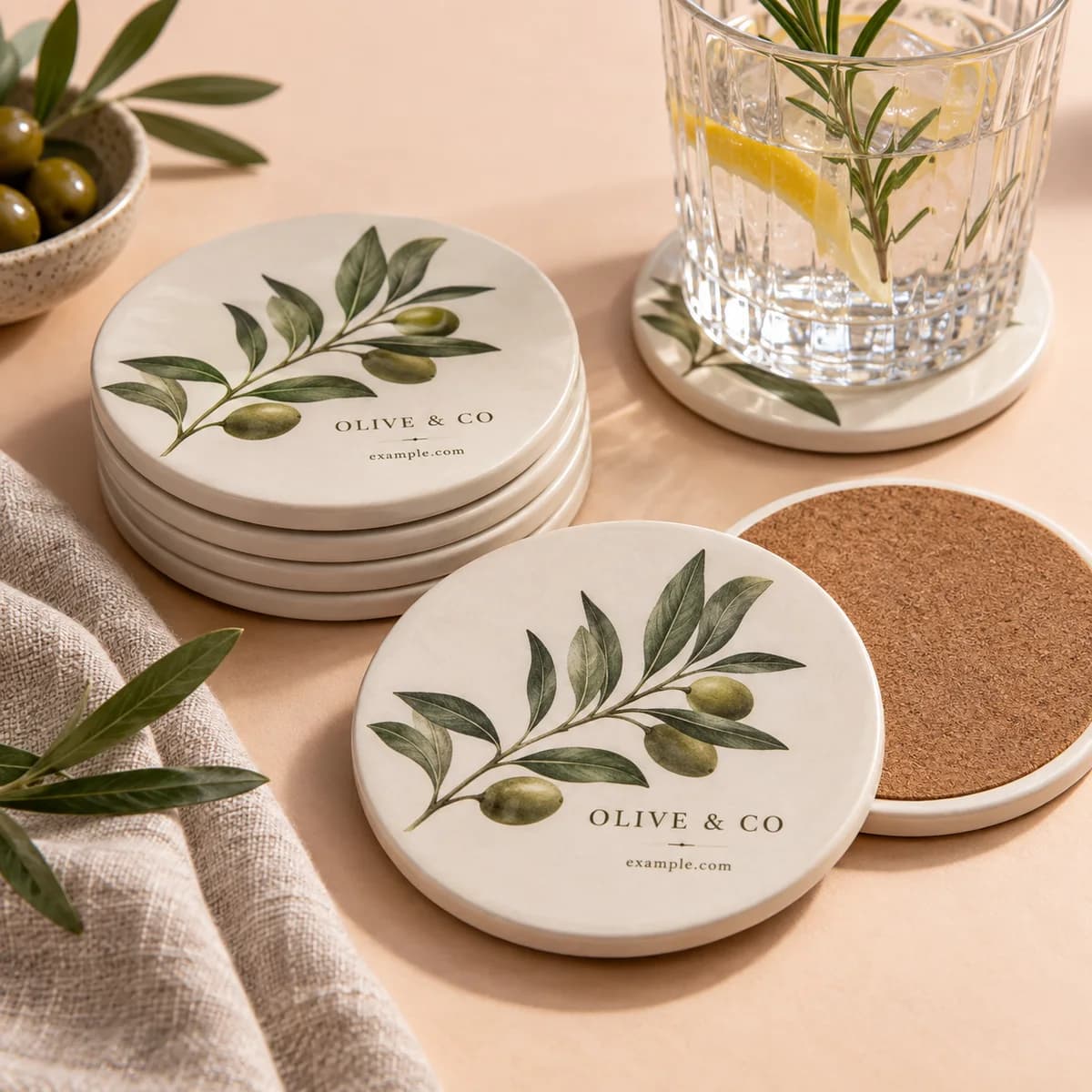
Heavyweight ceramic stone coasters with cork backing feel considered in a way that a printed card of the same size does not. A 32 pt card feels like a decision where a 14 pt card feels like stationery. A stainless steel keeper cup feels like a gift and a thin plastic cup feels like a container.
This is why substituting a heavier material usually beats making the item bigger. A larger cheap object reads as a larger cheap object.
Packaging changes the category of the gift
An object handed over loose is merchandise. The same object in a box is a gift.
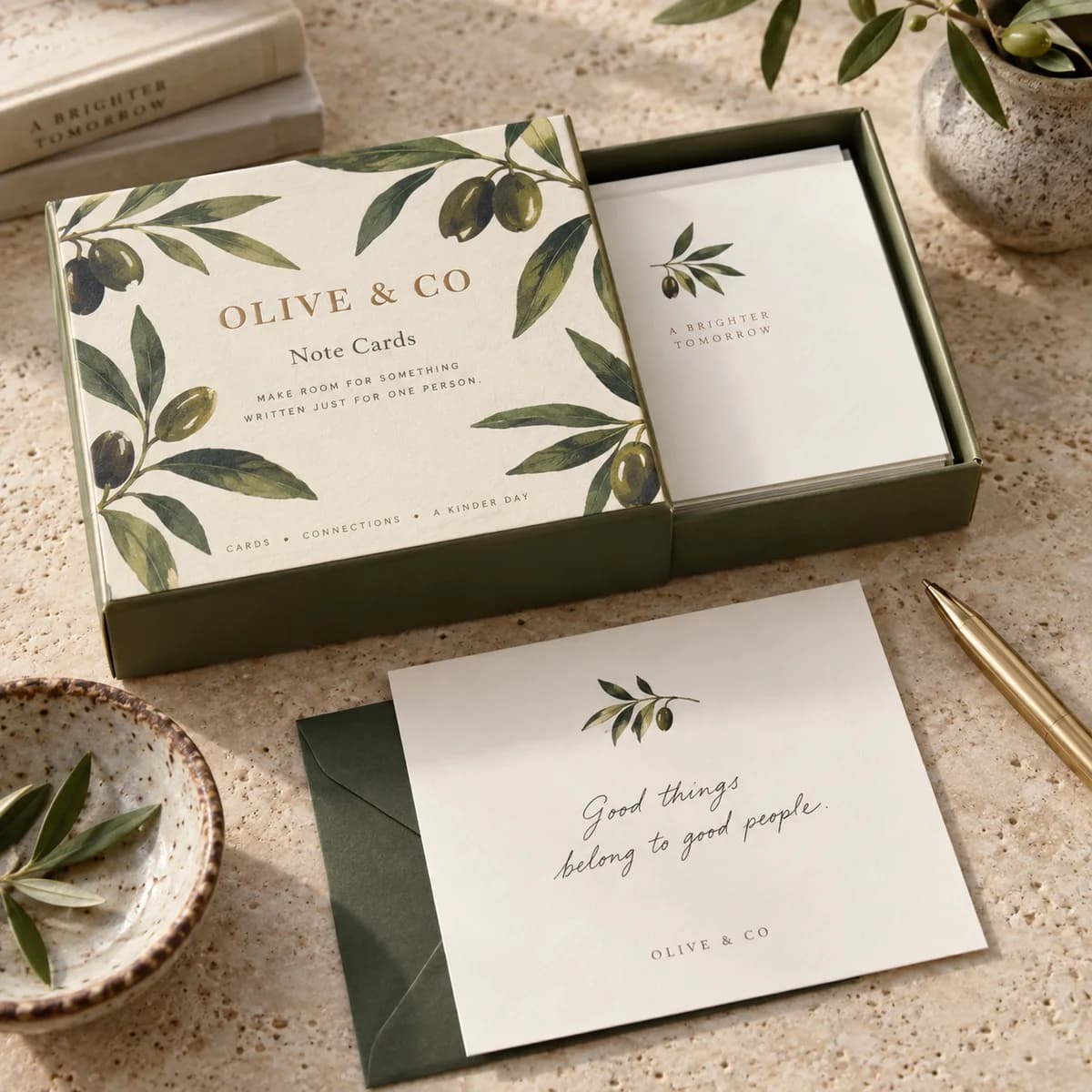
Our drinkware gift sets make this explicit: two 12 oz stemless wine cups with lids and a 25 oz canteen arrive in a gift box, described as ready to give. That packaging is doing real work, because it turns three items into one object with a moment of opening attached to it.
You can achieve a version of this yourself with items you already sell. A belly band around a pair of items, a printed mailer box, tissue and a card cost a fraction of the contents and change how the whole thing is received. Our guides to branded packaging on a budget and the unboxing experience cover how to assemble that without a custom structural project.
Restraint reads as confidence
The fastest way to lower perceived value is to fill the surface.
A small mark on a good object says the object was chosen for the recipient. A large mark, a tagline, a web address and a date on a small object says the object was chosen as advertising space. Recipients read that distinction instantly, and it is the reason expensive merchandise often underperforms cheap merchandise.
Practically, this means one idea per object. On narrow surfaces it is forced: a lanyard publishes a 0.75 by 6 inch print area and magnetic clips 0.5 by 1.5 inches, and neither holds more than one line. Apply the same discipline where you have more room and you will get more of it back.
What lowers perceived value
- A date, which turns a usable object into a souvenir that expires.
- An event name, for the same reason.
- A URL that will change.
- Four messages competing on one small surface.
- A color nobody would choose, as opposed to a brand color used sparingly.
- Visible thinness: a flimsy wall, a wobbly base, a loose lid.
- A general environmental badge with nothing behind it.
That last one is worth taking seriously as a credibility issue rather than only a legal one. The FTC Green Guides caution against broad, unqualified claims such as eco friendly and require a reasonable basis for any environmental claim. A specific material fact, such as a 100 percent recycled polyester strap or recyclable aluminum, is both more defensible and more persuasive than a badge.
Material honesty beats material aspiration
Recipients forgive a modest object. They do not forgive an object pretending to be a better one.
A plain ceramic mug that is dishwasher and microwave safe is a good gift honestly described. A vessel marketed on hour claims it cannot meet is a bad gift, however good it looked in the box. Our own approach is to publish the supplier figures and the care lines as they are, including the ones that are inconvenient: tumblers are hand wash recommended and aluminum bottles are hand wash only.
Apply the same standard to your own materials. Say what the object is, and let the object do the rest.
Testing perceived value before you order
Order one. Several of our products invite it, and a single sample answers the only question that matters: what does this feel like when someone is handed it.
Then run a crude test. Hand the sample to three people who have no stake in the decision and watch what they do with it in the first five seconds. If they turn it over, they are interested. If they put it down, no amount of unit cost is going to fix it.
Perceived value checklist
- Buy weight before you buy size.
- Add packaging before you add unit cost.
- Keep one idea on the surface.
- Leave dates, event names and URLs off anything meant to last.
- Use brand color sparingly rather than saturating the object.
- Make environmental claims specific to the material.
- Order one, hand it to three people, and watch.
Frequently asked questions
How do you raise the perceived value of a promotional gift?
Increase weight, add packaging and reduce the imprint. A heavier material reads as quality almost automatically, a gift box turns merchandise into a gift, and a small mark on a good object reads as a chosen gift rather than advertising space. None of the three requires a large increase in unit cost.
Does a bigger logo make a gift more effective?
Usually the opposite. A large mark plus a tagline, a URL and a date signals that the object was bought as advertising space, which is exactly the reading that gets items discarded. PPAI research points to usefulness and quality as the reasons items are kept, and both are undermined by a crowded surface.
Is packaging worth the extra cost on promotional gifts?
Often yes, because it changes the category of the item. Our drinkware gift sets arrive in a gift box and are described as ready to give, which converts three vessels into one gift with a moment of opening. A belly band, a mailer box, tissue and a card achieve a version of that at a fraction of the contents cost.
Can you call a promotional product eco friendly?
Avoid it. The FTC Green Guides caution against broad, unqualified environmental claims and require a reasonable basis for any claim you make. State the material fact instead: a 100 percent recycled polyester lanyard strap, or recyclable aluminum in a bottle. Specific claims are both safer and more convincing.
Sources & specification notes
The references below support the relevant technical or product details in this guide. Examples and checklists are not claims of practical testing or universal supplier requirements. Confirm the current specifications for your chosen product before production.
- PPAI: New PPAI Research Shows Why Consumers Take And Keep Promo Products ↗
Finds usefulness and quality to be the main reasons promotional products are kept, supporting weight and material as value signals.
- Federal Trade Commission: Green Guides ↗
FTC guidance requiring a reasonable basis for environmental claims and cautioning against unqualified terms such as eco friendly.