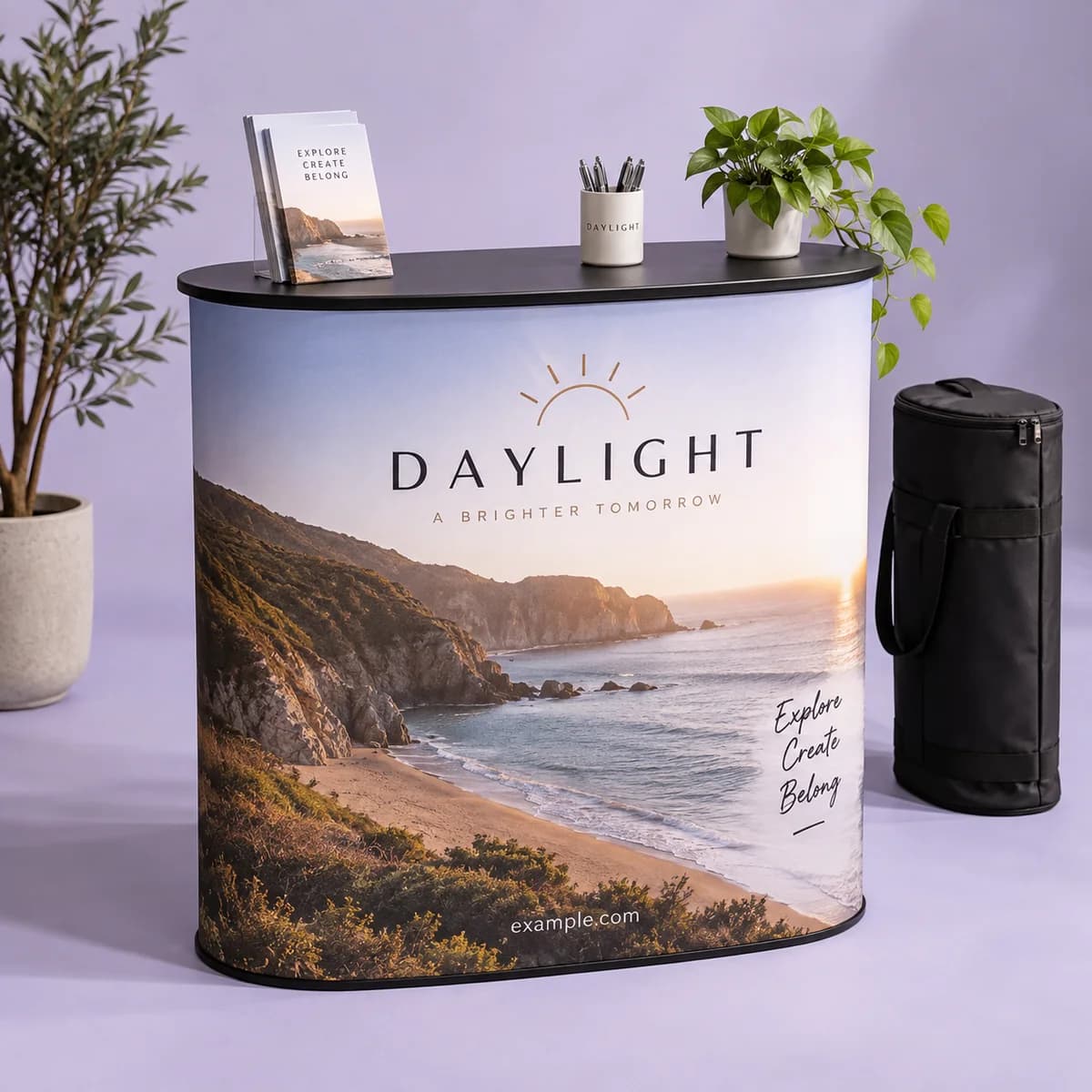
Which counter suits which booth?
| Counter | Footprint | Weight | Best for |
|---|---|---|---|
| Bounce up counter | About 31.3 x 15.6 in, 39.6 in tall | Light, spring frame | Tight booths, fast setup, sampling |
| Fabric pop up counter | About 41.75 x 15.75 in, 40 in tall | About 22.25 lb | A main staff base with a shelf |
| Round podium counter | Circular, full wrap graphic | About 11.64 lb | Welcome desks, open houses |
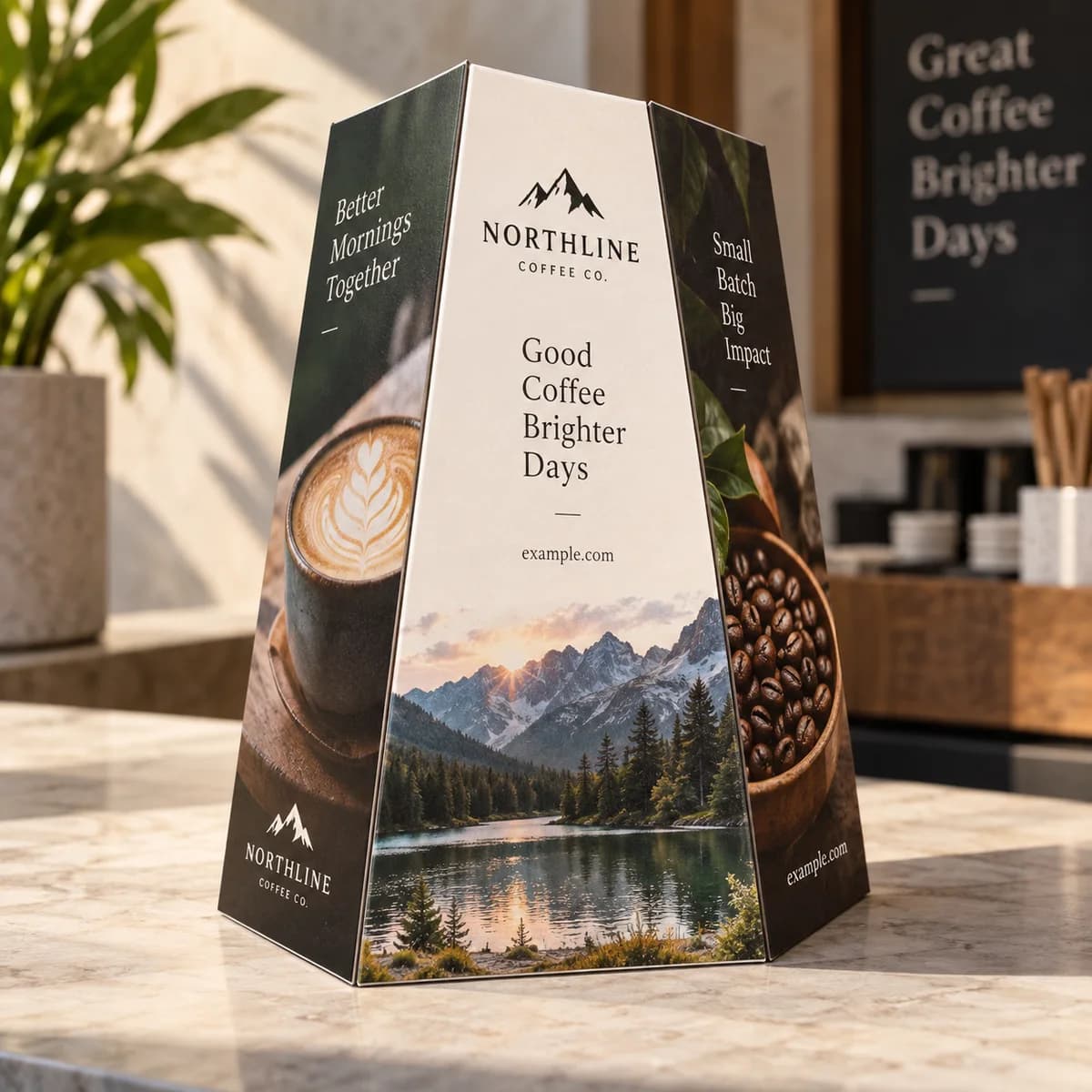
Bounce up counters use a spring system for tool free setup in seconds, take a 100 percent post consumer recycled polyester graphic, offer an optional 24 W integrated LED, and are stated to hold 33 pounds. Fabric pop up counters use a dye sublimated graphic made from recycled bottle polyester, with a countertop rated to 30 pounds and an internal shelf rated to 10 pounds. Round podium counters use a full wrap interchangeable graphic panel.
The interchangeable panel is the detail worth noticing. A counter whose graphic can be replaced separately outlives several campaigns, so it belongs in the permanent layer of your booth while the panel moves to the seasonal layer.
Where does the counter go?
On the side of the booth that faces the heavier traffic, angled slightly into the aisle rather than square across the front. That orientation invites people to stand beside your staff instead of across from them, which changes the conversation.
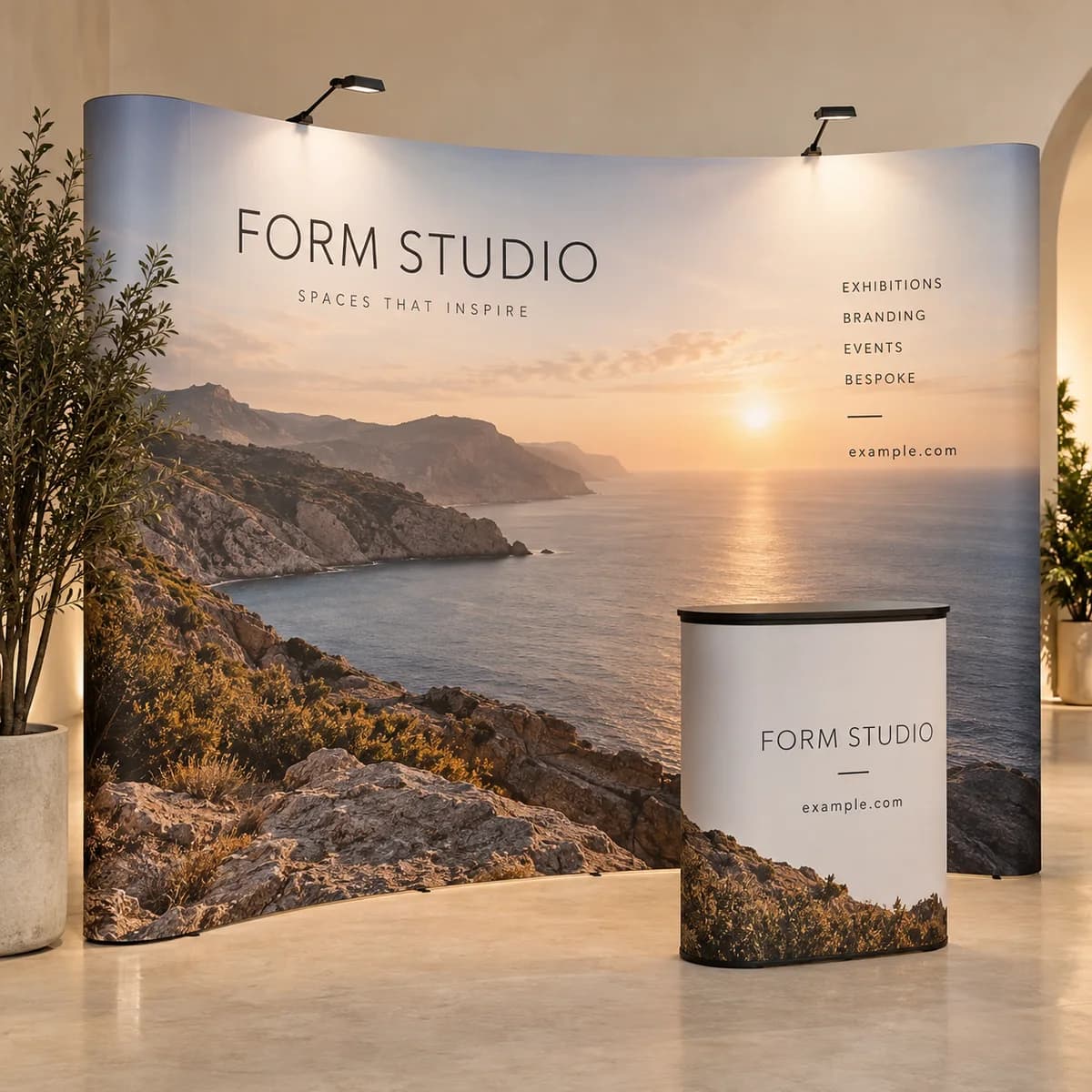
In a 10 x 10, a counter takes roughly a third of the frontage and leaves an open entry. In a 10 x 20, a counter marks the boundary between the recognition zone and the working zone. In both cases, leave enough room behind the counter for one person to stand without reversing into the wall graphic.
What should be on the front panel?
The panel is a small, low surface read at a short distance, often partly blocked. Give it one job.
- Your name or logo, sized to read from 10 feet.
- One line stating what you do or the single offer.
- Nothing below about 8 inches from the floor.
- No paragraphs, no lists, no contact block.
A code to scan is the one exception worth considering, because a counter is the right height to hold a phone against. If you add one, place it on the top third of the panel or on the countertop itself, not near the floor, and print the destination as text beside it. The decision of whether a code earns its space is covered in the guide to when a QR code is unnecessary.
The countertop is also a printed opportunity people forget. A small sign on the counter at eye level does more than extra copy on the front panel, because people look down at the surface while talking.
What goes inside?
This is where a counter pays for itself. Use the inside for the things that make a booth look untidy when they are visible.
A small box of giveaways, refill handouts, a bag with personal items, a power strip, the tool kit and a bottle of water. Keep the giveaway stock inside and put out only a few at a time, which both controls the rate and makes the table look curated rather than picked over.
Respect the stated load ratings. A 10 pound internal shelf is not a place for a box of brochures, and a 30 pound countertop is not a display plinth for heavy product.
Does a counter replace a table?
Often, yes, and usually for the better. A table invites staff to sit, and seated staff at a trade show get ignored. A counter keeps people upright and at the same eye level as visitors.
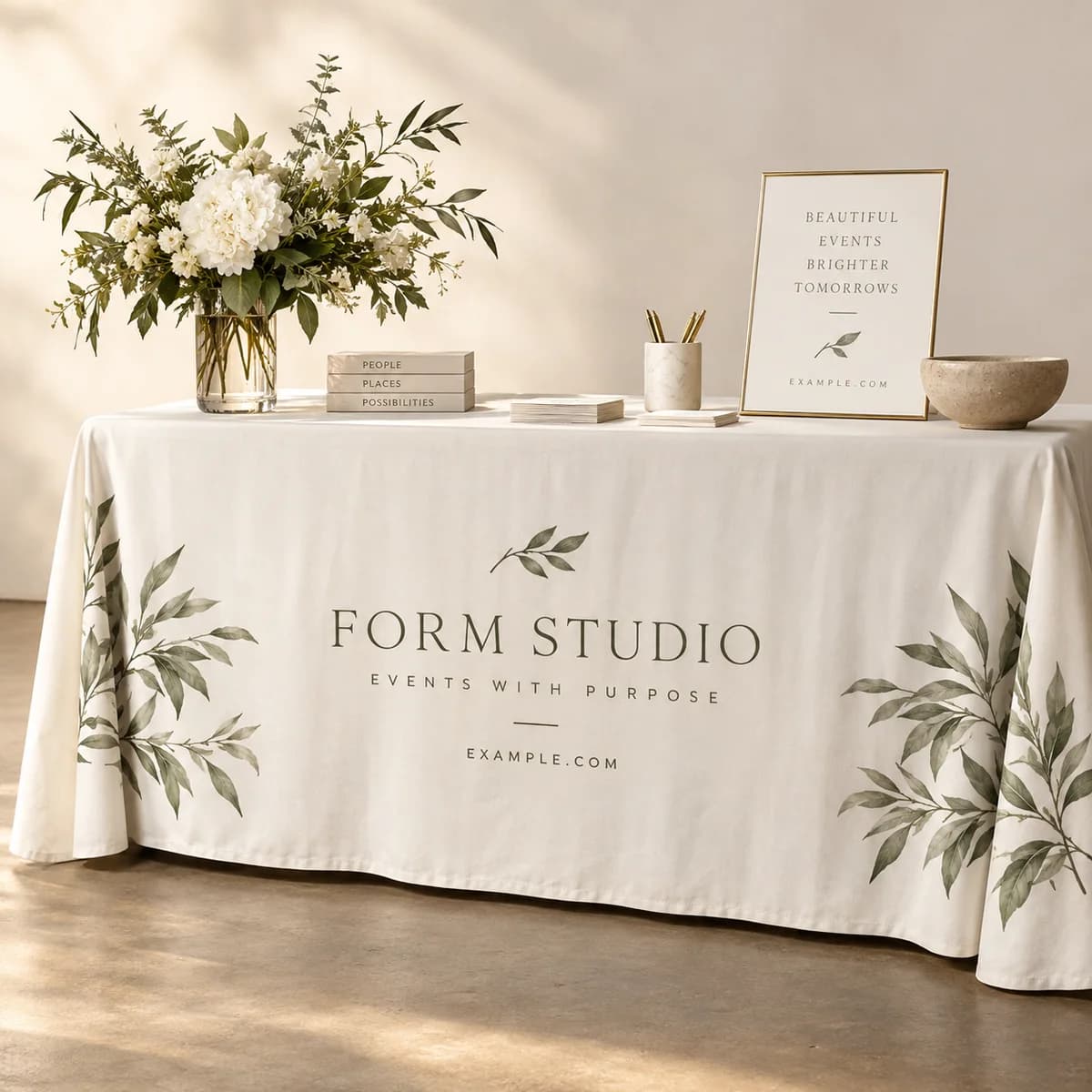
Where you still want a table is when visitors need to write, when you are laying out product samples to compare, or when the show provides one at no cost and your budget is better spent elsewhere. A covered table plus a counter is a good combination in a 10 x 20 and too much furniture in a 10 x 10.
How do you keep the graphic looking new?
Counter panels take more physical abuse than any other booth graphic, because bags, belt buckles and elbows meet them all day.
Choose a mid tone color rather than white for the lower half of the panel. Keep a microfibre cloth in the counter and wipe the front at each break. Store the panel rolled or folded as its material requires rather than left on the frame under a stack of cases. When the panel finally scuffs, replace just the panel: that is what the interchangeable design is for.
What is the counter checklist?
- Choose the counter by footprint and packed weight, not by looks.
- Place it on the busier side, angled into the aisle.
- Put one message on the front panel, sized to read from 10 feet.
- Keep everything readable above 8 inches from the floor.
- Use a small counter top sign for detail instead of more front panel copy.
- Store giveaways inside and put out only a few at a time.
- Respect the stated countertop and shelf load ratings.
Frequently asked questions
What is a pop up counter used for at a trade show?
It gives staff a standing base, hides storage at working height and puts a printed panel at eye level during conversations. Bounce up counters set up in seconds using a spring frame, fabric pop up counters add an internal shelf, and round podium counters suit welcome desks. All three replace the seated table that makes booths feel closed.
How much weight can a trade show counter hold?
Check the stated rating for the model. Our bounce up counters are stated to hold 33 pounds, and our fabric pop up counters state a 30 pound countertop with a 10 pound internal shelf. Those are working limits for a collapsible frame, not a display plinth rating, so keep heavy product on the floor or a dedicated stand.
What should go on a counter graphic?
Your name and one line saying what you do or what the offer is, sized to read from about 10 feet, with nothing important below 8 inches from the floor. If you want a code to scan, put it in the top third or on the countertop and print the destination as readable text beside it.
Do I need both a table and a counter?
In a 10 x 20, often yes: a counter for staff and a covered table for samples or writing. In a 10 x 10, one or the other. A counter is usually the better single choice because it keeps staff standing and leaves the booth open, while a table across the front turns the space into a service window.
Sources & specification notes
The references below support the relevant technical or product details in this guide. Examples and checklists are not claims of practical testing or universal supplier requirements. Confirm the current specifications for your chosen product before production.
- U.S. Access Board: Guide to the ADA Standards, chapter 7 signs ↗
Character height benchmark behind the guidance to size counter panel type for a 10 foot reading distance.