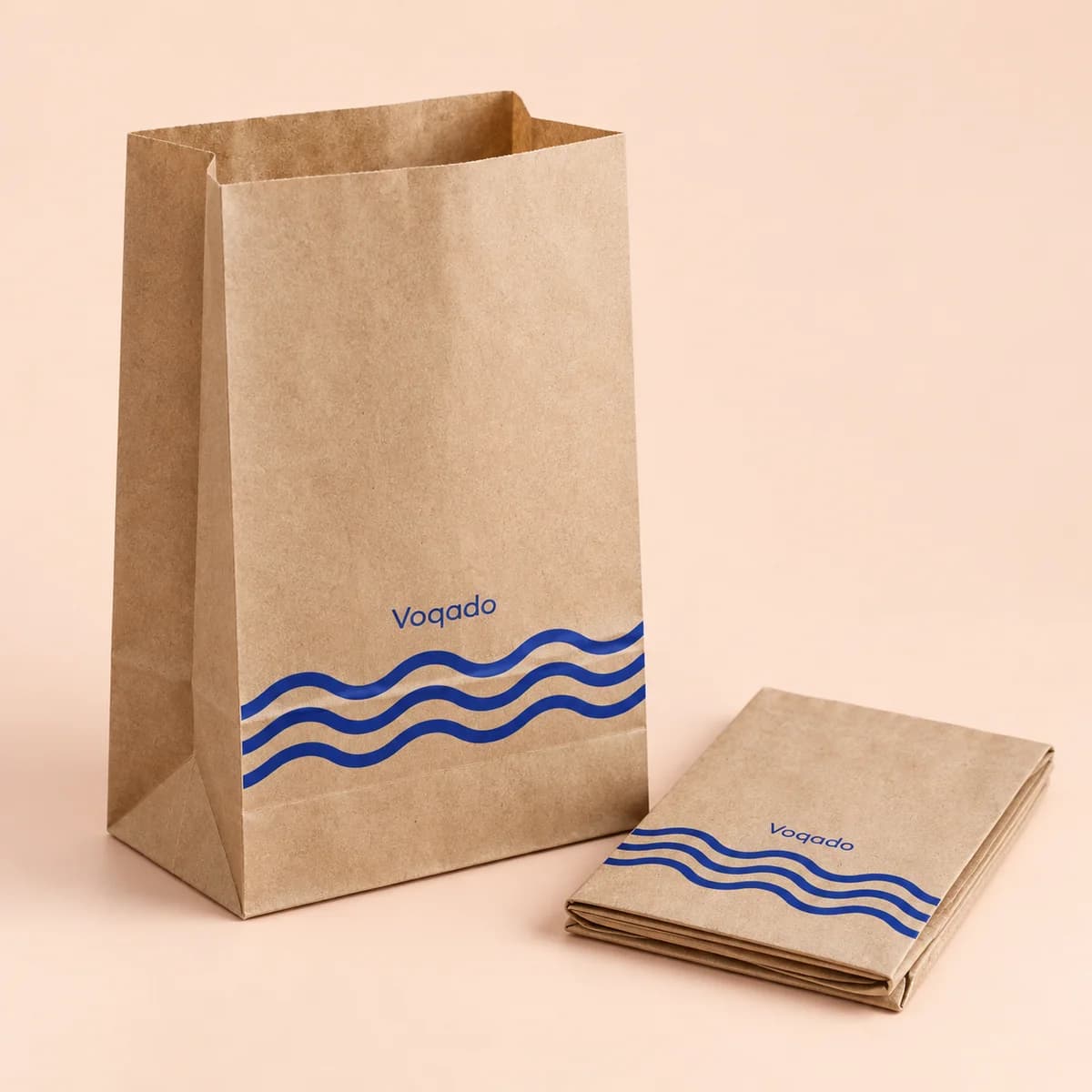
Size the bag from the container, not the meal
The mistake is to think about the food. Think about the container the food is in, and then about how many of them go in one bag.
A single clamshell, a drink and a napkin is a small bag. Two clamshells side by side is a medium bag with enough base width that they sit flat. A family order with four containers stacked is the largest size, and the base has to be wide enough that the stack does not lean.
| Consideration | What to measure |
|---|---|
| Base footprint | The widest container, plus room for a second |
| Height | The tallest container, plus a fold at the top |
| Capacity | The heaviest realistic order in pounds |
| Handle clearance | Add the handle height if the bag must fit a shelf or crate |
| Stacking | Whether the containers stack level |
If you also order paper clamshell packaging or pizza boxes, measure those and work back to the bag. The catalogue clamshells come in four sizes, all 3 in tall, from 6 by 6 in up to 9 by 9 in, which tells you exactly what base width your bag needs.
Handles are the failure point
Twisted paper handles are glued to the bag rather than stitched, and they are engineered for one trip at the stated capacity. They fail in two situations: when the load exceeds the rating, and when the bag gets wet.
Both are common with hot food. Condensation inside the bag, a leaking lid or rain between the door and the car all soften paper. The practical answers are a rigid leak resistant container inside, a bag sized so the load sits comfortably below the rating, and a stapled or taped closure that does not rely on the handles.
Remember the handle height. Adding about 3.75 to 4 in to the listed height matters if bags are stored on a shelf, stacked in a crate or handed to a delivery courier with a fixed bag.
SOS bags: the self opening alternative
For counter service, pastries and small orders, an SOS bag is often the better shape. SOS bags here come in five sizes from 4.25 by 2.25 by 7.75 in up to 8.25 by 5.75 by 13.5 in, in kraft or white paper at 30, 35 or 40 pt weights, with single color front printing or blank, in quantities from 250 to 3,000.
The flat bottom self opening design stands upright while you pack it, which is the whole point: one hand fills the bag while the other keeps working. There are no handles, so it is a hand carried bag for short trips rather than a carrier for a full order. The SOS bag product also notes a digital proof before you order, which the handled to go bags do not.
What food contact actually means
This is where takeaway packaging orders go wrong, because the category word gets applied to everything in the bag.
A handled paper carrier is normally an outer bag. The food sits inside a cup, a clamshell, a pouch or a wrap, and that inner item is the one making direct contact. Products in this catalogue that state a food contact specification say so specifically: deli paper is described as food safe and grease resistant, paper clamshell packaging as PFAS free and commercially compostable, food zipper bags as food contact safe and BPA free, and paper cups as having a liquid proof inside coating.
The to go bag specification does not make a direct food contact claim, and that is the honest reading of it. The category advice on this site says the same thing: capacity, temperature suitability and food contact specification must be confirmed for the selected product.
The underlying regime is worth understanding once. The FDA regulates substances that come into contact with food, and each food contact substance used to produce a food contact article must be listed in 21 CFR as an indirect food additive, be generally recognized as safe for that use, be covered by a threshold of regulation exemption, or be authorized through a food contact notification. That is a specification question about a material, not a description you can apply to a category.
So: if food will touch the bag directly, such as a warm pastry dropped straight in, confirm the specification for that product before you order. If the food is in a container, the bag is a carrier and the container carries the food contact requirement.
Printing on kraft, in one color
To go bags take single color logo printing on the front, and SOS bags take single color front printing. That constraint is more freeing than it sounds, because a one color mark on brown kraft is one of the most reliably good looking pieces of print a small food business can buy.
Three practical notes. Brown kraft is a mid tone, so a dark ink reads well and a pale ink does not. Keep strokes generous, because kraft has a visible fiber texture. And put the mark where it survives a fold, since a packed bag folds at the top and creases where the load presses out.
Minimum quantities are real. To go bags run from 200 to 3,000 bags, and SOS bags from 250 to 3,000. Plan a year of usage rather than a month, but not five years, because a phone number or an address change makes a pallet of bags into waste.
Recycling and the claim you can make
To go bags here are described as curbside recyclable and made from 100 percent post consumer recycled fiber, and SOS bags as widely recyclable. Those are specific, checkable statements, which is the standard to hold yourself to when you print a claim on the bag itself. The FTC Green Guides set out how to qualify environmental claims so consumers are not misled, including claims about recycled content.
If you print a recycling instruction, make sure it matches local collection. A bag telling customers to recycle it in a place that does not collect paper carriers is worse than a bag that says nothing.
To go bag checklist
- Size the bag from the container footprint, not the meal.
- Choose capacity above the heaviest realistic order, not equal to it.
- Add handle height when the bag has to fit a shelf, crate or courier bag.
- Use an SOS bag for counter service and short hand carried trips.
- Confirm food contact specification for the product if food touches the bag.
- Design a one color mark with generous strokes for kraft.
- Order a year of usage, and keep printed claims specific and local.
Frequently asked questions
What sizes do custom to go bags come in?
Five sizes, from 5.5 by 3.25 by 8.25 inches up to 14 by 9.65 by 16 inches, with carry capacity from 10 lbs at the smallest to 20 lbs at the largest. Twisted paper handles add roughly 3.75 to 4 inches to the listed height, which matters if bags are stored on a shelf or handed to a courier.
Are paper to go bags food safe?
The to go bag specification does not make a direct food contact claim, and it is normally an outer carrier with the food inside a container. Products here that are specified for food contact say so explicitly, such as deli paper, food zipper bags and paper clamshells. If food will touch the bag directly, confirm the specification for that product.
What is an SOS bag?
A self opening flat bottom paper bag that stands upright while you pack it, which suits counter service, pastries and small orders. It comes in five sizes from 4.25 by 2.25 by 7.75 inches up to 8.25 by 5.75 by 13.5 inches, in kraft or white at 30, 35 or 40 pt, with single color front printing.
How many colors can you print on a to go bag?
One. To go bags take single color logo printing on the front or come blank, and SOS bags take single color front printing. On brown kraft that constraint usually flatters a design: choose a dark ink, keep strokes generous because kraft has a visible fiber texture, and place the mark where a fold will not cross it.
Sources & specification notes
The references below support the relevant technical or product details in this guide. Examples and checklists are not claims of practical testing or universal supplier requirements. Confirm the current specifications for your chosen product before production.
- FDA: Packaging and Food Contact Substances (FCS) ↗
Supports the statement that each food contact substance must be listed in 21 CFR as an indirect food additive, be generally recognized as safe for the use, be covered by a threshold of regulation exemption, or be authorized through a food contact notification.
- CalRecycle: Single Use Carryout Bag Ban ↗
Supports the point that recycled paper carryout bags provided at the point of sale in California must meet minimum postconsumer recycled content requirements.
- FTC: Green Guides ↗
Supports the advice to qualify recyclability and recycled content claims so that consumers are not misled, including matching a recycling instruction to local collection.