How sublimation works, in one paragraph
Sublimation printing puts dye onto a transfer sheet, then heat and pressure turn that dye into a gas that enters an open polyester surface. When the surface cools it closes around the dye. The result is a print with no thickness: you cannot feel an edge, and the image cannot be scratched off as a layer, because there is no layer. That is the property people are really asking about when they ask whether it is dishwasher safe.
The requirement is a polyester or polymer coated surface. Cotton does not take sublimation, and bare stainless steel does not either. This is why the method turns up on some products and not others.
Where sublimation appears in our catalog
We use dye sublimation on flat and fabric goods rather than on drinkware.
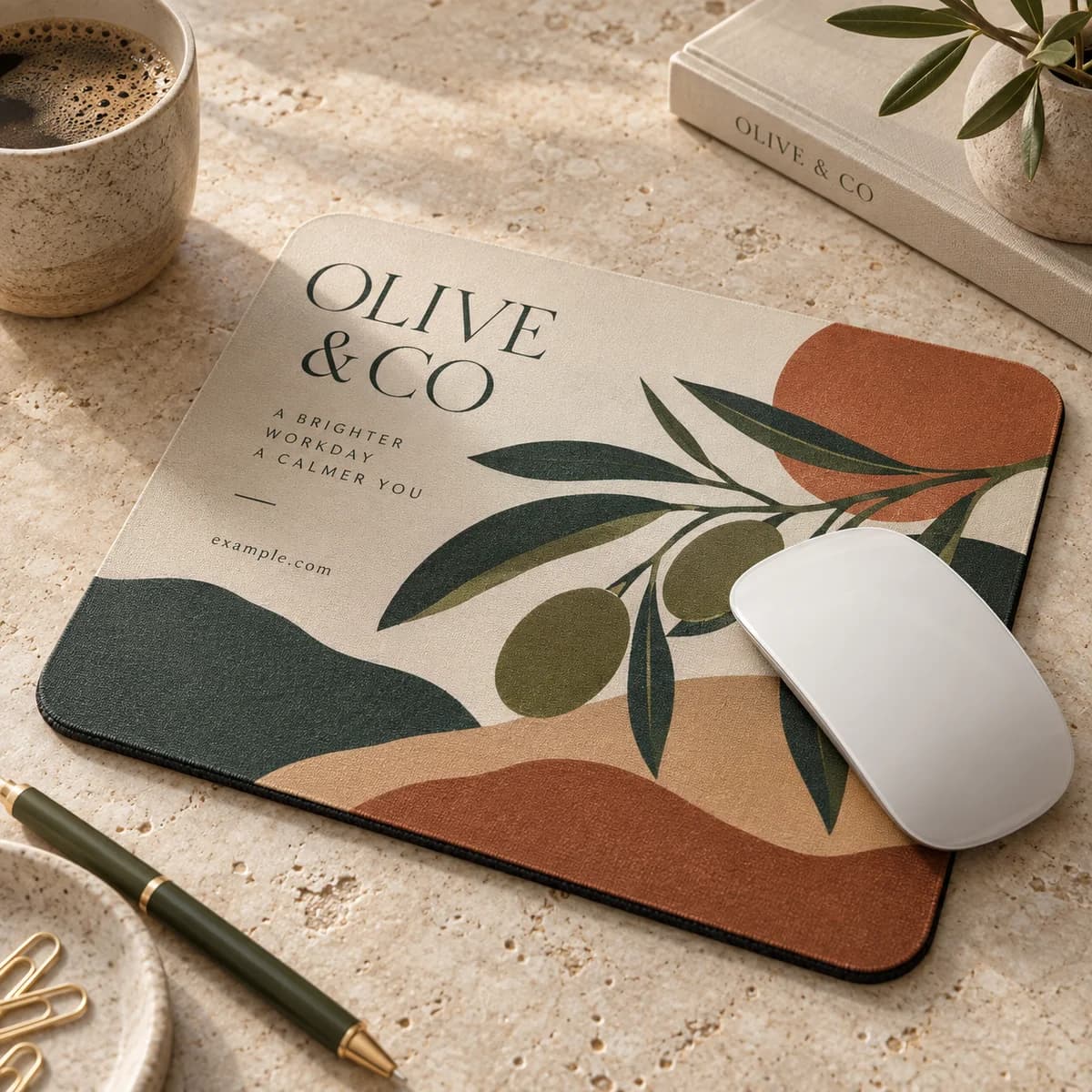
- Mouse pads: edge to edge full color dye sublimation on a smooth matte fabric surface.
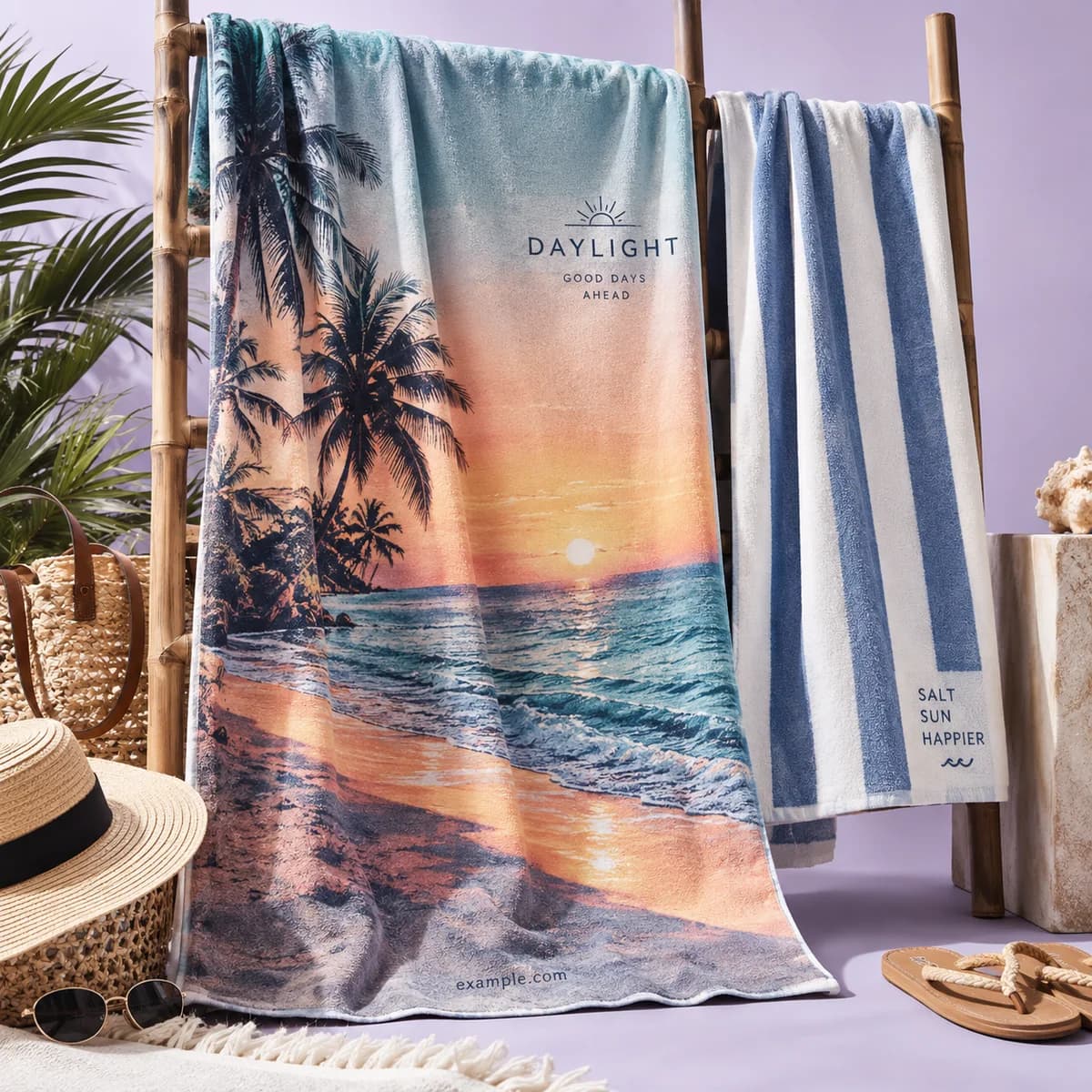
- Beach towels and picnic blankets: a plush microfiber face carrying an edge to edge design, machine washable.
- Sweatshirt blankets: full color edge to edge sublimation on a polyester sweatshirt face.
- Custom pillows: full color dye sublimation, described as not flaking or cracking.
- Yoga mats: full color edge to edge sublimation on a polyester top.
- USB flash drives: full color sublimation on the top face.
- Canopy tent walls and fabric counters: single sided dye sublimation, machine washable.
Our drinkware does not use it. Tumblers offer laser engraving or digital inkjet, travel mugs offer single color screen printing or heat transfer, aluminum water bottles use digital inkjet, and stemless glassware is laser etched. If your question was really about a sublimated mug, that is a product we do not sell, and no care advice we could give you about it would be honest.
So what does the dishwasher actually attack?
Three things, and only the first is unique to the dishwasher.
Detergent chemistry comes first. A dishwasher cycle is an alkaline chemical bath, not a warm rinse, and the industry treats detergent resistance as its own measurable property. ASTM C676 immerses a decorated glass specimen in a hot sodium pyrophosphate solution precisely to estimate how a decoration survives detergents in use, and ASTM C927 uses that exposure as an accelerated step before measuring metal release from decorated drinking glasses. Neither test is about sublimation, but both make the same point: it is the chemistry, not the water, that ages a decoration.
Heat comes second. Sublimation is a heat process, so sustained high temperature is the one input that can move dye that has already settled. Domestic dishwashers do not reach transfer temperatures, but a hot dry cycle is still the harshest part of the machine for any coated item.
Abrasion comes third. A coated surface rubbing against cutlery or another vessel wears the coating, and the dye goes with the coating. This is the failure most people actually see.
Read the product's care line, not the method
The method sets an upper bound. The product sets the real one, because the vessel or the object has its own limits that have nothing to do with the decoration.
Our ceramic mugs are dishwasher and microwave safe. Our laser etched glassware is dishwasher safe, and the etch is stated not to fade or wash off. Our insulated drinkware gift sets are dishwasher safe with the top rack recommended. Our tumblers are hand wash recommended and our aluminum water bottles are hand wash only. In two of those cases the constraint is insulation and material, not the mark.
The same logic applies to sublimated goods. Beach towels, picnic blankets and fleece blankets are machine washable. Pillows depend on the cover: removable covers are machine washable, fixed covers are spot or dry clean only. Mouse pads and yoga mats are not laundry items at all.
Practical advice that actually extends the life
- Wash by hand where the product says hand wash, because that instruction is usually about the vessel rather than the print.
- Where a dishwasher is allowed, use the top rack and the lowest sensible temperature.
- Skip the heated dry cycle on anything coated.
- Keep decorated items from knocking against cutlery, which abrades coatings.
- Do not use abrasive pads or scouring powder on any printed or coated surface.
- Separate lids and straws so trapped water does not sit against a seal.
If you need washable and colorful
When the requirement is genuinely both, pick the object before the method. A ceramic mug with wraparound printing is dishwasher and microwave safe. Etched glassware is dishwasher safe but single tone. Sublimated fabric goods are machine washable and full color, but they are not drinkware.
That is the choice, honestly framed. We would rather tell you the combination does not exist on a given vessel than sell you one and let a dishwasher explain it later. As with every vessel, the design canvas is a visual concept: ask us for the product template or send print ready artwork, and our team sets the placement with you before production.
Sublimation durability checklist
- Confirm the item is polyester or polymer coated, or sublimation is not the method.
- Read the product's own care line and treat it as the limit.
- Expect chemistry and abrasion, not water, to be what wears the surface.
- Use the top rack and skip heated drying where a dishwasher is permitted.
- Do not assume a sublimated mug is available, because we do not offer one.
- Choose the object first when you need both color and washability.
Frequently asked questions
Does a sublimated print fade in the dishwasher?
It does not peel, because the dye is inside the polyester coating rather than on it. What fades is usually the coating itself, worn by detergent chemistry and by abrasion against cutlery or other items. Use the top rack, avoid heated drying and never use an abrasive pad on a coated surface.
Can you sublimate a mug or a tumbler?
The method needs a polyester or polymer coated surface, so it is used on specially coated drinkware elsewhere in the industry. We do not offer it on any of our drinkware. Our ceramic mugs use wraparound printing, tumblers use laser engraving or digital inkjet, travel mugs use screen printing or heat transfer, and glassware is laser etched.
Is sublimation more durable than heat transfer?
Generally yes on a suitable substrate, because heat transfer leaves a printed film on the surface that can lift at the edges, while sublimation leaves nothing raised. Heat transfer wins where the surface is not polyester, which includes most metal drinkware, and it gives unlimited colors on those vessels.
Are sublimated towels and blankets machine washable?
Our beach towels, picnic blankets, fleece blankets and sweatshirt blankets are all listed as machine washable. Pillows depend on the cover: removable covers are machine washable and fixed covers are spot or dry clean only. Mouse pads and yoga mats are wipe clean items rather than laundry.
Sources & specification notes
The references below support the relevant technical or product details in this guide. Examples and checklists are not claims of practical testing or universal supplier requirements. Confirm the current specifications for your chosen product before production.
- ASTM C676: Standard Test Method for Detergent Resistance of Ceramic Decorations on Glass Tableware ↗
Immerses decorated specimens in hot sodium pyrophosphate solution to estimate detergent resistance, supporting the point that detergent chemistry rather than water ages a decoration.
- ASTM C927: Lead and Cadmium Extracted from the Lip and Rim Area of Glass Tumblers Externally Decorated with Ceramic Glass Enamels ↗
Uses accelerated detergent exposure before measuring extraction, cited here to show that washing exposure is treated as a formal durability input.