What you are actually decorating
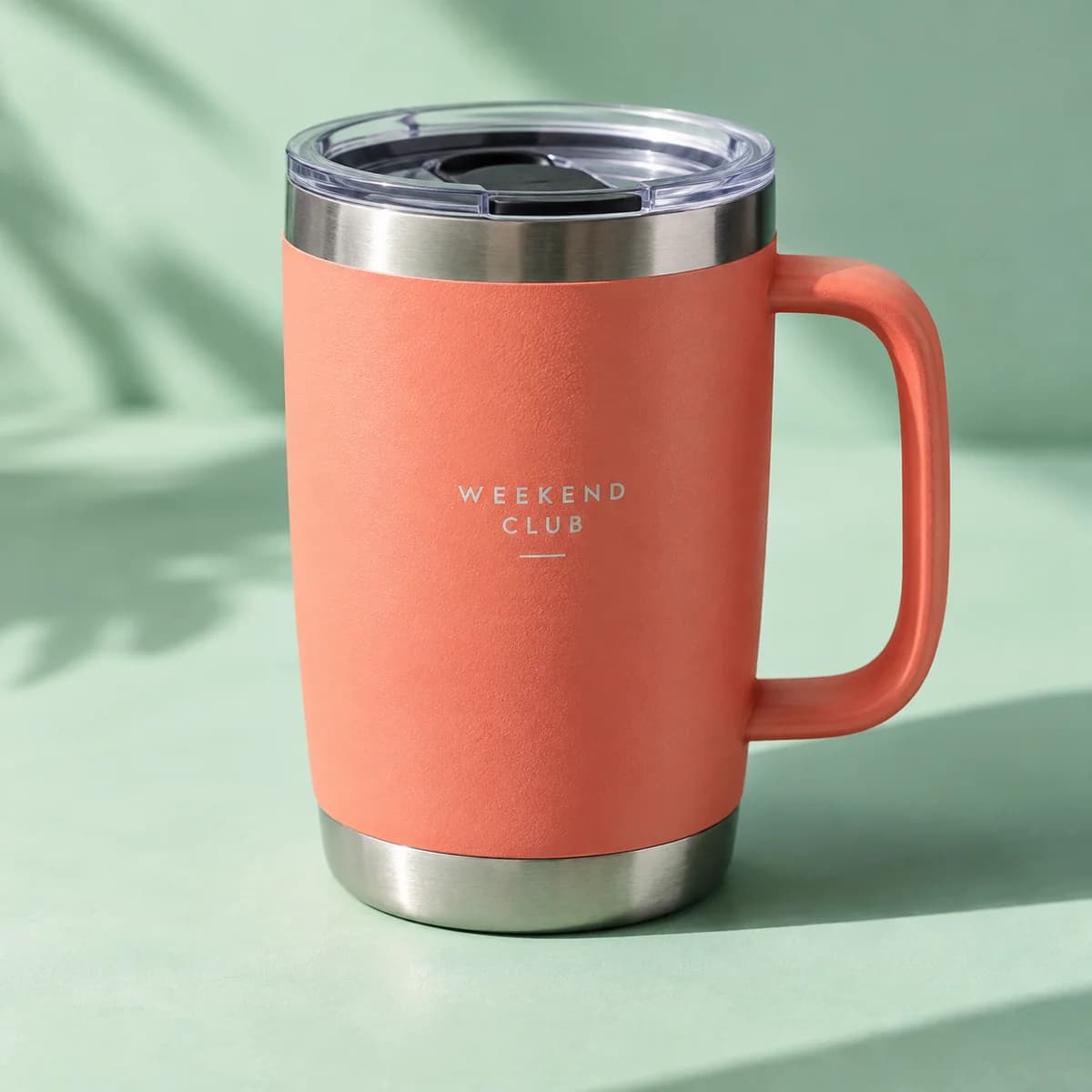
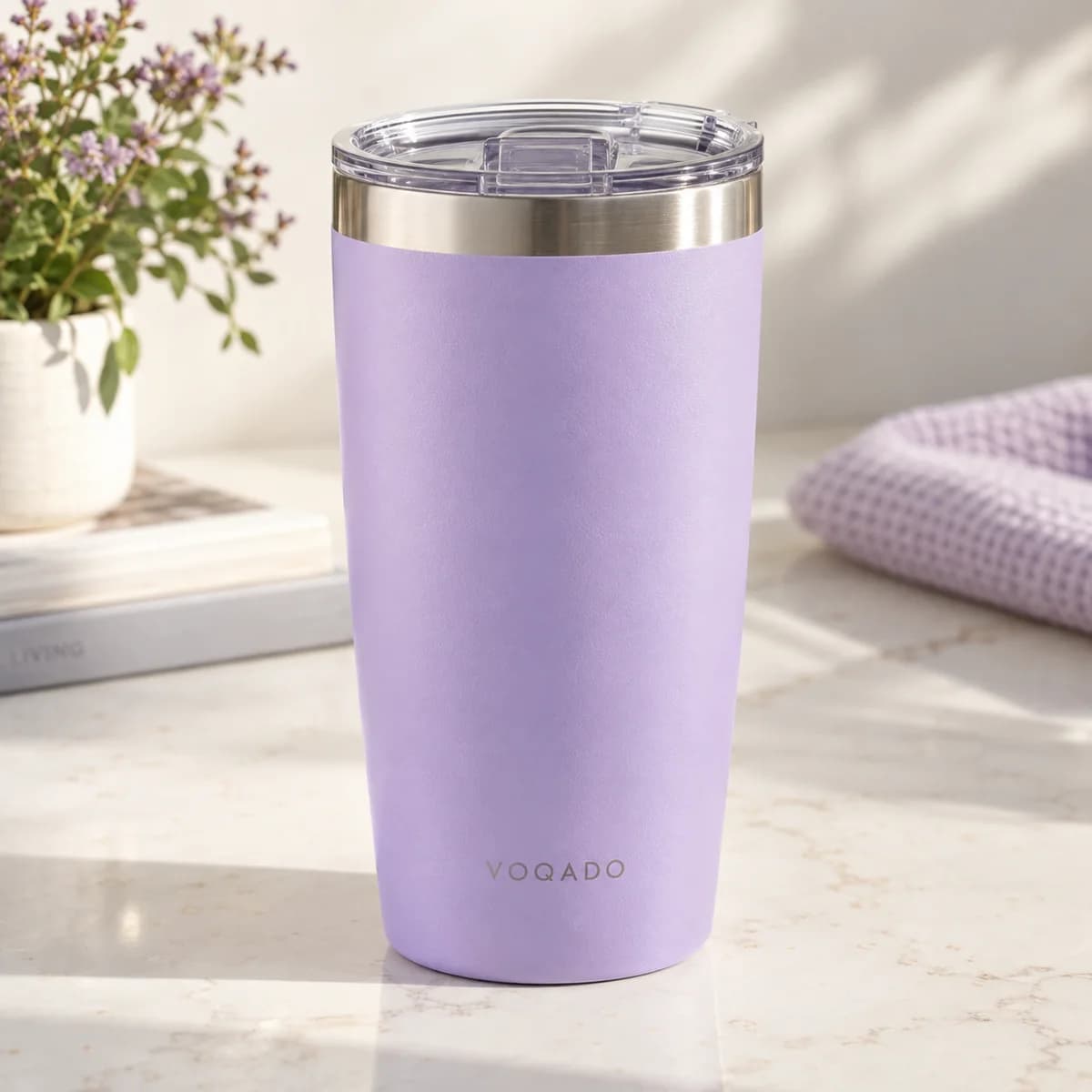
A tumbler is a cylinder that narrows toward the base, has a rolled lip at the top and a lid that screws or clicks over that lip. The band you can decorate is the middle of that cylinder: below the lid thread, above the taper, and short of wherever the artwork would meet itself on the back.
That is a very different shape from a business card. A card has a trim line, a bleed and a safe area, all published. A tumbler has a circumference, a usable height and a seam. Nothing in that list is a rectangle, which is why we do not draw one.
Why the design canvas is not the tumbler surface
Opening a tumbler in the Studio gives you an editable visual concept, not the printed surface. We say so on the product, and it is worth understanding why.
We hold no imprint sheet for this vessel. The size recorded against it in the catalog is a layout default, and the written dimensions describe the object rather than a printable area. Drawing a trim line over numbers nobody measured would look exactly like a real specification, so the canvas draws no trim, no bleed and no safe area for drinkware at all. The rectangle is there to help you compose, and that is all it claims to be.
The two honest routes to a correct file are the same two we use for every vessel. Ask us for this tumbler's template and lay your artwork out on it, or send print ready artwork at the largest size you want it and let our team set the placement with you before production.
How much room is there around a cylinder?
The usable width is a length of arc, not a width of paper. You can estimate it whenever the catalog states a diameter. Our 40 oz travel mug is listed at 4 inches diameter and 9.5 inches high, so its full circumference is about 12.6 inches, from pi multiplied by 4.
That figure is the ceiling, never the imprint. Subtract the handle, the seam where a wrap meets itself, the curve at the shoulder and the taper at the base, and a mark that reads cleanly usually lives in a band well inside it. This is why we ask which of three things you want rather than asking for a size: one side, both sides, or a full wrap.
What the lid and the handle take away
Lids and handles are the two things people forget, and they remove area in different ways.
A lid removes height at the top. On the tumbler the lid is a 360 degree drinking lid, so it covers the rolled lip completely and anything placed too high disappears under it. Keep artwork clear of the top of the vessel rather than measuring down from the rim.
A handle removes width in the middle. The travel mug has an easy grip handle, so its decorated band is interrupted: a wrap becomes two panels, and a wide horizontal logotype either sits under the handle or has to shrink. If your mark is long and thin, a handled vessel is the wrong vessel for it.
One side, both sides or a wrap
These are genuinely different jobs, and the file is different for each.
- One side: a single mark centered on a band. The most forgiving option, and the one that survives the widest range of vessels.
- Both sides: two separate marks with a deliberate gap. Do not assume the two sides are symmetrical about the handle unless you have asked.
- Full wrap: continuous artwork that has to meet itself. A wrap needs a design where the join is invisible, which means no continuous horizontal line, no single large word and no pattern with an obvious repeat length.
Write your choice into the order notes. It is the fastest way to remove ambiguity from the conversation that follows.
Engraving or ink changes what your logo can be
Laser engraving does not add color. It removes a thin layer, so the result is a single tone light etch in whatever the underlying material is. That is permanent and dishwasher indifferent, but a two color logo becomes one color, gradients disappear and fine reversed out type can close up.
Digital inkjet keeps the color, so photographs, gradients and multi color marks survive. Our Studio works in RGB and we do not offer a color matching guarantee, so treat brand color on drinkware as close rather than exact, and especially so on a colored vessel where the base tone sits under the ink.
If your brand depends on one precise color, decide in advance which quality matters more: the color or the permanence. You rarely get both on a steel vessel.
Decoration near the lip is a safety question too
There is a reason decoration stops short of the drinking edge. ASTM C927 exists specifically to measure lead and cadmium extracted from the lip and rim area of glass tumblers that carry external ceramic enamel decoration, and the FDA publishes separate guidance on lead in foodwares. Those documents concern enamels and glazes rather than the methods used here, but the underlying convention they reflect is a sound one: keep decoration off the surface a mouth touches.
Practically, that means a wrap on a drinking vessel is a wrap of the body, not of the rim.
Order one before you order two hundred
The product page says to order the smallest quantity first, and on curved goods that advice earns its keep. A single unit tells you three things a screen cannot: how far your logo actually travels around the curve, how the engraving tone reads against the vessel color, and whether the mark is still legible once a hand is wrapped around it.
Checklist before you order a branded tumbler
- Pick the exact vessel first, because the band changes with every model.
- Say whether you want one side, both sides or a wrap.
- Choose engraving for permanence or inkjet for color, not both.
- Ask us for the vessel template, or send print ready artwork at full size.
- Keep artwork clear of the lid area and away from the drinking edge.
- Simplify two color marks before engraving rather than after.
- Order a single unit and hold it before committing to a run.
Frequently asked questions
Can you put a full color logo on a tumbler?
Yes, with digital inkjet, which prints unlimited colors on the tumbler. Laser engraving cannot, because it etches the surface rather than adding ink, so a multi color mark becomes a single tone. Our Studio works in RGB and we do not guarantee color matching, so expect a close rather than exact brand color, particularly on a colored vessel.
How big can a logo on a tumbler be?
We hold no imprint sheet for our tumblers, so we do not publish a rectangle. You can estimate the ceiling from the circumference where a diameter is listed, for example about 12.6 inches around a 4 inch diameter travel mug, but the usable band is smaller once the lid, taper, seam and any handle are removed. Ask us for the vessel template and our team sets the placement with you.
Can a logo wrap all the way around a tumbler?
A wrap is possible, but the artwork has to meet itself at a seam. Designs with a continuous horizontal rule, one very wide word or a pattern with an obvious repeat show that join. Wraps also do not survive a handle, which splits the band into two panels. Tell us you want a wrap when you order so the file is built for it.
Does a logo on a tumbler come off in the dishwasher?
Laser engraving is cut into the surface, so it is not removed by washing. Printed decoration depends on the vessel and the method, and our tumblers are listed as hand wash recommended regardless of decoration. Check the care line on the exact product rather than assuming, because it differs between our ceramic mugs, etched glassware and insulated steel.
Sources & specification notes
The references below support the relevant technical or product details in this guide. Examples and checklists are not claims of practical testing or universal supplier requirements. Confirm the current specifications for your chosen product before production.
- ASTM C927: Lead and Cadmium Extracted from the Lip and Rim Area of Glass Tumblers Externally Decorated with Ceramic Glass Enamels ↗
Confirms that a dedicated test method exists for the lip and rim area of externally decorated drinking glasses, which is why decoration conventionally stops short of the drinking edge.
- U.S. Food and Drug Administration: Lead in Food and Foodwares ↗
FDA overview of lead in foodware, including decorated ceramic and glass items, used here to support keeping decoration away from food contact and lip surfaces.