What curvature does to a design
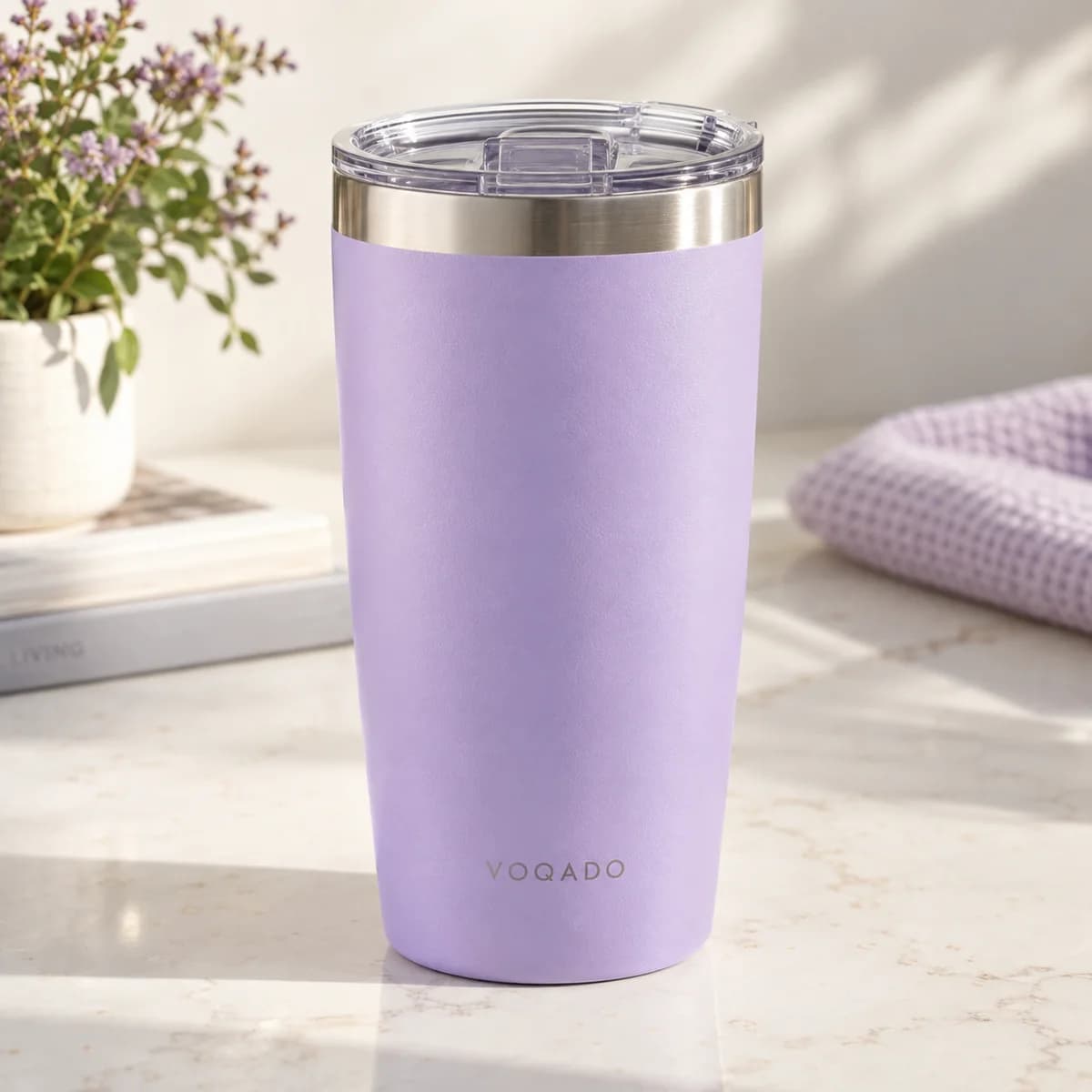
Stand a cylinder in front of you and you see slightly less than half its circumference. Toward the visible edges the surface turns away, so artwork there is foreshortened: a circle becomes an ellipse and even letter spacing looks tighter. Anything within roughly the outer fifth of the visible arc is effectively decoration rather than information.
That is the first rule of curved layout. Put the thing that must be read in the middle third of the visible arc, and let the rest of the band carry texture, color or a repeat.
Vertical curvature does the same thing in the other direction. A mug shoulder and a bottle neck curve in two directions at once, which is why artwork that climbs toward a rim distorts in a way no flat proof will show.
Why no trim line is drawn
Opening a curved product in our Studio gives you an editable visual concept. It deliberately draws no trim rectangle, no bleed edge and no safe area, and the reason is specific rather than a feature that is missing.
We hold no imprint sheet for these products. The catalog carries exactly two kinds of size: a layout default recorded against most products, and prose in the specifications. Prose is where the trap lies. A tote bag says 13.4 by 13.4 inches with a 2.4 inch depth, but that is the bag, not a printable panel. A bottle's real constraint is a circumference, not a flat box. A drawn line has the full visual authority of a real trim, so drawing one over a number that never described a printable area would be a false statement in the shape of a specification.
So the canvas says what it is. On drinkware it says that artwork wraps, that the usable band depends on the vessel, the handle and the decoration method, and that nothing on the canvas sets scale, wrap, seam position or method.
Estimating the band yourself
You can still do useful arithmetic, as long as you treat the result as a ceiling and not an imprint.
Circumference is pi multiplied by the diameter. Our 40 oz travel mug lists 4 inches diameter, giving about 12.6 inches around. The 25 oz canteen in our drinkware gift set lists 3 inches wide, giving about 9.4 inches around, and the 12 oz stemless wine cups in the same set list 3.5 inches wide, giving about 11 inches.
From that ceiling, subtract in this order: the handle if there is one, the seam allowance if you want a wrap, the shoulder curve at the top, the taper at the base, and the outer fifth of the arc on each side if the content has to be read. What remains is a realistic band, and it is usually far narrower than the raw circumference suggested.
The seam is a design decision
A full wrap has a join. You choose, in advance, what happens there.
- Designs that hide a seam: irregular textures, scattered elements, color fields, patterns with no obvious repeat length.
- Designs that expose a seam: a continuous horizontal rule, a single very wide word, a regular stripe, a photograph with a strong horizon.
- Designs that avoid the question: one mark on one side, or two marks with a deliberate gap.
If you cannot describe where the seam should fall, the safest brief is one side or both sides rather than a wrap.
Handles, lids and other interruptions
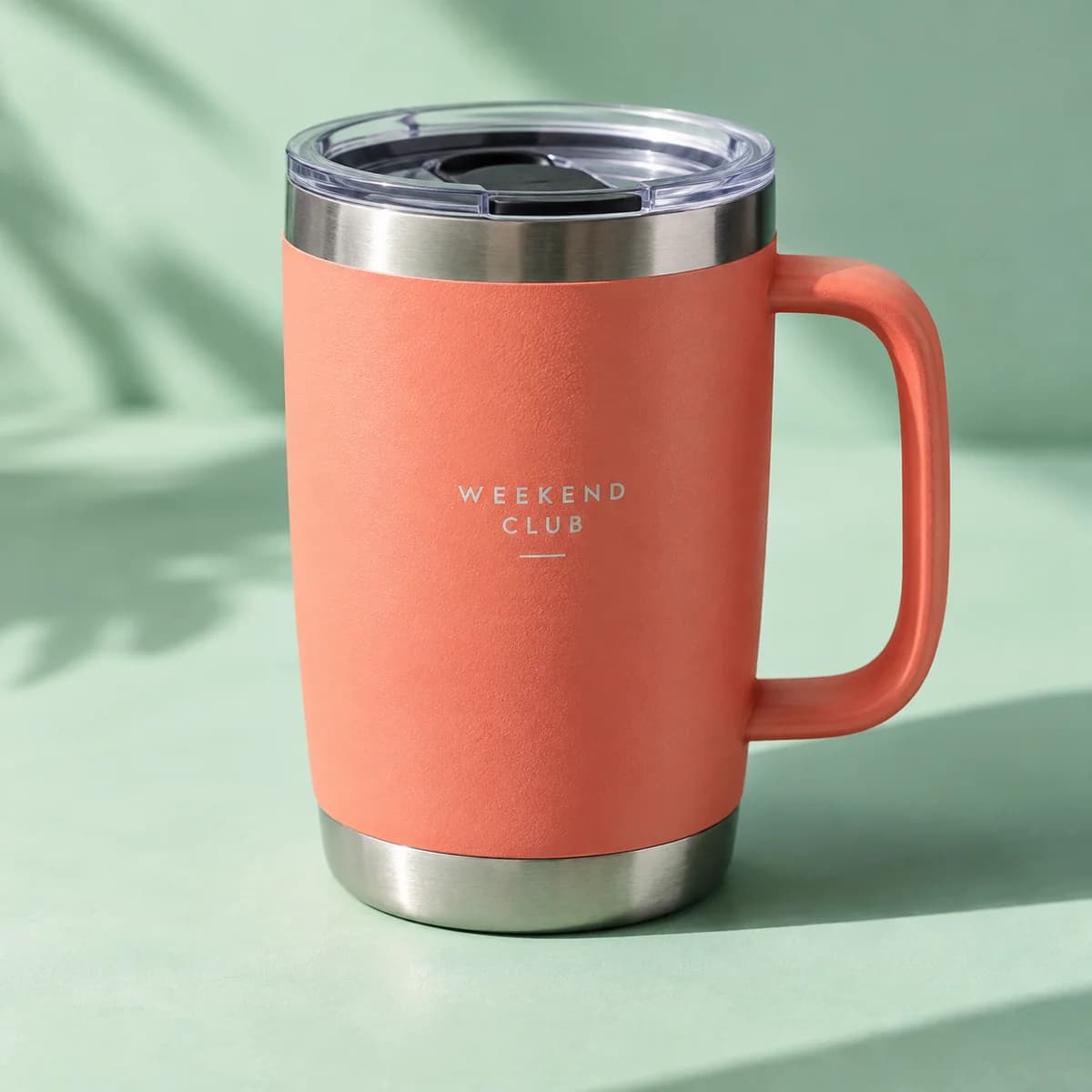
A handle splits a band into two panels. That is not a reduction in width, it is a change in structure, and a wide horizontal logotype simply does not survive it.
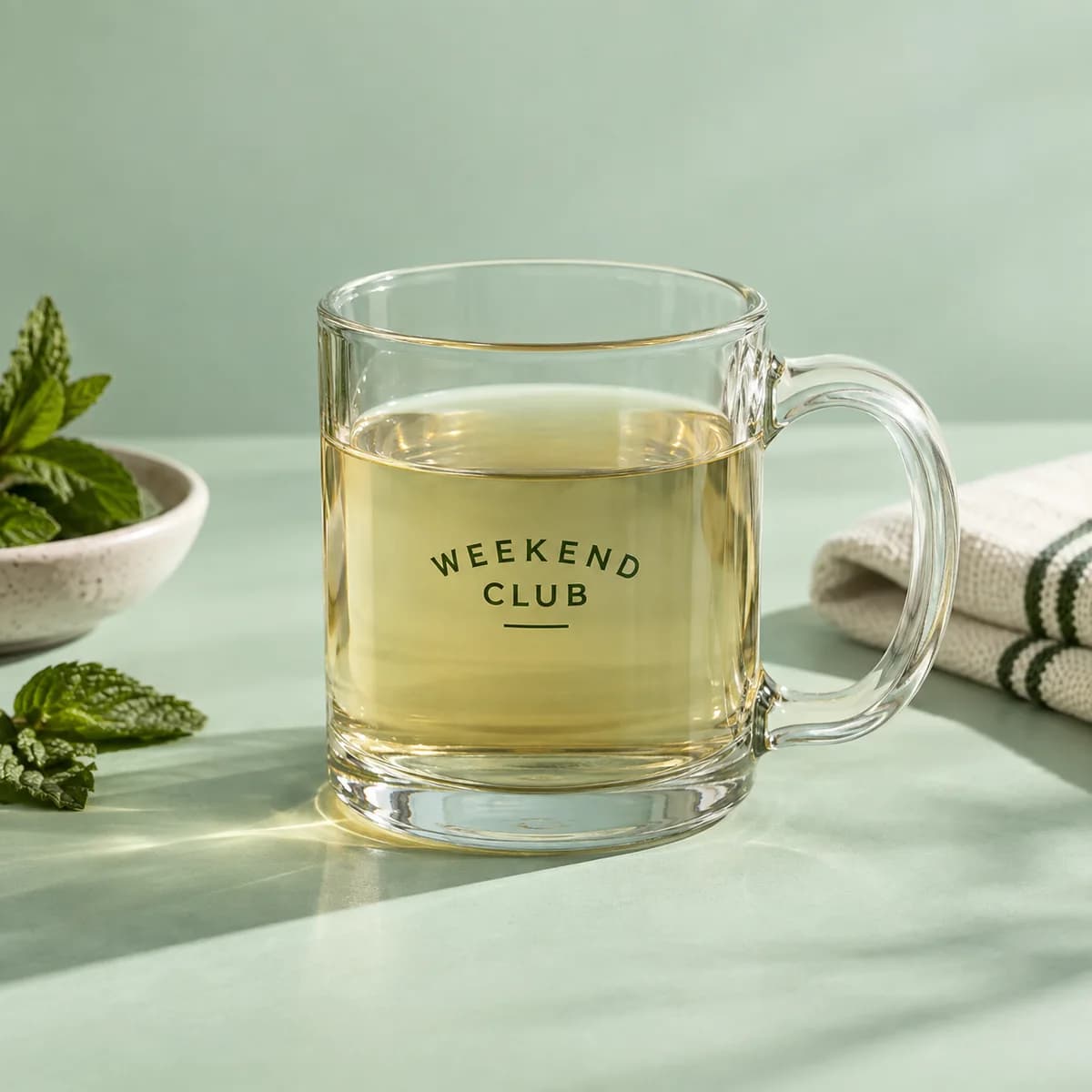
A lid removes height at the top. On a 360 degree drinking lid the whole rolled lip is covered, so measure your clearance from the top of the vessel rather than from the rim.
A carabiner, a strap loop or a flat grip panel changes the geometry again. Our aluminum water bottles ship with a carabiner, and our insulated gift set cups have flat sides for grip, which is a small flat area in an otherwise curved vessel.
Methods react to curvature differently
Curvature is also a production constraint, not only a design one.
Laser engraving and laser etching follow a rotating vessel well and are indifferent to color, so they cope with curvature easily but give you one tone. Digital inkjet on our tumblers and aluminum bottles keeps full color on a curved surface. Single color screen printing on our travel mugs transfers ink to a curved surface through a stencil, which is why it is offered as one color rather than as registered multi color. Heat transfer presses a printed film onto the surface, so it prefers a gentle, even curve to a tight one.
None of those methods will reproduce an exact brand color on demand. Our Studio works in RGB and we do not offer color matching, so plan for close rather than matched, and expect a colored vessel to shift a printed color further.
What to send us
- Name the exact product, because every vessel has a different band.
- Say one side, both sides or wrap.
- Say which decoration method you want.
- Ask us for that product's template, or send print ready artwork at the largest size you want it.
- Keep essential content in the middle third of the visible arc.
- Order one unit and look at it from three feet away before scaling up.
Curved surface checklist
- Treat circumference as a ceiling and never as an imprint area.
- Decide what happens at the seam before you design a wrap.
- Expect a handle to split the band into two panels.
- Measure lid clearance from the top of the vessel, not the rim.
- Avoid continuous horizontal rules and single wide words on wraps.
- Confirm placement with our team on the product template before production.
Frequently asked questions
How do you design artwork for a curved surface?
Work from the vessel rather than from a rectangle. Estimate circumference as pi multiplied by the diameter, subtract the handle, seam, shoulder curve and taper, then keep anything that must be read in the middle third of the visible arc. Ask us for the product template and send print ready artwork at the largest size you want it.
Why is there no bleed or safe area on drinkware in the Studio?
Because we hold no imprint sheet for those products. The size recorded against them is a layout default and their written dimensions describe the object rather than a printable rectangle. Drawing a trim line over those numbers would look like a real specification, so the canvas is presented as a visual concept and draws no guides.
Can artwork wrap all the way around a bottle?
Yes, but the design has to meet itself. Continuous horizontal rules, single wide words, regular stripes and photographs with a strong horizon all reveal the join. Irregular textures, scattered elements and color fields hide it. If you are unsure, brief one side or both sides instead of a wrap.
Does a handle reduce the print area?
It does more than reduce it: it splits the band into two separate panels. A wide horizontal logotype that fits the circumference on paper will not fit past a handle. If your mark is long and thin, choose a handleless vessel such as a tumbler or a canteen rather than a handled travel mug.
Sources & specification notes
The references below support the relevant technical or product details in this guide. Examples and checklists are not claims of practical testing or universal supplier requirements. Confirm the current specifications for your chosen product before production.
- U.S. Food and Drug Administration: Packaging and Food Contact Substances ↗
FDA framework for substances used on surfaces that contact food, cited to support keeping decoration away from food contact areas on vessels.
- ASTM C927: Lead and Cadmium Extracted from the Lip and Rim Area of Glass Tumblers Externally Decorated with Ceramic Glass Enamels ↗
Shows that the lip and rim of a decorated drinking vessel is treated as a distinct area, supporting the advice to keep wraps to the body.