What CPSIA asks of a children's product
Three duties come up in almost every conversation about branded kids apparel.
First, certification. A domestic manufacturer or importer of a children's product must generate a Children's Product Certificate certifying compliance with the applicable safety rules, and must ensure the certificate accompanies distribution of the product.
Second, tracking labels. Children's products must bear distinguishing permanent marks on the product and on any packaging, so that a consumer can identify the source and date of production. The physical tracking label does not itself need testing by a CPSC accepted laboratory and does not go in the certificate, but it must comply with the lead content requirements for children's products.
Third, lead. Children's products must not contain more than 100 ppm, that is 0.01 percent, of total lead content in any accessible component part. That applies to the parts of your decoration a child can reach, not only to the fabric.
Drawstrings on hoodies and jackets
This is the rule most often discovered too late, because hoodies are the obvious garment for a school or club order.
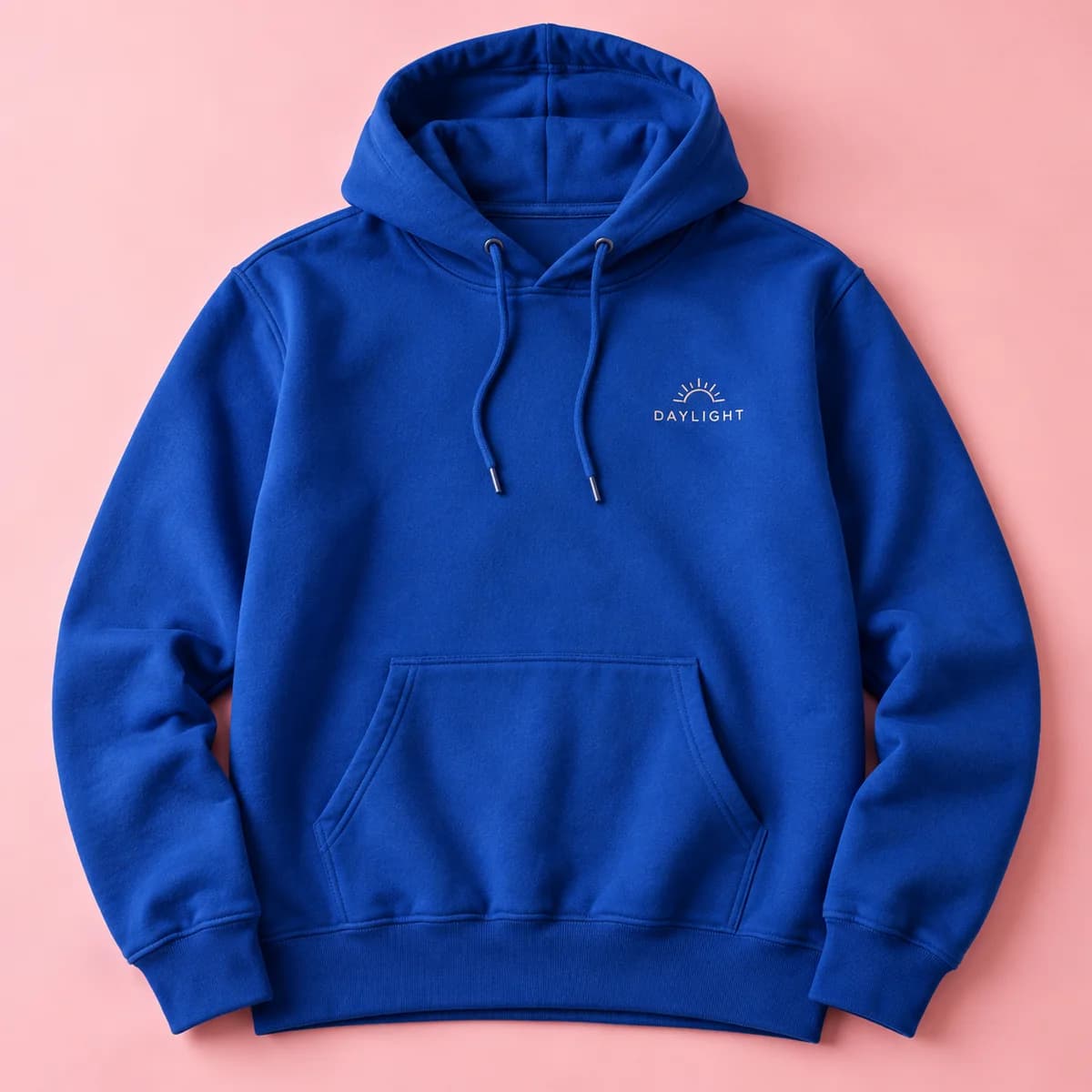
CPSC treats ASTM F1816-97 as the safety standard for drawstrings in children's upper outerwear, and in 2011 approved a federal rule requiring conformance for sizes 2T to 16. Hood and neck drawstrings are prohibited in sizes 2T to 12 or the equivalent. Waist and bottom drawstrings in sizes 2T to 16 are limited to 3 inches outside the drawstring channel when the garment is expanded to its fullest width, must be free of toggles, knots and other attachments at the free ends, and must be bar tacked if the drawstring is one continuous string.
| Garment feature | Sizes 2T to 12 | Sizes 2T to 16 |
|---|---|---|
| Hood or neck drawstring | Prohibited | Prohibited in 2T to 12 |
| Waist or bottom drawstring | Limited to 3 in outside the channel | Limited to 3 in outside the channel |
| Toggles and knots on free ends | Not permitted | Not permitted |
| Continuous drawstring | Must be bar tacked | Must be bar tacked |
The practical consequence for a branded order is simple. If you want hooded sweatshirts for children, specify garments made without hood and neck drawstrings rather than planning to cut them out yourself.
What does this mean for a decorated order?
Nothing about decoration removes these duties, and nothing about buying a compliant blank transfers them automatically either. Who is the manufacturer or importer of the finished children's product is a question about your own arrangements, and it deserves an answer before you order rather than after.
A practical position for a small buyer is to stay out of the category unless you are set up for it. Order adult sizes for adults, and if children's garments are genuinely required, work with a supplier who can tell you in writing what certification, testing and tracking label the finished product carries.
This catalogue publishes standard US adult sizes from S to 2XL on its sized garments, with caps, hats, aprons and bags in one size. Youth sizing is not a published option, so a children's run is a request that has to be confirmed with the supplier, along with everything above.
What else applies to children's clothing?
Three further areas come up regularly and are worth knowing exist, even when they do not apply to a plain tee.
- Flammability. Children's sleepwear is subject to its own federal flammability standards, and general wearing apparel has a separate flammability rule. A branded pyjama set is a very different project from a branded tee.
- Small parts and attachments. Buttons, toggles, appliques and anything that can detach are hazards for young children, and decoration that adds a three dimensional element adds that question.
- Surface coatings. Paint and similar surface coatings on children's products have their own lead limit separate from total lead content.
If your design includes a patch, a stitched on badge, a plastic label or anything raised, treat it as a component and ask about it specifically.
Practical steps before you order children's apparel
- Confirm in writing who is the manufacturer or importer of the finished product.
- Ask the supplier for the Children's Product Certificate covering the garment as decorated.
- Confirm the tracking label content and where it appears on the product and packaging.
- Specify hooded garments without hood or neck drawstrings for sizes 2T to 12.
- Confirm total lead content compliance for every accessible part, including decoration.
- Avoid detachable three dimensional decoration on garments for young children.
- Keep records. Certification is only useful if you can produce it.
Children's apparel checklist
- Treat children's apparel as a regulated product category with its own duties.
- Remember the 100 ppm total lead limit applies to accessible component parts.
- Remember the permanent tracking label on product and packaging.
- Follow the drawstring rules for upper outerwear in sizes 2T to 16.
- Do not assume a compliant blank makes a compliant finished product.
- Get a written answer from the supplier before you place a children's order.
Frequently asked questions
Do custom kids T shirts need a CPSIA certificate?
A children's product requires a Children's Product Certificate generated by the domestic manufacturer or importer, certifying compliance with the applicable rules and accompanying distribution of the product. Whether that is you depends on your arrangements with the supplier, so get a written answer about who holds that duty before you order.
What is a tracking label on children's clothing?
A distinguishing permanent mark on the product and on any packaging that lets a consumer identify the source and production information. It does not need to be tested by a CPSC accepted laboratory and is not included in the certificate, but it must itself comply with the lead content requirements for children's products.
Are drawstrings allowed on children's hoodies?
Not at the hood or neck in sizes 2T to 12 or the equivalent. At the waist or bottom in sizes 2T to 16 a drawstring is limited to 3 inches outside the channel when the garment is expanded to its fullest width, must have no toggles or knots at the free ends, and must be bar tacked if continuous.
What is the lead limit for children's apparel?
Children's products must not contain more than 100 ppm, or 0.01 percent, of total lead content in any accessible component part. That includes accessible parts of your decoration, not just the fabric. Surface coatings such as paint are subject to their own separate lead limit for children's products.
Sources & specification notes
The references below support the relevant technical or product details in this guide. Examples and checklists are not claims of practical testing or universal supplier requirements. Confirm the current specifications for your chosen product before production.
- CPSC: The Consumer Product Safety Improvement Act ↗
The statute that establishes children's product certification, tracking labels and lead content limits.
- CPSC: Drawstrings in Children's Upper Outerwear ↗
Supports the prohibition of hood and neck drawstrings in sizes 2T to 12, the 3 inch limit at waist and bottom in sizes 2T to 16, the bar tacking requirement, and the reference to ASTM F1816-97.
- CPSC: Total Lead Content ↗
Supports the 100 ppm total lead content limit for accessible component parts of children's products.
- CPSC: Tracking Label ↗
Supports the requirement for distinguishing permanent marks on children's products and their packaging.