What do you decide before you order?
Write these five lines down before you open a design tool. Each one is a question the order form will ask, and each one is easier to answer away from a mockup.
| Decision | What it sets | Where it is confirmed |
|---|---|---|
| Garment | Fabric, cut, sizes available | Product page |
| Size run | How many of each size | Size picker at checkout |
| Garment color | The background your ink sits on | Color picker at checkout |
| Decoration | Screen print, direct to garment, heat transfer or embroidery | Requested at checkout, confirmed with the supplier |
| Artwork | The file and how large it prints | Uploaded or built in Studio |
The last two are requests rather than settled facts. A decoration preference is recorded with the order and confirmed against the product's own decoration template before anything is printed. That is deliberate: a method that suits a cotton tee does not always suit a polyester cap.
Which garment should you choose?
Start from how the shirt will be worn, not from the price list. A giveaway tee at a one day event and a uniform worn four days a week are different products.
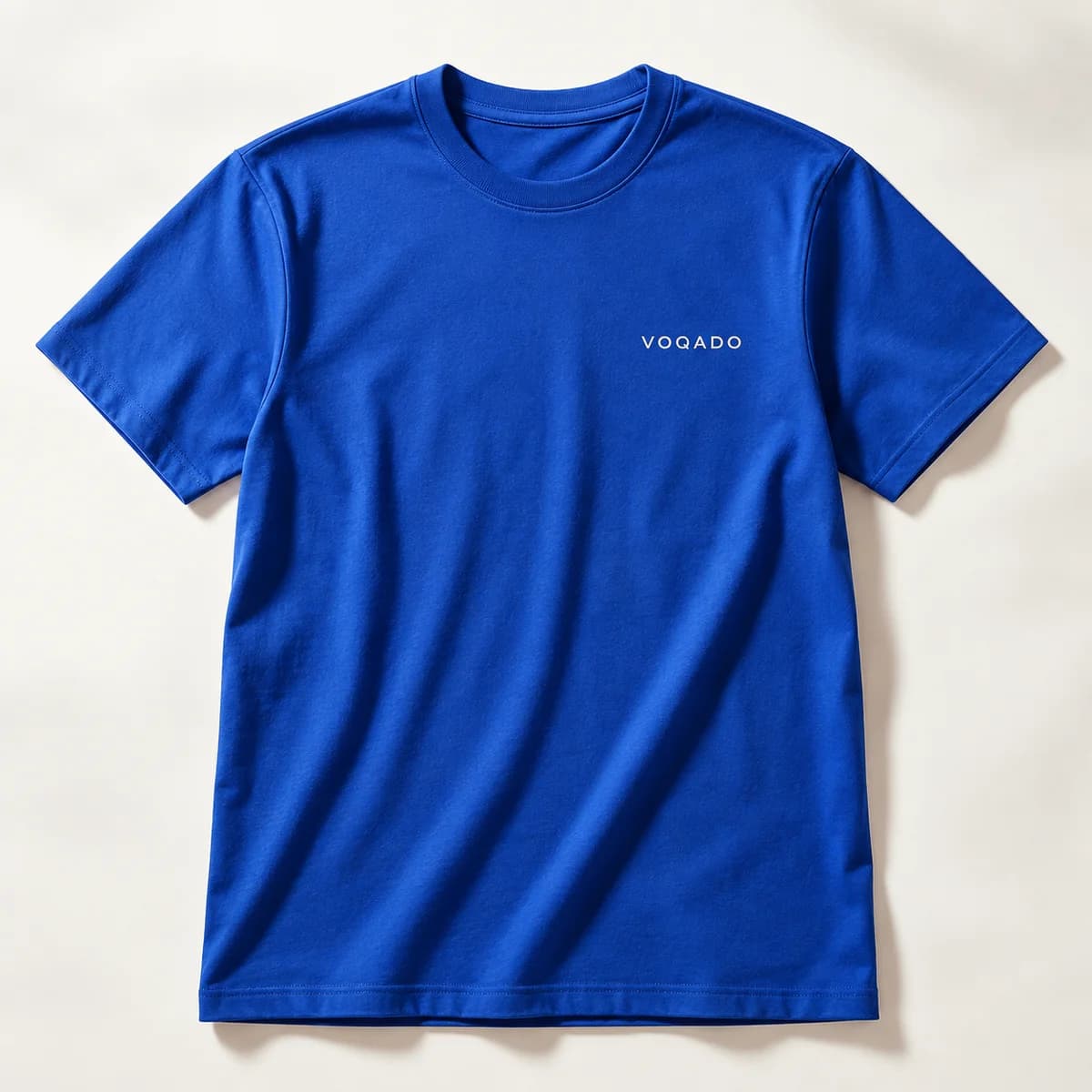
Custom T shirts are soft cotton or cotton blend, run from S to 2XL, carry a tear away label, and take print on the left chest, the full front or the back. They fit slightly small, so size up if a wearer is between sizes. Tank tops are 4.5 oz ring spun cotton with a scoop neck and a double needle hem. Long sleeve tees and V neck tees suit the same audience with a different silhouette.
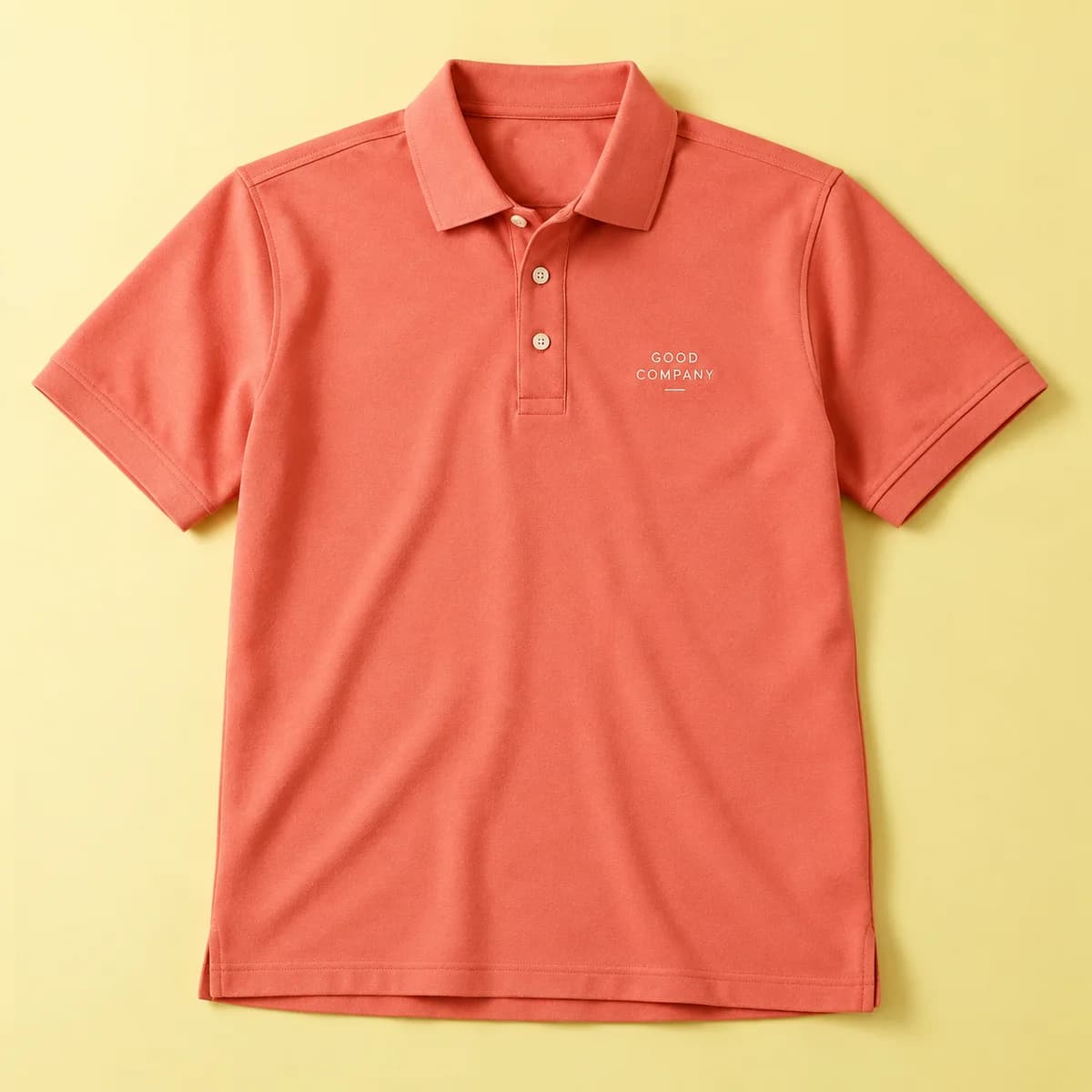
For anything customer facing, look at polo shirts, which are 6.5 oz ring spun cotton with a knit collar and are decorated with embroidery, or dress shirts in a wrinkle resistant cotton and polyester twill. Hoodies and sweatshirts work as the layer people keep.
How do you build a size run?
A size run is the count of each size, and it must add up to the order quantity exactly. If you order 50 shirts, your sizes have to total 50, or the order will tell you the numbers do not match.
The reliable way to build one is to ask. A short form with name and size, sent a week before you order, beats any distribution table. When you cannot ask, because the shirts are for a crowd you have not met, lean toward the middle and slightly larger, since an oversized tee gets worn and a tight one does not.
- Collect sizes from named people wherever you can.
- Add a small buffer of two or three shirts in the most common sizes.
- Remember that these garments fit slightly small.
- Record the final run, so a reorder can repeat or correct it.
How do you choose the garment color?
The garment color is the background your artwork sits on, and it changes the artwork more than most people expect. A logo drawn for white paper can vanish on navy.
Some products state their own color range and some do not. Tank tops, for example, are made in White, Heather Grey, Black, Navy and Red, and that is the list. Where a product does not publish a range, the swatches you see are common colors to ask for rather than a confirmed range, and the color you name is checked with the supplier before printing. If you need a specific shade, say so in plain words and expect it to be confirmed, not guaranteed.
The design studio works in RGB and produces a visual concept, not a color proof. Treat every on screen color as an approximation and plan your artwork so it survives a shade of difference.
Which decoration method suits your design?
For custom T shirts the choices are direct to garment, which handles unlimited colors, or single color screen printing, which is the better value in bulk. Back printing on this product uses direct to garment. Polo shirts and dress shirts are embroidered instead, because a knit collar and a twill placket take stitches better than they take ink. Jackets and vests take embroidery in up to 12 thread colors or heat transfer.
Count the colors in your artwork before you choose. A one color mark is a natural screen print. A photograph or a gradient is not, and trying to force it through a single screen produces a flat, disappointing result. The comparison of shirt printing methods works through the cost and quality tradeoff in detail.
What artwork should you send?
Send print ready artwork at the largest size you want it printed. Enlarging a small file at the press stage is where soft edges and jagged type come from, and no decoration method repairs a low resolution original.
Several garments in the range, including hoodies, aprons and every cap style, have no published artwork template. For those, the product's decoration template is sent to you before production and the placement is confirmed then. That is a real step in the order path, and it is the moment to check that your mark fits the panel you imagined.
What happens after you order?
The order records your sizes, your color, your placement and your decoration preference. The supplier confirms the size run, the color and the method against the actual garment. If the color you asked for is not one the product is made in, that is caught before payment on products with a confirmed range, and by the supplier check on the rest.
Budget time for that conversation. A team order placed the week of the event leaves no room for it.
Custom T shirt ordering checklist
- Choose the garment from how often it will be worn.
- Collect real sizes and make the run total match the quantity.
- Name the garment color and expect it to be confirmed with the supplier.
- Count the colors in your artwork before choosing a decoration method.
- Send artwork at the largest size you want it printed.
- Leave time for template and color confirmation before your deadline.
Frequently asked questions
What sizes do custom T shirts come in?
Custom T shirts run from S to 2XL, and the catalogue notes that the fit runs slightly small, so size up if a wearer is between sizes. Caps, hats, aprons and bags are one size instead. If you need a size outside the published run, add a production note and the supplier confirms what is available before printing.
How many shirts should I order for a team?
Order the number of people plus two or three spares in the most common sizes. Collect sizes by name rather than guessing a distribution, because an unworn 2XL costs the same as a worn medium. Whatever total you choose, the size counts have to add up to it exactly or the order will flag the mismatch.
Can I print on the back of a T shirt?
Yes. Custom T shirts take print on the left chest, the full front or the back, and back printing on this product uses direct to garment. Two print locations mean two decoration passes, so confirm both placements when you order rather than adding the second one later.
Do I get a printed proof before production?
There is no human proof approval step. What you get is the product's decoration template, sent before production for products that do not publish one, plus a supplier confirmation of size, color and method. The design studio produces an RGB visual concept, not a color proof, so send print ready artwork at final size.
Sources & specification notes
The references below support the relevant technical or product details in this guide. Examples and checklists are not claims of practical testing or universal supplier requirements. Confirm the current specifications for your chosen product before production.
- FTC: Clothes Captioning, Complying with the Care Labeling Rule ↗
Supports the point that manufacturers and importers of textile wearing apparel must attach permanent care instructions, which is why garment care is settled with the supplier rather than at the design stage.
- FTC: Threading Your Way Through the Labeling Requirements Under the Textile and Wool Acts ↗
Supports the statement that fiber content, country of origin and the identity of the responsible firm must appear on a textile label.