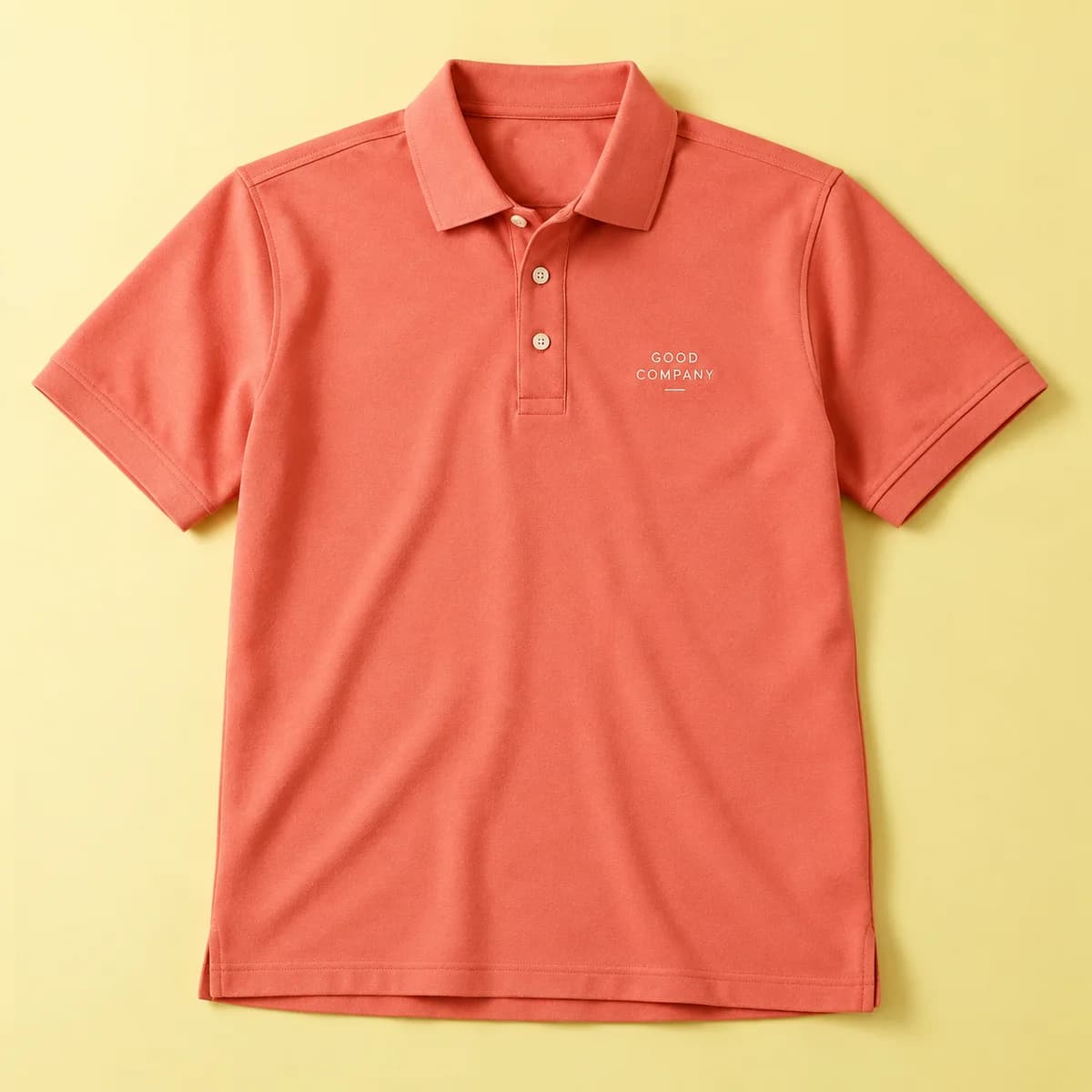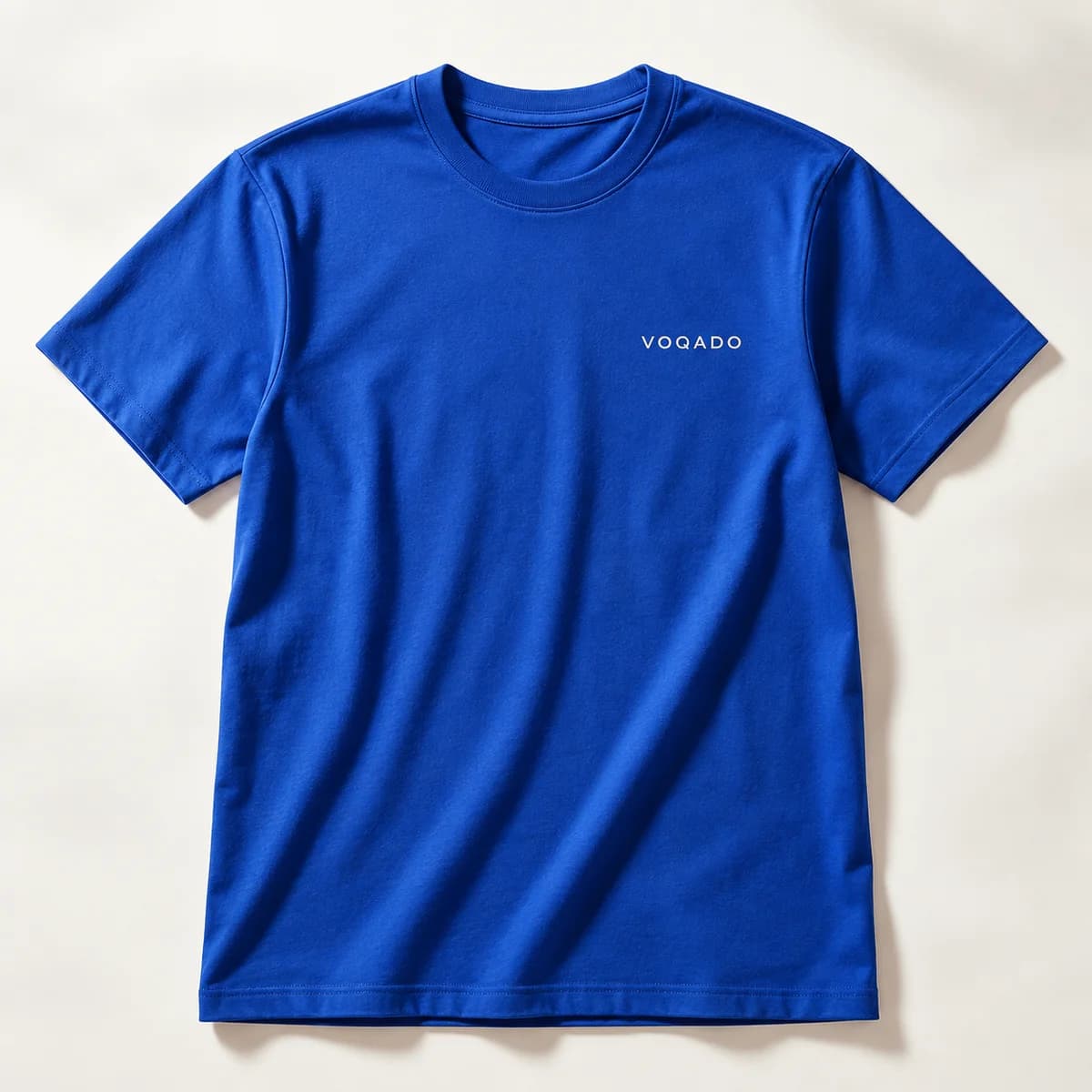
Where do prints normally sit?
| Placement | Typical width | Top edge sits | Reads from |
|---|---|---|---|
| Left chest | 3 to 4 in | About 7 to 9 in below the shoulder seam | Close, one to one |
| Full front | 10 to 12 in | About 2 to 3 in below the collar | Across a room |
| Back, upper | 10 to 12 in | Just below the yoke | Behind, at distance |
| Back, yoke strip | Up to 11 in, short height | Across the shoulder blades | Behind, at distance |
| Sleeve | 2 to 3 in | Centred on the sleeve | Side on, close |
Treat these as planning figures. The exact print area for a given garment is set by the product's decoration template, which is confirmed before production. The numbers above exist so you can lay out artwork that will not need rescuing.
How do you choose between them?
Ask who reads the shirt and from where. Staff serving customers across a counter are seen from the front at about three feet, and a left chest logo is plenty. Crowd at an outdoor event, seen from any angle at twenty feet, needs a full front or a back print with very few words.
The common mistake is buying a full front graphic for a uniform. A large logo on the chest of a person taking an order reads as merchandise rather than as staff. The opposite mistake is a left chest logo on a giveaway tee, which nobody notices and which does not make the shirt worth wearing.
- Uniform or customer facing: left chest, optionally with a small back or yoke mark.
- Event, team or merchandise: full front, or front plus back.
- Sponsor or supporter kit: full front for the cause, sleeve or yoke for the sponsor.
Why does the size run change the placement?
A print is positioned relative to the collar, not to the hem, because the collar is where the eye lands. That means a fixed print size looks proportionally larger on a small shirt and smaller on a 2XL.
On a 10 in wide full front graphic, a small shirt gives up most of its chest width, while a 2XL leaves generous margins. That is normally acceptable and often preferred, because a print that scales with the size makes a run look inconsistent when the shirts hang side by side. What is not acceptable is a print so wide that it runs into the side seam on the smallest size in your run. Check the narrowest garment you ordered, not the average.
If your run spans youth sizes through 3XL, plan on two print sizes rather than one, and say so when you order. This is a request that is confirmed with the supplier, so raise it before production rather than after.
What about seams, pockets and zips?
Decoration needs a flat, uninterrupted area. Seams, collar ribbing, pocket edges, zips and drawstring channels all create steps that a press or a hoop cannot flatten.
On a tee the risks are the side seams at the widest part of a large graphic, the collar ribbing at the top of a high placement, and the hem on anything that sits low. On hoodies, the pouch pocket and the front zip rule out the lower half of the front entirely. On polos, the placket and the buttons keep prints to the left chest.
Keep at least an inch of clear fabric between the edge of your artwork and any seam or hardware, and more if the design has a straight edge, because a straight edge makes any distortion obvious.
How should artwork be built for a placement?
Build the file at the size the print will be applied, not at the size of the shirt. A 10 in wide artboard for a full front print is correct. A shirt shaped mockup is a presentation tool, not a production file.
Send print ready artwork at the largest size you want it printed, because enlarging at the press stage is where soft edges come from. If you have a mark that appears at several placements, export it once per size rather than scaling one file, so you can thicken hairlines on the smaller version.
The design studio is a visual concept tool that works in RGB. Use it to see the idea, then send the artwork you actually want printed.
Does placement affect method?
It can. On custom T shirts, back printing is produced with direct to garment. Sleeve prints are small and awkward for some presses. Embroidery on a knit tee is limited to small marks, because jersey stretches under the needle.
If a placement matters to you more than a method does, say which one is fixed. The order records a decoration preference and a placement, and the supplier confirms both against the product's template rather than silently choosing for you.
Placement checklist
- Decide who reads the shirt and from what distance.
- Use left chest for uniforms and full front for events and merchandise.
- Check your widest graphic against the smallest garment in the run.
- Keep an inch of clear fabric away from seams, pockets and zips.
- Build artwork at the printed size, not at the shirt size.
- Name the placement in the order and expect it to be confirmed with the template.
Frequently asked questions
What size should a left chest logo be?
About 3 to 4 inches wide is the usual range, sitting roughly 7 to 9 inches below the shoulder seam so it lands on the chest rather than near the collar. Smaller than 3 inches starts to disappear at conversational distance, and larger than 4 inches begins to read as a graphic rather than a badge.
How wide should a full front T shirt print be?
Around 10 to 12 inches wide for adult sizes covers most designs without crowding the side seams. Confirm the exact print area against the product's decoration template, and test the widest point of your artwork against the smallest garment size in your run before you approve anything.
Can you print on the back and front of the same shirt?
Yes. Custom T shirts list left chest, full front and back as placements, with back printing produced by direct to garment. Two placements mean two decoration passes, so include both in the order rather than adding one later, and expect the combination to be confirmed with the supplier.
Should the print get bigger on larger sizes?
Usually not. A single print size keeps a run looking consistent when the shirts hang together, and larger garments simply show more margin. The exception is a run that spans youth through 3XL, where two print sizes make sense. Raise that before production, because it is a request the supplier confirms.
Sources & specification notes
The references below support the relevant technical or product details in this guide. Examples and checklists are not claims of practical testing or universal supplier requirements. Confirm the current specifications for your chosen product before production.
- U.S. Access Board: Guide to the ADA Standards, chapter 7 signs ↗
Used as a legibility benchmark for sizing wording on a garment that must be read across a room rather than at arm's length.
- ASTM D5034: Standard Test Method for Breaking Strength and Elongation of Textile Fabrics (Grab Test) ↗
Notes that knitted fabrics with more than about 11 percent stretch behave differently under load, which is why jersey distorts around seams and decorated areas.