What etching physically does
A laser delivers enough energy to disrupt a thin layer of the glass surface, leaving it microscopically rough. Rough glass scatters light instead of transmitting it, which is why an etch reads as a soft matte mark. Nothing has been added, so there is no layer to abrade, lift or dissolve.
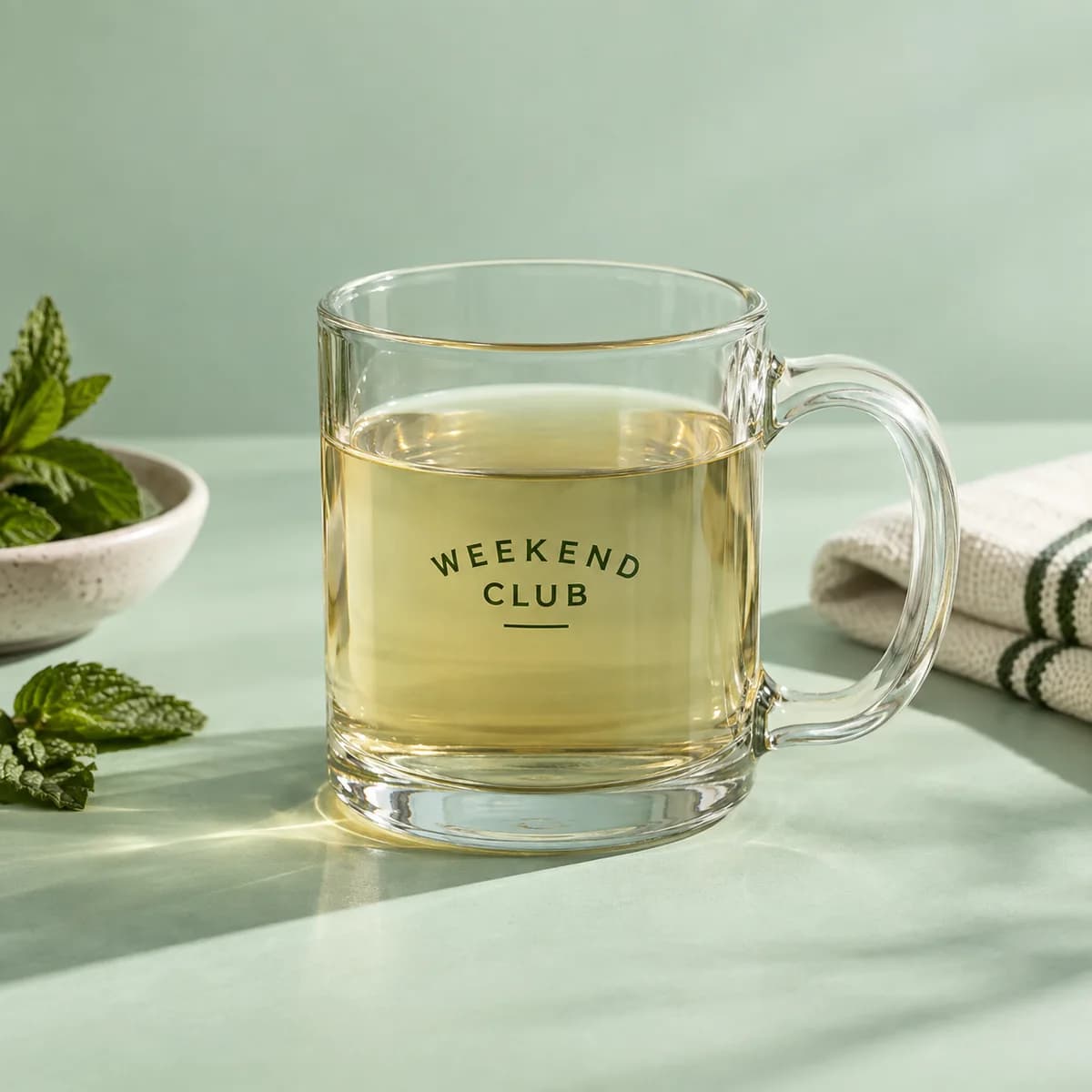
That is the basis for the durability claim on our 15.25 oz etched glass, which holds about three restaurant pours and is stated to be dishwasher safe and easy to clean.
Why an etch has one tone
An etch is either there or not there at any given point. You can vary how densely the etched dots are placed, which gives an impression of lighter and darker areas, but you cannot vary hue, and the contrast range is narrow because it is bounded by clear glass at one end and fully frosted glass at the other.
This is exactly why the product offers frosted or charcoal as design colors rather than a palette, and why photographs are discouraged. A photograph relies on a long tonal range and on color. Reduce it to a narrow two tone range on a transparent, curved surface and what survives is a smudge.
What does survive is a shape. A logotype, a monogram, a crest, a line illustration, a date, a short quotation: all of these are silhouettes, and silhouettes etch beautifully.
Preparing artwork that etches well
- Start from vector artwork or a high contrast original, not a screenshot.
- Convert the design to a single solid color and check that it still reads.
- Remove drop shadows, glows and gradients, because they become mud.
- Thicken hairlines. Very fine strokes can either disappear or close up.
- Give reversed out detail room, since the surrounding frost fills in tight gaps.
- Keep small text generous. On a curved transparent surface, small type is harder to read than on paper.
The design canvas in the Studio works in RGB and is a visual concept on a vessel like this, not the printed surface. There is no color to match on an etch anyway, which removes one of the usual worries: your brand color is not going to shift, because there is no ink.
One side or both
Our glassware can be etched on one side or both. Two sides is not automatically better.
A stemless wine glass is transparent, so a mark on the back is visible through the front, doubled and reversed. That can be an attractive effect and it can be a mess, depending on how open your design is. Dense marks on both sides interfere with each other. A single well placed mark on one side often looks more considered, and a small second mark on the reverse is a better pairing than two large ones.
Decide which mark faces the person holding the glass, and say so in the brief.
Washing, and the reason it holds up
The durability question has a real technical background. ASTM C676 is a test method for the detergent resistance of ceramic decorations on glass tableware, immersing decorated specimens in a hot sodium pyrophosphate solution to estimate how a decoration survives detergents in service. ASTM C927 then measures lead and cadmium extracted specifically from the lip and rim area of glass tumblers externally decorated with ceramic glass enamels.
Both standards exist because applied enamel decoration is a layer that can be attacked and can release metals. An etch is not a layer and carries no pigment, which is why the durability conversation is short: our etched glassware is stated dishwasher safe, and the etched finish is stated not to fade or wash off.
The lip and rim lesson still applies. Keep the design on the body of the glass rather than on the drinking edge, which is sound practice on any drinking vessel and consistent with FDA guidance on lead in foodwares for decorated items generally.
Where etched glassware fits
- Client and staff gifts where the object should outlast the campaign.
- Wedding and event keepsakes with names and a date.
- Venue glassware that has to go through a commercial dishwasher.
- Anniversary and retirement gifts, where a monogram beats a photograph.
- Anything where a single color brand mark is already the strongest asset.
Where it does not fit: full color campaign artwork, photographic gifts and any design that depends on a gradient. For those, a printed vessel or a photo keepsake is the right product instead.
Etching checklist
- Reduce the design to one solid color before you judge it.
- Choose frosted or charcoal deliberately, since those are the two options.
- Drop photographs, gradients and shadows.
- Thicken hairlines and open up reversed out detail.
- Decide one side or both, remembering the glass is transparent.
- Keep the design on the body, away from the drinking edge.
- Order one glass and hold it against a dark and a light background.
Frequently asked questions
Does laser etching on glass wash off?
No. Etching roughens the glass surface itself rather than adding a layer, so there is nothing to abrade or dissolve. Our etched stemless glasses are stated to be dishwasher safe, with a soft matte finish that will not fade or wash off. Applied enamel decoration is the kind that has its own detergent resistance test methods.
Can you laser etch a photograph onto a glass?
It is not recommended on this product. An etch has a narrow tonal range and no color, so a photograph loses the two things it depends on. Logotypes, monograms, crests, line illustrations, dates and short quotations all etch well because they are silhouettes rather than tonal images.
What colors can laser etched glassware be?
Two design colors are offered, frosted and charcoal. That is a consequence of the process rather than a limited menu: etching removes a thin surface layer rather than adding pigment, so hue is not something the method controls. If you need brand color on a vessel, choose a printed product instead.
Should you etch one side or both sides of a glass?
Both is available, but glass is transparent, so a mark on the back shows through the front reversed. Open designs tolerate that and dense designs fight each other. A single strong mark on one side, optionally with a small second mark on the reverse, usually looks more deliberate than two large ones.
Sources & specification notes
The references below support the relevant technical or product details in this guide. Examples and checklists are not claims of practical testing or universal supplier requirements. Confirm the current specifications for your chosen product before production.
- ASTM C676: Standard Test Method for Detergent Resistance of Ceramic Decorations on Glass Tableware ↗
Detergent immersion test for applied decorations on glass tableware, cited to contrast an applied enamel layer with an etch that adds no layer.
- ASTM C927: Lead and Cadmium Extracted from the Lip and Rim Area of Glass Tumblers Externally Decorated with Ceramic Glass Enamels ↗
Test method specific to the lip and rim of externally decorated drinking glasses, supporting the advice to keep design on the body of the glass.