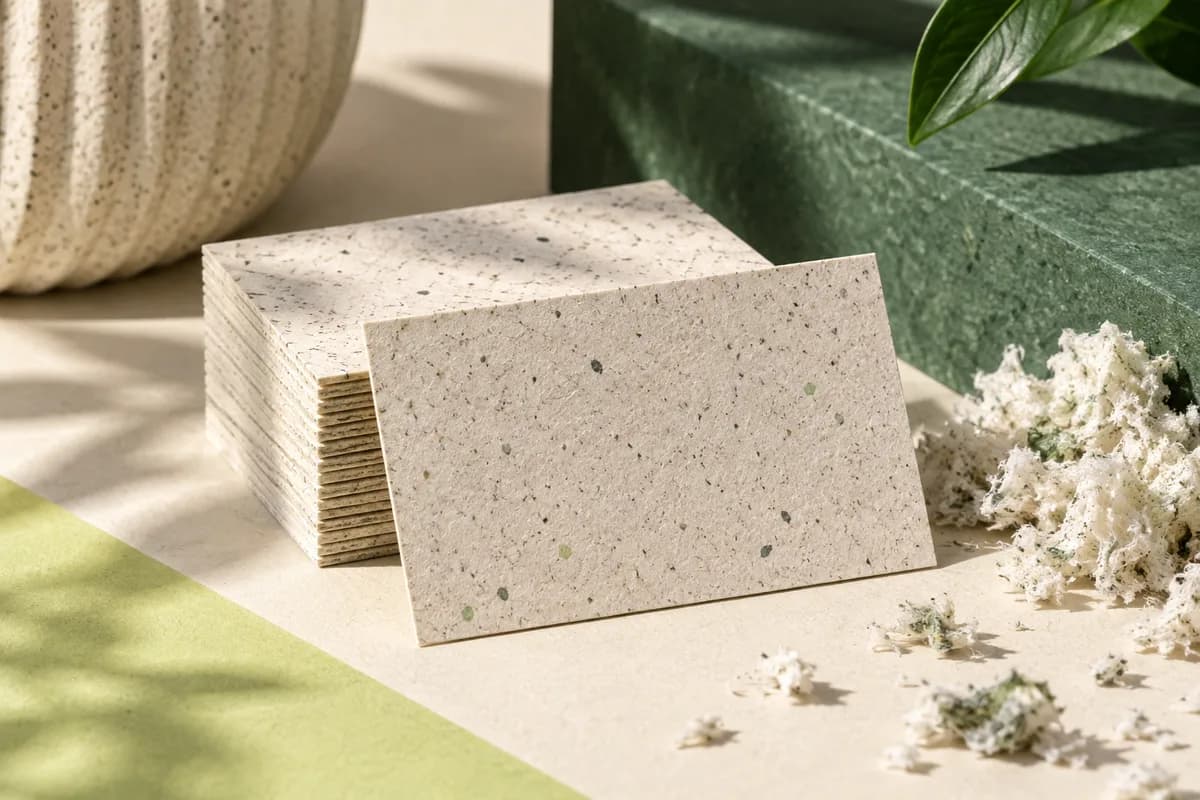
What does recycled mean on a business card?
Recycled describes an input. It tells you that some or all of the paper fiber came from material that would otherwise have been discarded. The Federal Trade Commission, in its Guides for the Use of Environmental Marketing Claims at 16 CFR 260.13, treats recycled content as material recovered from the waste stream, either during manufacturing or after consumer use.
The claim does not describe how the card looks. A speckled or earthy surface can be made from virgin fiber, and a smooth white card can contain recovered fiber. Judge the claim by documentation, not by texture.
What is the difference between preconsumer and postconsumer content?
Preconsumer content is scrap recovered during manufacturing, such as trimmings that would have gone to landfill. Postconsumer content is material that people used and then recycled, such as office paper collected from bins. The FTC allows marketers to distinguish between the two, but any stated percentage must be substantiated, and preconsumer material only counts if it would otherwise have entered the waste stream.
Ask the supplier which kind of content the stock contains and in what proportion. A figure that combines both is still useful, as long as it is presented accurately.
Is a recycled business card also recyclable?
Not automatically. Recycled content describes what went into the paper. Recyclable describes what can happen after use. The FTC guidance at 16 CFR 260.12 says an unqualified recyclable claim is appropriate only when recycling programs for the item are available to a substantial majority, at least 60 percent, of the consumers or communities where it is sold.
Finishes matter here too. A laminate, foil, plastic layer or heavy coating can limit whether a finished card is accepted by a local program. The guidance says a claim is deceptive if a component significantly limits recycling of the item. Check the finished construction, not only the base paper.
What should you ask a supplier before ordering?
Ask for product facts, tied to the exact stock and configuration in your order. The table lists common environmental terms and the question each one should trigger.
| Term on the quote | What it describes | Question to ask |
|---|---|---|
| Recycled | Recovered fiber in the paper | What percentage by weight, and is it postconsumer? |
| 100 percent recycled | Entire paper from recovered fiber | Does that include the finish and any coating? |
| Recyclable | Accepted by collection programs | Is the finished card, with its finish, accepted locally? |
| FSC Recycled | FSC label for fully recycled material | Is the stock certified, and may the label appear on my card? |
| FSC Mix | Certified, recycled or controlled sources | Which sources, and who holds the certificate? |
| Tree free or alternative fiber | Fiber from plants such as bamboo or hemp | What is the full fiber composition? |
Keep the answers with your order record. They are the evidence behind any claim you later print on the card or post on your website.
Can you print a recycled logo or FSC label on your card?
Only with permission and documentation. The Forest Stewardship Council describes three label types: FSC 100%, FSC Mix and FSC Recycled, and each depends on an independently verified chain of custody. Do not add a certification mark to artwork just because a paper range is described as certified. Ask the printer whether the stock is certified for your order and whether the label may be printed.
A plain, accurate statement is often the safer route. "Printed on recycled paper" is appropriate only when the documentation supports it. A qualified phrase such as "printed on paper with 30 percent postconsumer fiber" is more specific and easier to support.
Which recycled and natural fiber stocks are available?
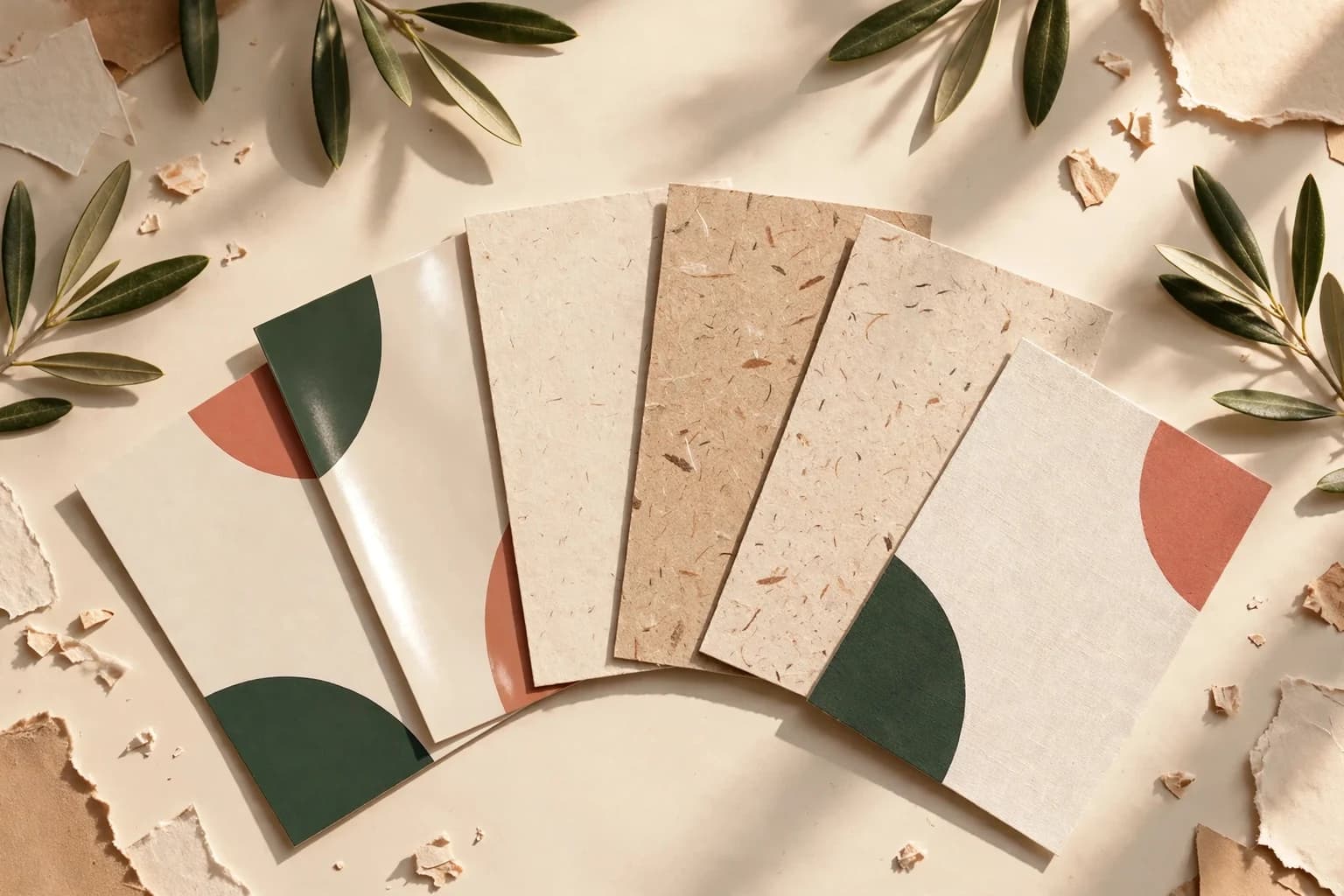
Many printers offer a recycled option alongside alternative fibers. For example, recycled matte business cards offer a smooth, shine free surface as a premium paper upgrade, while bamboo business cards and hemp blend stocks use alternative fibers with their own texture. The published catalog asks buyers to confirm final composition and stock details with the quote, which is the right moment to request the recycled content figure.
At the time of writing, 100 recycled matte cards start at $33.99, and the product page shows the current price. Kraft and other textured stocks are compared in the paper stock guide.
What should a recycled card checklist include?
- Request the recycled content percentage by weight for the exact stock.
- Ask whether the content is preconsumer, postconsumer or both.
- Keep recycled content and recyclability as two separate questions.
- Check whether the finish, coating or laminate affects recycling.
- Print a certification label only with written permission.
- Qualify partial claims with a specific percentage.
- File the supplier answers with the order record.
What is the most reliable way to reduce card waste?
Order the quantity you will actually use. Obsolete cards are a common source of waste, because a phone number change or a new job title can make a whole box useless. The guide on how many business cards to order helps size a run to real handoffs, and careful proofing avoids reprints. Those choices reduce waste directly, and they do not depend on a claim that one material is always better for the environment.
Frequently asked questions
Are recycled business cards lower quality?
Not necessarily. Modern recycled stocks can be smooth, bright and sturdy, and many look identical to virgin fiber cards. Recovered fiber can be slightly shorter, which may change feel or color, so order a sample if the surface matters. Judge quality by thickness, finish and print result on the exact stock, not by the word recycled alone.
Can I say my business cards are eco friendly?
The FTC Green Guides warn against broad claims such as eco friendly because they are hard to substantiate. Make a specific, provable claim instead, such as printed on paper with a stated percentage of postconsumer recycled fiber. Keep the supplier documentation that supports the figure, and qualify the claim if only part of the card is recycled.
Can recycled business cards go in the recycling bin?
It depends on the finished card and your local program. Plain paper cards are widely accepted, but laminates, foil, plastic layers and heavy coatings can prevent a card from being recycled. The FTC says an unqualified recyclable claim needs programs available to at least 60 percent of consumers where the item is sold. Check local rules for the finished construction.
What is the difference between FSC Recycled and FSC Mix?
FSC Recycled means the product is made from entirely recycled material under the Forest Stewardship Council system. FSC Mix means the material combines FSC certified forest fiber, recycled content and controlled wood. Both rely on a verified chain of custody, so ask the printer whether your exact order is certified before any label appears on the card.
Sources & specification notes
The references below support the relevant technical or product details in this guide. Examples and checklists are not claims of practical testing or universal supplier requirements. Confirm the current specifications for your chosen product before production.
- FTC Green Guides: 16 CFR 260.13 recycled content claims ↗
Unqualified recycled claims require the entire product, excluding minor incidental components, to be recycled; partial claims should state the percentage by weight.
- FTC Green Guides: 16 CFR 260.12 recyclable claims ↗
Unqualified recyclable claims need recycling programs available to at least 60 percent of consumers or communities where the item is sold.
- Forest Stewardship Council: FSC labels ↗
Describes the FSC 100%, FSC Mix and FSC Recycled labels and third party verification.