What are the main types of business card paper stock?
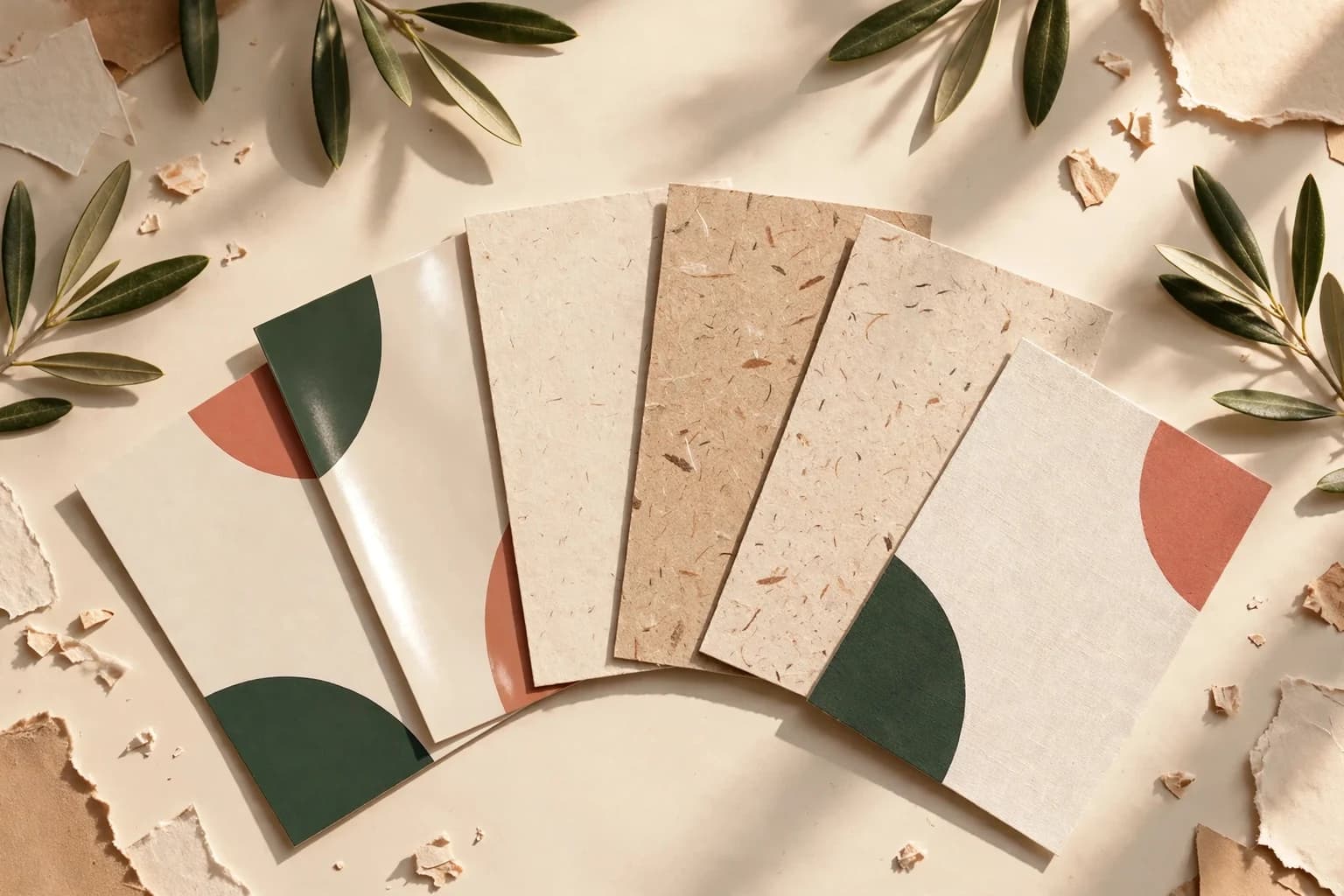
Most business card stocks fall into four families. Coated stocks, matte and glossy, have a smooth surface layer that holds ink on top of the paper for sharp detail. Uncoated stocks have no surface layer, so ink sinks in and the card feels like fine stationery. Textured stocks, such as linen and natural textured, add a pattern or tooth you can feel. Specialty stocks include soft touch laminates, pearl, kraft and alternative fibers such as bamboo and hemp.
The table compares the most common options by look, writing and best use.
| Stock | Surface | Writable | Best for |
|---|---|---|---|
| Matte | Smooth, low glare | Yes, with most pens | Everyday cards, text heavy layouts |
| Glossy | Shiny, vivid color | Not easily, the coating resists most pens | Photos and bold color |
| Uncoated | Natural, absorbent | Yes, easily | Appointment and note cards |
| Soft touch | Velvety laminate | Limited | Premium first impressions, dark designs |
| Linen | Woven texture | Yes, with care | Traditional and professional brands |
| Kraft | Brown, natural fiber look | Yes | Craft, food and handmade brands |
| Recycled | Varies by stock | Usually | Brands that document recycled content |
Matte or glossy: which business card finish is better?
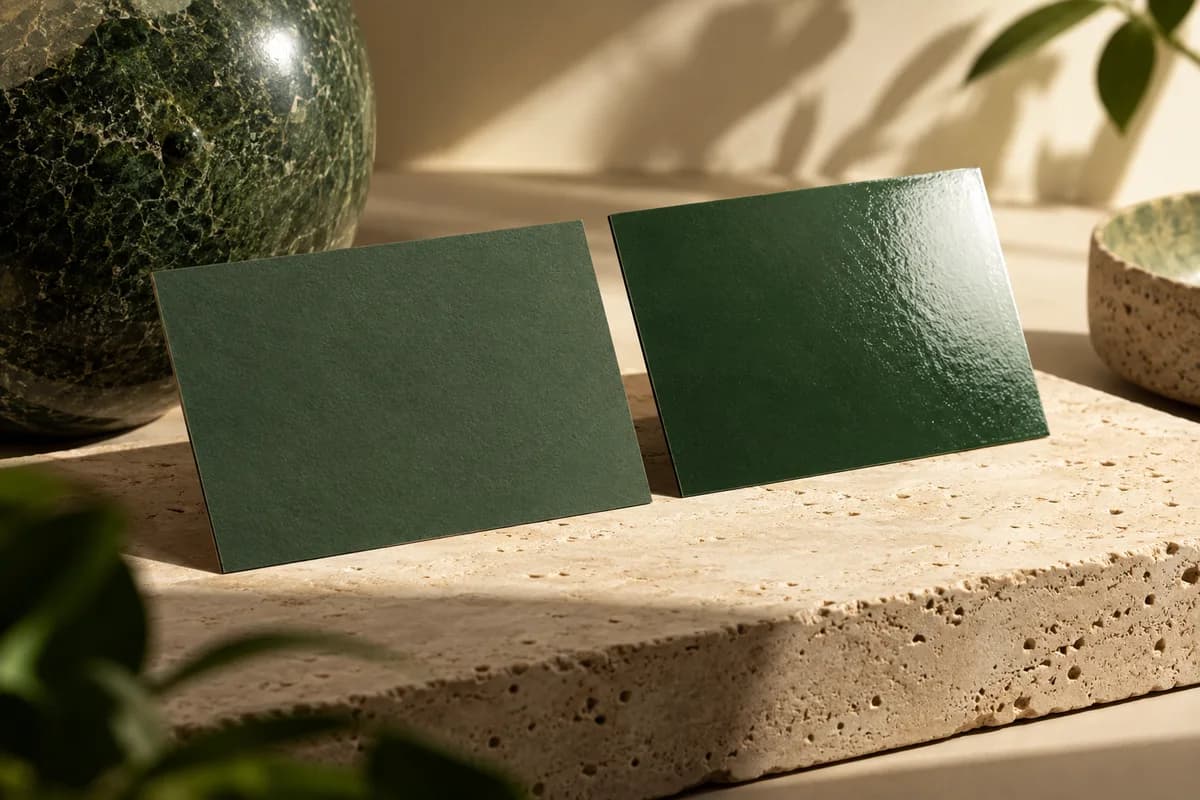
Neither is better in general; they suit different designs. Matte gives a smooth, glare free surface that keeps text easy to read under overhead light and accepts most pens. Glossy deepens color and makes photos look richer, but it reflects light and resists writing. For a card that is mostly type and contact details, matte is the safer default. For a card that leads with an image, glossy often looks stronger. The matte vs gloss business cards guide goes deeper into the tradeoffs.
When should you choose uncoated business cards?
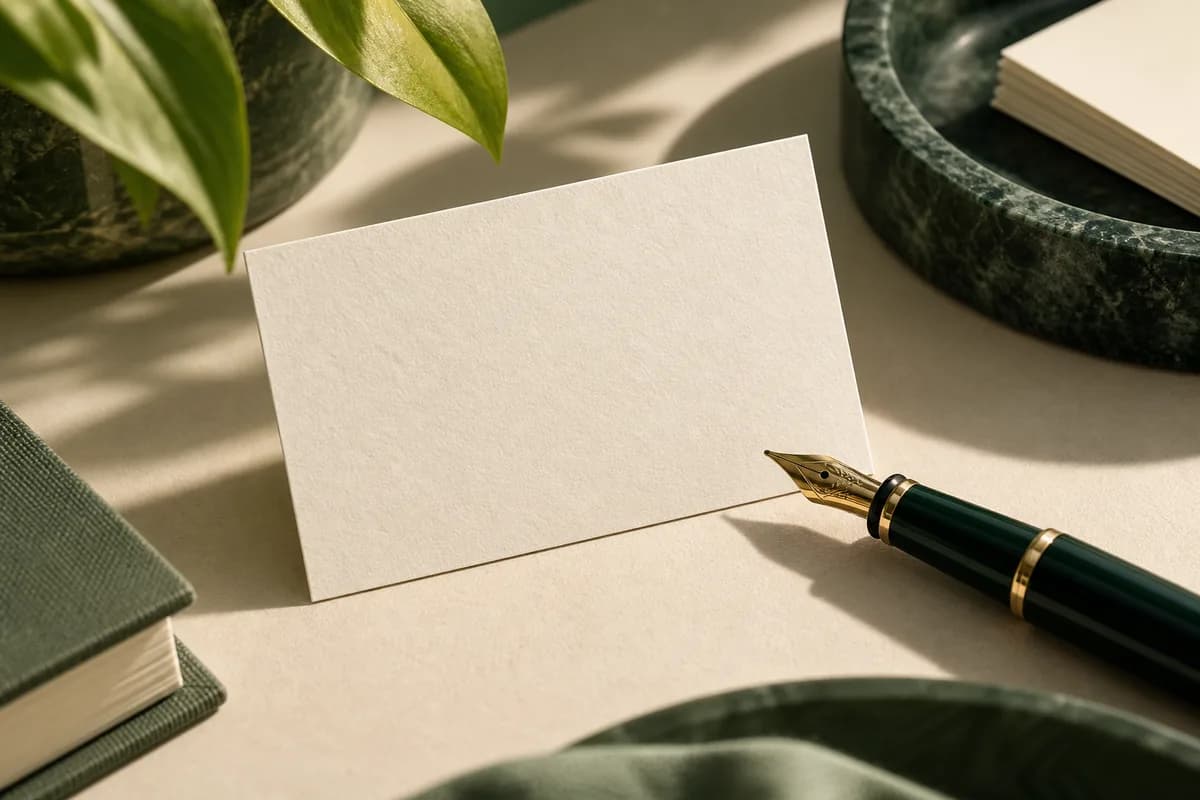
Choose uncoated stock when people will write on the card, for example to add an appointment time, a table number or a personal note. Pencil and ballpoint both work well on it. The tradeoff is color: ink absorbs into the fibers, so colors look softer and fine lines spread slightly. Bold, simple layouts work best. The guide to uncoated business cards for writing covers pen tests and layout tips.
How thick should a business card be?
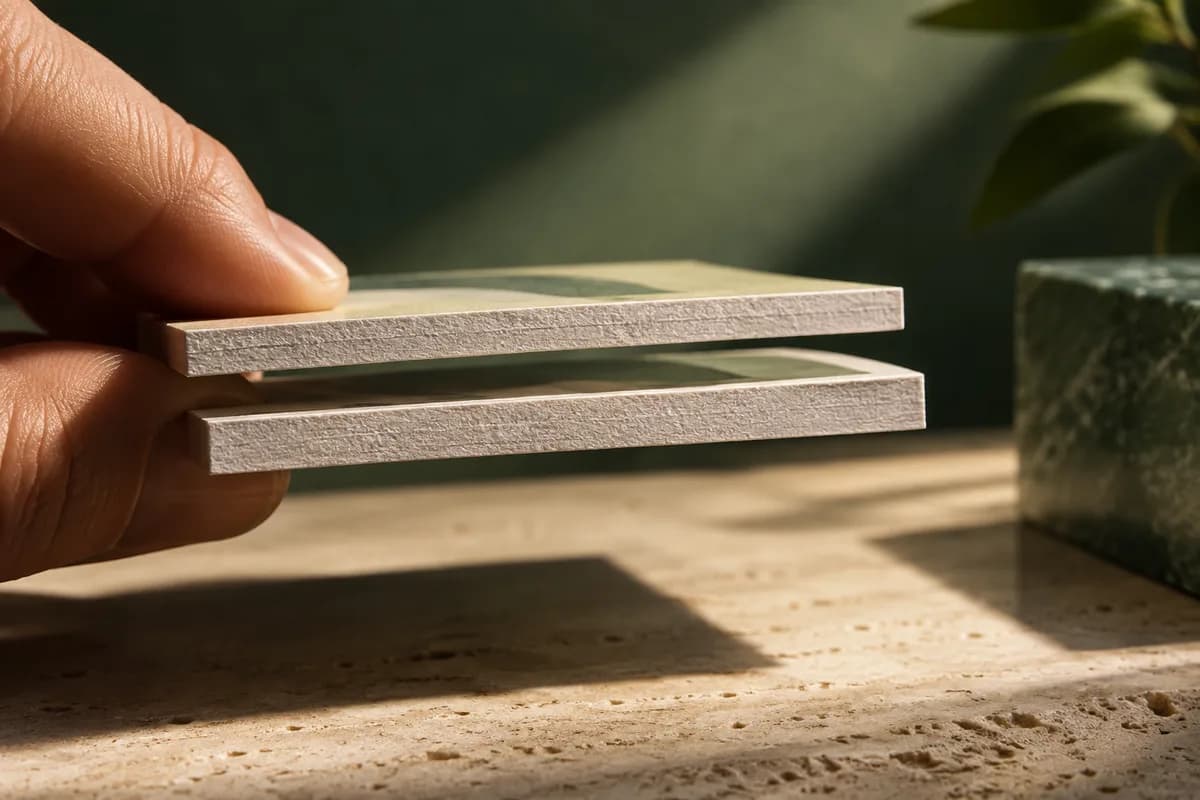
Thickness is measured as caliper, in points. One point is one thousandth of an inch, so a 14pt card is 0.014 inch thick and a stack of 100 is about 1.4 inches tall. Within one catalog, the figures give a direct comparison: standard cards use 14pt cardstock, Premium Plus cards use 18pt stock, and ultra thick cards are 32pt, a little more than twice the standard figure.
Thicker cards feel more substantial and resist bending, but they can be tighter in some holders and may limit which finishes are available. Paper weight in GSM is a different measure, mass per area, and it does not convert reliably into thickness. The guide to GSM vs pt explains why.
What are premium business card stocks?
Premium stocks change how a card feels in the hand. Soft touch uses a laminate with a velvety, matte like surface that makes dark and saturated designs look deep. Linen has a fine woven texture that suits traditional professional brands. Pearl has a subtle shimmer. Kraft has a brown, natural look. Painted edge and ultra thick cards add visible depth at the edge.
Premium finishes are best used where the handoff itself matters: client meetings, luxury retail, creative studios. For large volume handouts at events, an everyday stock is usually the practical choice, with a smaller run of premium cards for key contacts.
Are recycled and alternative fiber cards a good choice?
They can be, provided the claim behind them is documented. Recycled stocks contain recovered fiber, and alternative fiber stocks such as bamboo and hemp blend use plant fibers other than wood. The FTC Green Guides say an unqualified recycled claim requires the whole product to be recycled material, apart from minor parts, so partial content should be stated as a percentage by weight. Ask the supplier for the figure before printing any claim, and read the guide to recycled business card claims for the questions to ask.
How do you choose the right paper stock?
- Decide whether people will write on the card.
- Choose glossy for photos, matte for text, uncoated for writing.
- Compare thickness in points, not GSM.
- Check that a thick stock still fits your holder or wallet.
- Save premium finishes for key contacts and first impressions.
- Ask for documented recycled content before printing a claim.
- Handle physical samples before ordering a large run.
How do you compare stocks before ordering?
Feel beats description. A physical sample shows thickness, texture, glare and how ink sits on each surface in a way that no photo can. The business card sample kit brings 16 printed samples across everyday and premium papers, finishes and shapes to your desk for $1 with free standard US shipping, so you can compare stocks such as soft touch, linen, kraft, pearl and ultra thick side by side. The exact mix can vary with stock on hand.
Once you have a favorite, check it with your own layout. Print the design at actual size on plain paper, place it over the sample and look at contrast and spacing together. Then choose the stock on the business card collection page and upload or design your artwork. Test your usual pen on the chosen sample if the card will be written on.
Frequently asked questions
What is the most common business card paper?
A smooth coated cardstock around 14pt thick, in a matte or glossy finish, is the everyday choice at many printers. It is sturdy enough to hand out, fits standard holders and prints sharp detail. Matte is often preferred for text heavy cards because it reduces glare and accepts most pens, while glossy suits photo led designs.
Can you write on matte business cards?
Yes, most pens and pencils write well on matte stock, which is why it is a popular everyday finish. Very smooth coatings can slow some gel inks, so test the pen you usually carry. If writing is central to how the card is used, such as appointment cards, an uncoated stock is the most reliable surface for any pen.
Is 32pt too thick for a business card?
No, but it is a deliberate choice. A 32pt card is 0.032 inch thick, a little more than twice a 14pt card, so it feels rigid and substantial. It suits premium first impressions rather than bulk handouts. Check that it fits your holder, and confirm which finishes and shapes are available at that thickness before designing around them.
What paper is best for a luxury business card?
Luxury cards usually combine a premium surface with extra thickness. Soft touch gives a velvety feel, linen adds a traditional woven texture, and ultra thick or painted edge stocks add visible depth. Pair the stock with a restrained layout so the material does the work, and order samples first, because feel is the whole point of a luxury card.
Sources & specification notes
The references below support the relevant technical or product details in this guide. Examples and checklists are not claims of practical testing or universal supplier requirements. Confirm the current specifications for your chosen product before production.
- Neenah Paper: caliper definition on a product specification page ↗
Defines caliper as sheet thickness in thousandths of an inch (points or mils). Product values are not Voqado specifications.
- FTC Green Guides: 16 CFR 260.13 recycled content claims ↗
Partial recycled content should be qualified with a percentage by weight.
- Neenah Paper: basis weights reference ↗
Defines basis weight as the weight of a 500 sheet ream at a standard size.