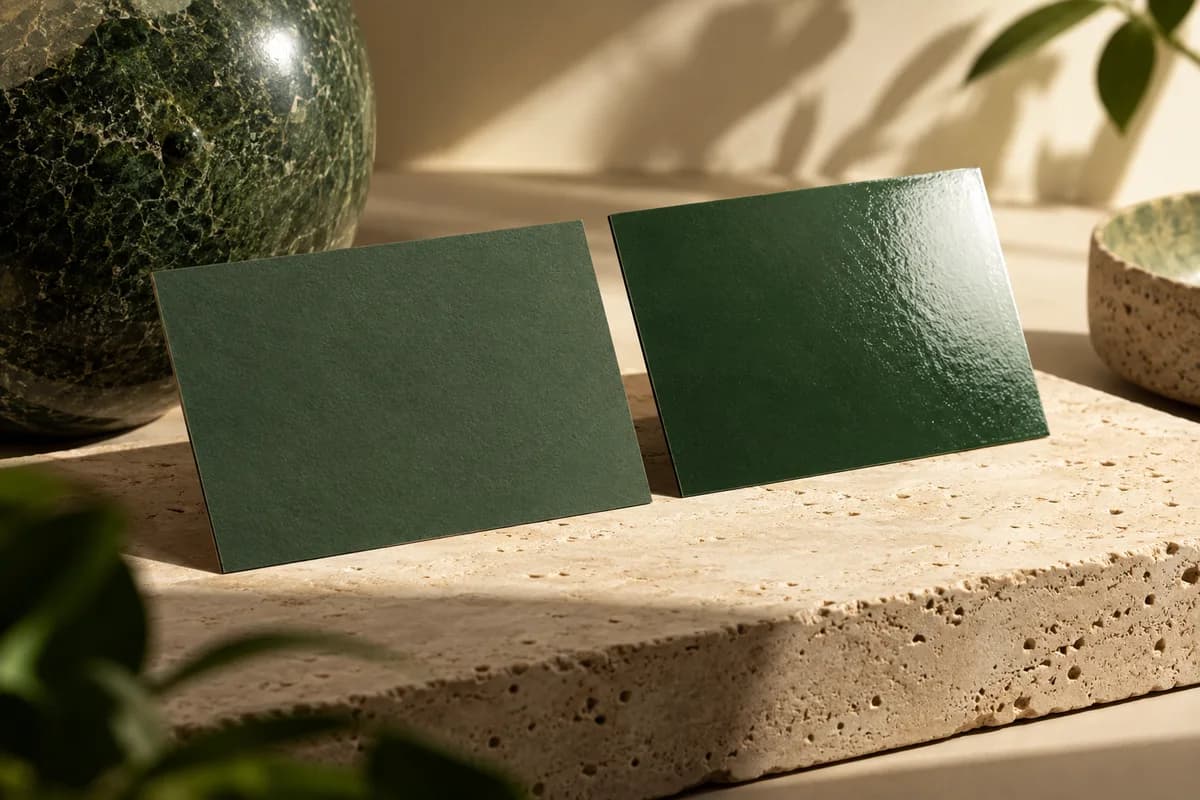
What is the difference between matte and glossy business cards?
Both finishes usually start as coated paper: a mineral coating fills the paper fibers so ink sits on the surface instead of soaking in. The difference comes from how smooth that surface is made and how much light it reflects straight back. A glossy sheet is polished so light bounces off in one direction, like a mirror. A matte sheet scatters light, so you see the printed color with far less shine.
That is why the same design can feel different on each. Gloss makes dark areas look deeper and photos look sharper. Matte makes type calmer and easier to read under office lights, and it tends to hide small fingerprints better than a mirror finish.
How do gloss levels compare?
Gloss is measured in gloss units with a glossmeter. The scale is anchored to a polished black glass reference that reads 100 gloss units, and different angles are used for different surfaces: 60 degrees for most materials, 20 degrees for very glossy ones and 85 degrees for very matte ones.
| Finish (100 lb cover, one mill) | Gloss standard | Average caliper | What you see |
|---|---|---|---|
| Gloss | 72 | 0.0091 in | Bright reflections, saturated photos |
| Silk | 43 | 0.0097 in | Soft sheen, balanced color |
| Matte | 25 | 0.0106 in | Low glare, muted color |
| Uncoated | Not in this guide | Varies | Natural paper feel, softest color |
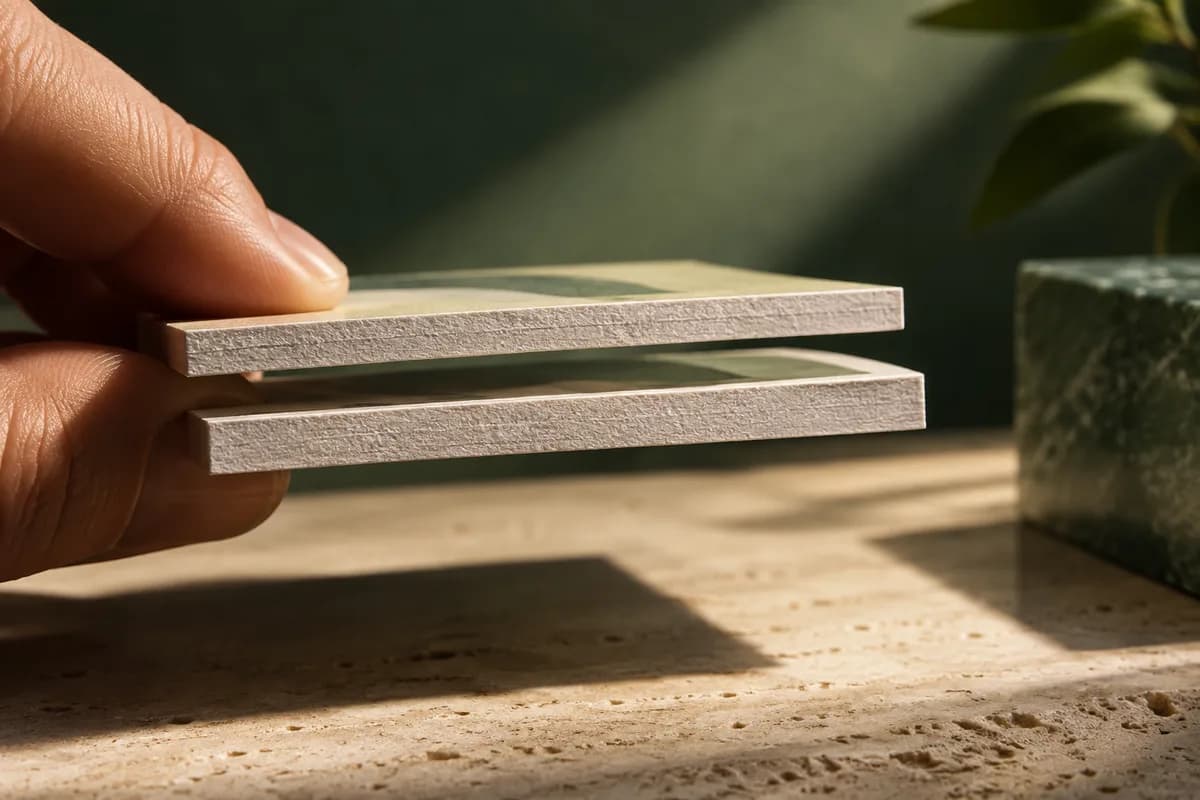
The figures come from Sappi's specification guide for its McCoy sheets. Notice the caliper column: at the same basis weight, the matte sheet is thicker than the gloss sheet, usually because the polishing that creates gloss also compresses the sheet. Finish and thickness interact, so compare finished cards, not just paper names.
Which finish is better for photos and bold color?
Choose gloss when the card leads with photography, rich color or a dark full bleed background. Real estate, food, travel and photography cards often fall in this group. The trade off is glare: under a bright light, a tilted glossy card can hide a phone number behind a reflection. Keep contact details large and high contrast if you choose gloss.
Matte still prints photos well, but it lowers their apparent contrast. Blacks look slightly softer and bright colors look calmer, which many brands prefer because it reads as understated rather than flashy. If your design relies on a deep black background, ask for a proof on both stocks: a large solid area shows the difference between finishes more clearly than any description. Brand colors can also shift a little between finishes, so check a printed sample against your brand guide rather than your screen.
Does the finish affect durability and handling?
Coated finishes protect the printed ink better than uncoated paper, so both matte and gloss cards resist light moisture and scuffing reasonably well in a wallet. Gloss tends to show fingerprints and fine scratches because any mark breaks its even reflection. Matte hides small marks, though a very dark matte card can burnish where fingers rub it. Neither finish is waterproof. If cards will be handled heavily, such as loyalty or appointment cards, look at a sample after carrying it around for a day, and consider a laminated or plastic option for the toughest jobs.
Which finish is easier to read?
Matte usually wins for text heavy cards, small type and pale backgrounds, because it reflects less light back into the reader's eyes at an angle. If your card carries a QR code, matte also reduces the chance that a reflection interrupts a scan, though you should still test the printed card with a phone.
Can you write on matte or glossy business cards?
Most pens skid or smear on glossy coatings. Matte coatings accept pencil and many ballpoint pens, but results vary by coating and ink, so test the exact stock if you plan to write appointment times on it. For cards that must be written on every day, uncoated business cards for writing are the more reliable choice. Some printers also offer a glossy front with an uncoated back, which keeps a photo bright on one side and leaves a writable surface on the other, so ask whether the two sides can differ before you settle on one finish for the whole card.
How much do matte and glossy business cards cost?
On the current price list, the matte business card listing starts at $14.99 for 100 cards and the glossy business card listing starts at $15.99 for 100. Other options, such as rounded corners or double sided printing, change the price, and the product page shows the exact configuration before payment.
What about soft touch and other finishes?
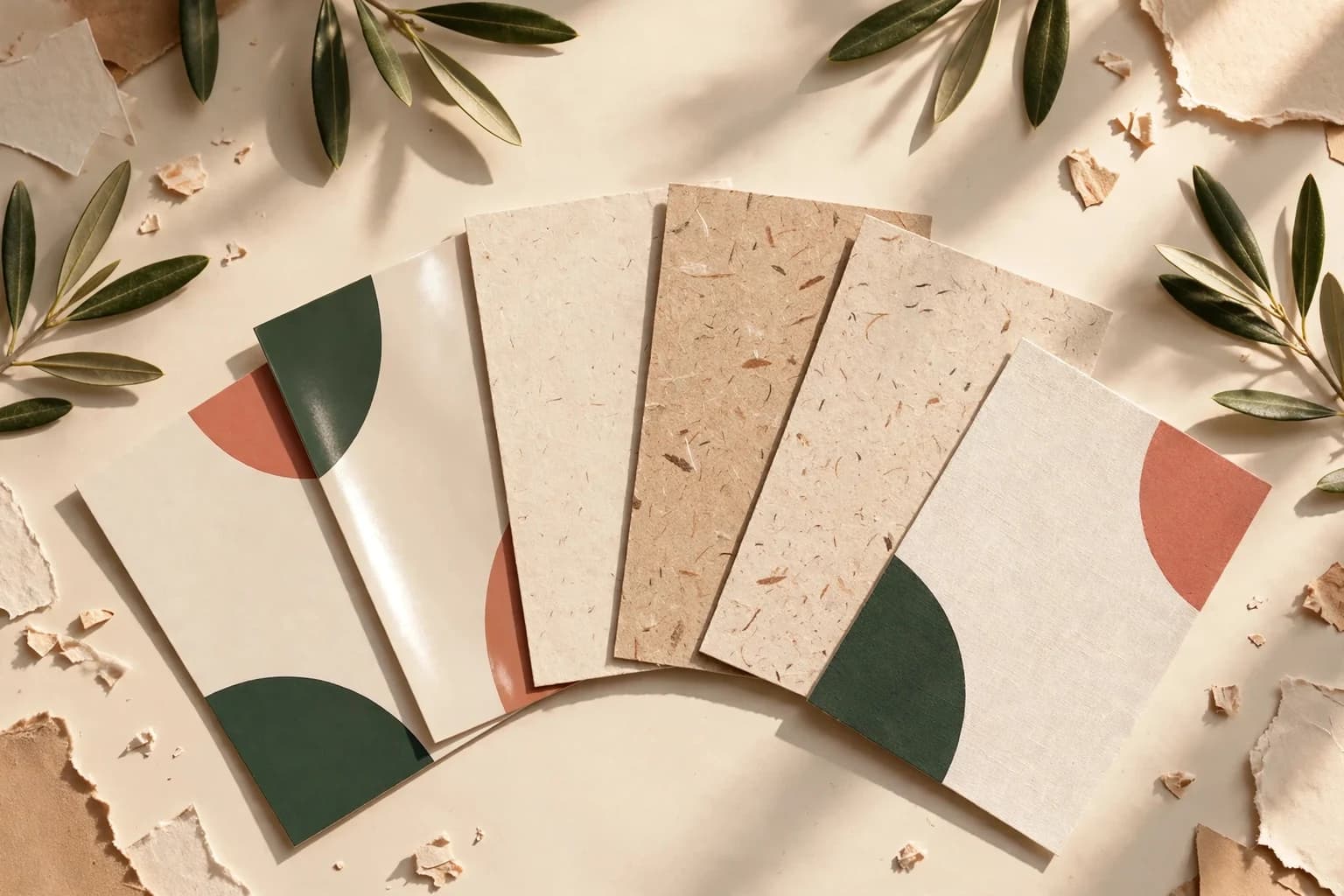
If neither finish feels right, soft touch business cards add a velvety laminate that is even lower in sheen than matte. Silk sits between the two. The easiest way to compare them is the business card sample kit, which puts 16 papers, finishes and shapes in your hand for $1.
How do you choose between matte and gloss?
- Photo led or dark design: consider gloss
- Text led, small type or pale background: consider matte
- Needs handwriting: consider matte or uncoated, and test the pen
- Will be read under bright or angled light: favor matte
- Carries a QR code: test scanning on the finished stock
- Unsure: order samples and compare them at arm's length
Frequently asked questions
Are matte or glossy business cards more professional?
Neither finish is more professional on its own. Gloss suits photo led and color rich designs, while matte suits text led, minimal and pale designs because it reduces glare. Choose the finish that keeps your name and contact details easiest to read in the places people will look at the card, and check a printed sample before ordering a large run.
Can you write on glossy business cards?
Usually not well. The polished coating resists most pens, so ink can skid, smear or take a long time to dry. Some permanent markers work, but results vary. If you plan to write appointment times or notes on cards, choose matte or, better still, uncoated stock and test the pen you actually use.
Does matte or glossy show fingerprints more?
Glossy surfaces tend to show fingerprints and smudges more because they reflect light evenly and any mark breaks that reflection. Matte surfaces scatter light, which hides small marks better, although very dark matte cards can still show scuffs. If handling is heavy, look at a sample after passing it around a few times.
Are glossy business cards more expensive than matte?
Often the difference is small. On the current Voqado price list, matte cards start at $14.99 for 100 and glossy cards start at $15.99 for 100. Upgrades such as rounded corners, double sided printing or premium papers usually change the price more than the finish choice does.
Sources & specification notes
The references below support the relevant technical or product details in this guide. Examples and checklists are not claims of practical testing or universal supplier requirements. Confirm the current specifications for your chosen product before production.
- Sappi North America: Specification Guide (McCoy, Opus and other coated papers) ↗
Mill specification tables listing gloss standard, average caliper and basis weight by finish. McCoy 100 lb cover lists gloss 72 at .0091 inch, silk 43 at .0097 inch and matte 25 at .0106 inch.
- Konica Minolta Sensing: Understanding gloss standards and units ↗
Instrument maker explanation of gloss units based on a polished black glass reference of 100 GU, and of the 20, 60 and 85 degree measuring geometries.