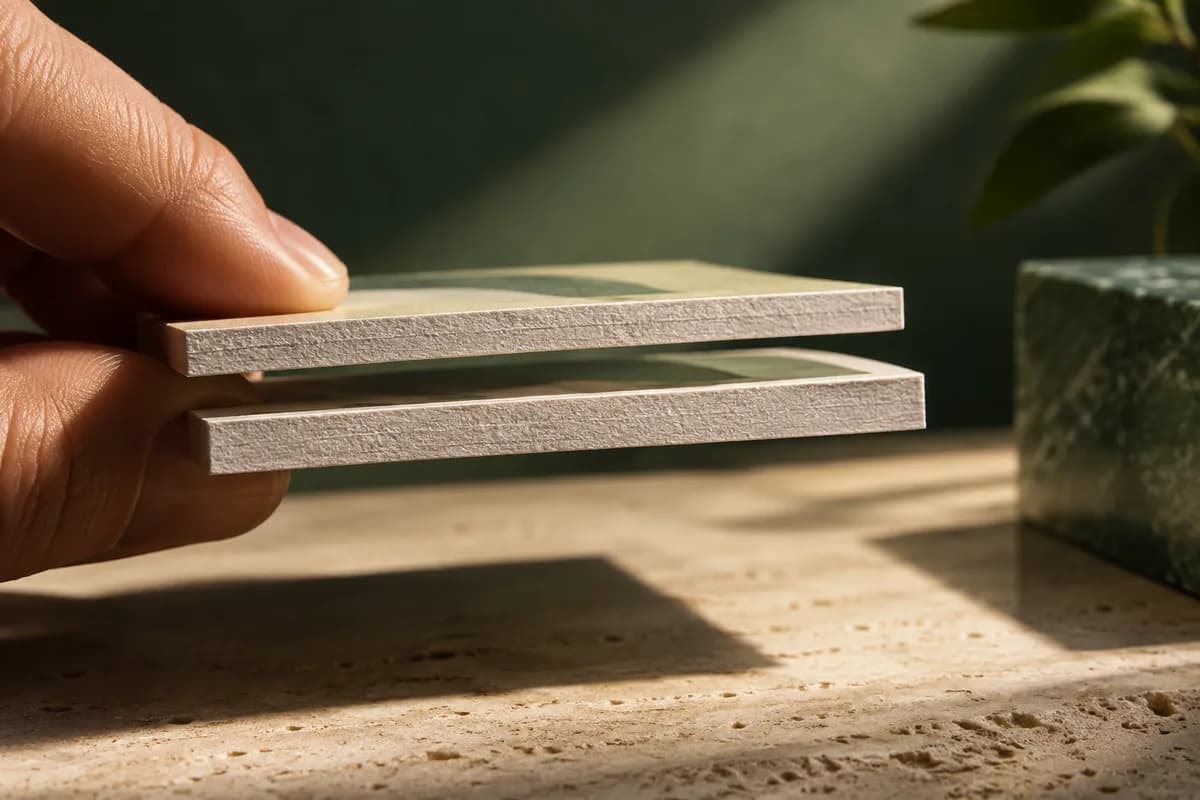
What does pt mean on business card paper?
In North American printing, pt is short for point, a unit of caliper, which is the thickness of a single sheet. Paper mills state caliper in thousandths of an inch and call each thousandth a point or a mil, so 14pt means 14 thousandths of an inch. This point has nothing to do with the typographic point used for font sizes.
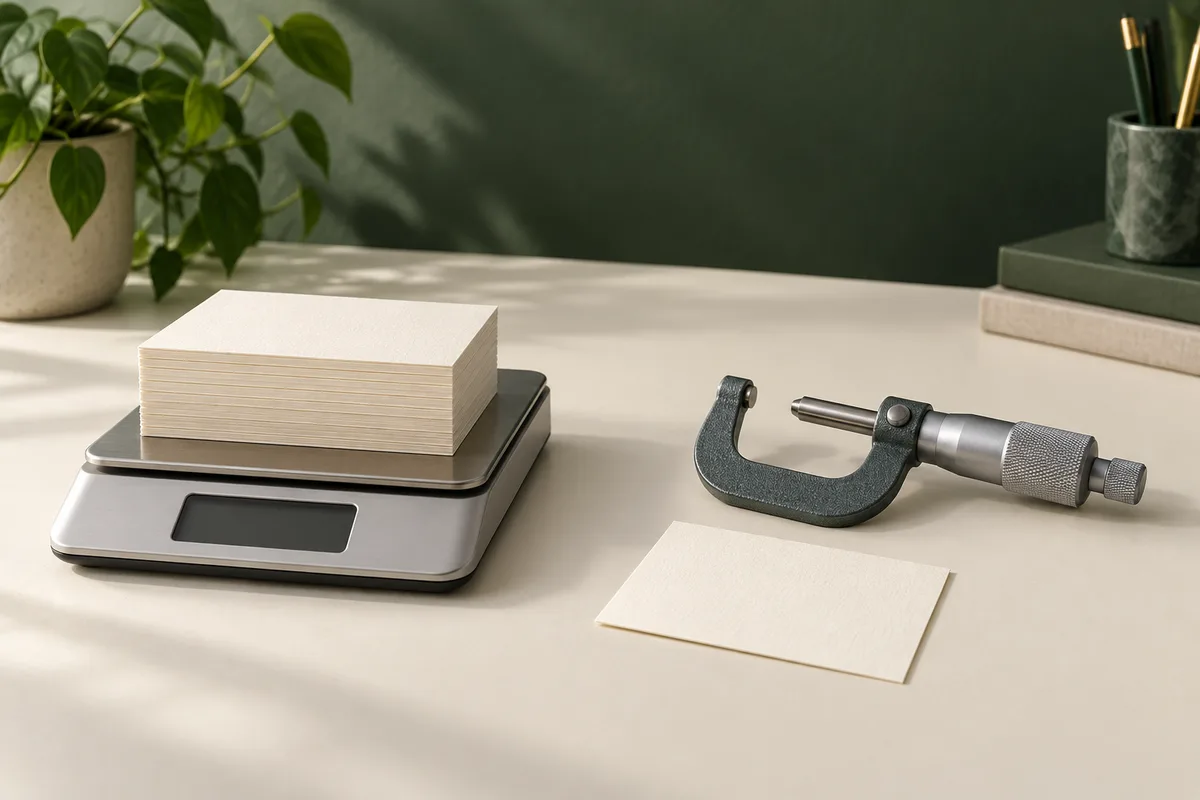
Caliper is measured with a micrometer on the finished sheet. Coatings, laminates and finishing all add to the number, which is why the caliper of a completed card can differ slightly from the paper it started as.
How thick are common business card stocks?
| Caliper | Inches | Millimeters | Typical use |
|---|---|---|---|
| 14pt | 0.014 | 0.36 | Everyday standard cards |
| 16pt | 0.016 | 0.41 | Slightly firmer standard cards |
| 18pt | 0.018 | 0.46 | Premium, noticeably rigid cards |
| 32pt | 0.032 | 0.81 | Ultra thick statement cards |
For reference, Voqado sells standard 14pt business cards, offers foil and embossed gloss cards on 14pt or 16pt stock, and sells Premium Plus cards at 18pt and ultra thick 32pt cards. The gaps between those steps are much larger than the gap between 14pt and 16pt, which is worth remembering when a listing describes a card as thick: always ask for the caliper in points or thousandths of an inch, and ask whether it was measured before or after coating.
Is card thickness the same as paper weight?
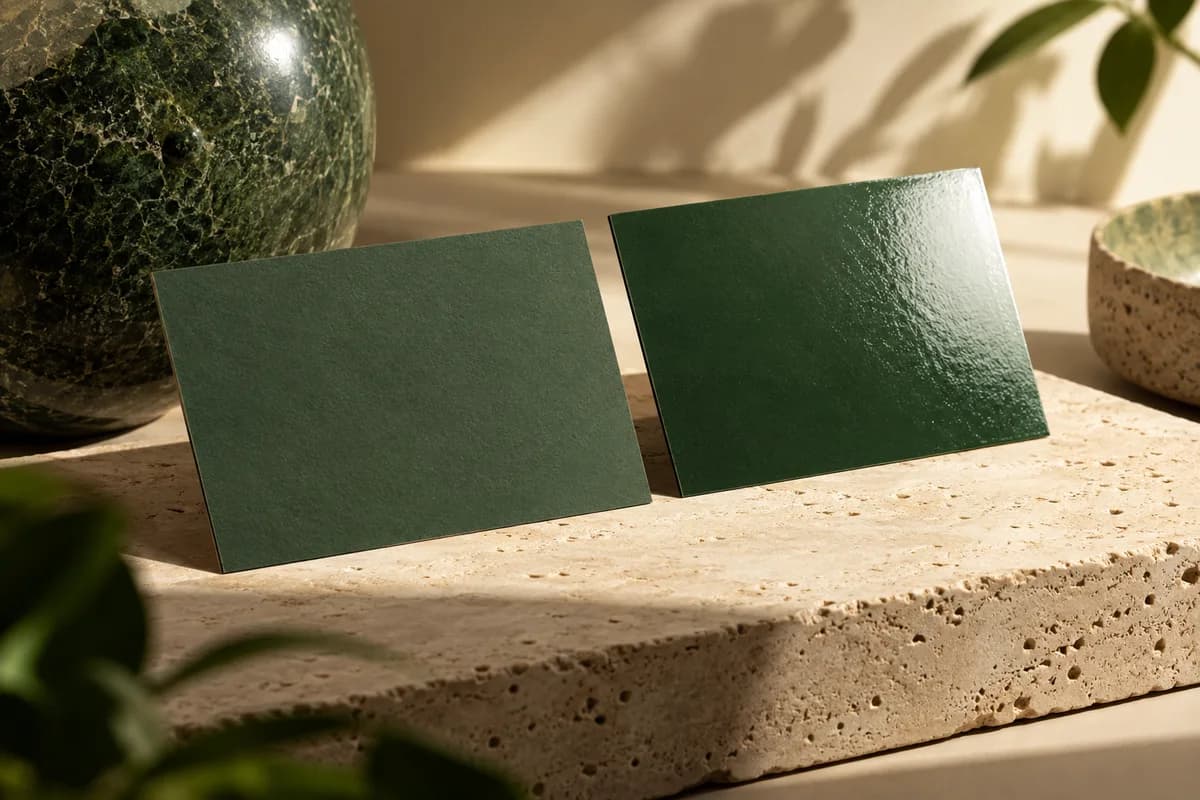
No. Weight, such as 100 lb cover or 350 gsm, describes mass, while caliper describes thickness, and two sheets of equal weight can differ in caliper. Sappi's specification guide shows this clearly: its McCoy 100 lb cover averages 0.0091 inch in gloss, 0.0097 inch in silk and 0.0106 inch in matte. The polishing that gives a sheet its gloss usually compresses it too, so the same weight can come out thinner.
That is why a product listing that gives only a weight, or only a caliper, is hard to compare with another printer's. If you need a translation, converting gsm to points explains the rough relationship and its limits.
Does a 16pt card feel stiffer than 14pt?
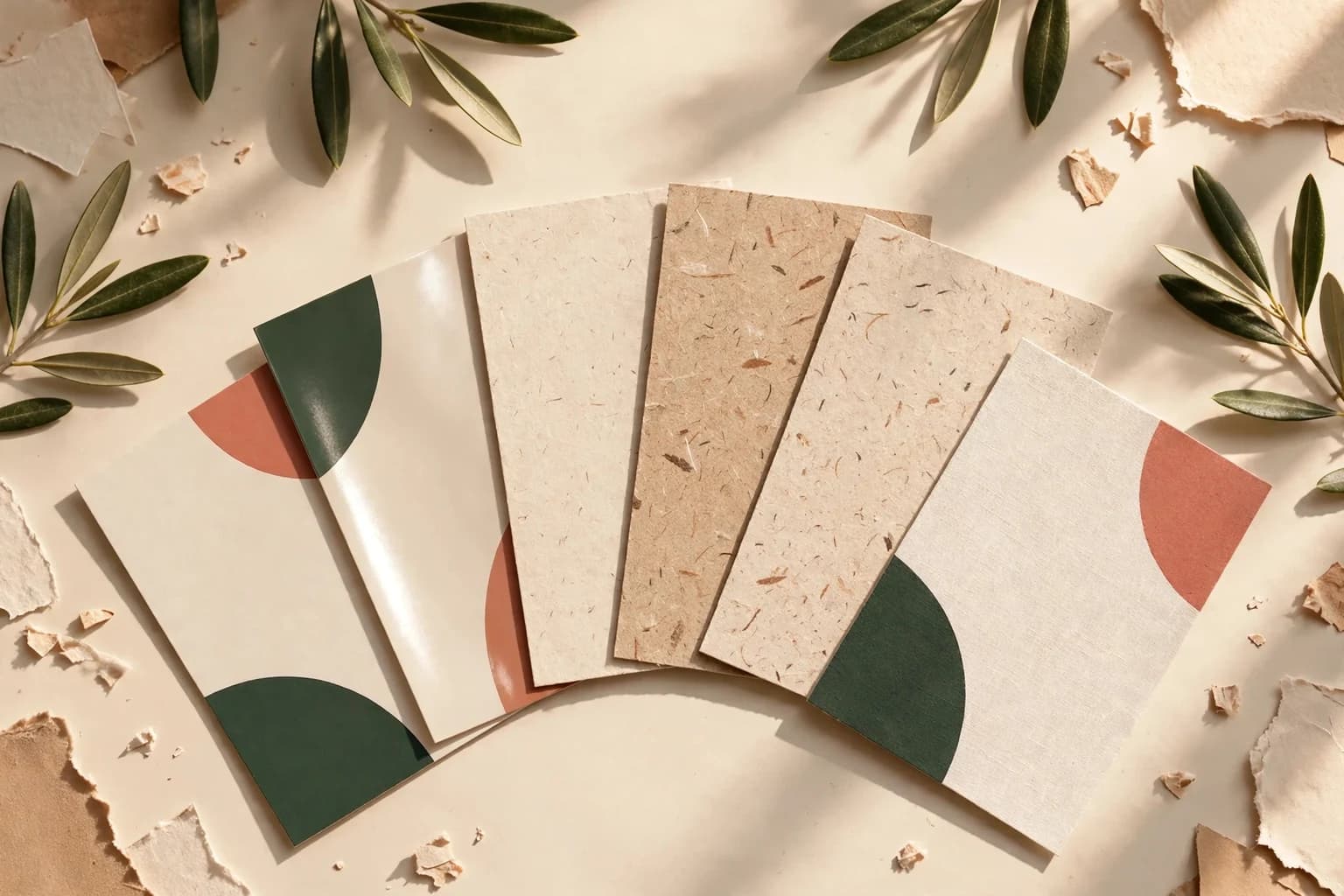
Usually, yes. Stiffness rises quickly with thickness, so a small gain in caliper can make a card feel firmer when you flex it. It is not the only factor, though. Fiber, coating and lamination all affect how a card bends and snaps back, so a laminated 14pt card can feel more solid than an uncoated 16pt card. Compare cards with the same finish if you want to judge thickness alone.
A simple way to compare is a blind test at your desk. Ask for both samples in the same finish, cover the labels, then hold, flex and tap each card on the table. Note which one feels right for the way you hand out cards, and only then look at the labels and the price difference. This keeps the decision about the feel of the card, not about the bigger number. Repeat the test with a colleague or two, because people who receive your cards will judge them the same way, by hand and in a second or two, without ever reading a specification.
How many cards fit in a holder or wallet?
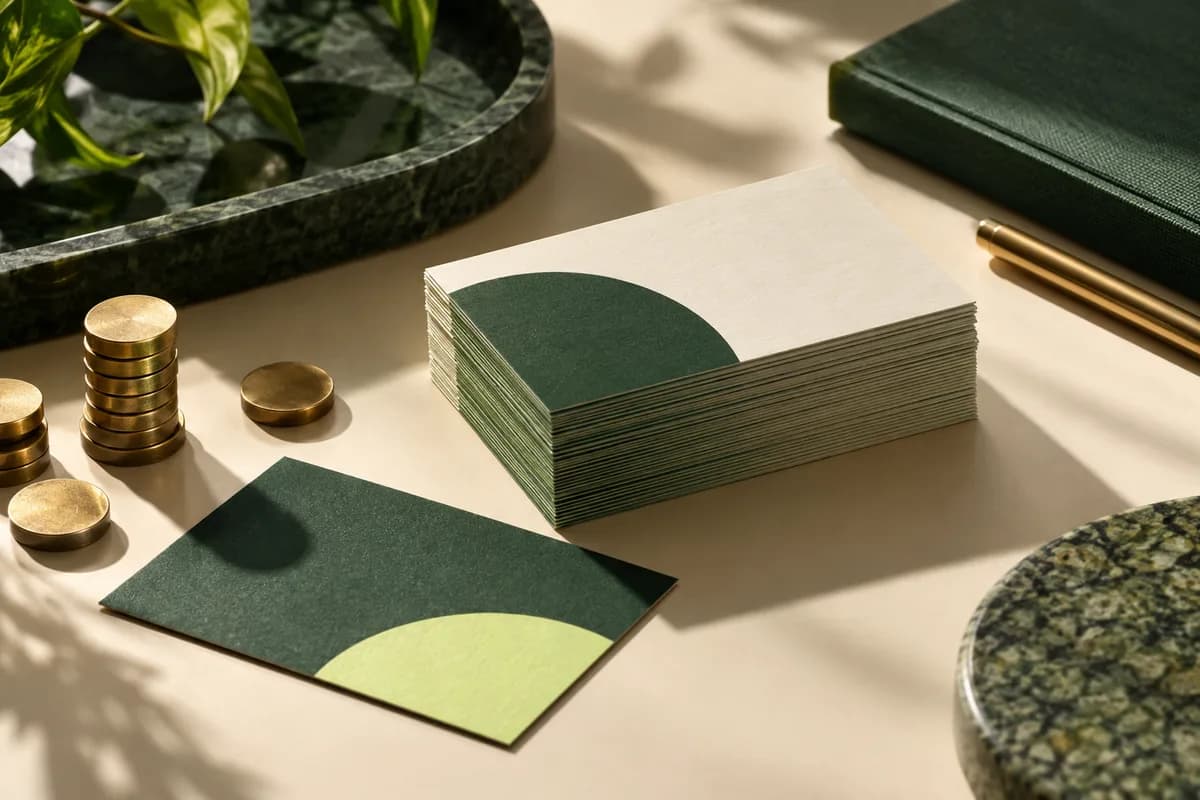
Thickness also changes how many cards fit where you keep them. A stack of 100 cards at 14pt is about 1.4 inches tall, while 100 cards at 16pt is about 1.6 inches, and 100 cards at 32pt is about 3.2 inches. That arithmetic ignores air between cards, so real stacks are slightly taller. If you carry cards in a slim metal case or a phone wallet, a thicker stock means fewer cards on hand. Desk holders and card boxes are usually sized for standard stocks, so very thick cards can overfill them.
Which is better, 14pt or 16pt?
Choose 14pt when you want a familiar, economical card for large runs, trade shows and handouts that will be read once and filed. Choose 16pt when the card is a first impression in a sales meeting, when you want a little more rigidity for rounded corners or foil, or when your design has large solid areas that benefit from a firmer base. Neither thickness changes how well a card fits a wallet or holder in size; both are standard 3.5 by 2 inch cards, and only the stack height differs.
How much more does a thicker card cost?
Price depends on the printer, finish and quantity, so ask for both thicknesses at the same quantity and delivery date and compare the totals. On the Voqado price list, standard 14pt cards start at $14.99 for 100. Thickness upgrades are usually a modest share of the total compared with specialty finishes or premium papers.
When should you go thicker than 16pt?
Go thicker when the card itself is the message: luxury retail, design studios and anyone who wants a card people pause over. Very thick stock limits some finishes, can require different cutting and can make stacks bulky in holders. The guide to thick business cards compares 18pt, 32pt and layered options in more detail.
How do you choose the right thickness?
- Confirm whether the caliper is for the paper or the finished card
- Compare cards with the same finish and coating
- Flex each sample and slide it into your usual holder
- Price both thicknesses at the same quantity
- Go thicker only when the feel supports your brand
Frequently asked questions
How thick is a 14pt business card in millimeters?
A 14pt card is 0.014 inch thick, which is about 0.36 mm. A 16pt card is 0.016 inch, about 0.41 mm. The conversion uses 25.4 mm per inch. Coatings and laminates can add a little to the finished thickness, so ask whether a stated caliper refers to the paper before finishing or to the completed card.
Is 16pt thicker than 100 lb cover?
Yes, compared with that mill sheet, but weight and thickness are different measures. Sappi lists its McCoy 100 lb cover at 0.0091 to 0.0106 inch depending on finish, which is roughly 9pt to 11pt. So a 14pt or 16pt card is thicker than that sheet. Compare calipers rather than weights when you want to know how thick a card will feel.
Can people tell the difference between 14pt and 16pt?
Many people notice a difference when they hold both cards together, because 16pt is about 14 percent thicker and feels firmer when flexed. Held alone, the difference is subtle. Finish can matter more: a laminated or soft touch card often feels more substantial than a thicker uncoated card, so judge the finished sample.
Is 14pt good enough for business cards?
Yes. Fourteen point stock is a common standard for everyday business cards, and it holds up to normal handling in wallets, holders and pockets. Choose 16pt or thicker when a firmer feel supports your brand, when you add finishes such as foil, or when the card has to make a strong first impression in person.
Sources & specification notes
The references below support the relevant technical or product details in this guide. Examples and checklists are not claims of practical testing or universal supplier requirements. Confirm the current specifications for your chosen product before production.
- Neenah: Classic Crest paper specifications ↗
Mill product page that defines caliper as the thickness of a sheet in thousandths of an inch (points or mils).
- Sappi North America: Specification Guide (McCoy, Opus and other coated papers) ↗
Mill specification tables listing gloss standard, average caliper and basis weight by finish. McCoy 100 lb cover lists gloss 72 at .0091 inch, silk 43 at .0097 inch and matte 25 at .0106 inch.