How much do business cards cost?
The price of a business card order is the sum of printing, any upgrades, shipping and tax. Printing depends on the stock and finish. Upgrades such as rounded corners or printing on both sides can add to the base price. Shipping depends on the order total and the delivery method.
The table shows published starting prices for 100 cards on Voqado at the time of writing. Each product page shows the current price and the options that change it.
| Product | Starting price for 100 cards | Price per card |
|---|---|---|
| Premium Plus, 18pt | $13.99 | About $0.14 |
| Standard, 14pt | $14.99 | About $0.15 |
| Matte | $14.99 | About $0.15 |
| Glossy | $15.99 | About $0.16 |
| Uncoated | $15.99 | About $0.16 |
| Rounded corner | $22.99 | About $0.23 |
| Embossed gloss | $28.99 | About $0.29 |
| Foil accent | $29.99 | About $0.30 |
| Soft touch | $33.99 | About $0.34 |
| Linen | $33.99 | About $0.34 |
| Raised foil | $34.99 | About $0.35 |
| Ultra thick, 32pt | $37.99 | About $0.38 |
What makes business cards more expensive?
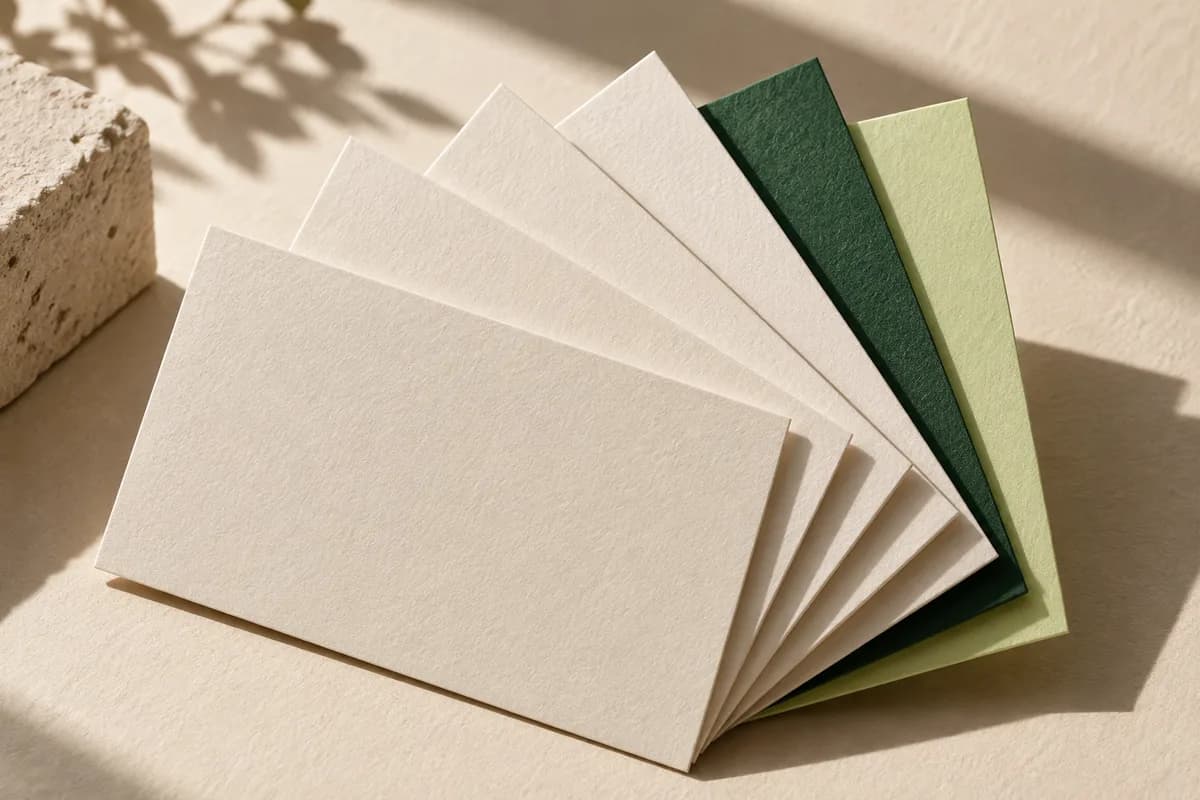
Paper and finish are the largest drivers in the table. Premium papers such as soft touch, linen and kraft cost more than twice the everyday stocks for the same quantity. Special finishes such as foil, embossed gloss and raised foil add another processing step. Thickness adds material, which is why the 32pt ultra thick card sits at the top.
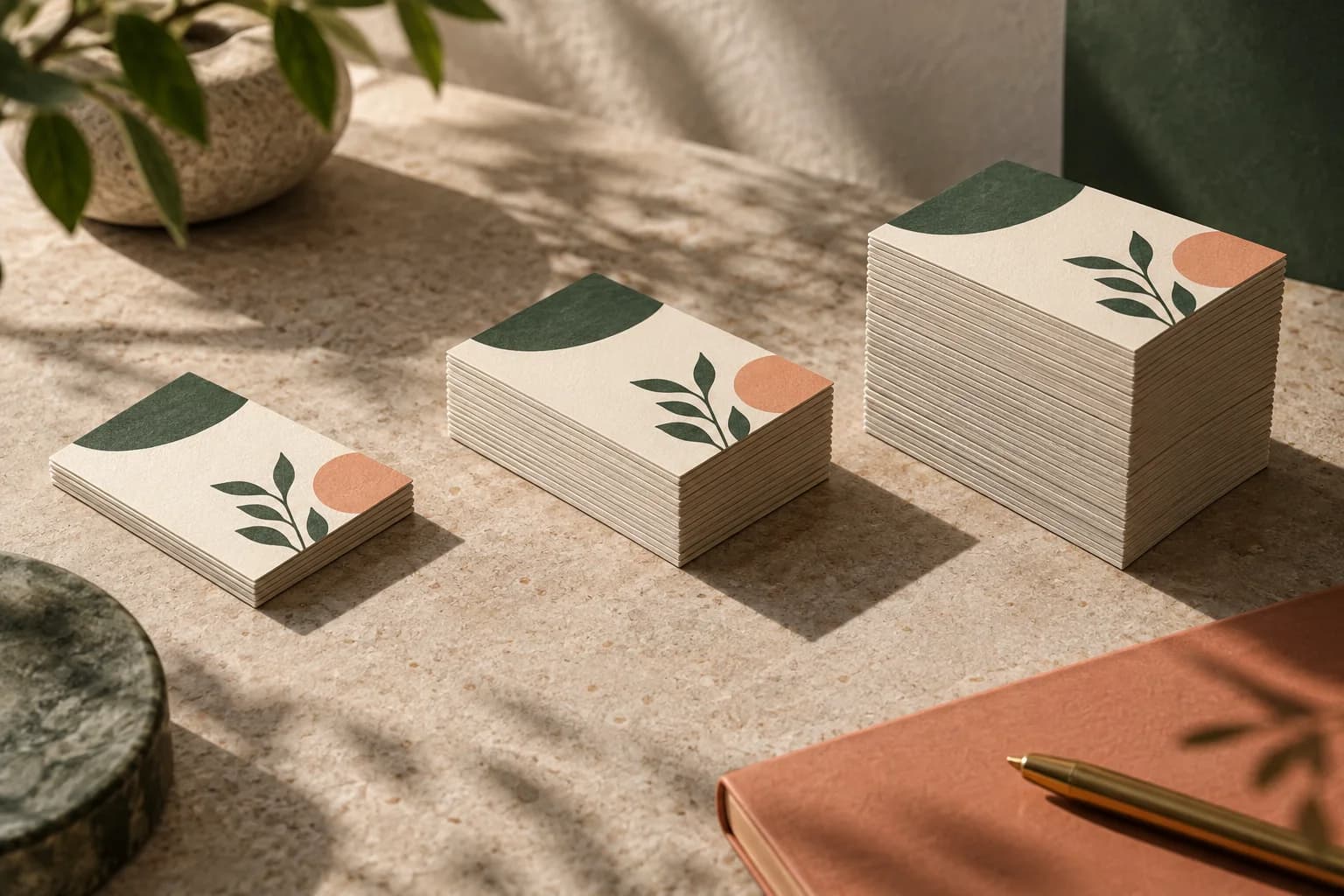
Shape changes cost as well. Rounded corners need an extra cutting step, and die cut shapes such as circles and leaves are priced for 50 cards rather than 100. Printing on the back, rush production and extra proof rounds can also change the total, so compare quotes with the same options selected. The business card printing guide explains each option in more detail.
How does shipping change the total?
Shipping is easy to leave out of a comparison, and on a small order it is a large share of the total. Standard delivery within the United States starts at $5.99 and is free on orders of $60.00 or more before tax. For timing, allow 2 to 4 business days of production after artwork approval plus 5 to 8 business days in transit.
A worked example shows the effect. 100 standard cards at $14.99 plus $5.99 shipping comes to $20.98 before tax, or about 21 cents per card delivered. An order that combines 100 soft touch cards at $33.99 and 100 ultra thick cards at $37.99 totals $71.98 and ships free, so the delivered cost per card equals the printed cost.
How do you compare business card quotes fairly?
Compare identical specifications. A quote for 14pt uncoated cards printed on one side is not comparable with a quote for 16pt matte cards printed on both sides, even at the same size and quantity. List the stock, thickness, finish, sides, corners, quantity, proof process and delivery method for each quote.
Then add every charge: printing, setup, upgrades, shipping and tax. Divide the delivered total by the quantity. The print quote comparison tool does this math for two quotes side by side and flags differences in specification.
Is a larger quantity always cheaper?
A larger run usually lowers the price per printed card, but it raises cash spent and the number of cards that may go unused. A new phone number, job title or logo can make a whole box obsolete. The useful measure is cost per card you will actually hand out.
Here is illustrative arithmetic, not a price quote. Suppose 250 cards cost $60 delivered and 1,000 cost $100. The printed unit costs are $0.24 and $0.10. If you expect to hand out only 200 before your details change, the cost per usable card is $0.30 for the smaller order and $0.50 for the larger one. The business card quantity planner estimates a realistic run from weekly handoffs.
Does printing on both sides cost more?
Often it does, because the back of the card needs its own artwork, its own proof check and, on many presses, a second pass. Whether the upgrade is worth it depends on what the back will carry. A back side earns its cost when it holds information people need, such as a service list, a map, appointment lines or a second language. It adds little when it repeats the logo from the front.
Before paying for it, decide what job the back will do. If the answer is decoration only, a single sided card on a better paper can make a stronger impression for a similar total. The business card back ideas guide lists practical uses for the second side.
How do you keep business card costs down?
- Compare identical stock, thickness, finish, sides and corners.
- Include shipping and tax in every total.
- Check the free shipping threshold before adding items.
- Divide the delivered total by the cards you expect to use.
- Price upgrades separately on the same base order.
- Confirm reprint terms before approving the proof.
What does a reprint cost if something goes wrong?
Ask about reprint terms before you order. Under the published shipping and returns policy, an order that arrives damaged, misprinted or materially different from the approved proof is reprinted or refunded within 30 days of delivery, and the customer keeps the original item. A typo in artwork you approved is not a printing fault, so careful proofing is the cheapest way to avoid paying twice. The business card proof checklist covers what to check before approval, and standard business cards are the usual starting point for a first order.
Frequently asked questions
How much do 100 business cards cost?
At the time of writing, 100 standard 14pt business cards start at $14.99 before shipping and tax, and matte starts at the same price. Glossy and uncoated start at $15.99, rounded corners at $22.99 and premium papers such as soft touch and linen at $33.99. Standard US shipping starts at $5.99, so a basic order delivers for about $21 before tax.
Why are some business cards so much cheaper than others?
Price follows material and processing. Everyday coated stocks at 14pt are the least expensive to produce. Premium papers, foil, embossed gloss, extra thickness and special shapes each add material or a production step. Advertised prices can also exclude shipping, printing on the back or proofing, so compare delivered totals for identical specifications before deciding which is cheaper.
Is it cheaper to order more business cards at once?
The price per card usually falls as quantity rises, but the total spend goes up, and unused cards are wasted money. If your details are likely to change within a year, a smaller order can cost less per card you actually hand out. Estimate weekly handoffs, multiply by the months until the next likely change and add a small reserve.
How can I get free shipping on business cards?
Standard US shipping is free on orders of $60.00 or more before tax, and below that it starts at $5.99. Combining items in one order, such as business cards for two team members or cards plus postcards, can pass the threshold. Check that the combined order still has a sensible delivery date for everything in it before checking out.
Sources & specification notes
The references below support the relevant technical or product details in this guide. Examples and checklists are not claims of practical testing or universal supplier requirements. Confirm the current specifications for your chosen product before production.
- Voqado: shipping and returns policy ↗
Standard US shipping from $5.99, free on orders of $60.00 or more before tax; 2 to 4 business days of production plus 5 to 8 in transit; reprint or refund within 30 days for damaged, misprinted or proof mismatched orders.
- US Bureau of Labor Statistics: Producer Price Index ↗
Explains how producer selling prices, including those for printing, are measured over time; context for why printing prices change.