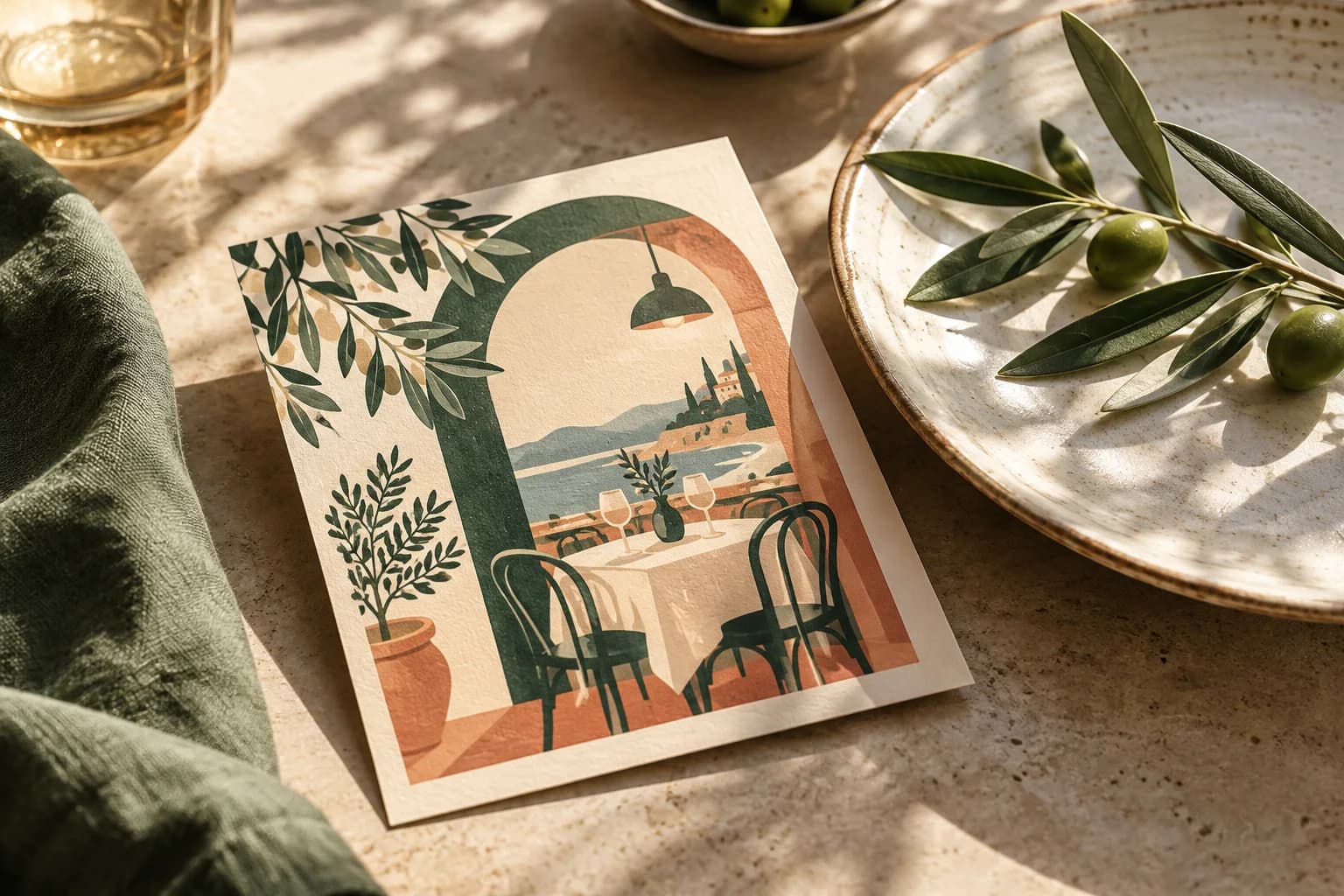
What are good restaurant postcard ideas?
Build each card around an occasion the reader can act on, not around the restaurant in general. The examples below are illustrative. Replace every offer, date and detail with information the business has confirmed.
| Occasion | Audience | Example message | Response action |
|---|---|---|---|
| New lunch menu | Offices within a short walk | Weekday lunch, served 11 to 2 | Scan to see the lunch menu |
| Catering | Local businesses and event planners | Catering for groups of 10 or more | Call or request a quote online |
| Holiday booking | Past guests | Reserve holiday tables early | Book online with a short URL |
| Reopening or new location | Households near the location | Opening day and hours | Visit with the card for the stated offer |
| Loyalty return | Guests who have not visited lately | A welcome back offer with an end date | Show the card at the counter |
Who should a restaurant mail postcards to?
There are three main routes, and they reach different people. A customer list, such as past catering clients or loyalty members, reaches people who already know the restaurant and suits return offers. Every Door Direct Mail reaches every address on the carrier routes you choose, which suits openings and new services. USPS says EDDM Retail pieces are addressed to "Postal Customer", and you can send from 200 up to 5,000 pieces per day per ZIP Code. The third route is in person: cards placed in takeout bags, handed out at events or left with neighboring businesses. Treat these as separate audiences when you compare results.
What size postcard should a restaurant use?
Size follows how the card will be delivered. A single card mailed with a stamp gets the First Class Mail postcard price only from 3.5 x 5 inches up to 4.25 x 6 inches and 0.007 to 0.016 inch thick; larger stamped cards pay letter postage. Presorted or automation First Class mailings can use card prices for postcards up to 6 x 9 inches, at least 0.009 inch thick once a card is larger than 4.25 x 6. A 4 x 6 inch card is a practical choice for mailing to a list or handing out. A larger card gives a food photo more room and stands out in a stack, so confirm the postage with your mail provider before you design. Route mailings follow separate flat size rules. The standard postcard range includes 4 x 6, 5 x 7 and 5.5 x 8.5 inch sizes, and cards for route mailing can arrive printed, addressed and bundled as direct mail postcards.
How should food photos be handled?
Use photos of the dishes the card actually promotes, prepared the way guests will receive them. The FTC expects advertising to be truthful and not misleading, and a styled photo that shows a larger portion or different ingredients than the menu delivers can disappoint guests and staff alike. Shoot in daylight or with soft, even light, and supply the image at a resolution that suits the printed size. If you use a concept illustration instead of a photo, make that obvious in the style.
What rules apply to restaurant offers and menu details?
State every condition of an offer where the reader sees the offer. The FTC guide on the word "free" says the terms for receiving a free item should be set out clearly and conspicuously at the outset. That means listing the minimum purchase, dates, locations and limits on the card, not only on a website. If your restaurant is part of a chain with 20 or more locations operating under the same name and offering substantially the same menu items, FDA menu labeling rules require calories on menus and menu boards, so check how they apply before printing menu items with prices. Confirm allergen and dietary statements with the kitchen.
How do you track restaurant postcard results?
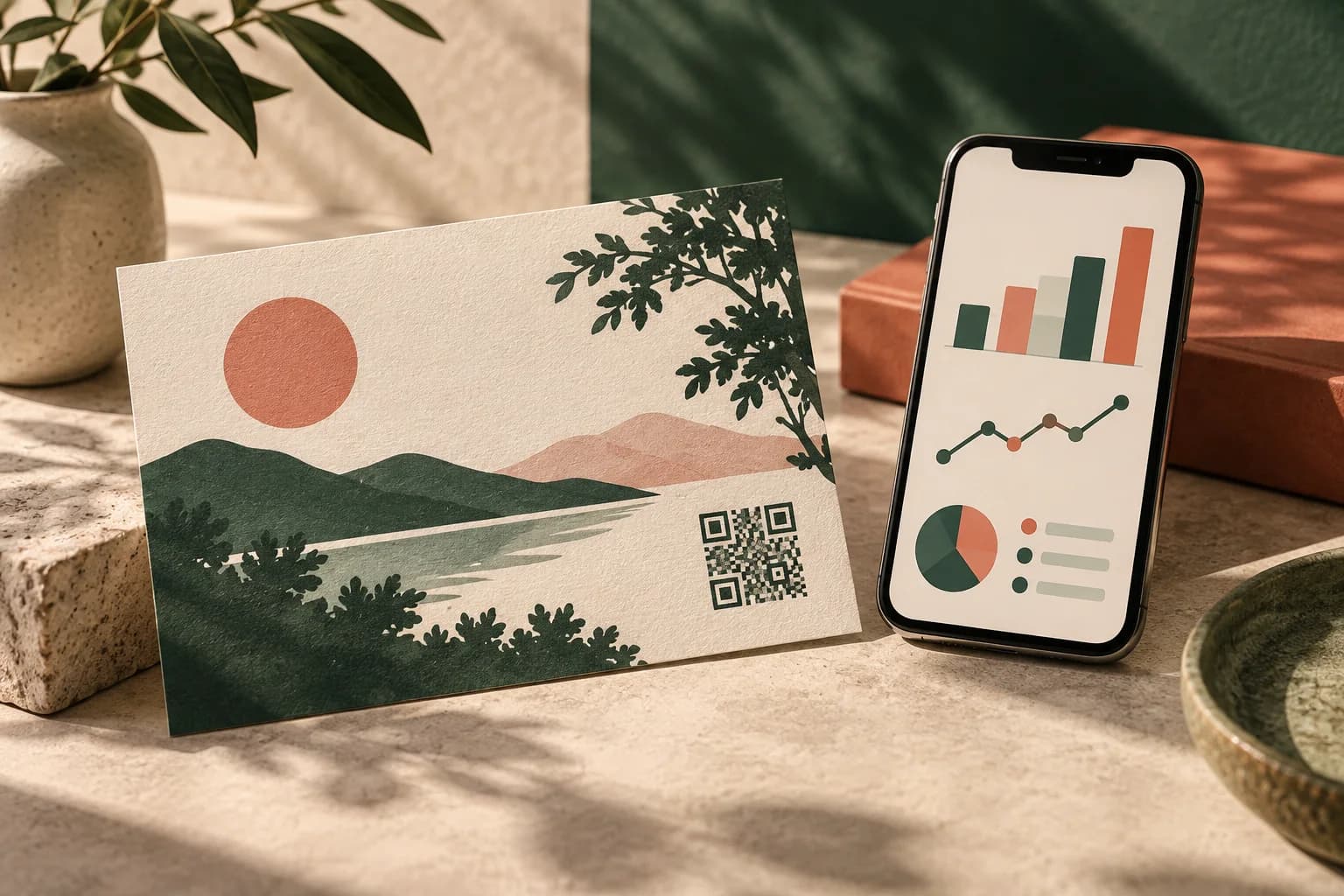
Give each mailing a way to be counted. Options include a unique offer code, a card guests hand to staff, or a QR code that opens a menu page with campaign tags. Use a link builder to add consistent UTM tags, and read our guide to QR code tracking before choosing the destination. Record scans and redemptions separately, because a scan shows interest while a redemption shows a visit. Brief the staff before the cards land, so servers and hosts know the offer, accept the card and record the code the same way every time. Note the mailing date, quantity and cost so results can be compared with the next campaign.
When should restaurant postcards arrive?
Work backward from the date guests need the card in hand. Allow time for copy, photos and proof approval, then production and shipping. At Voqado, production takes 2 to 4 business days after artwork approval, then delivery takes a further 5 to 8 business days. Add postal delivery time for mailed cards, and plan for the card to land one to two weeks before the occasion so guests can plan a visit or a booking.
Restaurant postcard checklist
- One occasion, one audience and one response action per card.
- Photos that show the real dish as it is served.
- Dates, hours, address and all offer conditions printed on the card.
- Menu, allergen and pricing details confirmed by the business.
- A tracking method: offer code, redemption card or tagged QR link.
- A timeline that lands the card before the occasion.
Where should you start?
Pick the next occasion on your calendar and write the offer first. If the card promotes a new menu, coordinate it with your printed restaurant menus so the details match, then refine the wording with our offer copy guide and set the final design on standard postcards.
Frequently asked questions
Do postcards work for restaurant marketing?
Postcards can work when they give a specific audience a clear reason to visit, such as a new menu, catering or a holiday booking. Results vary by offer, audience and timing, so measure each mailing with an offer code or tagged QR link. Start with a small test to past guests or nearby households, compare redemptions with the cost and scale what performs.
What should a restaurant postcard include?
Include one occasion or offer, an accurate food photo, the restaurant name and logo, the address, hours and one response action such as a menu link, phone number or booking URL. Print every condition of the offer, including dates and limits. If the card is mailed, leave the address side clear for the delivery address, postage and barcode area required by the mail provider.
How many postcards should a restaurant send?
Base the quantity on the audience rather than a round number. A past guest list sets its own size. For route mailing, count the households on the routes near the restaurant. USPS allows from 200 up to 5,000 EDDM Retail pieces per day per ZIP Code. A modest first mailing lets you measure response before committing to a larger campaign.
What size is best for a restaurant postcard?
A 4 x 6 inch card is a practical, economical size for mailing to a list and for handing out. A single stamped card gets the USPS postcard price only up to 4.25 x 6 inches. Larger sizes such as 5 x 7 or 5.5 x 8.5 inches give food photography more room; they pay letter postage when stamped individually, while presorted commercial mailings allow card prices up to 6 x 9 inches.
Sources & specification notes
The references below support the relevant technical or product details in this guide. Examples and checklists are not claims of practical testing or universal supplier requirements. Confirm the current specifications for your chosen product before production.
- USPS: Every Door Direct Mail ↗
EDDM Retail volume limits per ZIP Code and Postal Customer addressing.
- USPS Domestic Mail Manual 201: Physical Standards ↗
Card price limits: 4.25 x 6 inches for stamped cards, up to 6 x 9 inches for commercial postcards, and thickness rules.
- FTC: Guide Concerning Use of the Word Free and Similar Representations ↗
Offer terms should be stated clearly and conspicuously at the outset.
- FDA: Menu Labeling Requirements ↗
Calorie disclosure for chains with 20 or more locations.