The comparison, side by side
| Factor | Return address label | Pre inked stamp |
|---|---|---|
| Works on | Any stock, including dark and coated | Light, uncoated, absorbent stock |
| Materials | Semi gloss paper, gold foil, silver foil, clear plastic | Ink on the envelope itself |
| Waterproof | Foil and plastic are; paper is not | No |
| Cost per use | Per label | Very low after the stamp is bought |
| Speed | Peel and place | One press |
| Lines of text | Comfortable with more lines | Best with three lines or fewer |
| Minimum type size | Small type prints cleanly | Keep fonts at 8 pt or larger |
| Lifespan | Per order | Up to several thousand impressions |
| Changing details | Reprint | New stamp |
The honest summary is that a stamp is the cheaper tool for repetitive light envelopes and a label is the more capable tool everywhere else.
Where a stamp fails
A rubber stamp puts a thin film of ink on a surface and relies on the surface absorbing it. That works beautifully on uncoated white, cream, kraft and linen envelopes. It works badly on anything the ink cannot key into.
- Silver metallic and other coated surfaces: the ink sits on top, stays wet and smudges.
- Dark navy or ruby stock: black or blue ink has nowhere near enough contrast.
- Textured or heavily laid finishes: the impression breaks up into patches.
- Fine detail: small fonts, hairlines and tiny graphics fill in or drop out.
The design constraints are real. Rectangular address stamps here come in three size options with up to 10,000 impressions and work best with three lines of text or fewer, with fonts at 8 pt or larger and no fine lines or tiny graphics. Circular stamps come in two sizes with up to 5,000 impressions, and the smallest size is for images and icons only, with no text at all.
So a stamp is not a general purpose address tool. It is a tool for a short address on absorbent stock.
Where a label wins
Labels solve the contrast problem structurally. A white or foil label gives the address its own light surface regardless of what color the envelope is, which is exactly what a delivery or return address needs to be readable.
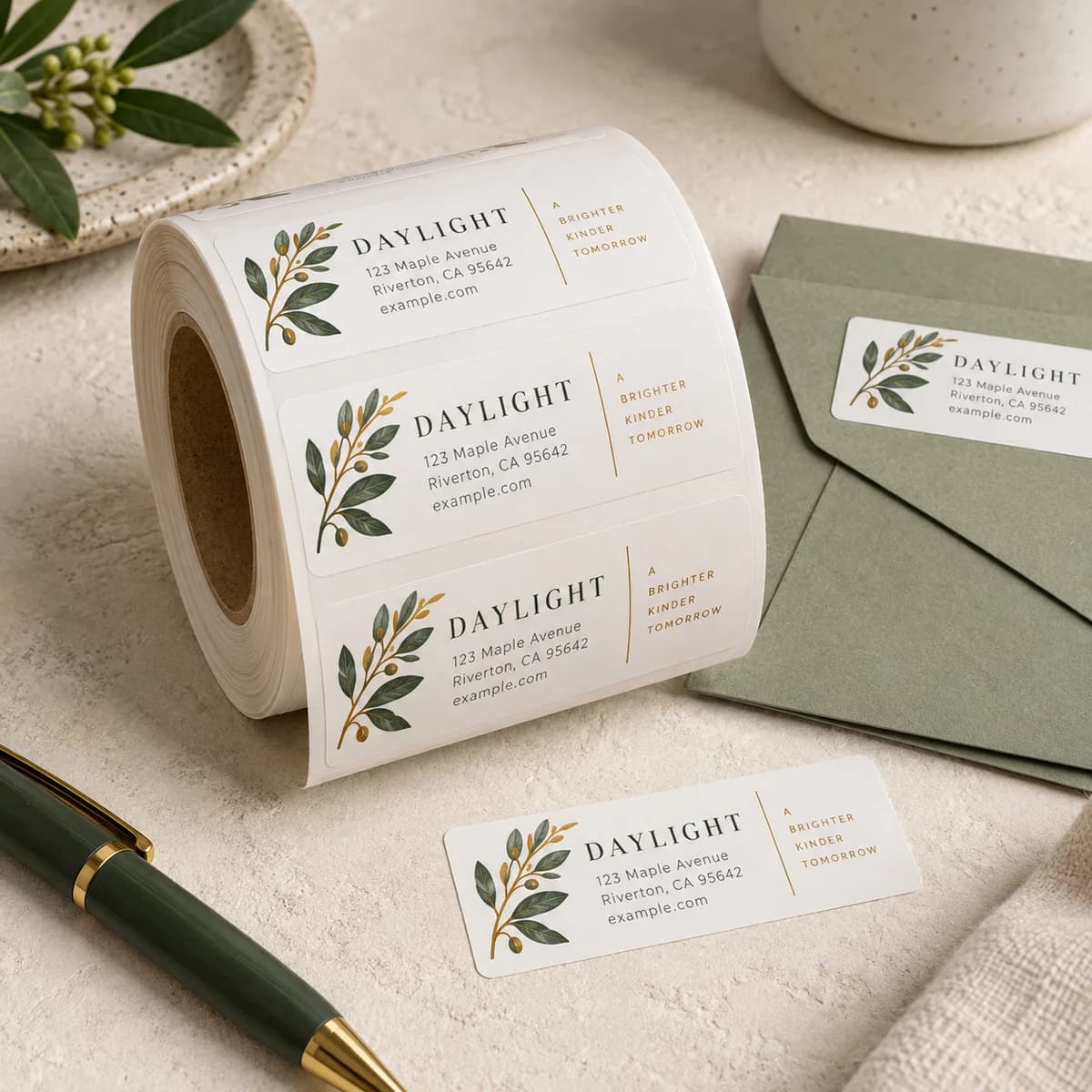
Return address labels here are 2.67 x 0.83 in, available in sheet or roll format, in semi gloss paper, gold foil, silver foil or clear plastic, self adhesive, in quantities from 50 upward. Foil and plastic options are waterproof and paper is not, which matters for mail that will sit in an outdoor mailbox in the rain.
One warning about clear labels. A clear label lets the envelope color show through, so it produces a subtle effect on light stock and an unreadable one on navy. Use clear for a quiet return address on white or cream, and never for an address that has to be read on dark stock.
Roll or sheet
If you address envelopes in batches, rolls are faster than sheets, because the next label is always presented in the same position and you do not lose time hunting a half used sheet.
Sheets are better when the labels are used occasionally, alongside other tasks, or when you want to store a known quantity in a drawer without a dispenser. For higher volume, a manual label dispenser keeps the roll organized and the next label where your hand expects it.
Neither, if you print the envelope
There is a third option worth naming: print the return address directly as part of the envelope design. That gives the cleanest result, with no label edge and no ink sitting on the surface, and it is the right answer at volume for a business with a stable address.
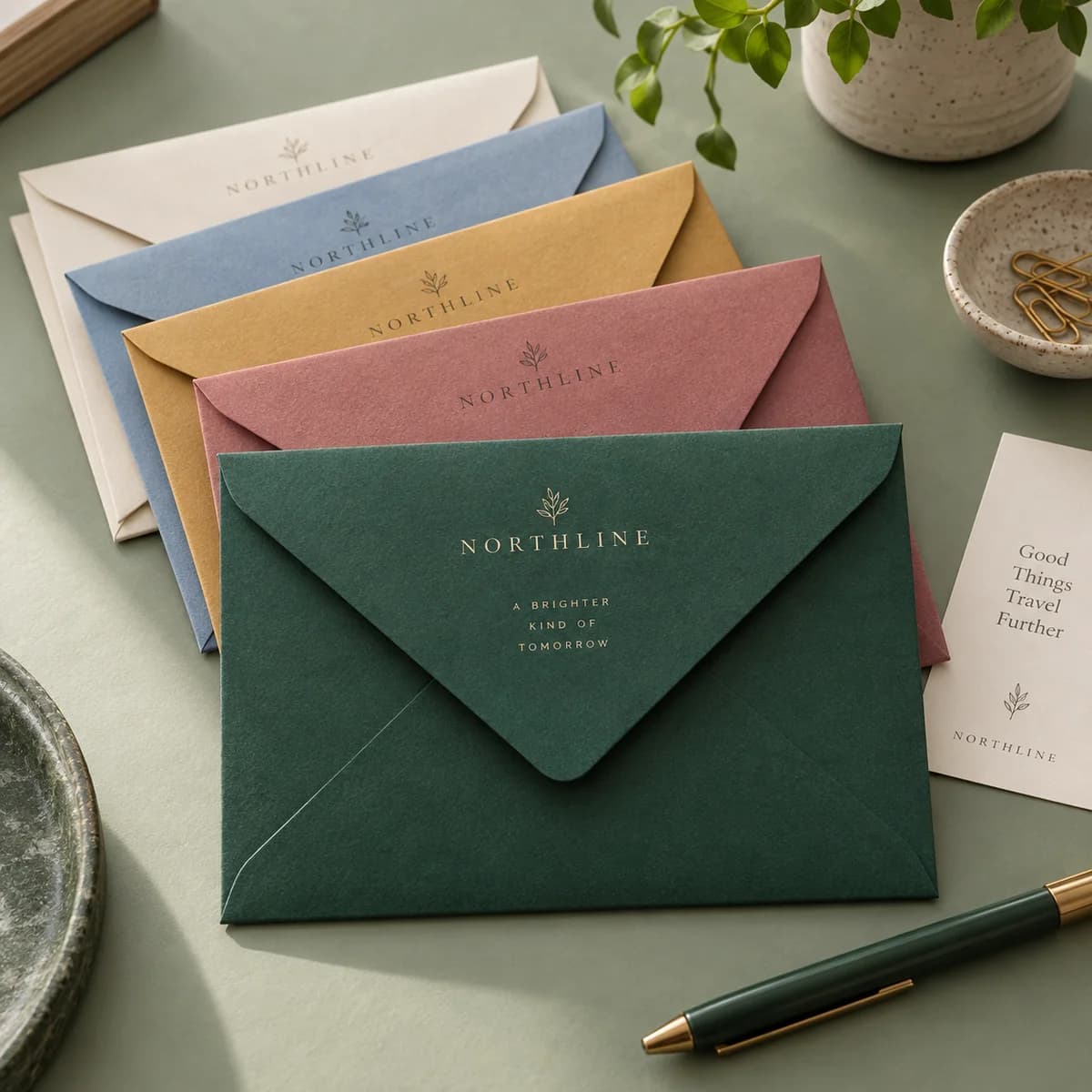
The catch is flexibility. Printed envelopes are committed to one address and one design, so an office move turns remaining stock into waste. Note that the colored envelopes in this catalog are not custom printed, which is precisely why labels, stamps and seals exist as the personalization route for them.
Placement is the same either way
Whichever tool you use, the return address belongs in the top left corner, compact and quiet, with the postage area clear at the top right and the delivery address in the center reading parallel to the longest edge. Keep the lower strip of the envelope front free, because that is where a barcode may be applied.
A return address label placed too far toward the center competes with the delivery address. A stamp pressed at an angle looks casual in a way that undercuts an otherwise careful piece. Both are avoidable with a light pencil guide mark on the first few envelopes until your eye calibrates.
Choosing checklist
- Check the envelope stock first: coated, metallic or dark rules out a stamp.
- Count the lines: more than three points to a label.
- Choose foil or plastic labels if the mail may get wet.
- Avoid clear labels on dark stock.
- Use rolls plus a dispenser for batch work, sheets for occasional use.
- Keep stamp fonts at 8 pt or larger with no fine lines.
- Consider printing the return address directly if the address is stable and volume is high.
- Keep the return address top left, compact, and clear of the center and the lower strip.
Frequently asked questions
Is a return address stamp better than labels?
Only on light, uncoated envelopes with a short address. A pre inked stamp is much cheaper per impression and faster in volume, but the ink needs an absorbent surface, so it fails on coated, metallic and dark stock where a label is the reliable choice.
Will a rubber stamp work on a metallic envelope?
Usually not. Metallic and coated surfaces do not absorb the ink, so the impression stays wet and smudges. Use a white or foil label on metallic stock, which also gives the address the light background it needs to be read.
Are return address labels waterproof?
The foil and clear plastic options are; semi gloss paper is not. If mail sits in an outdoor mailbox or travels in wet weather, choose foil or plastic so the address survives rather than running.
How many lines of text fit on an address stamp?
Three or fewer works best, with fonts kept at 8 pt or larger and no fine lines or tiny graphics. The smallest circular stamp size is intended for images and icons only and will not carry text at all.
Sources & specification notes
The references below support the relevant technical or product details in this guide. Examples and checklists are not claims of practical testing or universal supplier requirements. Confirm the current specifications for your chosen product before production.
- USPS Postal Explorer: Publication 28, Postal Addressing Standards ↗
Standard address format and components, used for the return address content and the case for fewer, shorter lines.
- USPS Publication 25: Window Envelope ↗
States the requirement for the address to sit on white or very light paper with print contrast maintained, the principle behind choosing a light label on dark stock.