What should a salon appointment card include?
Split the card into two jobs. The front identifies the salon: name, logo, address and the phone number or booking link people use to change a visit. The back is the working side, with labeled blanks for the details your team actually writes at the desk.
- Client name, if your team writes it.
- Day and date.
- Time, with AM or PM.
- Service, such as color, cut or treatment.
- Stylist or technician.
- A short line for rescheduling, with the phone number or booking link.
Leave out anything nobody fills in. A field that stays blank on every card takes space away from the date and time, which are the only details a client must read correctly.
How much writing space does an appointment card need?
More than most templates give. A card is only 2 inches tall, and after a safe margin at the edge, the usable height is small. Give each handwritten line at least a quarter inch of height, so a normal pen stroke fits without crowding the line above. That usually means four or five lines on the back, not eight.
| Layout | Lines on the back | Good for |
|---|---|---|
| Single visit | 3 or 4 (date, time, service, stylist) | Most salons and barbers |
| Two visits | 2 blocks of 2 lines | Color plus follow up visits |
| Visit plus note | 3 lines plus a note box | Prep or aftercare reminders |
| Punch plus visit | Visit lines plus stamp boxes | Salons that combine loyalty and booking |
Keep labels short, such as Date, Time and With, so the lines stay long. If the salon runs a loyalty program, the punch card loyalty design guide covers stamp boxes and reward rules.
Which paper is best for writing on appointment cards?
Uncoated stock is the most reliable writing surface, because ink soaks into the fibers and dries fast. Matte stock is often writable with a ballpoint, but some coatings resist gel pens and felt tips. Glossy coatings repel many inks and smear under a thumb, so keep gloss for the front if you want it at all.
| Stock | Ballpoint | Gel or felt tip | Notes |
|---|---|---|---|
| Uncoated | Writes well | Writes well, may feather slightly | Safest choice for the writing side |
| Matte | Usually writes well | Test first | Check drying time |
| Glossy | Often skips | Often smears | Better for a front only design |
The uncoated business cards writing guide explains why coatings change pen behavior. The practical test is simple: write a long date and time on the exact stock with the pen at your front desk, then rub it with a thumb after ten seconds.
Should the date be written in words or numbers?
Words are safer. A date such as 03/04 reads as March 4 in the US and as 3 April in much of the world, which matters in a salon with international clients or visitors. Label the line with a day field, such as Tue, and write the month as a word or short form. Always include AM or PM on the time line.
How do you keep an appointment card easy to read?
Use dark ink on a light background for the writing side, and keep the printed labels at a readable size. The W3C contrast guidance asks for a ratio of at least 4.5 to 1 for normal text, which is a sensible target for printed labels too. Pale gray lines on cream stock look elegant but disappear under salon lighting.
Keep printed text and lines inside the safe area, away from the trim, so the cut never clips a label. Decorative borders should never cross the writing lines.
What should go on the front of a salon appointment card?
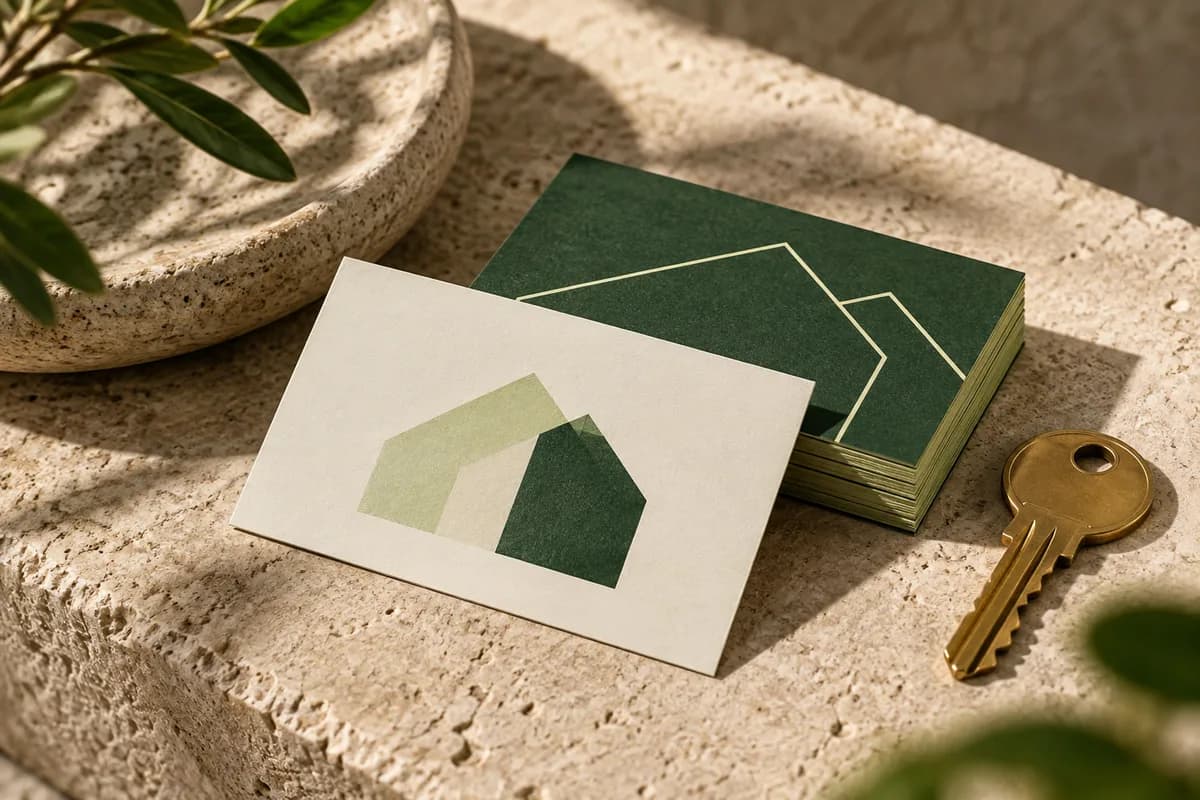
The front does the job of a business card. Show the salon name and logo, the street address, the phone number and the booking link, and keep them large enough to read in a dim car or bathroom. If the salon has a distinctive color or pattern, use it here, where there is no handwriting to protect.
Some salons also hand these cards to new walk in visitors as a regular business card, so the front should make sense on its own. A short line such as Book online or Call to change your visit tells the reader what to do next without crowding the design.
Should salon appointment cards have a QR code?
A QR code on the front can open your online booking page, which lets a client move an appointment without calling. Print the booking URL or phone number beside it, test the scan at final size, and give the code a quiet zone four modules wide on every side, as DENSO WAVE specifies. When you change booking systems, check old card stock before handing it out.
How many appointment cards should a salon order?
Count visits, not clients. A salon that books 60 return visits a week hands out roughly 60 cards a week, so 100 cards last under two weeks and 500 last about two months. The print quantity calculator turns a weekly rate into an order size. Appointment cards start at $18.99 for 100, and the product page lets you design both sides.
Checklist before you order
- List only the fields your team writes every day.
- Give each writing line at least a quarter inch of height.
- Choose uncoated or tested matte stock for the writing side.
- Test the front desk pen on the real paper.
- Print AM or PM and a day field on the time and date lines.
- Show one clear way to reschedule.
Frequently asked questions
What size is a salon appointment card?
Most salon appointment cards use the standard business card size of 3.5 x 2 inches, so they fit wallets and card holders. The front carries the salon name, address and booking route, and the back carries labeled lines for the date, time, service and stylist. A few salons use folded or larger cards for loyalty stamps.
Can you write on glossy appointment cards?
Many pens skip or smear on glossy coatings, especially gel pens and felt tips. Uncoated stock is the most reliable writing surface, and matte stock often works with a ballpoint. If you want a glossy look, keep the gloss on the front and use a writable stock or leave the back uncoated. Always test the real pen first.
What should the back of an appointment card say?
The back should carry short labels with generous lines: day and date, time with AM or PM, service and stylist. Add a single line with the phone number or booking link for changes. Remove any field your team never fills in, because every extra line takes height away from the date and time.
How many appointment cards should I order?
Base the order on weekly return visits. If your salon books 60 return visits a week, 100 cards last less than two weeks and 500 cards last around two months. Larger orders usually lower the cost per card, but reprint sooner if your phone number, address or booking system is likely to change.
Sources & specification notes
The references below support the relevant technical or product details in this guide. Examples and checklists are not claims of practical testing or universal supplier requirements. Confirm the current specifications for your chosen product before production.
- W3C: Understanding WCAG 2.2 success criterion 1.4.3, contrast minimum ↗
Text needs a contrast ratio of at least 4.5 to 1, or 3 to 1 for large text of 18 point, or 14 point bold.
- DENSO WAVE: QR code minimum size and quiet zone ↗
A QR code needs a margin four modules wide on every side, and more data moves the code to a higher version with more modules.