Why the machinery is the problem
Automated letter processing feeds pieces through rollers at speed, and it depends on the piece being flexible and of even thickness. The USPS physical standards for nonmachinable letters include uneven thickness caused by items inside or on the piece, and rigidity, among the characteristics that take a letter out of the automated stream.
A wax seal is both. It is a raised lump on one face, so the piece is thicker at one point than everywhere else, and it is rigid where the rest of the envelope flexes. The result is a piece that is pulled out and handled separately, which is what the nonmachinable surcharge pays for.
The second problem is physical. Real wax is brittle. Pressure from rollers cracks it, and even a seal that survives the sorting equipment can arrive with a hairline fracture. Wax seals here are described as delicate, with cracking treated as normal and hand canceling recommended.
What hand canceling is, and is not
Canceling is the act of marking the postage so it cannot be reused. Normally a machine does it. Hand canceling means a postal worker applies the postmark by hand instead, which avoids running the piece through the canceling machine.
Two things are worth being clear about. First, it addresses the canceling step, not the whole journey; the piece still travels through the network. Second, it is a request rather than a guaranteed service, so availability and practice vary by location and by volume. Ask at your local Post Office, take a sealed sample, and ask what they can actually do for the quantity you are sending.
Design on the assumption that some pieces will be handled by machine anyway. If a cracked seal would be unacceptable, do not use real wax.
Flat alternatives that survive the post
If the look matters more than the material, several flat options give the same visual effect and stay machinable.
| Option | Machinable | Notes |
|---|---|---|
| Printed flat sticker seal | Yes | Full color, any artwork, cheapest per piece |
| Foil sticker seal | Yes | Gold or silver, reads as ceremonial |
| Embossed or raised print seal | Usually | Slight relief only; test a sealed sample |
| Real wax seal | No | Raised, rigid and brittle |
| Ribbon or tie | No | Adds thickness and counts as a closure |
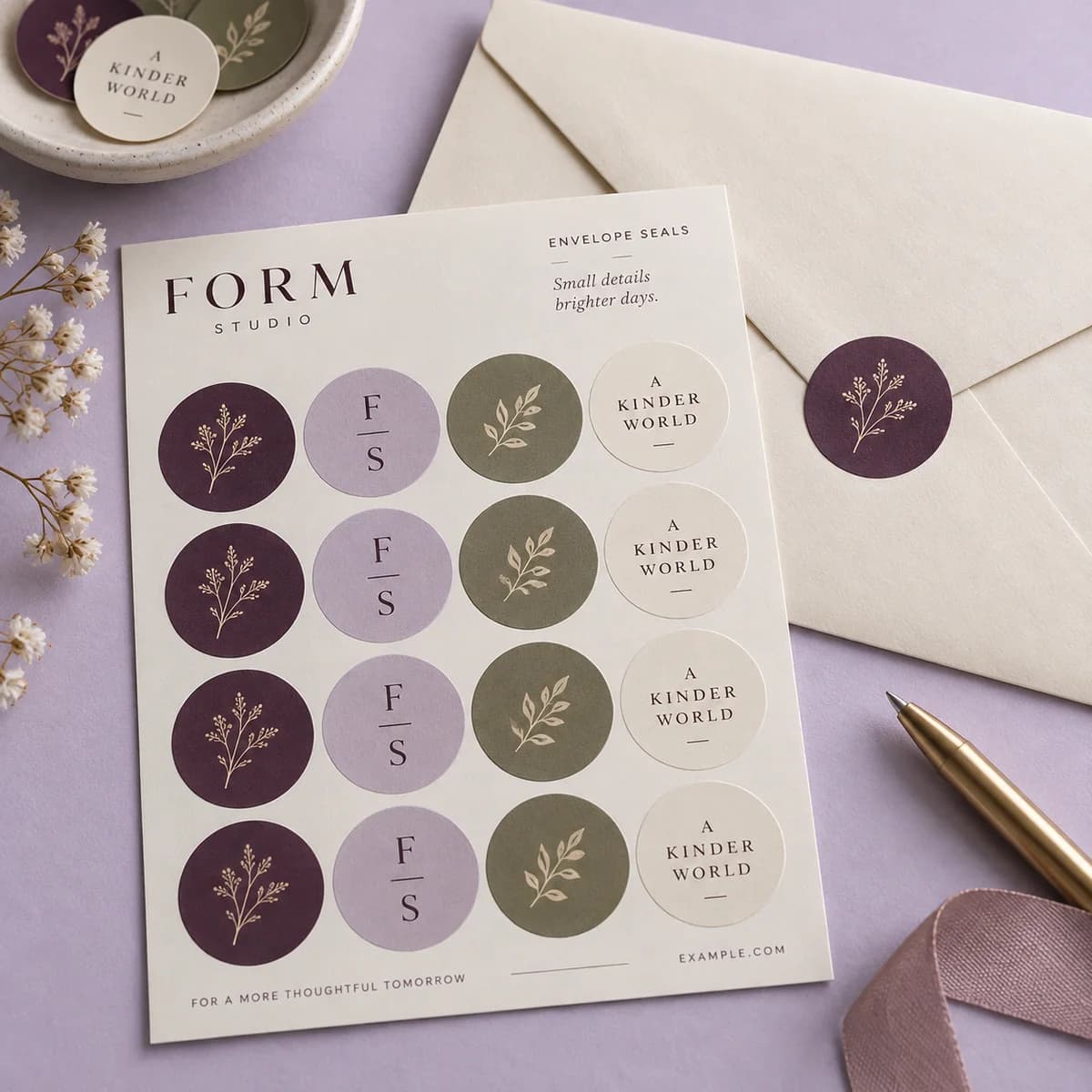
Envelope seals in the catalog are 1.5 x 1.5 in, 24 to a sheet, in white, gold foil, silver foil or clear and white plastic, with permanent adhesive, and they accept your own monogram, logo or artwork with variable data printing available for unique text per seal. That last feature is genuinely useful for a suite where each seal carries a guest name or a table number.
For comparison, the ready made wax seals are 1.25 in across, real wax with a peel and stick backing, in four colors and four fixed designs, sold in quantities of 25, and not customizable.
When to use real wax anyway
For a small, high value mailing, real wax is often the right choice and the surcharge is irrelevant. A hundred wedding invitations is a hundred surcharges, and nobody remembers the postage.
The approach that works is to protect the seal rather than hope for it.
- Use an outer mailing envelope and put the sealed inner envelope inside it. The outer envelope is machinable; the seal never touches a roller.
- Order extras, because some seals will crack.
- Apply seals the day of mailing, not weeks early, so nothing sits under weight.
- Take one fully assembled, sealed sample to a Post Office and confirm the actual handling and rate before ordering the run.
- Budget the surcharge as a line in the mailing cost rather than a surprise.
The double envelope approach is the traditional solution and it works. It also solves the aspect ratio problem if the inner envelope is square, because the outer envelope can be rectangular.
The other triggers that travel with a seal
A wax seal rarely arrives alone. Invitation suites tend to combine several nonmachinable characteristics, and fixing one leaves the rest.
A square envelope has an aspect ratio of 1.0, below the 1.3 minimum for a machinable letter, so it is surcharged whatever is on the flap. A thick cotton or double thick card can make the sealed piece too rigid. Several enclosures can push total thickness past the 0.25 in letter maximum. A ribbon is a closure and adds thickness.
So check the whole piece rather than the seal alone. Assemble one complete suite, seal it, weigh it, measure its thickness and flex it. That single sample tells you more than any table.
Wax seal checklist
- Accept that a real wax seal makes the piece nonmachinable.
- Expect some cracking; order extras.
- Ask about hand canceling, and treat it as a request rather than a guarantee.
- Put the sealed inner envelope inside a plain machinable outer envelope.
- Use a flat printed or foil sticker seal if machinability matters more than material.
- Apply seals on the day of mailing, not weeks in advance.
- Check the whole assembled piece for shape, rigidity and thickness, not just the seal.
- Take one sealed sample to a Post Office and confirm handling and rate before the run.
Frequently asked questions
Can you mail an envelope with a wax seal?
Yes, but it is handled as a nonmachinable letter, because the raised seal creates uneven thickness and rigidity that stop the piece running through automated processing. Machine pressure also cracks real wax, so expect some breakage.
What is hand canceling?
A postal worker applies the postmark by hand rather than running the piece through the canceling machine. It is commonly recommended for delicate pieces such as wax sealed invitations, but it is a request rather than a guaranteed service and practice varies by location.
How do I stop a wax seal from cracking in the post?
Use a double envelope: put the sealed inner envelope inside a plain rectangular outer envelope, so the seal never meets a roller. Also apply the seals on the day of mailing rather than weeks ahead, and order extras.
Is there a machinable alternative to a wax seal?
Yes. A flat printed or foil sticker seal gives the ceremonial effect without the raised profile, accepts your own artwork, and keeps the piece machinable. Variable data printing lets each seal carry different text, such as a guest name.
Sources & specification notes
The references below support the relevant technical or product details in this guide. Examples and checklists are not claims of practical testing or universal supplier requirements. Confirm the current specifications for your chosen product before production.
- USPS Postal Explorer: DMM 201 Physical Standards ↗
Physical standards for nonmachinable letters, including uneven thickness from items on or in the piece, rigidity, and closures such as clasps and strings.
- USPS Postal Explorer: DMM 101 Physical Standards ↗
Letter size and thickness limits and the 1.3 to 2.5 aspect ratio rule, used to check the whole assembled suite rather than the seal alone.