Why a cap is the hardest garment to decorate
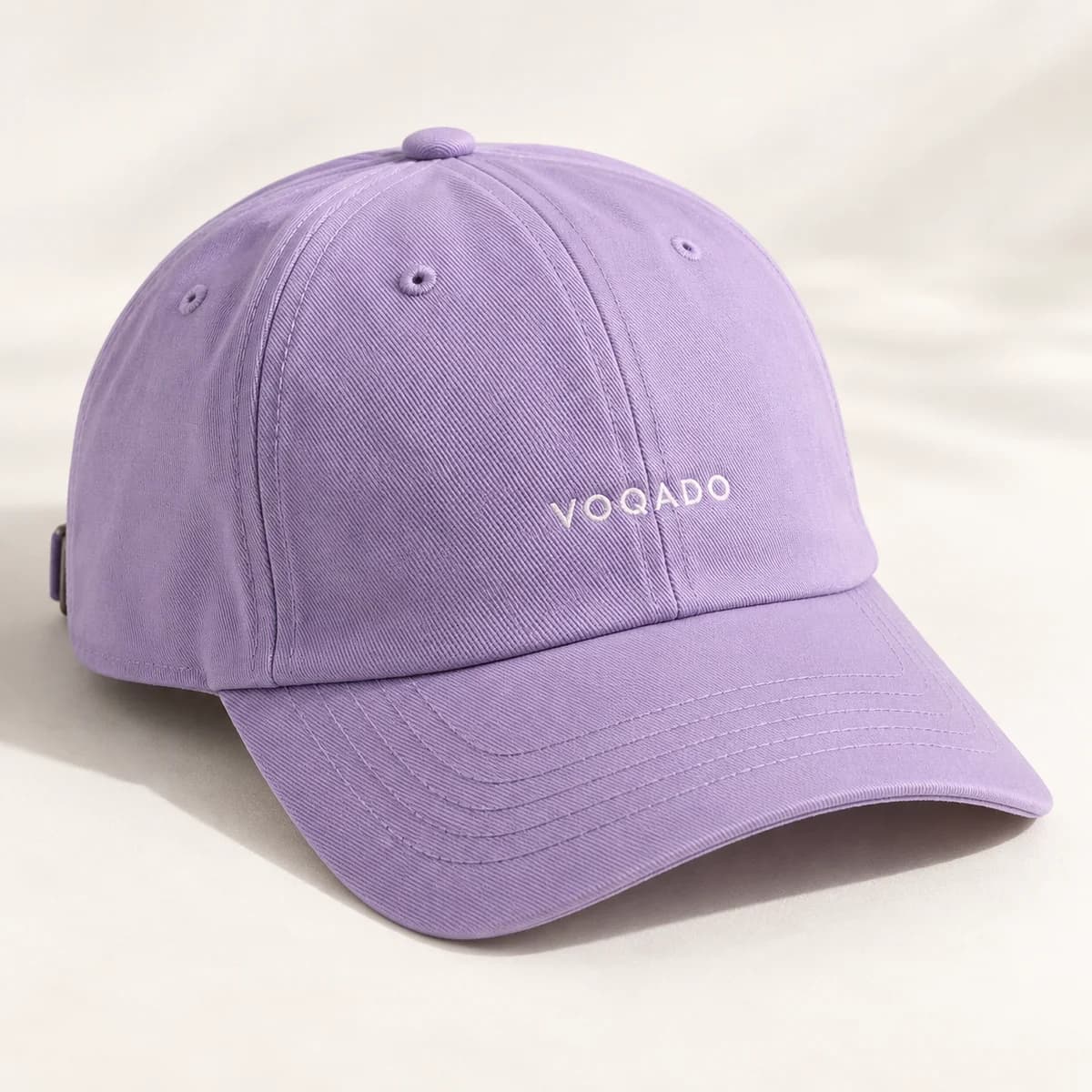
A shirt front is flat and continuous. A cap front is neither. It curves in two directions, it usually has a centre seam between panels, and it has a structured or unstructured crown that behaves differently under a hoop.
That means three things for your design. Wide marks run out of flat area before they run out of space. Anything that crosses the centre seam has to survive a step in the fabric. And a design with a long straight baseline will look slightly curved on the finished cap, because the surface is curved.
The usual answer is a compact, roughly square or shield shaped mark rather than a wide horizontal one. A wordmark that works beautifully on a chest often needs to be stacked onto two lines for a cap.
The cap styles in this range
| Style | Character | Decoration area to plan for |
|---|---|---|
| Baseball caps | The everyday six panel cap | Front centre, sides, back |
| Trucker caps | Mesh back, structured front panel | Front panel only, mesh does not take stitching well |
| Performance caps | Lightweight, for active wear | Front and side, on technical fabric |
| Patch caps | Built around a stitched on patch | The patch itself is the canvas |
| Beanies | Knit, stretches in every direction | Small cuff or front mark |
| Visors | Open top, no crown | Front band only |
| Bucket hats | Soft brim, relaxed crown | Front crown or brim |
All of these are one size in this catalogue, which is stated explicitly rather than left unsaid. If you need another size, add a production note and the supplier confirms what is available.
None of the cap styles publishes an artwork template. For each of them the catalogue is direct about it: there is no published artwork template, the product's decoration template is sent to you before production, and the placement and decoration method are confirmed with you after you order. Treat that as the real workflow rather than a formality, because it is the moment your two inch logo meets an actual panel.
Trucker caps and the mesh problem
A trucker cap has a structured front and a mesh back, and that is the whole point of the style. It is also the reason the decoration lives on the front panel. Mesh is an open structure; stitching into it distorts the holes, and a transfer film bridges them rather than bonding.
So plan a trucker cap as a single front panel design. If your brand needs a second element, put it on the side of the structured panel rather than on the mesh.
Patch caps: a different canvas
A patch cap moves the problem off the cap. The patch is made flat, decorated flat, and then attached, which means it escapes the curve and the seam entirely. That is why patch caps hold finer detail, more colors and straighter baselines than direct embroidery on a crown.
The tradeoffs are a visible patch edge, a slightly heavier front, and a shape decision you make early: a rectangle, a shield or a rounded badge. If your logo is detailed, or contains small lettering you refuse to drop, a patch cap is usually the better route than fighting a curved front panel.
Beanies and stretch
A knit beanie stretches in every direction, which is exactly what makes it comfortable and exactly what makes decoration awkward. A mark stitched into a stretchy knit is stable while the beanie is relaxed and distorts as it is pulled on.
Keep beanie decoration small, keep it on or just above the cuff where the knit is doubled and more stable, and avoid long horizontal words. A compact monogram or an icon survives far better than a six letter name across the front.
How small can cap lettering be?
The same floor applies as anywhere else in embroidery: roughly a quarter inch of capital height for a plain sans serif, and more for serif or script faces. Curved fabric makes it slightly worse, not better.
Run the paper test. Print the mark at the exact finished size, hold it at arm's length, then trace the strokes with a medium tip pen. If neighboring strokes merge under the pen, they will merge in thread. The detailed version of that test is in the guide to minimum text size for embroidery.
What about printing on a cap?
Heat transfer on a cap is possible in general terms, and it suits designs with photographic detail or many colors that embroidery cannot reproduce. Whether it suits a specific cap in this range is confirmed with you after you order, because none of the cap products publishes a decoration method. Ask, record it as your decoration preference, and wait for the confirmation before you commit to a deadline.
What is not in doubt is the order of operations: choose the cap, receive the template, then finalise the artwork. Designing first and choosing the cap afterwards is how a three inch wordmark ends up on a two inch panel.
Cap decoration checklist
- Choose the cap style before designing, because the panel sets the limits.
- Plan a compact mark two to three inches wide, stacked rather than wide.
- Keep trucker cap decoration on the structured front panel.
- Consider a patch cap for detailed logos and small lettering.
- Keep beanie marks small and near the doubled cuff.
- Expect a decoration template before production and confirm placement then.
Frequently asked questions
How big can a logo be on a cap?
Plan for a compact mark roughly two to three inches wide on a cap front, because the panel curves in two directions and usually has a centre seam. Wide horizontal wordmarks often need stacking onto two lines. The exact area comes from the product's decoration template, which is sent before production.
Can you embroider a trucker cap?
Decoration on a trucker cap belongs on the structured front panel. The mesh back is an open structure: stitching distorts it and a transfer film bridges the holes rather than bonding to fabric. Plan a trucker cap as a single front panel design, and put any secondary element on the side of the structured panel.
Are patch caps better for detailed logos?
Often yes. The patch is decorated flat and then attached, so it escapes the curve and the seam of a cap crown. That means finer detail, more colors and straighter baselines than direct embroidery on a front panel. The tradeoffs are a visible patch edge and a slightly heavier front.
What size are the caps in this catalogue?
Every cap, hat, visor and beanie here is one size, and the product says so explicitly rather than leaving size unstated. If you need a different size, add a production note with your order and the supplier confirms what is actually available before anything is decorated.
Sources & specification notes
The references below support the relevant technical or product details in this guide. Examples and checklists are not claims of practical testing or universal supplier requirements. Confirm the current specifications for your chosen product before production.
- U.S. Access Board: Guide to the ADA Standards, chapter 7 signs ↗
Used as a legibility benchmark for how small lettering can usefully be when read at close range.
- ASTM D5034: Standard Test Method for Breaking Strength and Elongation of Textile Fabrics (Grab Test) ↗
Notes that the grab test is not recommended for knitted fabrics with more than about 11 percent stretch, which is the measurable reason a knit beanie behaves differently from a structured cap front.