Why a polo is a stitching garment
Three features of a polo push the decision toward thread.
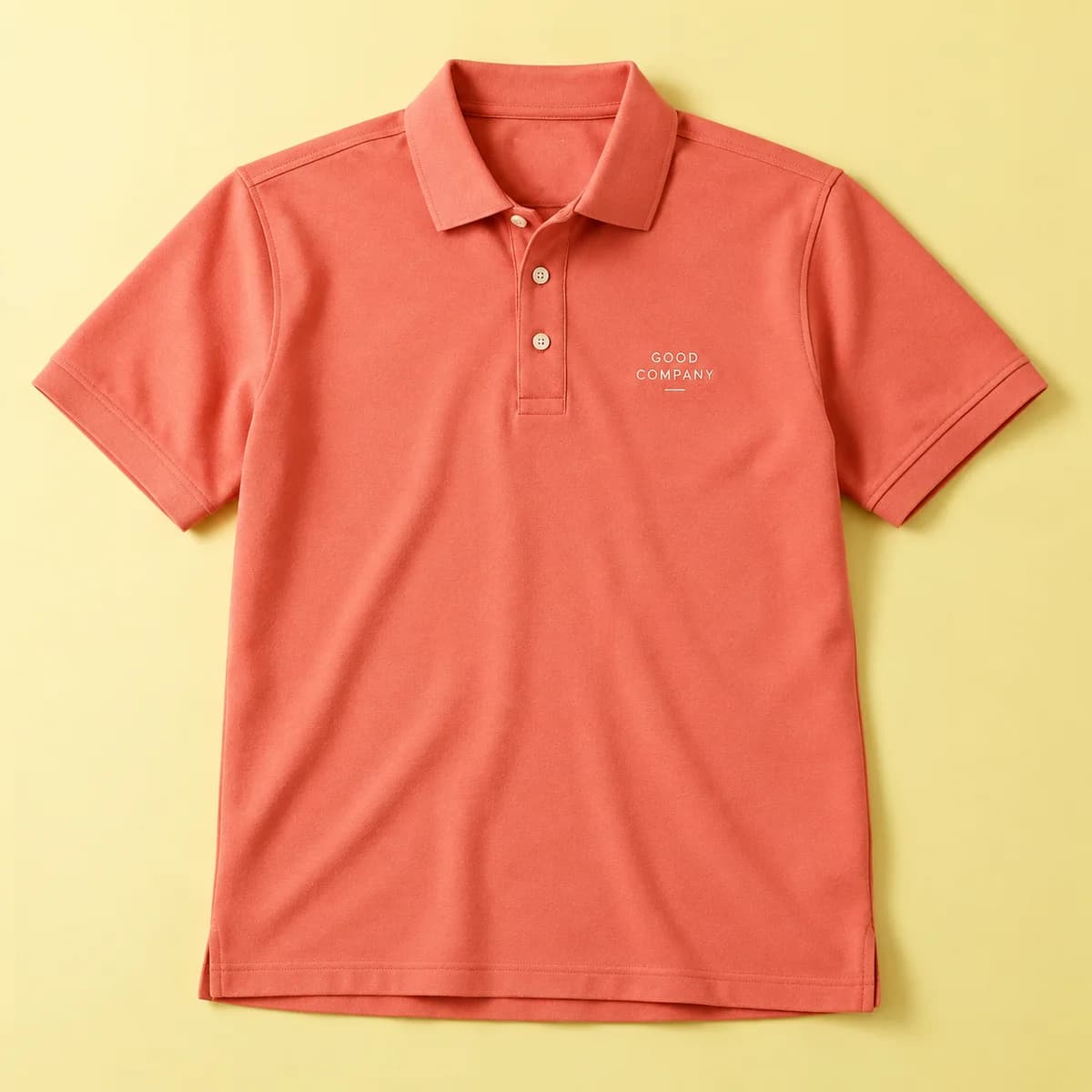
The fabric is heavier and more stable than a tee jersey. Polo shirts here are 100 percent ring spun cotton at 6.5 oz with a fashion knit collar and welt sleeve bands. That weight resists the puckering that makes embroidery on a light tee look rippled.
The front is interrupted. A three button placket runs down the centre, so the flat, uninterrupted panel a large print needs does not exist. What does exist is a clean left chest area, which happens to be the classic size for an embroidered logo.
And the audience is close. Polos are worn where staff meet customers across a counter or a desk, at three to five feet. At that distance texture reads as considered, and a printed film reads as merchandise.
What 12 thread colors buys you
The catalogue states embroidery in up to 12 thread colors for polo shirts, and the same range for jackets and vests. That is generous for a logo. Most marks use two to four.
The important thing to understand is that thread colors are chosen from a palette rather than mixed to order. A brand color specified as a precise value is matched to the nearest thread, and that match is confirmed with the supplier. This site does not offer guaranteed color matching, and the design studio works in RGB and produces a visual concept rather than a color proof, so treat the on screen swatch as an approximation.
If an exact shade is critical, say so in the order notes and expect a conversation, not a guarantee.
Placement on a polo
| Placement | Typical size | Notes |
|---|---|---|
| Left chest | 2.5 to 3.5 in wide | The default, clear of the placket |
| Right chest | 2 to 3 in wide | Secondary mark or wearer name |
| Left sleeve | 2 to 2.5 in wide | Sponsor or secondary brand |
| Back yoke | 4 to 8 in wide | Company name across the shoulders |
| Collar back | Small, 1 to 2 in | Subtle, reads only up close |
These are planning figures. The actual decoration area is set by the product's decoration template, which the supplier confirms before production.
A word about the nape and the collar. A mark there is elegant but almost invisible in wear, because a collar folds. If the point of the garment is recognition, put the logo on the left chest.
What does embroidery do to small text?
It loses it. Stitches have a minimum practical width, so the counters inside letters such as e and a close up below roughly a quarter inch of capital height for a plain sans serif. Straplines, web addresses and registered marks are the first casualties.
The fix is to plan for it: drop the strapline, set the name on a second line to buy height, or choose a heavier weight of the same typeface. The guide to minimum text size for embroidery includes a paper test you can run in five minutes with a pen.
Care, and the one instruction people ignore
The catalogue care line for these polos is specific: wash inside out on cold, no bleach, tumble dry or dry clean, and do not iron the embroidered area.
The last clause is the one that gets ignored, and it is the one that causes irreversible damage. An iron flattens and glazes thread, which changes the surface permanently. If a polo must be pressed, iron everywhere except the logo, or press it inside out with the logo face down on a soft towel.
Colorfastness to laundering, which is what the cold wash protects, is measured with accelerated methods such as AATCC TM61, where a single 45 minute test approximates roughly five typical home launderings.
When does a printed polo make sense?
Occasionally, and for specific reasons.
- A large graphic across the back, for an event or a sponsor, which no practical stitch count would cover.
- A photographic element, which thread cannot reproduce.
- A very small quantity where a transfer is faster and cheaper than digitizing a new logo.
- A performance polyester polo where the fabric behaves differently and a transfer may be more appropriate.
In this catalogue, polo shirts state embroidery as the decoration. A print request on a polo is a request, recorded with the order as a decoration preference and confirmed against the product template for suitability. Do not plan a campaign around it before that confirmation.
Polo alternatives in the same register
If a polo is not quite right, two neighbours cover the same ground. Dress shirts are a 4.3 oz cotton and polyester twill with a wrinkle resistant and stain releasing finish, a button down collar and a left chest pocket, decorated with an embroidered logo. Jackets and vests take embroidery in up to 12 thread colors or heat transfer, and suit outdoor and front of house roles in cooler weather.
Embroidered polo checklist
- Plan a left chest mark 2.5 to 3.5 in wide as the default.
- Keep lettering at or above about a quarter inch capital height.
- Expect thread colors to be matched from a palette, not mixed.
- Drop straplines and registered marks rather than shrinking them.
- Tell wearers not to iron the embroidered area.
- Treat a printed polo as a request confirmed against the product template.
Frequently asked questions
Why are polo shirts embroidered instead of printed?
The fabric and the construction both favour thread. A 6.5 oz ring spun pique knit is stable enough to stitch without puckering, and the three button placket interrupts the front so there is no flat panel for a large print. The left chest area that remains is exactly the size an embroidered logo wants.
How many thread colors can an embroidered polo have?
Polo shirts in this catalogue state embroidery in up to 12 thread colors, and jackets and vests use the same range. Most logos need two to four. Thread colors are selected from a palette rather than mixed, so a precise brand shade is matched as closely as the palette allows and confirmed with the supplier.
Can you iron an embroidered polo?
Not over the embroidery. The catalogue care line says to wash inside out on cold, avoid bleach, tumble dry or dry clean, and not iron the embroidered area. An iron flattens and glazes the thread permanently. Press around the logo, or turn the garment inside out with the logo face down on a soft towel.
Can I get a printed polo instead?
You can ask. The order records a decoration preference, and the supplier confirms it against the product's decoration template for suitability. Polo shirts here state embroidery as their decoration, so treat a print request as unconfirmed until you hear back, and do not build a deadline around it.
Sources & specification notes
The references below support the relevant technical or product details in this guide. Examples and checklists are not claims of practical testing or universal supplier requirements. Confirm the current specifications for your chosen product before production.
- AATCC TM61: Test Method for Colorfastness to Laundering ↗
Supports the statement that one 45 minute accelerated laundering test approximates roughly five typical hand or home launderings.
- FTC: Clothes Captioning, Complying with the Care Labeling Rule ↗
Supports the point that care instructions must cover ironing and any warnings, which is where the do not iron instruction for an embroidered area belongs.