What each one is
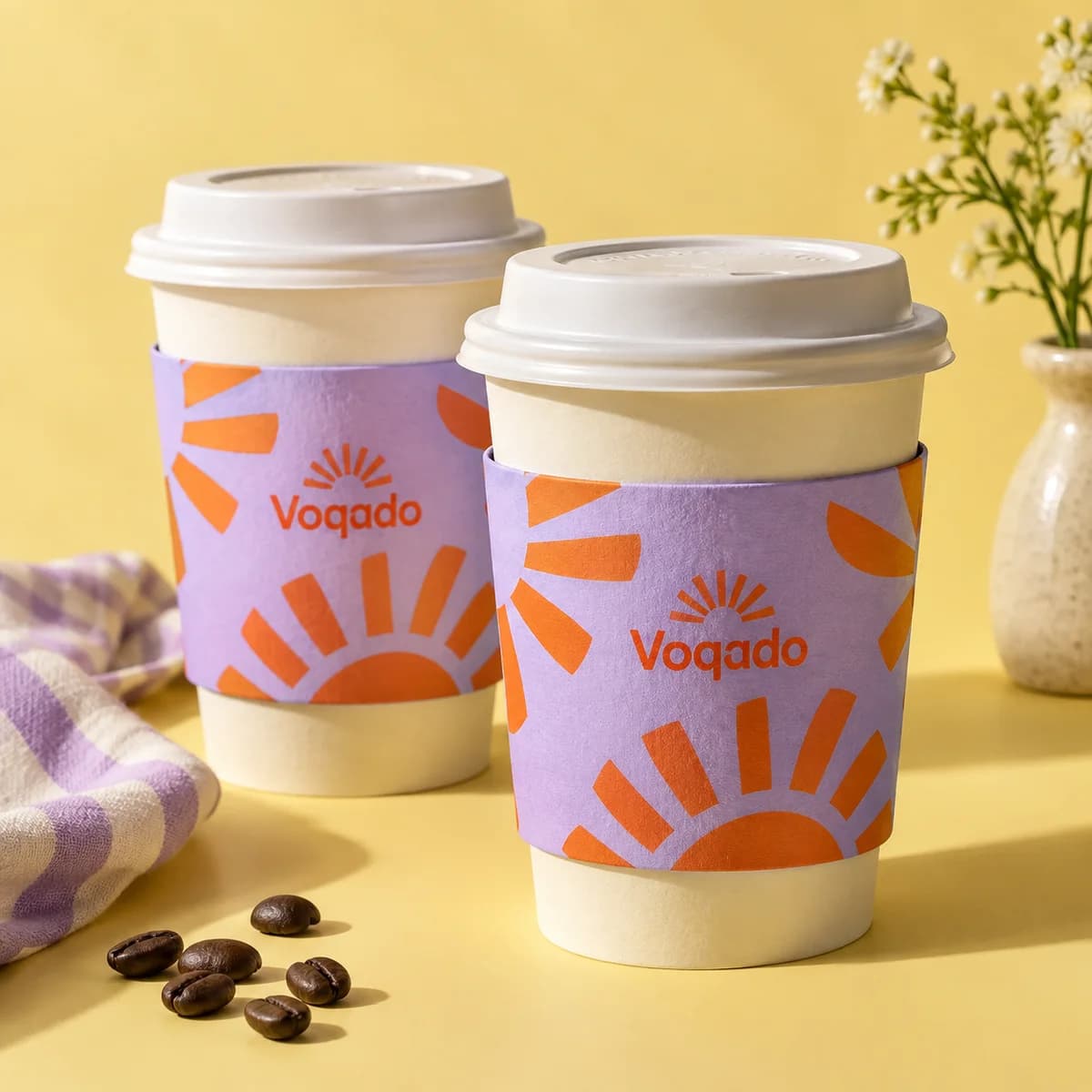
Our coffee sleeves are one size and fit most 12 to 24 oz cups. They come in two materials: premium embossed paperboard at 18 pt SBS with full surface printing, or corrugated cardboard in E flute with front printing. The embossed option adds three finishes, matte, gloss and soft touch, and the corrugated option comes in white at 190 gsm or natural kraft at 135 gsm. Both work for hot and cold drinks, keeping heat in and condensation off hands.
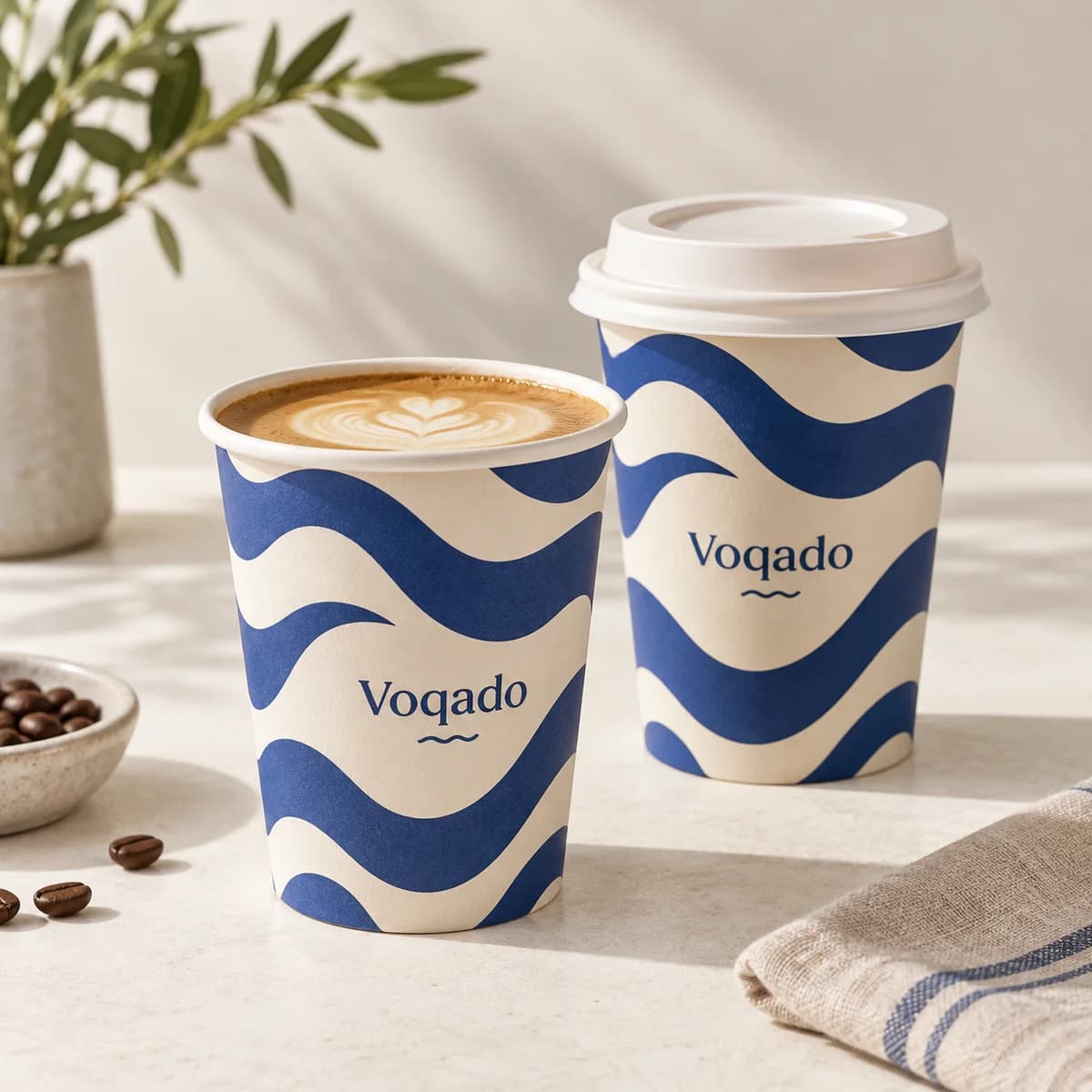
Our paper cups come in four sizes from 10 to 20 oz, in single wall, which the specification pairs with a sleeve, or double wall, which has built in insulation. Both wall types use durable laminated paper with a liquid proof inside coating.
The cost shape is different, not just the cost
These two options do not simply cost different amounts. They cost differently.
A sleeve splits your spend into a cheap, plain cup and a printed band. The printed part is the part you change seasonally, and the plain part keeps its price. Corrugated sleeves order from 25 and embossed sleeves from 250, so you can run a small batch of artwork without touching your cup stock.
A double wall cup puts the print on the item you already buy. There is nothing extra to stock, nothing to slide on at the counter and nothing that can be forgotten. But when the artwork changes, the cups change, and cups are the bigger order.
Branding surface and what each holds
A sleeve is a band, so it is genuinely a band of artwork: the embossed version prints over its full surface, and the corrugated version prints on the front. A band suits a logotype, a short line and a repeat. It is the wrong shape for a tall composition.
A cup is a cylinder, and a full wrap version prints 360 degrees around the entire outside in four sizes. That is more area and more freedom, and it is the option to choose when the artwork is a scene rather than a mark.
Neither surface is flat, which is the usual caveat. A flat rectangle on screen cannot show how a design meets itself around a cup or how an embossed texture breaks a fine line, so treat the design canvas as a visual concept and ask for the product template if the layout is tight.
Texture, finish and legibility
The embossed sleeve has a texture by design, and that texture interacts with your artwork. Fine hairlines, small reversed out type and delicate serifs all suffer on an embossed or corrugated surface, because the substrate is doing something at the same scale as your detail. Soft touch is a pleasant finish in the hand but it mutes contrast slightly.
Corrugated kraft at 135 gsm goes further: a brown base tints every ink laid on it, so light colors fade toward the paper and a dark single color mark is the reliable choice. The same rule applies here as on kraft paper anywhere. Design for the base color rather than against it.
Operational reality at the counter
The part that decides this for most cafes is not cost, it is the counter.
Sleeves add a step. Someone has to slide one on, and at a rush that step is skipped, which means the branded surface is missing exactly when the room is full of customers. Sleeves also need a dispenser or a stack within reach.
Double wall cups add nothing. The brand is on the cup because the cup is the cup.
Against that, sleeves let a small operation look considered on a tight budget, and they are the only option if you have already bought plain cups.
Recycling claims and how to word them
Both sleeves and paper cups are described as widely recyclable, and our paper ice cream cups add the honest qualifier to confirm paper food containers with your local facility.
If you intend to print an environmental claim on either item, keep it narrow. The FTC Green Guides caution against broad, unqualified claims such as eco friendly, and advise qualifying recyclability where collection is not available to a substantial majority of consumers. A specific statement about the material is defensible; a general badge is not.
A quick decision
- Small budget, artwork changes with the season, cups already bought: sleeves.
- Busy counter where a step gets skipped: double wall cups.
- Artwork is a full scene rather than a mark: full print paper cups.
- Cold drinks that sweat, hands that get cold: sleeves work for cold too.
- Two branded surfaces for one drink: single wall cup plus a printed sleeve.
- Lowest number of items to count: double wall cups and nothing else.
Sleeve or cup checklist
- Decide whether artwork will change during the year.
- Count the steps at your counter during a rush.
- Match your detail level to the texture of the substrate.
- Design dark and simple for kraft corrugated.
- Check the real minimums: 25 corrugated, 250 embossed, 100 for cups.
- Order lids with cups, since they are sold separately.
- Keep any recycling claim specific to the material and the market.
Frequently asked questions
Is a coffee sleeve cheaper than a double wall cup?
It changes the shape of the spend rather than simply lowering it. You buy a plain single wall cup plus a printed band, so the artwork lives on the cheaper item and can change without reordering cups. Corrugated sleeves order from 25 and embossed from 250, which makes small seasonal runs practical.
Do coffee sleeves fit all cup sizes?
Ours are one size and fit most 12 to 24 oz cups. Our own paper cups come in 10, 12, 16 and 20 oz, so the smallest cup sits below that range. If you stock an unusual cup, order a small batch of sleeves and test the fit before committing.
Can you print full color on a coffee sleeve?
The premium embossed paperboard sleeve prints across its full surface, and the corrugated version prints on the front. Both are textured substrates, so avoid hairlines and small reversed out type. On natural kraft corrugated, a dark single color mark is far more reliable than pale colors.
Do double wall cups need a sleeve?
No. Double wall construction has the insulation built in, which is the point of it. Single wall cups are the ones our specification pairs with a sleeve. Choosing double wall removes an item from your stockroom and a step from your counter, at the cost of flexibility when artwork changes.
Sources & specification notes
The references below support the relevant technical or product details in this guide. Examples and checklists are not claims of practical testing or universal supplier requirements. Confirm the current specifications for your chosen product before production.
- Federal Trade Commission: Green Guides ↗
FTC guidance on qualifying recyclability claims and avoiding broad, unqualified environmental claims on packaging.
- eCFR: 21 CFR 175.300, Resinous and polymeric coatings ↗
Covers coatings applied as a continuous film over a substrate for food contact, which is the liquid proof lining inside a paper cup.