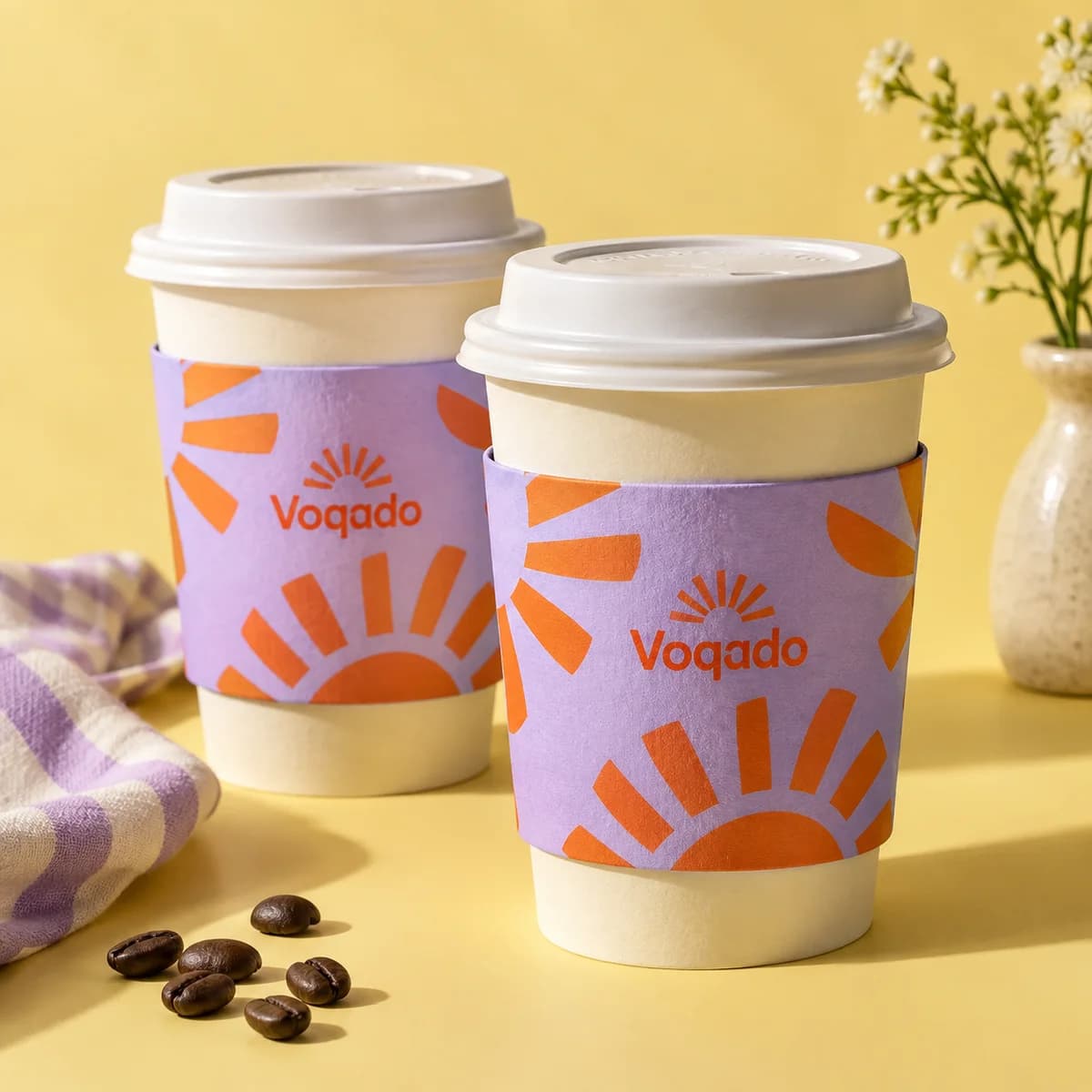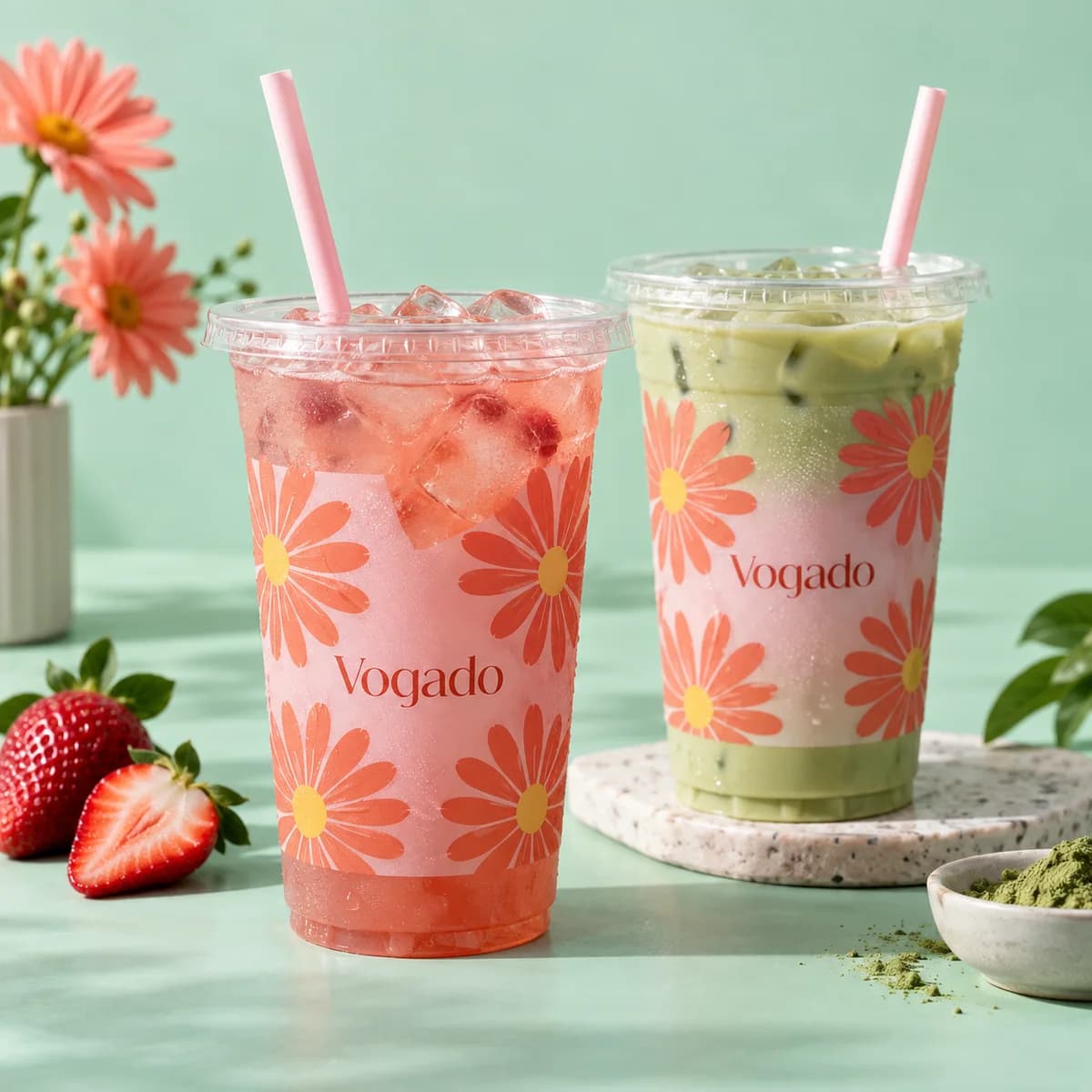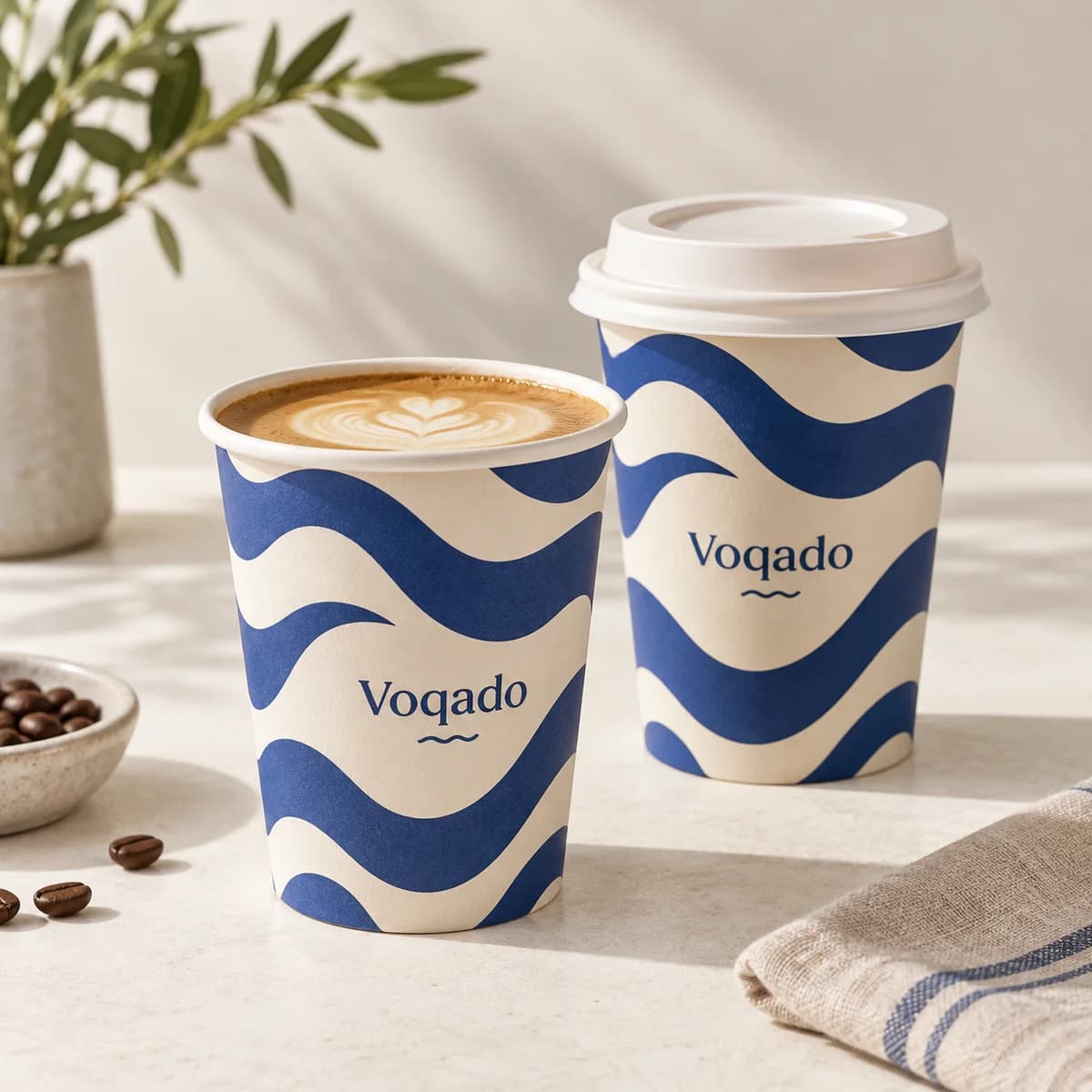
The two products side by side
| Factor | Paper cups | Cold cups |
|---|---|---|
| Sizes | 10, 12, 16, 20 oz | 12, 16, 20, 24 oz |
| Material | Laminated paper with a liquid proof inside coating | Clear 280 gsm PET, BPA free and nontoxic |
| Temperature | Hot and cold | Cold drinks only |
| Plain, logo front, or full wrap custom | Single color on front and back | |
| Wall | Single wall or double wall | Single wall |
| Lids | Black or white sip thru lids fit all sizes, sold separately | Flat or dome lids sold separately, 98 mm |
| Ordering | From 100 | By the case of 1,000; 24 oz ships as two cases of 600 |
| Recycling | Widely recyclable | Widely recyclable |
The ordering row is the one that surprises people. A cold cup program starts at a thousand units, so it is a decision for a venue with steady volume rather than for a single event.
Why the lining matters more than the paper
A paper cup holds liquid because of a coating, not because of the paper. Ours is described as durable laminated paper with a liquid proof inside coating, and that coating is the food contact surface.
That is also the part that is regulated. The FDA treats materials touching food as food contact substances and maintains an inventory of those authorized in 21 CFR, and 21 CFR 175.300, resinous and polymeric coatings, is the umbrella regulation covering coatings applied as a continuous film over a substrate for direct food contact. The basic polymers used for a clear plastic cup fall instead under 21 CFR part 177 subpart B, which covers substances used as basic components of single and repeated use food contact surfaces.
You do not need to quote those sections to order a cup. They explain why the specification talks about a liquid proof inside coating rather than about paper thickness.
Print freedom is the real difference
This is where the two products diverge most.
Paper cups come in three styles: plain white, logo front, or full wrap custom. A separate product takes that further with full wraparound printing on the entire outside in four sizes, single or double wall, and it invites you to order a single custom cup to test your design first. That single unit option is the most useful thing on the page, because a wrap is exactly the kind of artwork that behaves differently in your hand than on a screen.
Cold cups print a single color on the front and the back. That constraint is not a limitation of the press so much as a consequence of the material and the look: the point of a clear cup is that you see the drink, so the artwork is a frame around a product rather than a full surface.
One color also means your brand mark has to work as a silhouette. Gradients, photographs and multi color logotypes do not survive the trip. Decide on the single color version before you decide on the cup.
Single wall or double wall
Our paper cups come both ways, and the choice interacts with the sleeve question.
Single wall is thinner, cheaper and the specification says to pair it with a sleeve. Double wall has built in insulation, so it holds heat without a second item to stock, print and hand out.
If you already print sleeves, single wall plus a sleeve gives you two branded surfaces and lets you change the sleeve artwork without reordering cups. If you do not, double wall is one item instead of two.
Lids, and the detail that catches people
Lids are sold separately on both products and are not customizable. Paper cup lids are black or white sip thru and fit all four sizes, which is convenient for stockholding. Cold cup lids come flat or dome at 98 mm, and the dome is the one to order if drinks get whipped cream or a tall garnish.
Order lids at the same time as cups. A branded cup with no lid is a cup nobody can carry out.
Recyclability claims, said carefully
Both products are described as widely recyclable, and our paper ice cream cups add a sensible qualifier: confirm paper food containers with your local facility.
That caution is the right instinct. The FTC Green Guides advise marketers not to make broad, unqualified environmental claims, and to qualify recyclability claims where facilities are not available to a substantial majority of consumers. If you plan to print a recycling claim on the cup itself, keep it specific and keep it true for the places you actually operate.
Choosing in one line
- Hot coffee, full color brand, small runs: paper cups, and consider the full wrap version.
- Iced drinks where the drink is the product, high volume venue: cold cups.
- Desserts and scoops: paper ice cream cups for hot or cold, plastic ice cream cups for cold only.
- One branded surface you can change cheaply: single wall cups plus printed sleeves.
- Fewest items to stock: double wall paper cups.
Cup ordering checklist
- Decide temperature first, because cold cups are cold only.
- Reduce your logo to one color before considering cold cups.
- Choose single or double wall, then decide about sleeves.
- Order lids at the same time and check the size in millimeters.
- Check the real minimum: cold cups ship by the case of 1,000.
- Order a single full wrap cup to test the artwork before a run.
- Qualify any recycling claim you print on the cup.
Frequently asked questions
Can you put a hot drink in a cold cup?
No. Our clear PET cold cups are specified for cold drinks only and are not for hot beverages. If you need one cup for both, paper cups are specified for hot and cold, and our paper ice cream cups are also stated to work for hot and cold foods.
Can you print full color on a clear cold cup?
Not on this product. Cold cups print a single color on the front and the back, so a multi color logo needs a one color version before you order. Full color on the whole outside surface is available on paper cups, including a full 360 degree wraparound option.
Do you need a sleeve with a paper cup?
Only with single wall. The specification pairs single wall cups with a sleeve, while double wall cups have built in insulation. Single wall plus a printed sleeve gives you two branded surfaces and lets you change seasonal artwork on the sleeve without reordering cups.
How many cups do you have to order?
It differs sharply by product. Paper cups start from 100 and the full wrap version lets you order a single custom cup to test a design first. Cold cups are sold by the case of 1,000, and the 24 oz size arrives as two cases of 600, so a cold cup program suits a steady venue rather than one event.
Sources & specification notes
The references below support the relevant technical or product details in this guide. Examples and checklists are not claims of practical testing or universal supplier requirements. Confirm the current specifications for your chosen product before production.
- eCFR: 21 CFR 175.300, Resinous and polymeric coatings ↗
Authorizes resinous and polymeric coatings applied as a continuous film over a substrate as a food contact surface, which covers the liquid proof lining of a paper cup.
- eCFR: 21 CFR Part 177 Subpart B, Substances for Use as Basic Components of Single and Repeated Use Food Contact Surfaces ↗
Covers the basic polymers used to make single and repeated use food contact surfaces, which is where a clear plastic cup body sits.
- Federal Trade Commission: Green Guides ↗
FTC guidance cautioning against broad, unqualified environmental claims and requiring qualification of recyclability claims where facilities are limited.