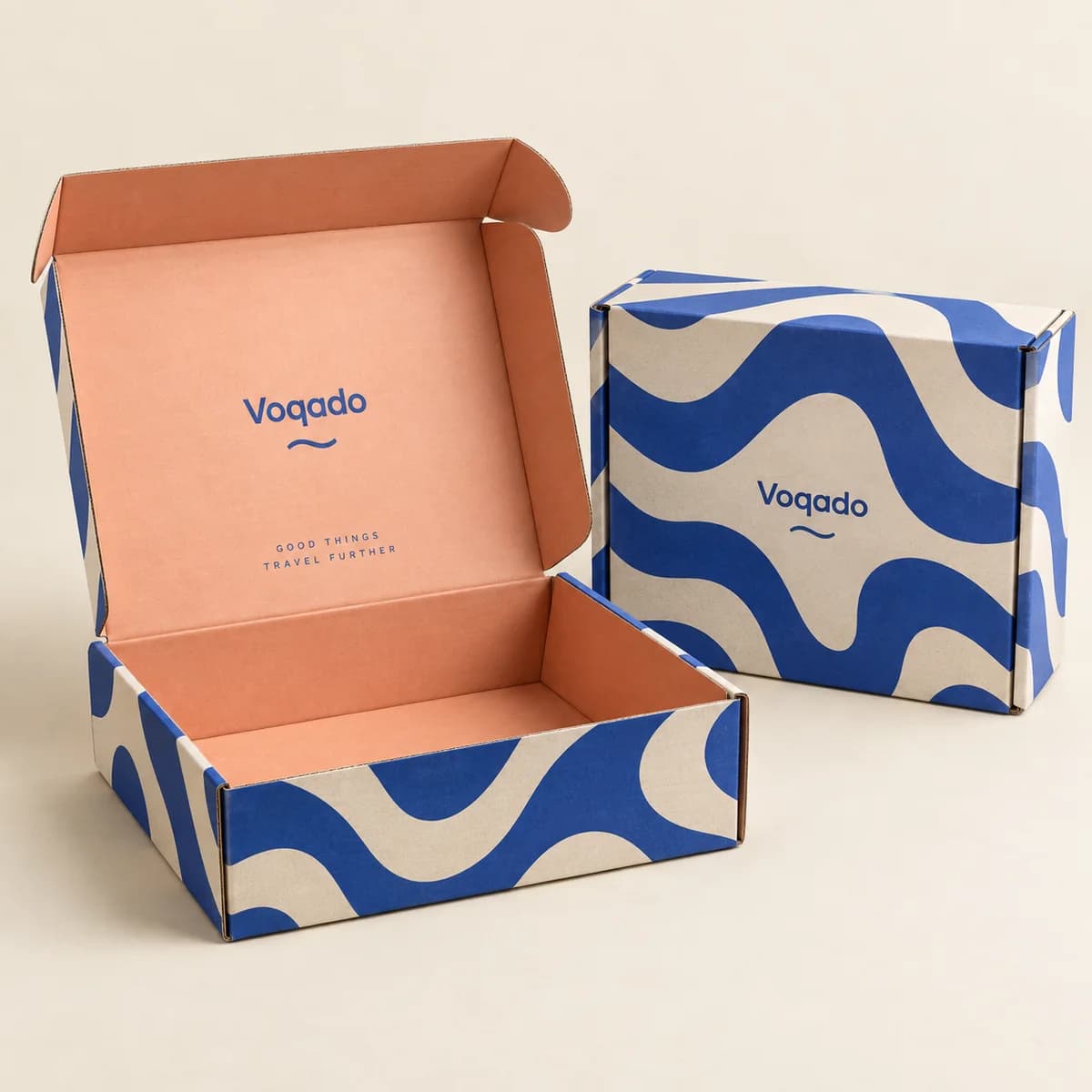
The five steps, and what each one is for
| Step | What the customer sees | What it should do |
|---|---|---|
| 1 Arrival | The outside of the box or mailer | Be recognizable and undamaged |
| 2 Opening | The tuck flap or a sealed sticker | Open cleanly in one motion |
| 3 First surface | Inside of the lid, or a closed tissue layer | Say one thing, not five |
| 4 The card | An insert card, note or instruction | Give the one next step |
| 5 The product | The item itself, presented | Look better than expected |
Five steps is plenty. Brands that add more usually add layers, not moments: a second sheet of tissue, a second sticker, a second card. Each extra layer costs money, adds packing seconds and dilutes the step before it.
Step one is arrival, and it is mostly about damage
No amount of interior design survives a crushed corner. The first thing the sequence depends on is the parcel arriving intact and clean, which is a structural question rather than a creative one.
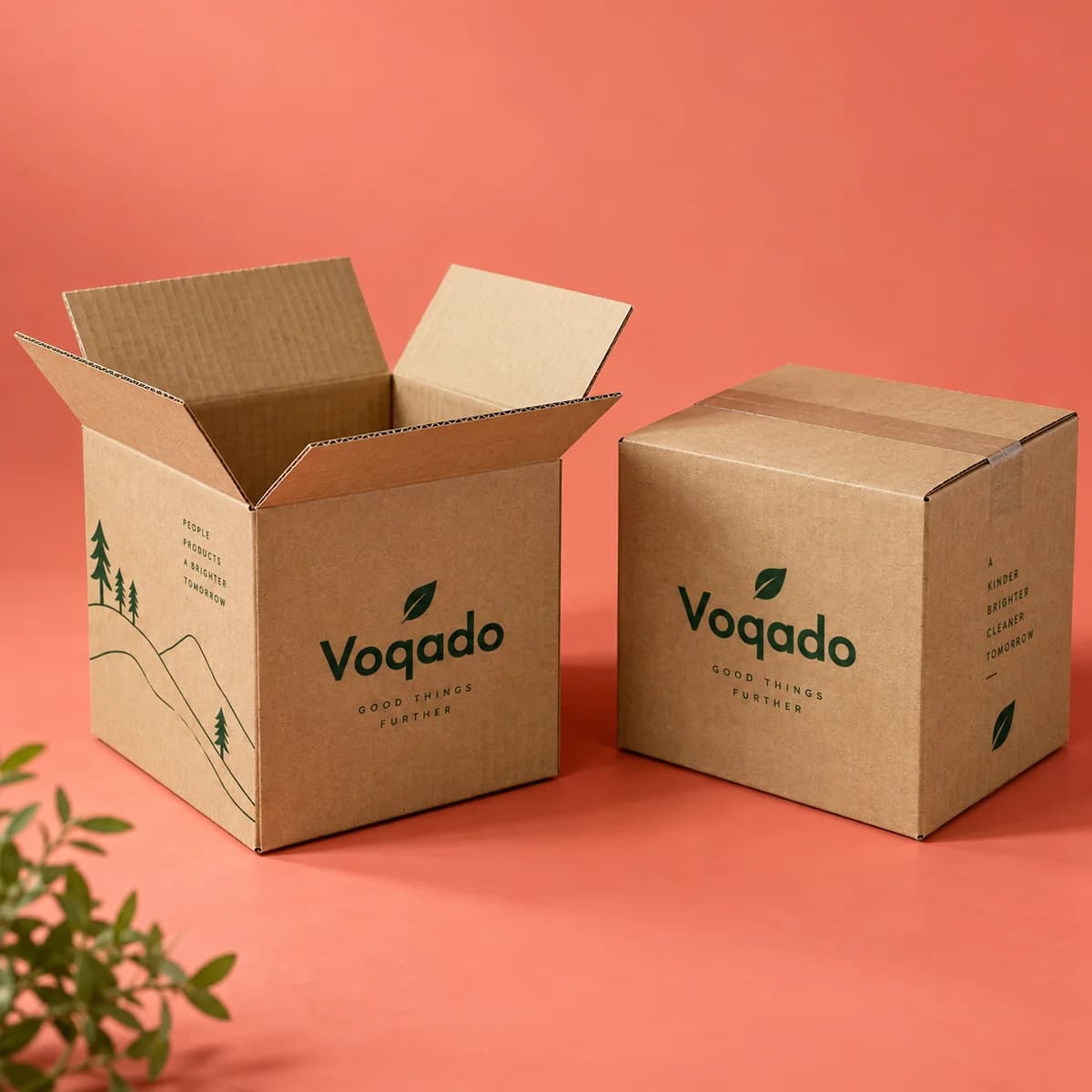
That means the board, the closure and the fit are part of the unboxing design. A box one size too big lets the product travel and dent the wall from inside. Soft touch lamination scuffs where a box rubs in a van. A full coverage dark print shows every mark. Run a drop and stack test before deciding the finish, not after.
Step two is the opening motion
A front tuck closure opens in one motion, which is why mailer boxes are the format of choice for orders a customer opens. A taped carton opens with scissors and a bit of wrestling, which is the right answer for a wholesale order and the wrong one for a gift.
If you want tamper evidence without tape, seal the tuck with a printed sticker or run a belly band across the box. Both tear when opened, both carry your brand, and neither requires the customer to find a knife.
Step three is the one most brands waste
The first surface after the lid opens is the highest attention moment in the whole sequence, and it is usually either blank or crowded.
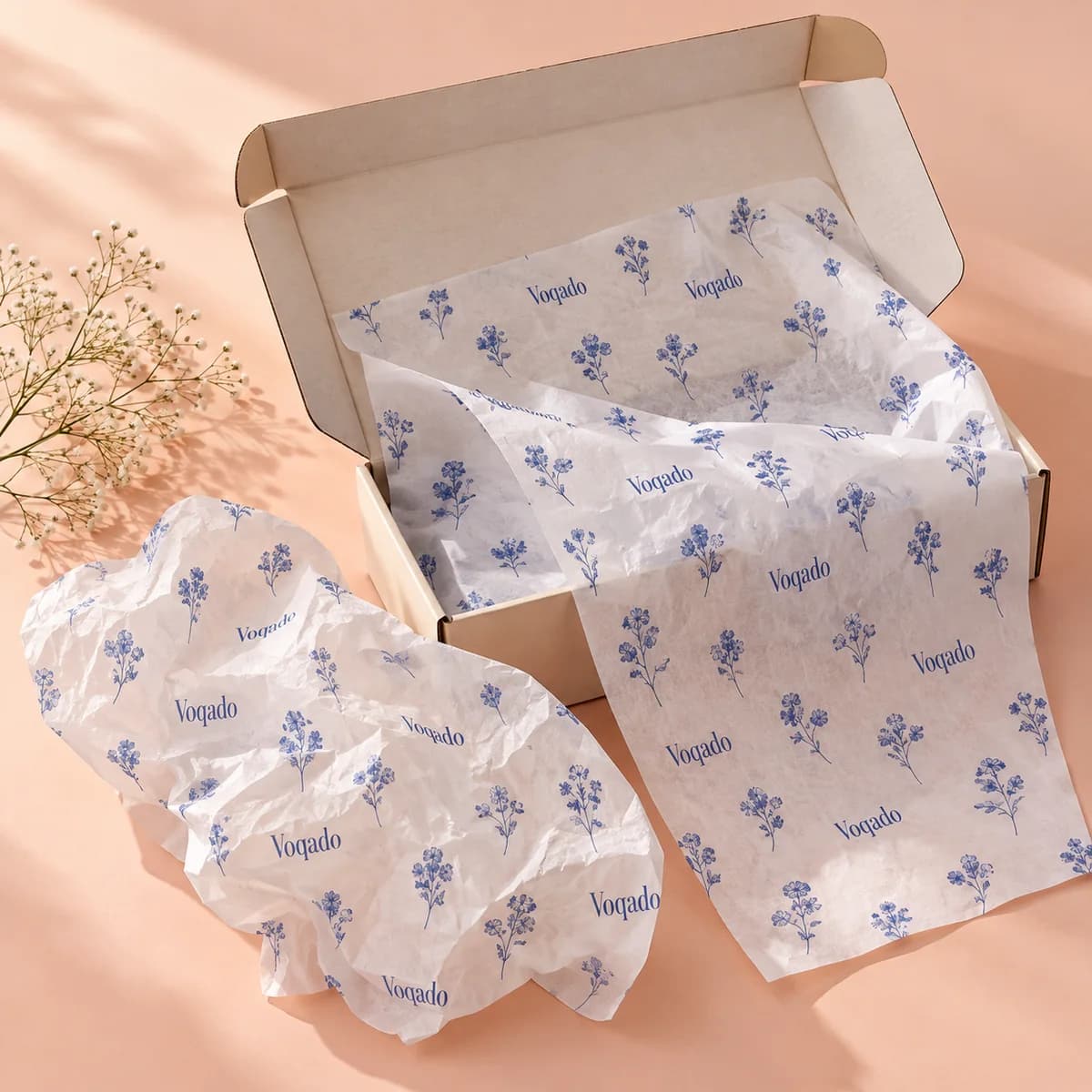
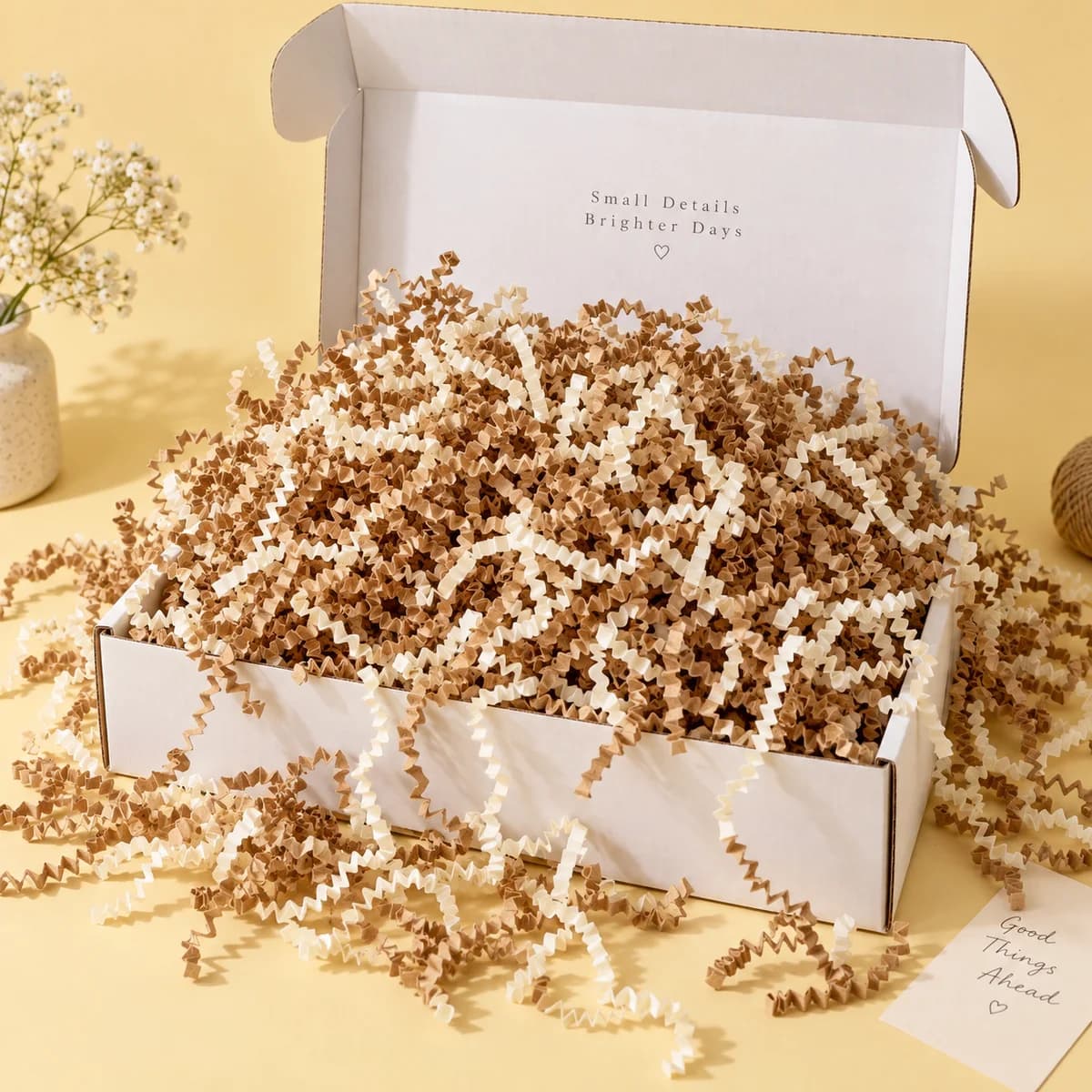
Two things work there. An inside printed panel on the lid, which mailer boxes support since they can be printed inside, outside or both. Or a closed layer of tissue, folded over the product and sealed, so that opening the box reveals a second thing to open rather than the product itself.
What does not work is tissue crumpled on top of a visible product, or a lid printed with a paragraph. One line, one mark, or one closed layer. That is the whole brief.
Step four is the card, and it should ask for one thing
An insert card is the only part of the package that can carry a message, so give it one job. A thank you plus a single next step: how to care for the product, how to reorder, how to leave a review, how to claim a discount, or where to scan.
If the card asks for three things it gets none. Choose the action that matters most for this product at this point in the customer relationship and cut the rest. A QR code works here, but plan for the surface and print a readable fallback line beside it.
Step five is the product, presented
The last step is the product looking better than the customer expected. That is mostly about contrast and stillness.
Contrast means the fill color flatters the product. A black product on black crinkle paper disappears. A white product on white tissue disappears. Photograph it before you commit.
Stillness means the product is where you put it. Anything that has slid, tipped or rolled during transit reads as carelessness even if nothing is damaged. A fitted insert, a belly band holding a bundle, or simply a smaller box all solve it, and all solve it better than more paper.
Cut, do not add
The fastest way to improve an unboxing is usually subtraction. Work through your own package and put every component into one of three groups.
- Earns its step: it is the only thing doing that job at that moment.
- Duplicates a step: a second sticker, a second card, a second tissue layer.
- Fills space: it exists because the box is too big.
Remove everything in the last two groups. Duplicates cost money and attention. Space fillers cost money twice, because carriers bill on the greater of scale weight and volume divided by a published divisor, so an oversized box charges you on every order whether or not you fill it.
Write it down and pack the same way every time
A sequence only exists if every order gets it. Write the five steps on a card at the packing bench, with the fold, the seal position and the card position specified, and pack one reference box to sit beside it.
That consistency is what makes the package feel designed. A customer who reorders and gets a different arrangement learns that the first one was an accident.
Sequence checklist
- Write down the five steps before buying any packaging.
- Confirm arrival condition with a drop and stack test first.
- Choose a closure that opens in one motion if a customer opens it.
- Give the first surface one line, one mark, or one closed layer.
- Give the insert card exactly one next step.
- Choose fill color that contrasts with the product, and photograph it.
- Stop the product moving with fit, not with more paper.
- Delete every component that duplicates a step or fills space.
- Keep a reference box at the bench so every order matches.
Frequently asked questions
What is an unboxing sequence?
The fixed order in which a customer encounters your packaging: the outside of the parcel, the opening motion, the first surface inside, an insert card, then the product. Designing that order, rather than buying components separately, is what makes a package feel intentional.
What should be printed inside a mailer box?
One line or one mark. The inside of the lid is the highest attention surface in the whole sequence, and a paragraph there is read by nobody. If you would rather keep the lid plain, use a folded and sealed tissue layer so opening the box reveals a second thing to open.
Do I need both tissue paper and crinkle paper?
Only if they are doing different jobs. Tissue is the visible layer that wraps; crinkle paper is the cushioning nest beneath it. If both are present purely to fill space, the box is too big and one of them is costing you money for nothing.
How many inserts should go in a package?
One. A single card with a thank you and one next step outperforms a stack of cards competing for attention. Choose the action that matters most for this product and this customer, and cut everything else.
Sources & specification notes
The references below support the relevant technical or product details in this guide. Examples and checklists are not claims of practical testing or universal supplier requirements. Confirm the current specifications for your chosen product before production.
- ASTM D4169: Performance Testing of Shipping Containers and Systems ↗
Cited for the point that arrival condition is a tested property of the shipping unit, not a matter of hope.
- FedEx: What is dimensional weight? ↗
States the volume based billed weight calculation, which is why space filling layers cost money on every order.