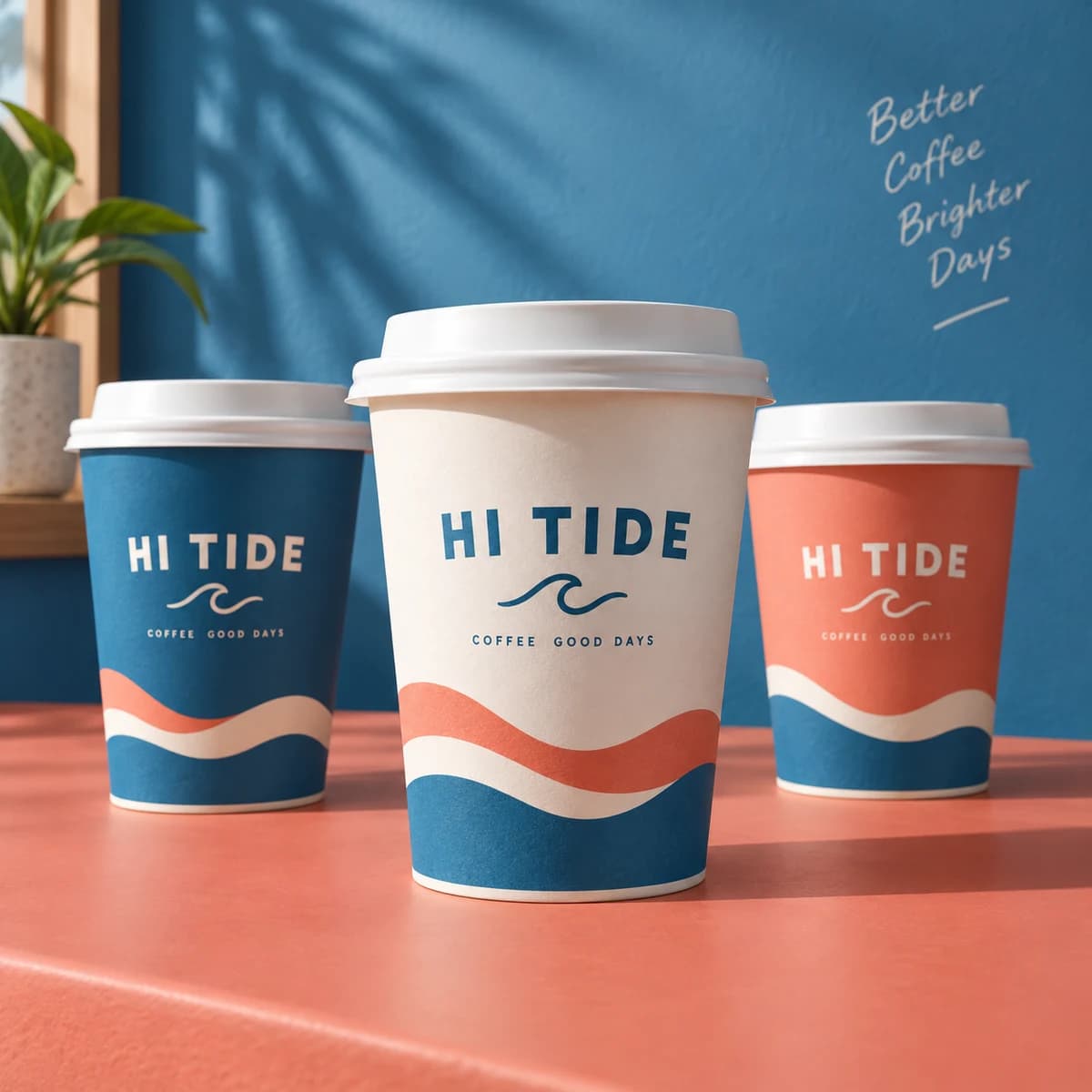
Paper cups
From $45.00100 items
Your coffee's favorite outfit. Single or double wall paper cups in four sizes, printed plain, logo style, or full wrap.
Choose options Start without artwork · Tax and delivery shown before payment.Explore menu boards, vinyl banners, branded to go bags, and paper cups for food trucks, stalls, and pop up kitchens.
A truck sells to people who are already walking past. The menu has to be read from the back of a line, the banner has to survive a service that ends in a gust of wind, and the bag has to carry hot food across a parking lot without failing. Every piece gets packed away at close and set up again somewhere else tomorrow, so print here is judged on how it travels.
Your coffee's favorite outfit. Single or double wall paper cups in four sizes, printed plain, logo style, or full wrap.
Choose options Start without artwork · Tax and delivery shown before payment.One lid size fits all four cup sizes, so a truck stocks one lid box instead of four.
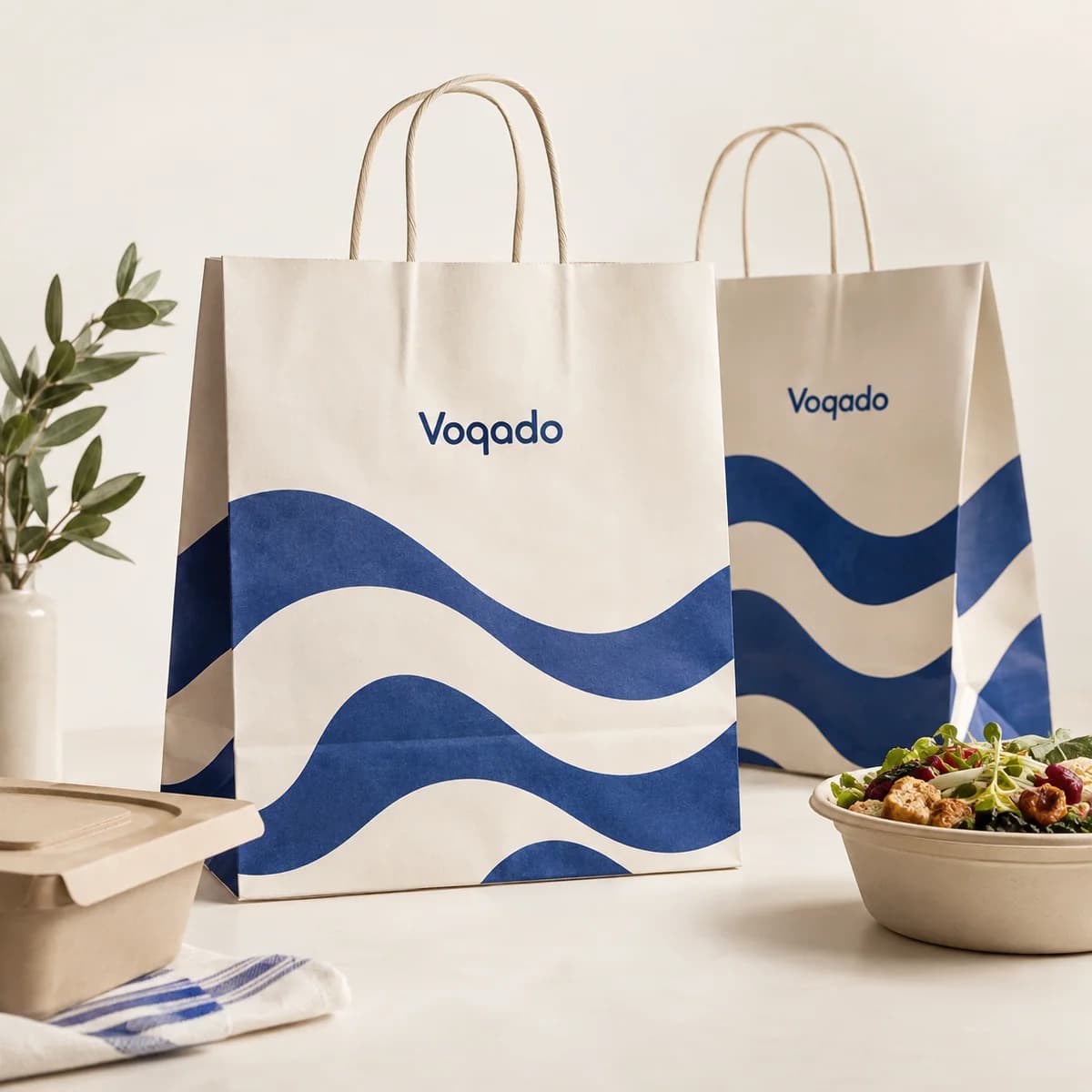
The handoff is the handshake. Sturdy handled takeout bags in kraft or white, printed with your logo in one bold color.
Choose options Start without artwork · Tax and delivery shown before payment.Five sizes carrying ten to twenty pounds in kraft or white, with a single color mark that travels out of the lot and through the park.
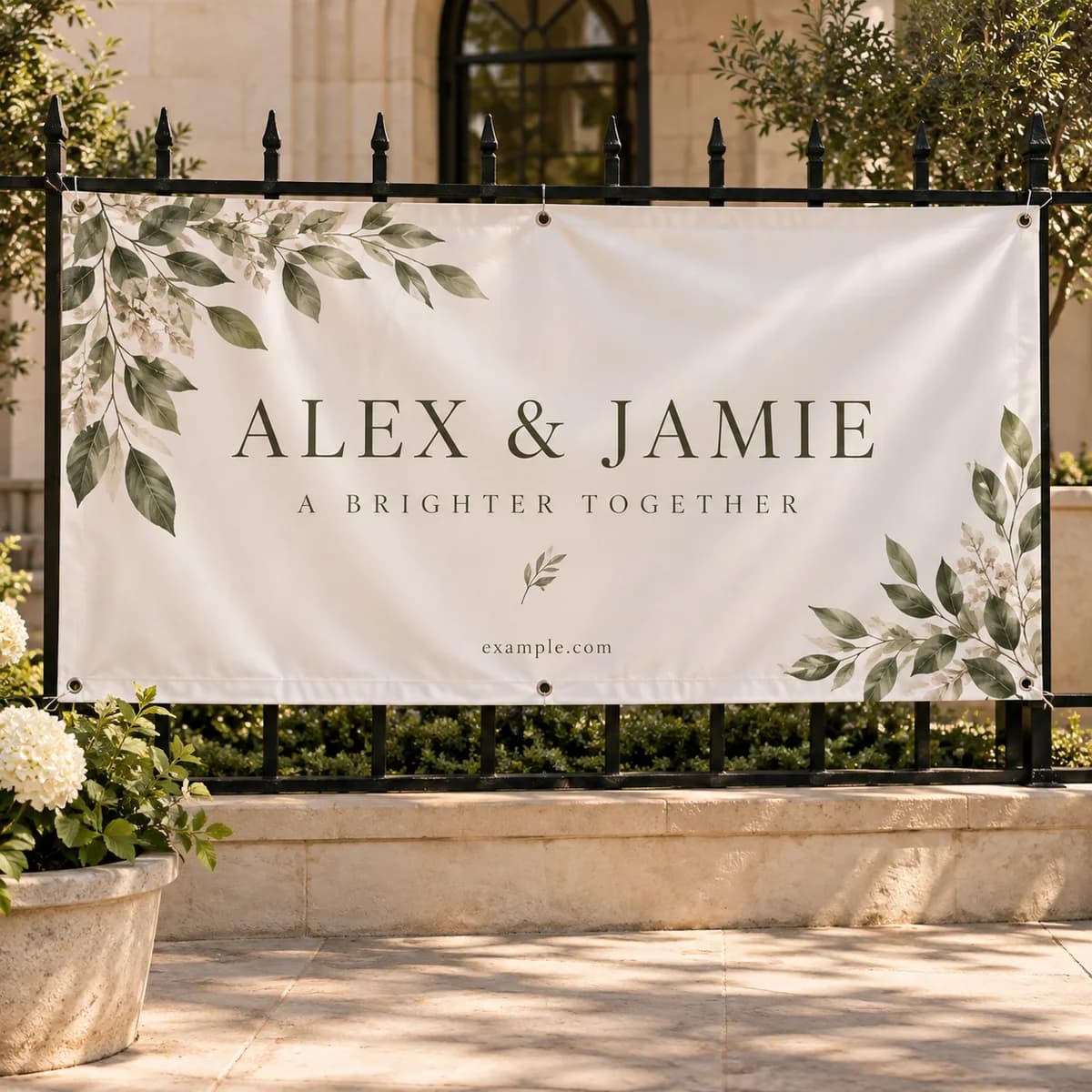
Big message? Give it a big stage.
Choose options Start without artwork · Tax and delivery shown before payment.Heavy duty outdoor material rated up to two years, with grommets and reinforced edges for a banner tied and untied at every service.
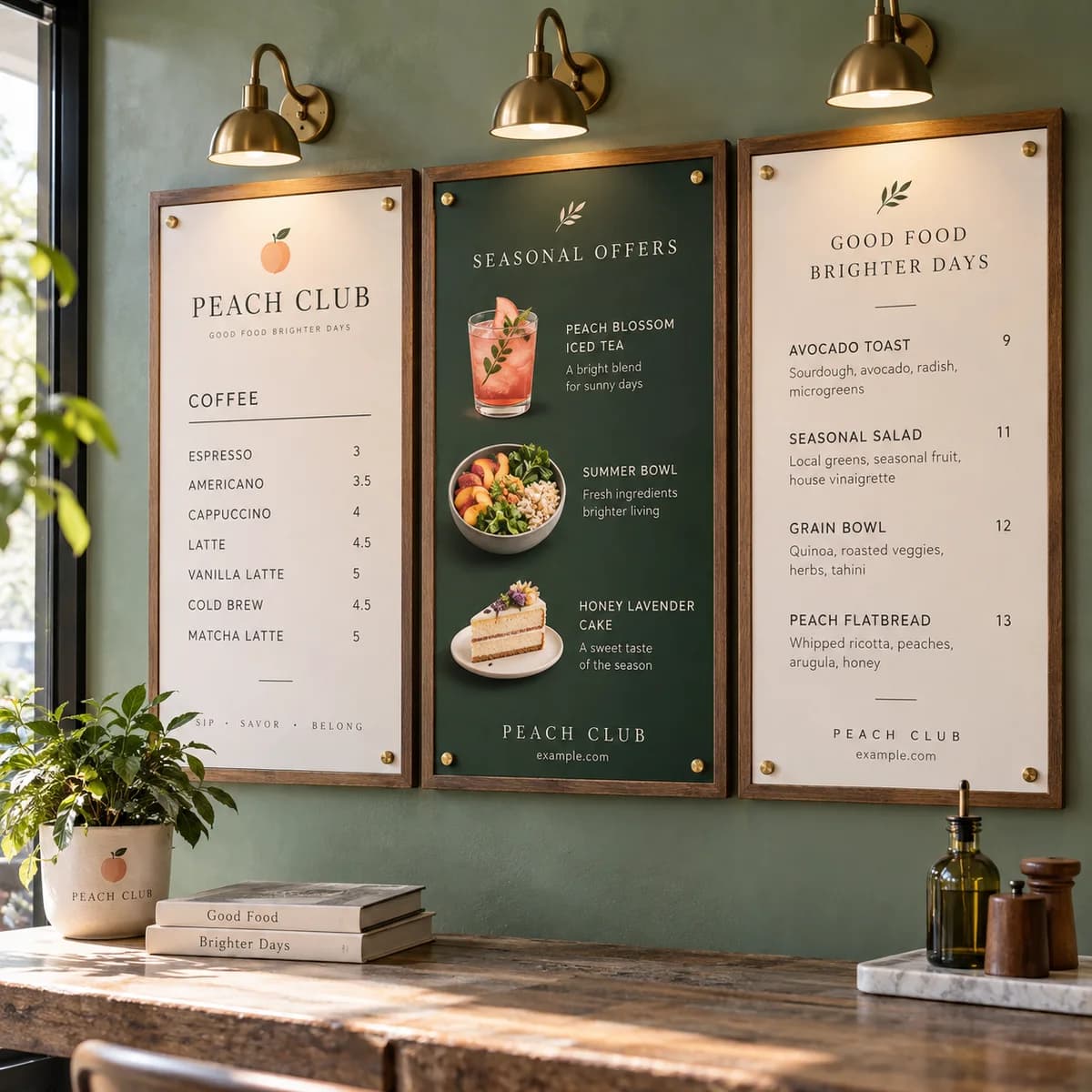
A menu that looks as good as the food.
Choose options Start without artwork · Tax and delivery shown before payment.A weather resistant steel mount with a quarter inch aluminum composite sign, so a seasonal menu change means a replacement sign rather than a new board.
The person at the window already decided. The person ten feet back is still deciding, and they are reading over shoulders, in sunlight, while the line shuffles. That is why a truck menu behaves differently from a sit down menu: category headers have to carry weight, prices have to sit on the same optical line as the item so the eye can scan a column, and the list has to be short enough to finish before you reach the window. Most trucks print too many items at too small a size, then hand write the day's specials on a board beside the window. Plan for that board from the start rather than treating it as a failure of the printed menu. A menu that can be read early also speeds service, because the order comes out in one sentence instead of three.
Operators hear about calorie counts on menu boards and assume it applies to them. The federal menu labeling rule reaches restaurants and similar retail food establishments that belong to a chain of twenty locations or more trading under one name with substantially the same menu. A single truck, or a pair of trucks under one name, sits below that line. What can still reach you is state and local rule, plus one thing operators forget: if you take catering work, some states attach advertising duties to the catering license. Florida requires public food service establishments that offer catering services to display their license number on all advertising for catering services, which means the catering line on your banner and your card, not just a contract. Confirm your own state and county before the artwork goes out, because a printed board outlives the rule change.
Event signage that hangs indoors for a weekend and a banner that rides a tailgate through a season are not the same product. Voqado offers five banner materials, and the heavy duty outdoor light blockout is the one rated to last up to two years outside with proper care, which is the only rating that means anything to a truck. Weight is only half the decision. Grommet placement and heat welded reinforced edges decide whether wind tears a corner out on an open lot, and a banner seen from both directions of foot traffic should be printed double sided rather than hung back to back with a second banner. Measure the truck panel, the rail or the fence you actually tie to before choosing a size, because a banner that overhangs a service window costs you the window.
A cup travels back to an office and sits on a desk for an hour in front of people who never saw your truck. A bag walks through a park. That is real reach, and it is the reason to spend design effort on the single color mark rather than on a full wrap you cannot afford at volume. Order by physics rather than by look: bag capacity runs from ten pounds on the smallest size to twenty pounds on the largest, and a bag chosen for how the artwork sits will split under a family order. The handles add roughly four inches to the listed height, which decides whether a stack fits the cabinet you have. Order in a rhythm that matches your event calendar, since bags start at two hundred and you do not want a pallet of the wrong size.
Your menu is read from about ten feet away by someone deciding whether to join the line. Lead with a few legible items and prices rather than the full list. Banners and boards live outdoors and get packed away nightly, so confirm the material, grommet placement and folding tolerance before ordering.
Build your brand kit →The federal menu labeling requirement reaches chains of twenty locations or more trading under one name with substantially the same menu. A single truck falls below that threshold. State, county and city rules are separate and can differ, and some jurisdictions add their own posting duties, so confirm with the health department that issues your permit before you finalize a board you plan to keep for a season.
Design for the distance, then confirm it physically. Print the layout at final size, mount it where the real board will sit, and read it standing where the tenth person in line stands. If the category headers do not separate at that distance, the type is too even, not too small. Keep the printed board to the items you always sell and leave a fixed area for the daily special, since a hand written line over printed type is what makes a board look improvised.
Match the material to exposure, not to price. An indoor or PVC free stock is fine for a hall, a market or a one day event. Light blockout suits anything hung against a window or a lit panel. For a banner that rides with the truck, gets tied to a fence and sits in weather all season, the outdoor materials are the ones rated for it, with the heavy duty option lasting up to two years outside with proper care. Add reinforced edges and grommets anywhere wind reaches a corner, and carry a spare set of ties.
Work from covers per service and services per week rather than from a round number. Bags are ordered from two hundred up to three thousand, so estimate on the high side for your busiest month and hold the rest, since running out mid event means serving your best day in unbranded packaging. Order cup sizes in the proportion you actually pour, and count lids separately, because they are a separate line and the counter notices when one runs out before the other.
Business cards by industry · 5 MIN READ
Food truck business cards that bring people back: schedule links, stamp loyalty backs, catering lines, allergen notes, grease proof stock, and wording.
Read the guide
Small business print · 6 MIN READ
Restaurant menu printing guide: common menu sizes, paper that survives service, lamination versus disposable menus, layout tips and a reprint schedule.
Read the guide
Signs, banners & events · 7 MIN READ
A frame sign ideas by business type, 14 messages that work, layout rules for sidewalk reading, swappable inserts, and placement and weather tips.
Read the guide START HERE
Signs, banners & events · 7 MIN READ
Common vinyl banner sizes and where each fits, plus letter height by viewing distance, hem and grommet allowances, wind tips and a worked storefront example.
Read the guideHelp us improve Voqado with analytics? Details