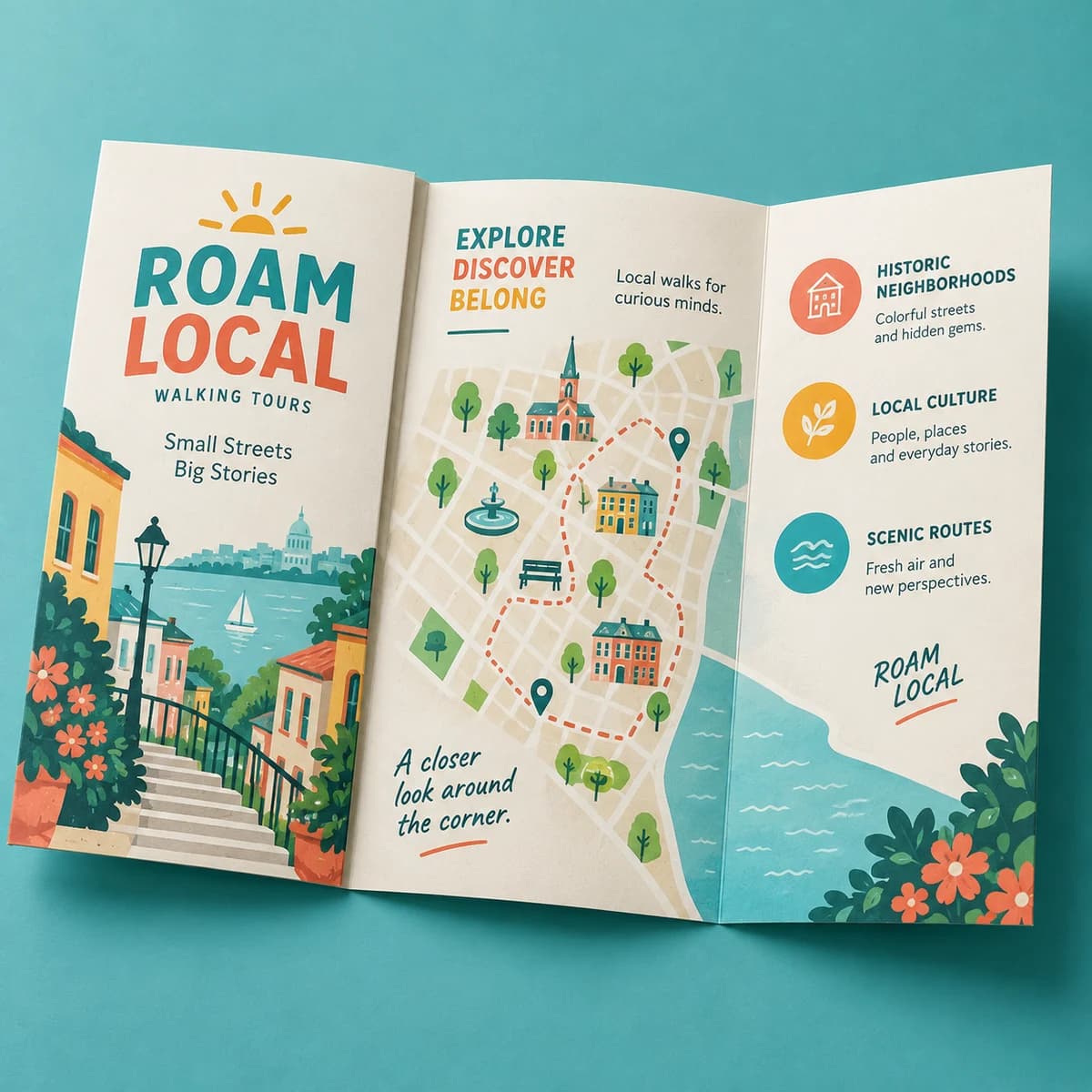
Brochures
From $10.991 item
Unfold the story. Six panels of room to say everything your business does.
Choose options Start without artwork · Tax and delivery shown before payment.Explore event tickets, fundraiser banners, program brochures, and branded tote bags for nonprofits, charities, and community groups.
A fundraiser runs on a sequence: get someone through the door, explain the work, ask for money, then acknowledge it in a way the donor can file. Print sits at every step of that sequence, and the piece that goes wrong is usually the one that touches the money. Language about what a ticket is worth and what a gift is worth is governed by tax rules, not by taste.
Unfold the story. Six panels of room to say everything your business does.
Choose options Start without artwork · Tax and delivery shown before payment.Tri fold, Z fold or bi fold, arriving already folded, for the moment a supporter is standing still and wants to know where the money goes.
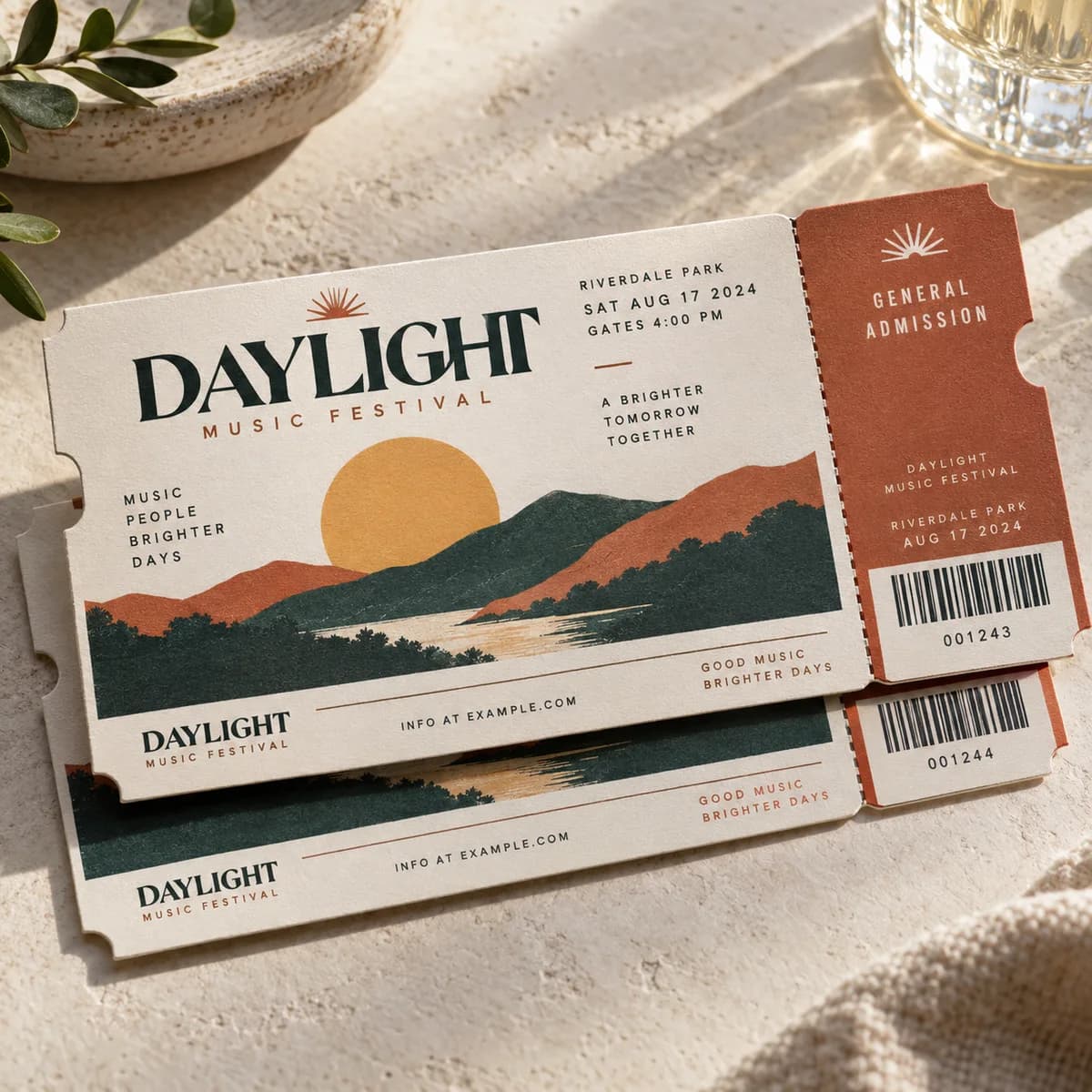
Your event, on paper. Professional tickets that make any night out feel like the main event.
Choose options Start without artwork · Tax and delivery shown before payment.Two sizes on 14 pt stock with an optional perforated stub, for admission and door control rather than for a numbered raffle draw.
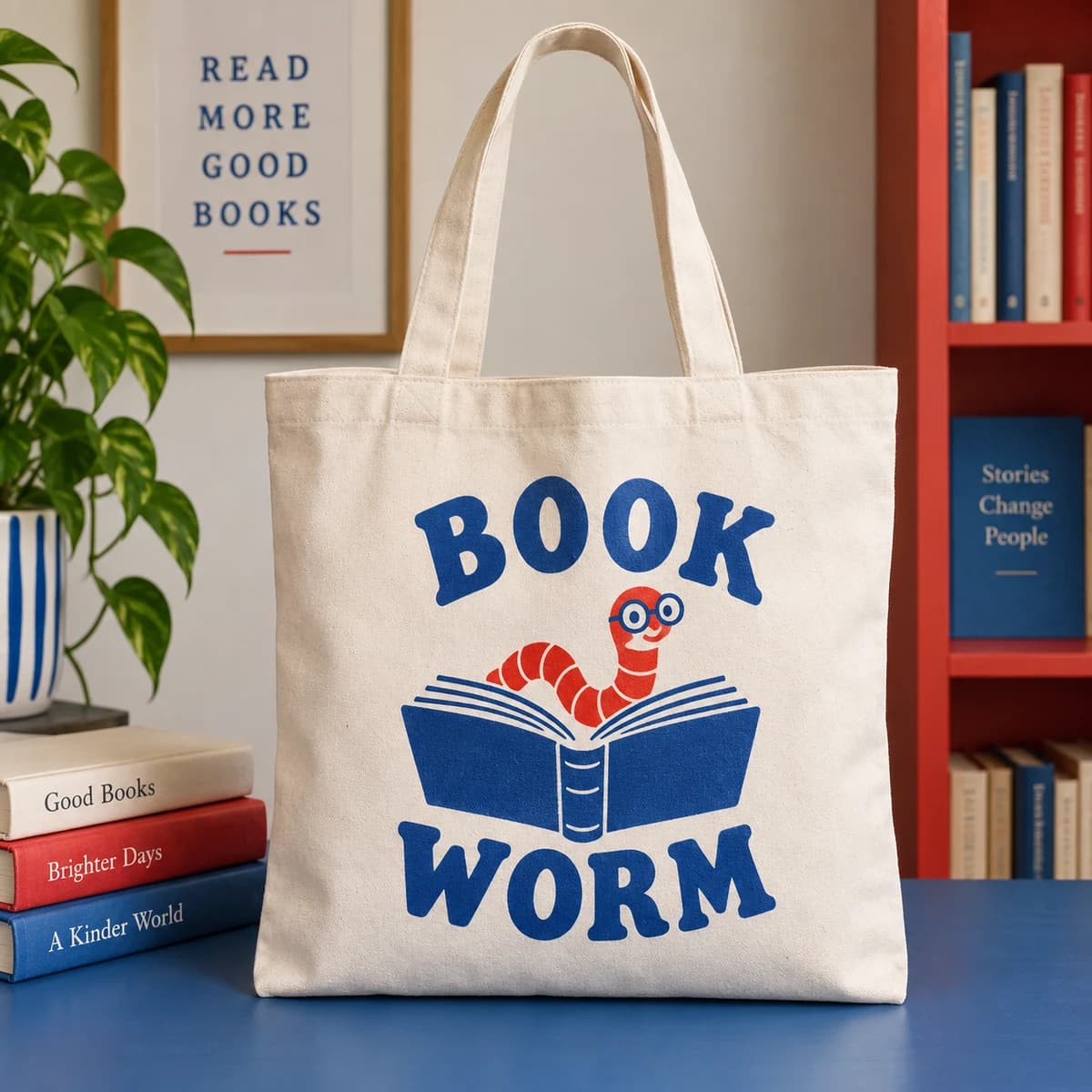
The everyday tote that earns its keep. Sturdy cotton canvas, printed front and back: your design goes everywhere the errands do.
Choose options Start without artwork · Tax and delivery shown before payment.Cotton canvas printed on both sides, so the message keeps moving through the neighborhood after the event ends.
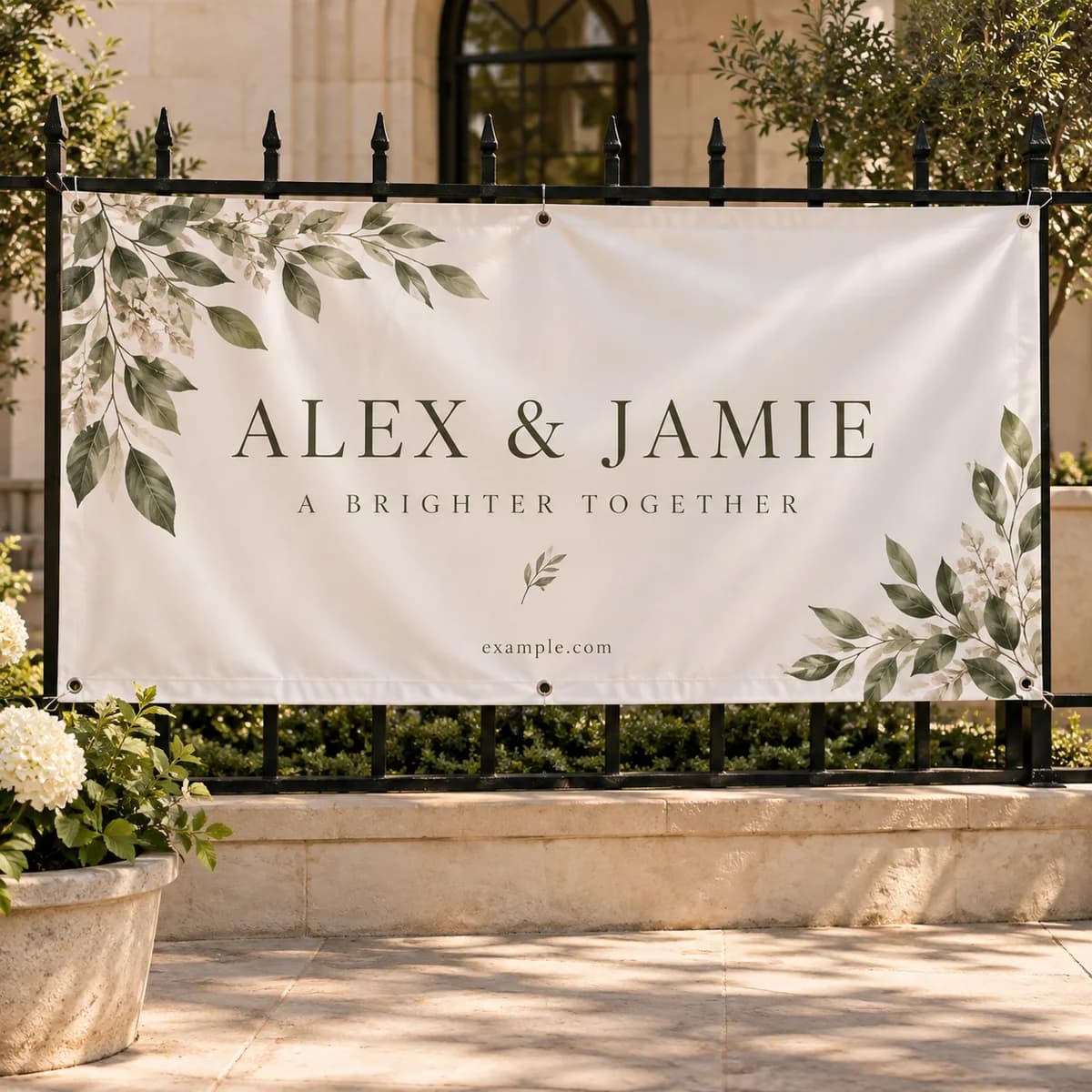
Big message? Give it a big stage.
Choose options Start without artwork · Tax and delivery shown before payment.Indoor stocks for a ballroom or a lobby and outdoor stocks for a course marker or a build site, from the same artwork.
If someone pays more than the value of what they receive, that is a quid pro quo contribution, and under 26 USC 6115 an organization that receives a quid pro quo contribution over seventy five dollars must give the donor a written statement telling them that only the excess over the value of the goods or services is deductible, along with a good faith estimate of that value. A gala ticket that includes a meal is the classic case. The statement can live on the ticket itself, on the receipt or on the acknowledgment, but it has to exist and it has to carry the estimate. Have whoever handles your filings approve the exact sentence before the print run, since fixing it afterwards means reprinting the whole batch.
Raffle tickets need to do something ordinary event tickets do not: every stub has to match exactly one ticket held by a person in the room, which requires unique sequential numbers. These tickets come in two sizes and three stocks with an optional perforated stub, but sequential numbering is not part of the options, so a run of identical tickets cannot be your drawing mechanism. Use the printed ticket for admission and identity, and run the draw on a numbered roll or a digital entry list. Charitable gaming is separately licensed in most states and some prohibit raffles entirely, so confirm with your state charity regulator before you promise a draw in print.
Fundraising print fails by asking for everything at once. A banner has one job, which is to tell someone at a distance that they are in the right place and that the event belongs to you. A brochure has a different job, which is to convert interest into understanding once someone is standing still and holding it. The ticket admits. The tote thanks and then keeps advertising after the event. When each piece carries the whole story, the ask disappears into the middle of a paragraph. Write the single next step first, in the words a supporter would use, then design backwards from it.
Under 26 USC 170(f)(8) a donor cannot deduct a contribution of two hundred fifty dollars or more without a contemporaneous written acknowledgment from the organization, and that acknowledgment has to state the amount of cash, describe any noncash property without valuing it, and say whether goods or services were provided in return along with a good faith estimate of their value. If your event mails a printed thank you, you may as well make it do this work properly rather than sending a warm note and a separate receipt later. Draft the wording once with your finance lead, then reuse it, and never hand print a number onto a piece that also carries tax language.
A fundraiser asks for attention, money and a next step, usually in that order. Give each piece one job: a ticket to admit, a brochure to explain, a tote to carry the message home. If you print donation amounts or tax language, have someone check the wording before the run, because a reprint costs more than a review.
Build your brand kit →The part most often missed is the value language. Under 26 USC 6115, when a quid pro quo contribution is more than seventy five dollars, the organization must give the donor a written statement saying that only the amount above the value of the goods or services is deductible, and must include a good faith estimate of that value. A ticket that includes a meal is exactly that situation. The statement can sit on the ticket, the receipt or the acknowledgment, but have your finance lead approve the wording before you print.
Not as the drawing mechanism. A raffle needs each stub to match exactly one ticket, which means unique sequential numbers, and sequential numbering is not offered on these tickets. Use the printed ticket for admission and for carrying your branding and event details, and run the draw from a numbered roll or a digital entry list. Charitable gaming is licensed separately in most states and banned in a few, so check with your state charity regulator before you advertise a raffle.
It depends on where it hangs and for how long. A gala in a hotel ballroom or a lobby needs nothing heavier than the lighter indoor stocks, and a light blockout material is the one for a window or a spot with daylight behind it, where a thinner banner shows the street through your logo. A banner staked at a 5k or tied to a fence for a whole season is a different product, and only the outdoor materials are specified for months of weather. Add grommets and reinforced edges anywhere wind can get behind it.
They earn their place when they carry a message rather than only a logo. A tote leaves with a supporter and keeps being seen, which is more exposure than a program that goes in the recycling at the end of the night. Print both sides, since the bag faces whichever way it hangs, and keep the wording short enough to read as someone walks past. One caveat to set expectations on: these are cotton canvas and washing is not recommended, so treat them as carriers rather than laundry.
Small business print · 6 MIN READ
Event ticket printing for fundraisers and concerts: standard ticket sizes, perforated stubs, sequential numbers, anti counterfeit ideas and door checks.
Read the guide
Small business print · 5 MIN READ
Thank you cards for small business: sizes, paper, real wording examples for orders and clients, a review ask that feels natural, and packing tips.
Read the guide START HERE
Signs, banners & events · 7 MIN READ
Common vinyl banner sizes and where each fits, plus letter height by viewing distance, hem and grommet allowances, wind tips and a worked storefront example.
Read the guide
Flyers, brochures & booklets · 6 MIN READ
Learn how to print a brochure step by step: pick the fold, set up panels and bleed, choose paper that folds cleanly, check the PDF and approve a proof.
Read the guideHelp us improve Voqado with analytics? Details