How does check washing work?
The scheme has four steps. First, a thief gets a signed check, most often from a residential mailbox with the flag up, a blue collection box, or mail stolen in transit. Second, the thief covers the signature and uses solvents to dissolve the ink in the payee line and amount fields. Third, the dried check is filled in with a new payee, often a money mule or a fake identity, and a higher amount. Fourth, it is deposited, frequently through a mobile app where no teller ever touches the paper.
Washed checks can also be scanned and reprinted. The Postal Inspection Service notes that thieves may copy a washed check and print many versions for future use or sale. That shifts the crime from one altered check to a batch of counterfeits using your real account numbers.
How common is check washing right now?
The numbers moved sharply after 2020. In its February 27, 2023 alert, FinCEN reported that banks filed more than 350,000 check fraud reports in 2021 and over 680,000 in 2022, nearly double. The alert tied much of that rise to mail theft and named check washers as a distinct role in organized fraud rings.
FinCEN also noted that business checks may be more valuable to criminals than personal ones because business accounts often hold larger balances and fraud may take longer to notice. That makes small businesses that pay vendors by mailed check a natural target.
What are the warning signs of a washed check?
You rarely see the washed check itself. You see its effect on your account. Watch for these signs:
- A cleared check with the right number but the wrong payee or amount
- A check that clears for much more than the invoice it paid
- A vendor calling to say a payment never arrived, while your bank shows it cashed
- A cleared check image with blotches, faded areas or uneven paper color
- Check numbers from your range clearing out of order or twice
Pull the image for every cleared check at least weekly. Most online banking portals show the front and back.
A worked example shows why speed matters. Say you mail a $186.40 check to a supplier on Monday. It is stolen from the collection box that night, washed, rewritten as $4,860.00 to a stranger and deposited by phone on Wednesday. If you review images on Friday, you can report it within days. If you wait for the monthly statement, the thief has had weeks to move the money and may have printed copies too.
How do you prevent check washing?
Prevention works best in layers, because each step blocks a different part of the scheme.
| Step | What it blocks | Effort |
|---|---|---|
| Hand mail to a post office clerk or drop it inside the lobby | Theft from mailboxes and collection boxes | Low |
| Write with pigmented gel ink | Solvents dissolving the payee and amount | Low |
| Use chemically reactive check stock | Invisible washing, since the paper stains | Low at reorder |
| Fill every line and draw a line through empty space | Adding words or digits after the fact | Low |
| Enroll in positive pay with payee match | Payment of altered checks at the bank | Moderate, bank fee |
| Review cleared check images weekly | Late discovery | Moderate |
| Move recurring vendors to ACH or bank bill pay | Paper in the mail entirely | Moderate |
The postal guidance is specific: deposit outgoing mail in blue collection boxes before the last pickup or at your local post office, and never leave mail in your mailbox overnight. For more detail on routes and envelopes, see our guide on whether it is safe to mail a check.
Which pen and paper choices help most?
Ink choice matters because washing depends on dissolving it. Pigmented gel inks put solid color particles into the paper fibers, which common solvents struggle to lift. A consumer test reported by OrboGraph found one pigmented gel pen resisted every solution tried, while a popular gel pen and a standard ballpoint faded under some of them. Our guide to the best pen for writing checks covers the choice in detail.
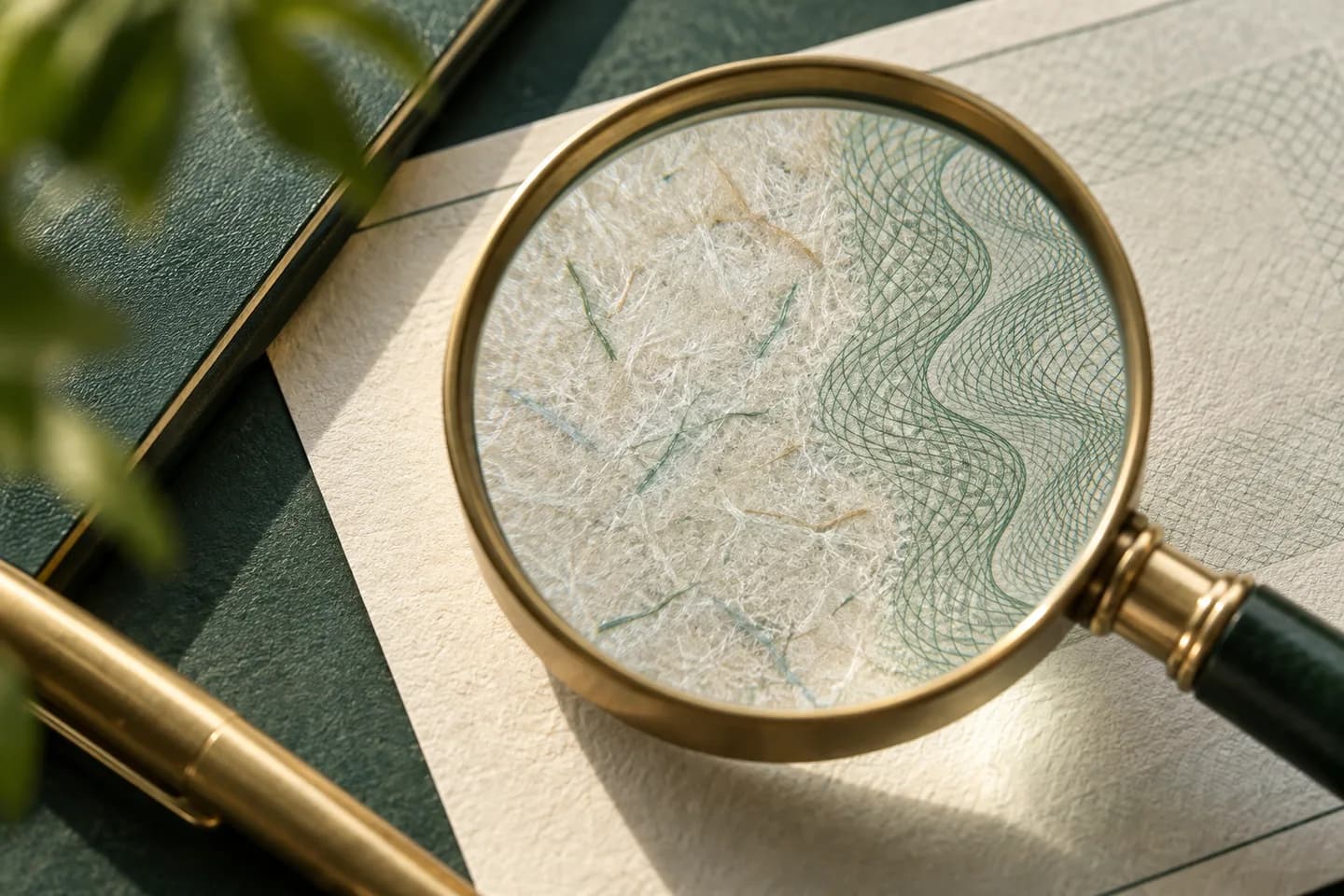
Paper is the second layer. Chemically reactive stock stains or shows a warning when a solvent touches it, so a washed check looks damaged instead of blank. Our overview of check security features explains how that coating compares with microprinting and void pantographs.
Does positive pay stop washed checks?
Standard positive pay compares the check number and amount you issued with what is presented. It catches a washed check only if the amount changed. Payee positive pay also compares the payee name, which closes the gap when a thief changes only the name. If washing is your main worry, ask your bank for payee match specifically.
Positive pay needs an issued check file sent to the bank each time you write checks, and you decide on each flagged item before a cutoff. Our explainer on how positive pay works walks through the file, the exceptions and the costs to ask about.
What should you do if a check was washed?
Speed matters. Call your bank's fraud line, identify the check number, and ask them to return or reclaim the item. Under the Uniform Commercial Code you must review statements with reasonable promptness, and you lose the right to challenge an altered item after one year, so do not wait for the next statement.
Then follow these steps:
- Stop payment on any other outstanding checks from the same batch
- Ask whether the account should be closed and reopened with new numbers
- Report the theft to the Postal Inspection Service at 1-877-876-2455 or online
- File a police report and keep copies of every document
- Reissue the vendor payment by ACH or a new check from the new account
If you do close the account, you will need new checks with the new account number and, ideally, a fresh number range. Our guide to lost or stolen checks lists the full recovery sequence.
Frequently asked questions
What chemicals are used in check washing?
Thieves use common household and hardware store solvents that dissolve many dye based inks. Public agencies deliberately avoid publishing exact recipes. What matters for prevention is that chemically reactive check paper is designed to stain when these solvents touch it, and pigmented gel ink resists them better than most ballpoint ink.
Can a washed check be detected by the bank?
Sometimes. A teller handling the paper may notice stains or rough texture, but mobile deposits reduce the check to an image where washing damage can be hard to see. Positive pay with payee match gives the bank a data mismatch to act on, which is far more reliable than visual inspection.
Who is liable if my check is washed and cashed?
Liability depends on state law, your account agreement and how quickly you reported it. Under the Uniform Commercial Code you must examine statements with reasonable promptness, and claims for alterations are barred after one year. Report immediately and ask your bank in writing how it will handle the claim.
Is it safer to pay vendors by ACH than by check?
For recurring vendors, usually yes, because nothing physical travels through the mail. ACH has its own risks, such as fake vendor bank change requests, so verify any change by phone using a number you already have. Many businesses keep checks for occasional payees and move regular ones to ACH.
Sources & specification notes
The references below support the relevant technical or product details in this guide. Examples and checklists are not claims of practical testing or universal supplier requirements. Confirm the current specifications for your chosen product before production.
- FinCEN: Alert on Nationwide Surge in Mail Theft Related Check Fraud Schemes ↗
February 27, 2023 alert with the 2021 and 2022 report counts, the check washer role and the note on business checks.
- U.S. Postal Inspection Service: Check Washing ↗
Describes washing and copying of checks and gives the mail timing tips quoted here.
- OrboGraph: Check washing experiment, putting gel ink pens to the test ↗
Reports an informal test in which one pigmented gel pen resisted all solutions while other pens faded.
- Cornell LII: UCC 4-406 ↗
Sets the customer duty to review statements promptly and the one year limit for reporting alterations.