How the vacuum does the work
Heat leaves a drink three ways: conduction through the vessel, convection in the air around it, and radiation. A vacuum gap removes the first two almost entirely, because there is no medium in the gap to carry heat across. What remains is radiation across the gap and conduction through the small structural join at the rim, which is why insulated vessels are good rather than perfect.
A single wall vessel has none of that. Our 26 oz aluminum water bottle is explicitly single wall and not insulated, so it takes the temperature of its contents and sweats in humid air. That is a legitimate design: it is lighter, fully recyclable aluminum, and it prints in full color digital inkjet with no design limitations.
Reading the hour figures honestly
Insulated products are sold with hour claims, and it helps to know what those are and are not.
| Product | Construction | Stated performance |
|---|---|---|
| Travel mugs, 40 oz | Double wall vacuum insulated steel | Hot 6 hours, cold 10 hours |
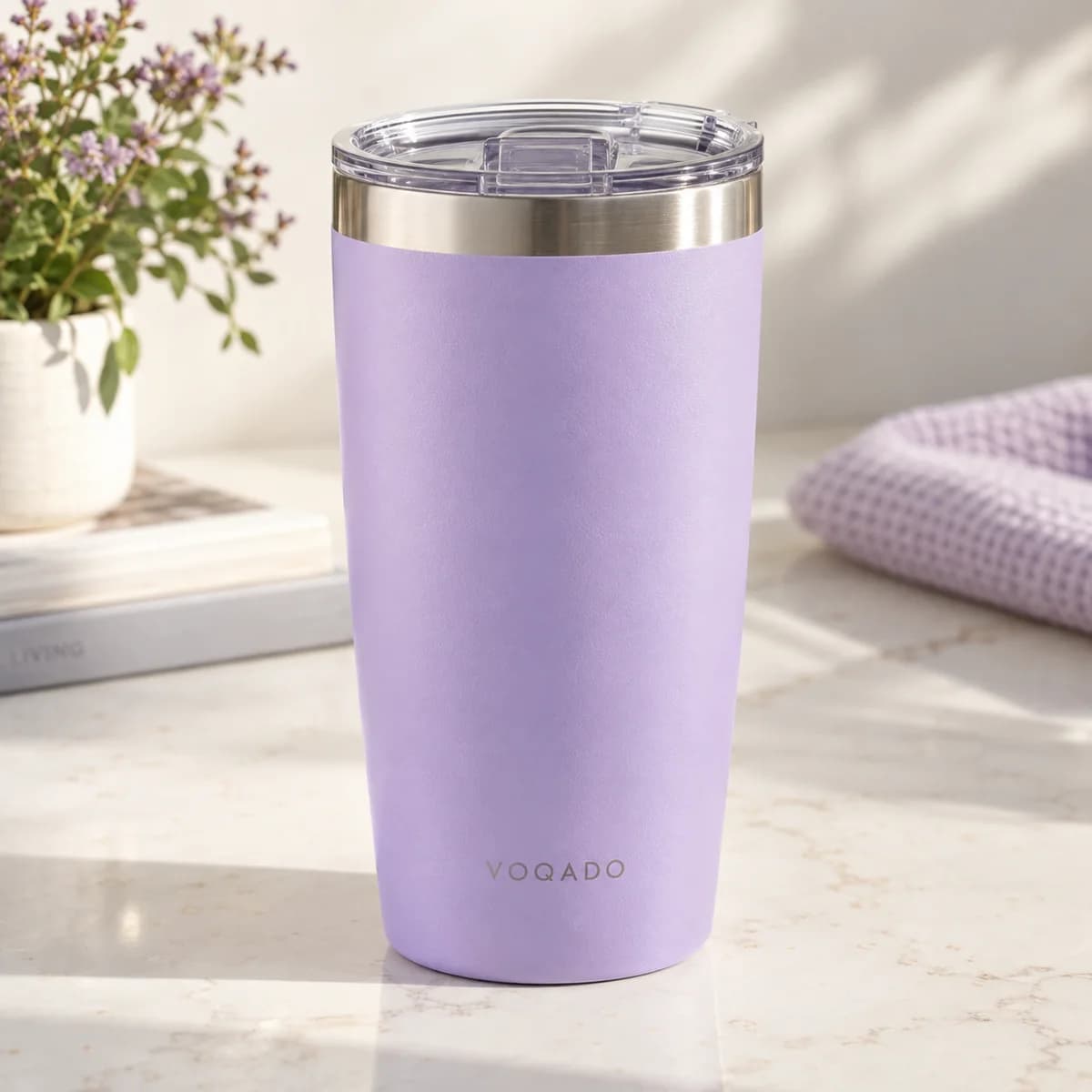
| Tumblers, 17 oz | Double wall vacuum insulated 18/10 steel | Keeps drinks hot or cold longer |
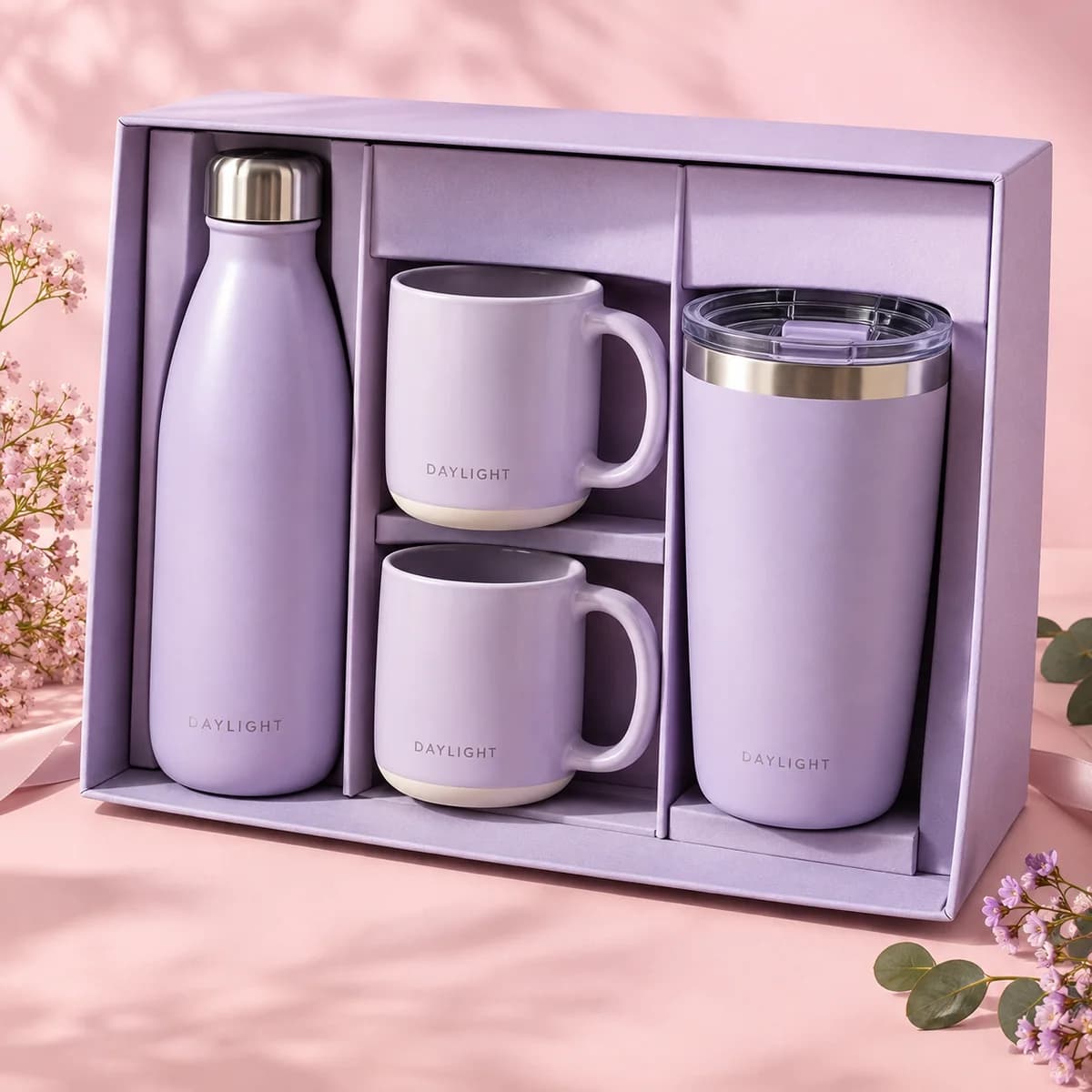
| Gift set wine cups, 12 oz | Triple insulated, vacuum sealed steel | Cold 9 plus hours, hot 3 hours |
| Gift set canteen, 25 oz | Triple insulated, vacuum sealed steel | Cold 25 hours, hot 12 hours |
| Water bottles, 26 oz | Single wall aluminum | Not insulated |
Those are the manufacturer figures we publish, not measurements we made, and they behave like every insulation figure: bigger vessels hold longer because the ratio of contents to surface area is better, cold claims beat hot claims because the temperature difference from a room is smaller, and a lid left open resets the clock. The 25 oz canteen outlasting the 12 oz cup by a wide margin is volume, not a better vacuum.
Why insulation means hand wash
The published care lines follow construction rather than decoration.
Our tumblers are hand wash recommended. Our aluminum bottles are hand wash only. Our insulated gift sets are dishwasher safe with the top rack recommended. Our plain ceramic mugs are dishwasher and microwave safe, and our etched glassware is dishwasher safe.
The pattern is that the simplest bodies are the most washable. An insulated vessel has a sealed cavity, a seam at the rim and a lid assembly with seals, and repeated hot cycles are hardest on exactly those features. Where a dishwasher is permitted, the top rack keeps the vessel away from the heating element, and skipping the heated dry cycle removes the harshest part of the program.
Microwaving is a flat no for all of them. Metal plus a sealed void is not a microwave combination, whatever the decoration.
What insulation does to your artwork
Insulated construction changes the decoration conversation in three quiet ways.
It makes the wall thicker, so the vessel is slightly wider than an uninsulated one of the same capacity. That is more circumference to work with, but it comes with a stronger taper on many models.
It makes engraving attractive, because a vessel built to last for years wants a mark that lasts as long. Our tumblers offer laser engraving as one of two options, and the trade is the usual one: permanent and single tone, or full color digital inkjet without a color guarantee.
It adds hardware. Lids, sliders, straws, screw caps and flat grip panels all sit in places artwork would otherwise go, and our gift set cups have flat sides precisely where a hand lands.
Materials and what the labels mean
Our insulated drinkware is stainless steel, and the tumbler specifies 18/10, which describes the chromium and nickel content of the alloy rather than a coating. The tumbler and the gift set are both listed as BPA free.
BPA is a specific chemical used in some polycarbonate plastics and can linings, and the FDA publishes a questions and answers page on its use in food contact applications. A BPA free note on drinkware refers to the plastic parts, which on an insulated vessel means the lid, slider or straw rather than the steel body.
If food contact compliance is something you have to document, the FDA's framework for packaging and food contact substances is the right starting point, and NSF publishes material standards for commercial food equipment that many suppliers reference.
Choosing between insulated and single wall
- Long commute, drink has to survive a shift, gift that should feel substantial: insulated.
- Gym, hiking, clip to a bag, lightest possible, full color graphics: single wall aluminum.
- Desk use with reheating: neither, choose ceramic.
- Hot drinks in a car cup holder: insulated tumbler, since it is listed as fitting most holders.
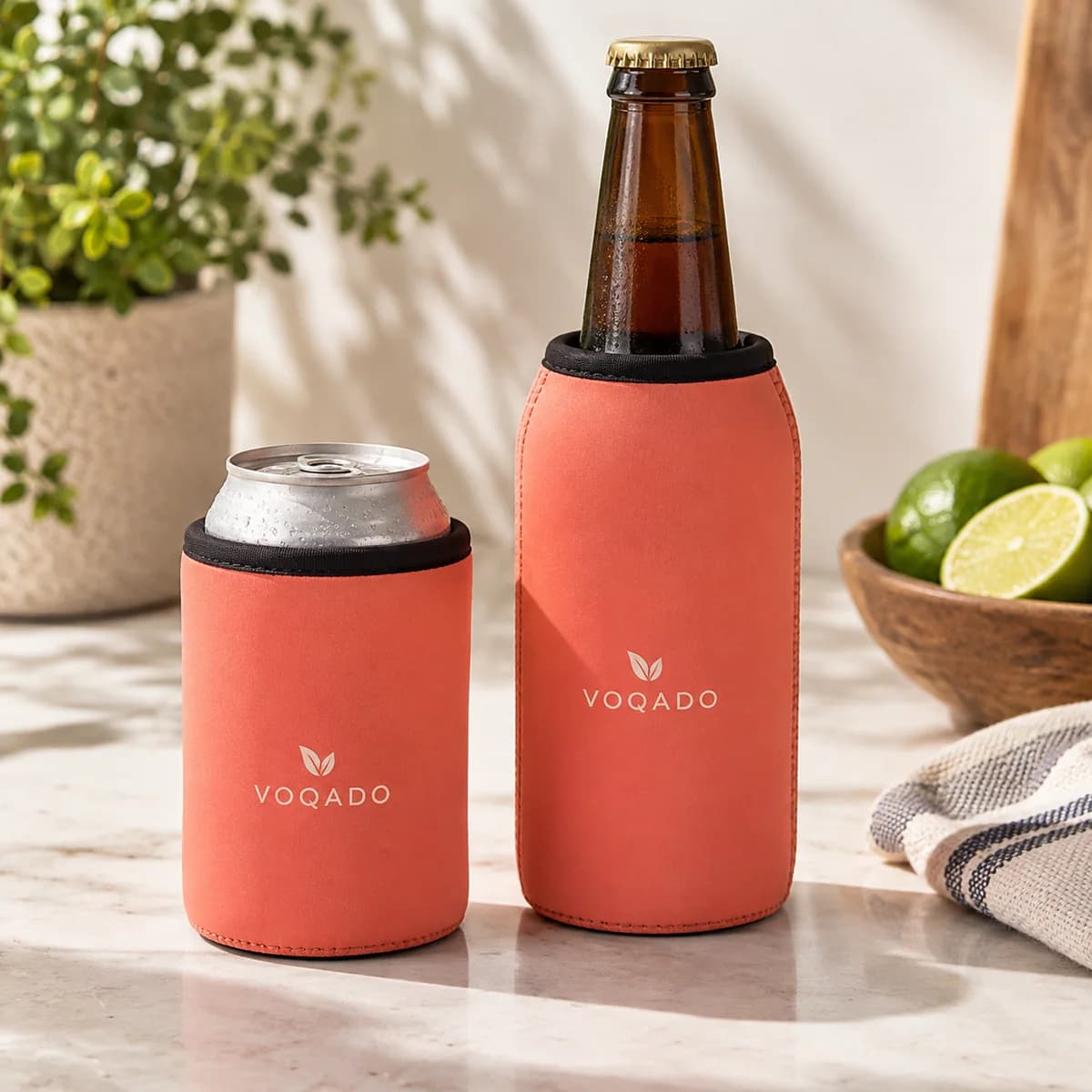
- Event giveaway at the lowest unit cost: a can cooler or a printed cup rather than an insulated vessel.
Insulated drinkware checklist
- Treat hour figures as supplier claims and expect volume to drive them.
- Assume hand wash on insulated steel unless the product says otherwise.
- Never plan microwave use for an insulated vessel.
- Use the top rack and skip heated drying where a dishwasher is allowed.
- Prefer engraving when the vessel is meant to last for years.
- Check where lids, straws and grip panels land before placing artwork.
- Ask for the vessel template and confirm placement with our team before production.
Frequently asked questions
How long does double wall vacuum insulation keep a drink cold?
It depends mostly on volume. Our 40 oz travel mug is stated at hot 6 hours and cold 10 hours, while the 25 oz canteen in our gift set is stated at cold 25 hours and hot 12 hours. Larger vessels hold longer because there is more liquid per unit of surface area, and opening the lid resets the clock.
Can insulated drinkware go in the dishwasher?
Sometimes, and it is stated per product. Our insulated gift sets are dishwasher safe with the top rack recommended, while our tumblers are hand wash recommended and our aluminum bottles are hand wash only. The limit comes from the sealed cavity, the rim seam and the lid seals rather than from the decoration.
Why can you not microwave an insulated tumbler?
Because it is metal with a sealed void between two walls. Microwaves reflect off metal, and a sealed cavity should not be heated. If reheating matters, the requirement selects a plain ceramic mug, which our 11 oz mug supports as both dishwasher and microwave safe.
Is insulated drinkware better for branding than single wall?
It is thicker, heavier and reads as a more valuable gift, and it usually offers engraving for a mark that lasts as long as the vessel. Single wall aluminum is lighter, fully recyclable and takes full color digital inkjet with no design limitations, so it is often the better choice for a colorful graphic.
Sources & specification notes
The references below support the relevant technical or product details in this guide. Examples and checklists are not claims of practical testing or universal supplier requirements. Confirm the current specifications for your chosen product before production.
- U.S. Food and Drug Administration: Questions and Answers on Bisphenol A (BPA) Use in Food Contact Applications ↗
Explains what BPA is and where it is used in food contact plastics, supporting the point that a BPA free note concerns plastic components rather than steel.
- NSF: Food Equipment Standards ↗
NSF portfolio covering materials and finishes used in food equipment, cited as the reference framework suppliers use for food zone materials.