What makes a poster suitable for outdoor use?
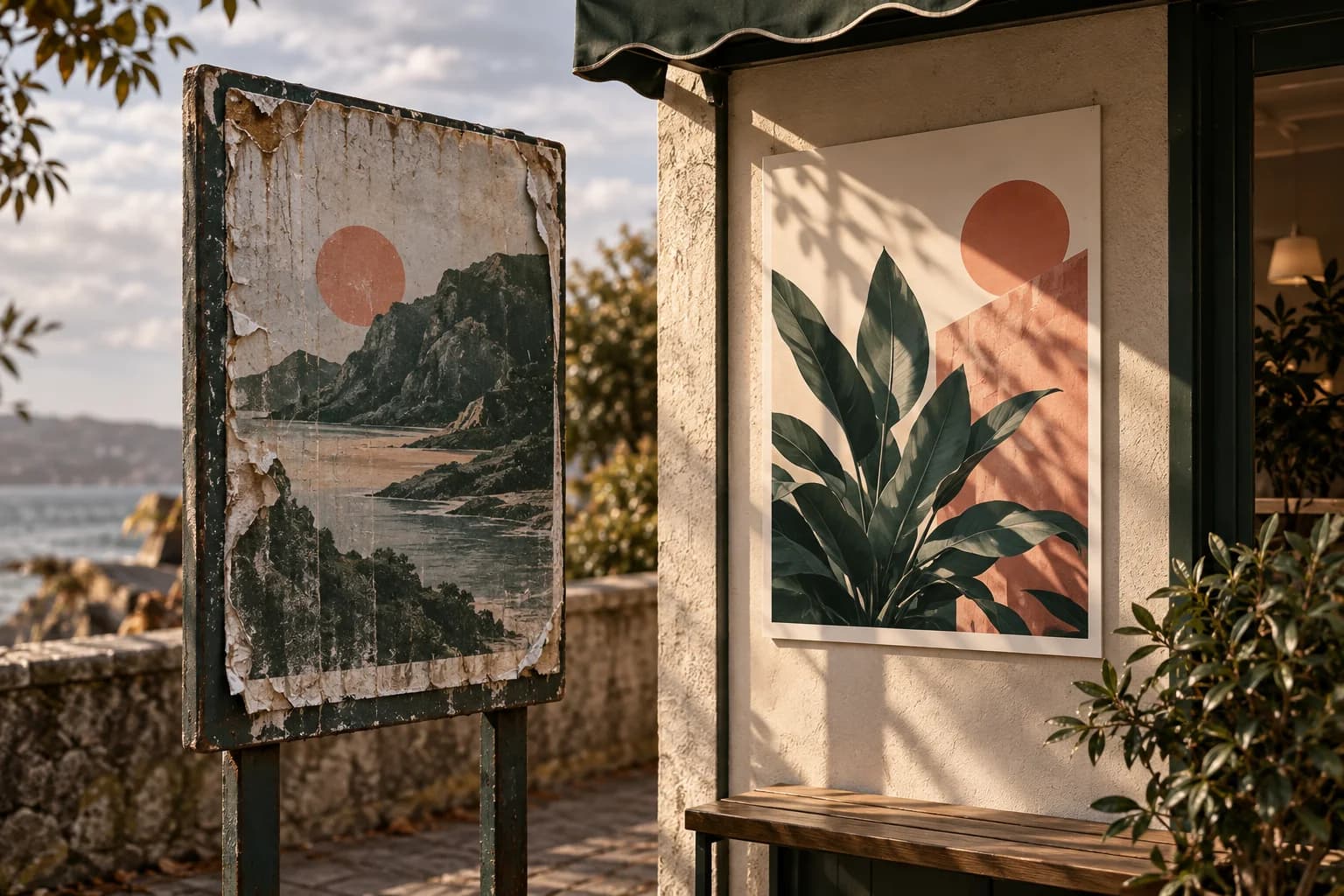
Three layers decide whether a poster survives outside: the substrate, the ink and any protective finish. Standard poster paper is made from wood fiber, so rain soaks in through the face and the cut edges, and a wet sheet can wrinkle, tear or pull away from its fixings. Outdoor media replace paper with plastic films such as vinyl, polyester or polypropylene, which do not absorb water in the same way.
The ink matters just as much. Water based latex ink, one common large format choice, cures into a thin, transparent, flexible and waterproof film as it dries on the media. Solvent and UV curable inks are other outdoor options. Whatever the process, ask whether the ink and the material were chosen together for outdoor use rather than assuming one weather resistant part protects the whole piece.
As a reference point, the weather resistant outdoor posters in the Voqado catalog are printed by large format inkjet on a tear and water resistant material that blocks the sun, in eight standard sizes, with a listed starting price of $6.98 per poster.
Which outdoor poster material should you choose?
| Material | Water resistance | Tear resistance | Typical use | Watch for |
|---|---|---|---|---|
| Coated poster paper | Low | Low | Indoors or behind glass | Swelling at cut edges |
| Laminated paper | Face protected | Moderate | Short, sheltered displays | Edges stay exposed |
| Synthetic film (polyester or polypropylene) | High | High | Covered entrances, event walls | Needs outdoor ink |
| Printed vinyl sheet | High | High | Fences, exterior walls | Weight and secure fixing |
| Self adhesive vinyl | High | High once applied | Smooth doors, walls, glass | Surface prep and removal |
Use the table to shortlist, then confirm the exact construction with your printer. Two products with the same name can use different films, inks and adhesives.
How long does an outdoor poster last?
There is no single lifespan for an outdoor poster, and a responsible supplier states durability with conditions attached. Avery Dennison, for example, defines the durability of its graphics films as the expected life in outdoor vertical exposure, meaning the graphic still works for its purpose when viewed from the intended distance. Vertical means the face is within 10 degrees of upright.
The same bulletin shows how quickly conditions change the answer. A graphic whose face is 85 to 90 degrees from vertical, such as one lying flat, is rated at half the vertical figure for its signage, wrapping and white or clear printable films. Climate matters too: in the zone system of its European bulletin, a film rated five years vertical in the mildest zone drops to three years in hot states such as Arizona, Nevada and Texas, and sites above 1,000 meters fall into the harshest zone. Pollution, high humidity and poor cleaning shorten life further.
Treat any published lifespan as a figure for one material in one test condition, not a promise for your wall. Direction matters as well: a wall facing the afternoon sun receives far more ultraviolet light than one in shade, so the same poster can fade at different speeds on two sides of one building. If a display must look fresh for a season, plan to replace it partway through rather than stretching one print past its useful life.
Does lamination make a paper poster waterproof?
Lamination seals the printed face against scuffs, moisture and fingerprints, and it can deepen color. It does not turn paper into a synthetic. The trimmed edges of a laminated paper sheet can still let water in, and once the core is wet the poster can bubble or separate. For short displays under cover, laminated paper can be reasonable. For rain, wind or weeks of sun, start with a synthetic material and add a laminate only if the supplier recommends it for abrasion.
How should you mount a poster outside?
Mounting is part of the specification. Wind turns a loose sheet into a sail, so fix every corner and, on larger sizes, the midpoints of each side. Keep text, logos and QR codes clear of fasteners, frames and rail clips. Match the method to the surface: adhesive strips need clean, smooth, dry surfaces and an outdoor rated version, while fence ties and grommets suit mesh or rails.
For a cleaner exterior look, a set of poster rails holds the top and bottom edges straight. The poster mounting guide compares rails, frames, strips and board backing in more detail.
How do you design a poster that reads outside?
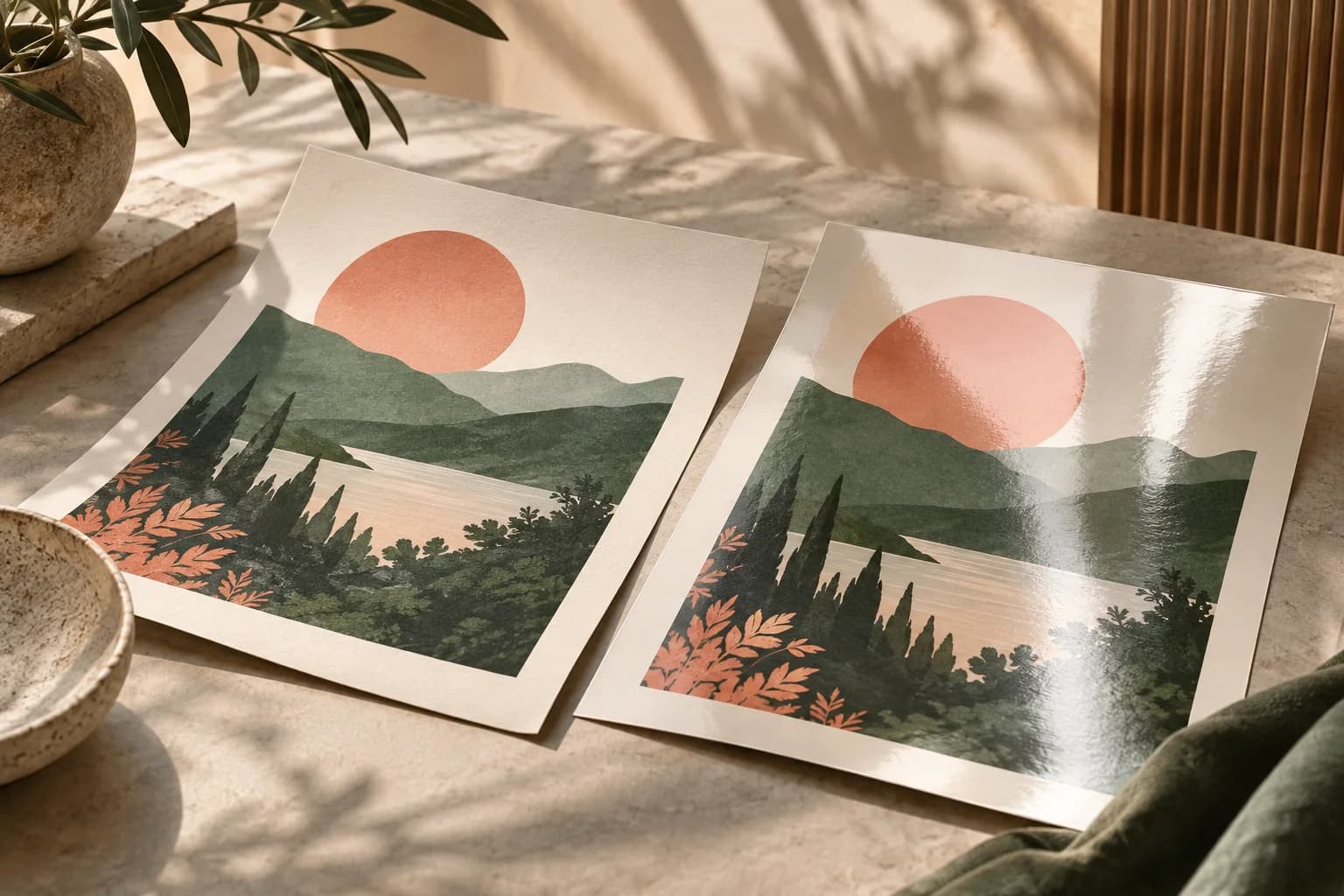
Outdoor posters are read from farther away and in harsher light. Use high contrast color pairs, large type and one clear message. Direct sun creates glare on shiny surfaces, which is one reason to think about choosing a poster paper finish before you commit to gloss. Check image resolution at the final printed size, because a photo that looks sharp on screen can soften when enlarged to poster size, and test any QR code on a phone at the distance people will stand.
If the poster will hang inside a shop window facing the street, it is not truly outdoors. The guide to printing a window poster covers that case, where paper often works well.
What should you confirm before you order?
- Where the poster will hang and whether its face is vertical, angled or flat
- How many weeks or months it must stay readable
- Sun, rain, wind and handling at that exact spot
- Material, ink and any laminate, confirmed as one construction
- Mounting method, surface and fixing points
- How the poster will be cleaned, removed and disposed of
When is a paper poster still the right choice?
Paper remains a sensible, lower cost choice for a single day event under a canopy, for posters behind glass and for anything that will be replaced within days. When a sign has to stand in a lawn or along a road for weeks, rigid corrugated yard signs are often a better fit than any poster.
Frequently asked questions
What is the best material for outdoor posters?
For rain and sun, a synthetic material such as polyester, polypropylene or vinyl printed with outdoor durable ink is the usual choice. Paper absorbs water through its face and edges, even when laminated. The best option still depends on how long the poster must last, whether it faces upward and how it will be mounted, so confirm the full construction with your printer.
How long does an outdoor poster last?
It depends on the material, ink, orientation and climate. Film makers usually quote durability for vertical exposure in a mild climate. Avery Dennison, for instance, halves its rating for graphics that face the sky and reduces it by years in hot regions. Ask for the rating that applies to your exact product and location instead of relying on a general number.
Is a laminated paper poster waterproof?
Not completely. Lamination protects the printed face from moisture and scuffs, but the trimmed edges can still let water reach the paper core, which can cause bubbling or separation. Laminated paper can suit a short display under cover. For rain or weeks outside, choose a synthetic outdoor material from the start.
How do I hang a poster outside without it blowing away?
Fix every corner and, on large sizes, the middle of each edge, so wind cannot lift the sheet. Use outdoor rated adhesive strips only on clean, smooth, dry surfaces, or use rails, frames, grommets and ties on fences. Keep important artwork away from fixing points, and follow any installation limits your supplier gives for the material.
Sources & specification notes
The references below support the relevant technical or product details in this guide. Examples and checklists are not claims of practical testing or universal supplier requirements. Confirm the current specifications for your chosen product before production.
- Avery Dennison: Instructional Bulletin 1.30, Durability of graphics films ↗
European bulletin that defines durability for outdoor vertical exposure, halves it for horizontal graphics on listed film families, cuts two years in Zone 2 regions such as Arizona, Nevada and Texas, and puts sites above 1,000 meters in Zone 3.
- Drytac: How HP Latex ink works ↗
Media maker article with an HP contributor describing water based latex ink that cures into a thin, transparent, flexible and waterproof film, and comparing it with solvent and UV cured inks.