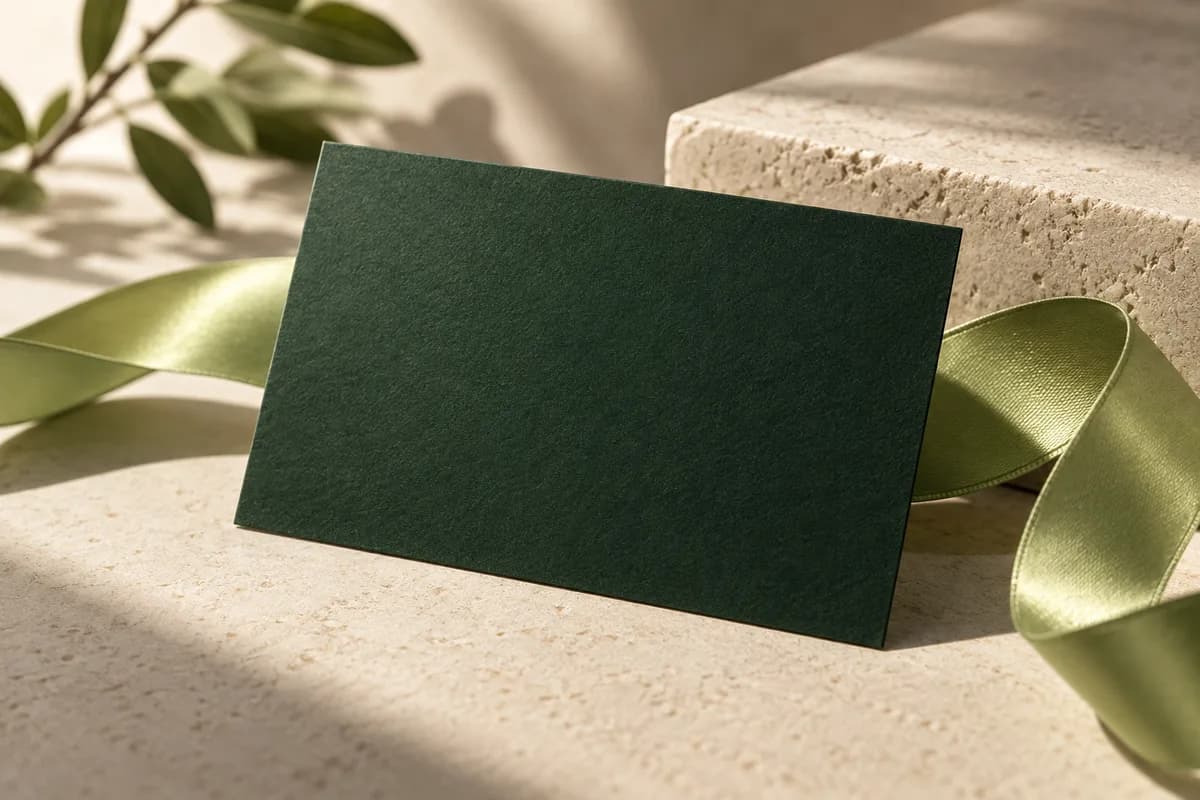
What is a soft touch finish?
Soft touch is a finish, not a paper. The card is printed first, then covered with a thin clear layer whose surface is engineered to feel soft and to scatter light. Most commercial versions are laminate films. Dunmore, for example, coats its soft touch film onto PET film 12 or 25 microns thick, then the printer bonds that film to the printed sheet. Some printers use a liquid soft touch coating instead, which feels similar but is usually thinner.
Because the effect comes from the top layer, soft touch can sit on many base stocks. Ask what the base card is, whether one or both sides are laminated and whether your sample matches the configuration you are about to order.
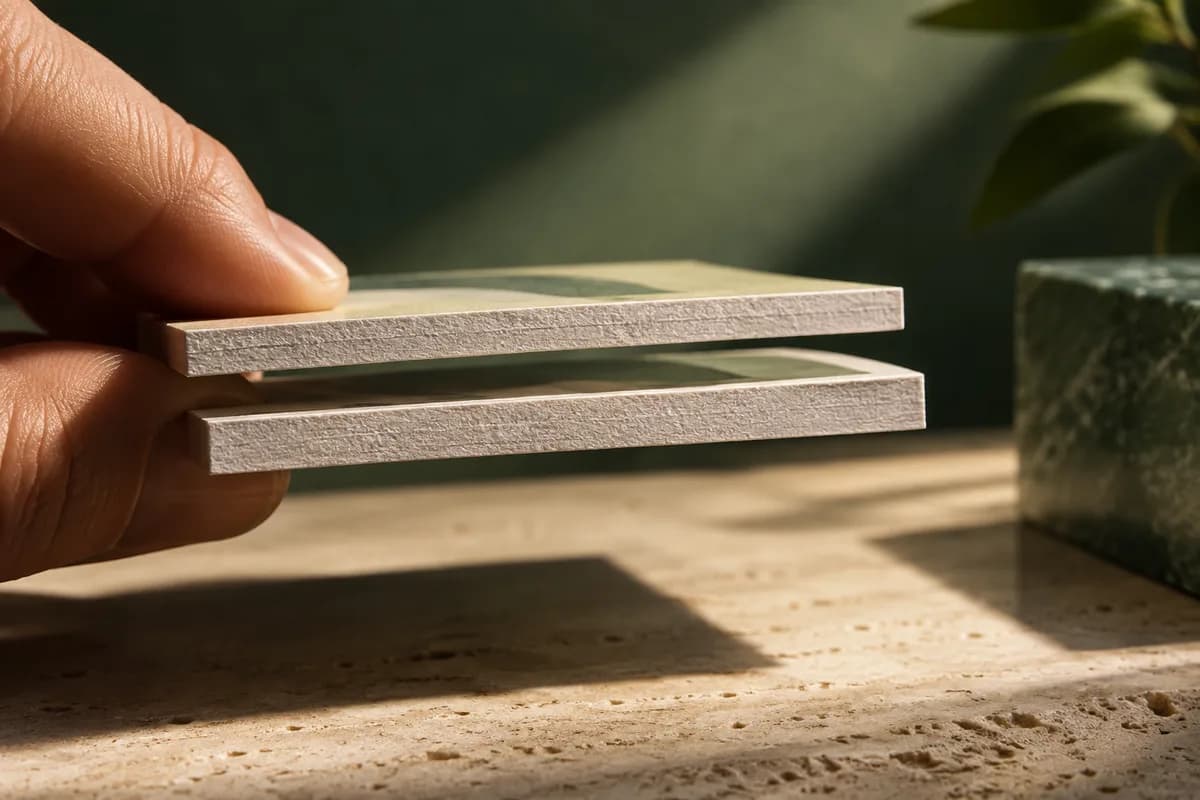
The laminate also changes how the card behaves. It adds a little thickness and stiffness, seals the ink against light moisture and gives cut edges a slightly different look, because the film is trimmed along with the card. Two cards sold under the same name can therefore feel noticeably different if one uses a thick film and the other a thin coating.
How does soft touch compare with matte and gloss?
| Finish | Published gloss figure | Feel | Best for | Watch for |
|---|---|---|---|---|
| Soft touch laminate | Under 12 GU at 60 degrees (one film) | Velvety, warm | Minimal, dark or luxury designs | Higher cost, scuffs on dark areas |
| Matte coated paper | 25 on one mill's gloss standard | Smooth, dry | Text led designs | Softer photo color |
| Gloss coated paper | 72 on the same gloss standard | Slick, cool | Photos and bright color | Glare and fingerprints |
The matte and gloss figures come from Sappi's specification guide, while the soft touch figure is a film maker's specification, so treat the column as a guide to relative sheen rather than a precise ranking. For the difference between the two paper finishes, see matte versus glossy.
Does soft touch scratch or show fingerprints?
Quality soft touch films are engineered for rub resistance. Dunmore states that its film shows no visual change after 250 rub cycles in its own test. That is one product's specification, not a guarantee for every soft touch card. Dark solid colors show burnishing and scuffs more than light ones, and oily fingers can leave faint marks on some films. If the card will live in pockets or be handed around a trade show, look at a sample after handling it for a day. Store finished cards in their box or a card case rather than loose in a bag, because keys and coins scuff soft surfaces faster than normal handling does, and a scuffed velvet card looks worn sooner than a matte one.
Can you write on soft touch business cards?
Sometimes, but do not count on it. The laminate is a plastic surface, so many ballpoint pens skip and gel ink can smear before it dries. Permanent markers and some pencils work better. If writing on the card is part of its job, such as appointment reminders, test the exact pen on the exact product, or choose an uncoated stock instead.
Can you add foil or spot gloss on soft touch?
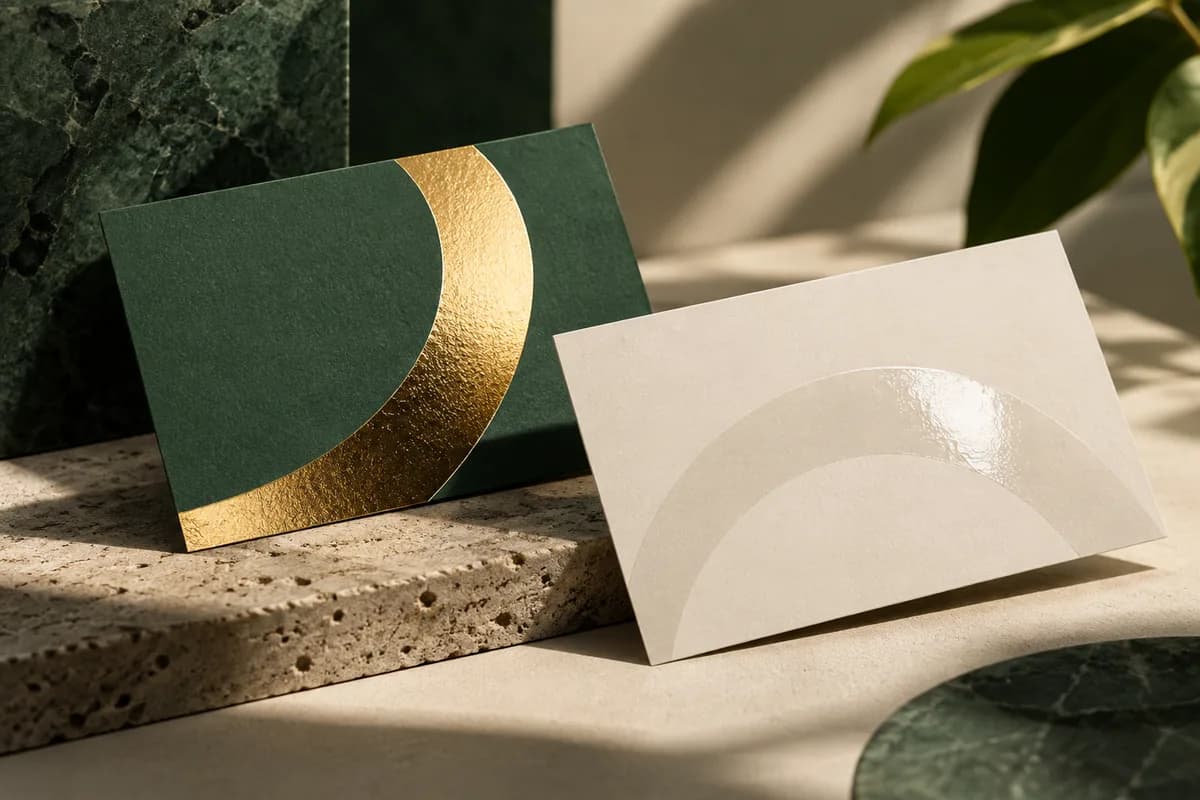
Yes, and it is one of the most popular pairings. A glossy or metallic accent stands out strongly against a very flat surface. The combination depends on the printer's process, because foil and UV coatings have to bond to the laminate rather than to paper. Confirm the exact combination, the artwork setup and the proof before ordering. The article on foil and spot UV compared explains how each effect is made.
How much do soft touch business cards cost?
Soft touch usually costs more than standard finishes because it adds a finishing layer and an extra production step. On the current Voqado price list, the soft touch card listing starts at $33.99 for 100 cards, compared with $14.99 for 100 standard matte cards. Quantity, double sided printing and added finishes change the total, so compare full configurations.
Which designs suit soft touch best?
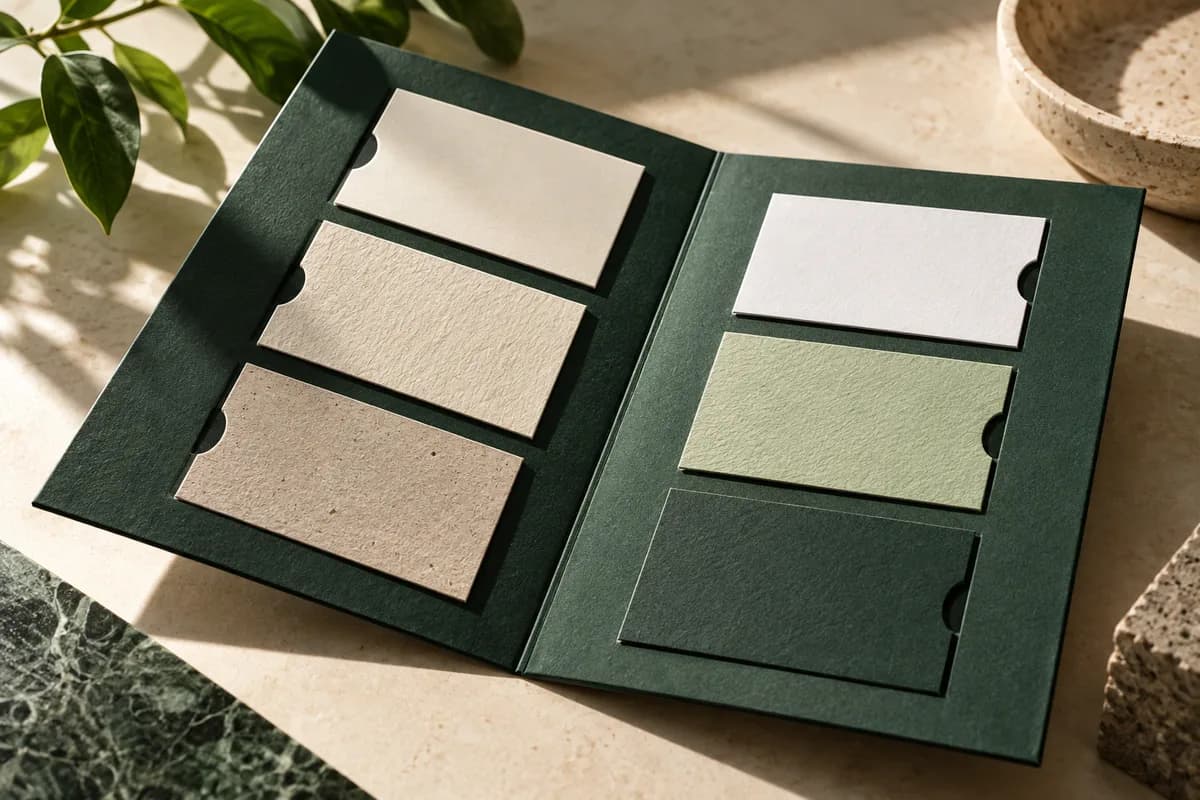
Soft touch rewards restraint. Dark backgrounds look deep and even, simple logos feel intentional and generous white space lets the surface do the work. Very fine lines and tiny type can soften slightly under a matte film, so keep contact details at a comfortable size. Photos print well but look calmer than they would on gloss. If you are unsure, the business card sample kit lists soft touch among its 16 samples, though the exact mix can vary.
Color needs a little care. A matte film sits over the ink and softens its apparent brightness, so saturated brand colors can look slightly deeper and less vivid than on screen or on a glossy proof. Ask for a printed proof on the actual finish if a brand color must match closely. Light pastel backgrounds can look chalky under some films, while deep navy, forest green, charcoal and black are the colors where soft touch looks most distinctive.
How do you decide if soft touch is right?
- Confirm whether the finish is a film or a coating, and on which sides
- Handle a sample and look for marks on dark areas
- Test writing if the card needs notes
- Confirm foil or spot gloss compatibility before designing
- Compare the full price with a matte alternative at the same quantity
Frequently asked questions
What is soft touch lamination on business cards?
Soft touch lamination is a thin clear film bonded over the printed card. Its surface is engineered to scatter light and feel velvety, a little like suede or a peach skin. It lowers sheen, deepens dark colors and adds some protection against moisture. Some printers use a liquid soft touch coating instead, which feels similar but is usually thinner.
Are soft touch business cards worth it?
They are worth it when the handoff itself matters, such as luxury retail, design studios, salons and high value services, because the texture is noticed immediately. They cost more than matte or gloss and are harder to write on. For large handout runs where the card is read once, a standard matte stock is usually the better value.
Do soft touch business cards scratch easily?
Good soft touch films are designed to resist rubbing, and one maker reports no visual change after 250 rub cycles in its own test. Results still vary by film and color. Dark solid areas can show burnishing or scuffs after heavy handling, so inspect a sample that has been carried in a pocket or wallet before committing to a large order.
Can I put foil on soft touch business cards?
Usually yes, and the contrast between a flat velvet surface and bright foil or clear gloss is a popular look. Because the foil or coating has to bond to the laminate, the printer must support that exact combination. Ask for the artwork setup rules, keep foil text at the minimum size they specify and approve a proof before production.
Sources & specification notes
The references below support the relevant technical or product details in this guide. Examples and checklists are not claims of practical testing or universal supplier requirements. Confirm the current specifications for your chosen product before production.
- Dunmore: DUN SOFT soft touch film ↗
Film maker specification for a coated soft touch lamination film: 12 and 25 micron PET, gloss below 12 units at 60 degrees, no visual change after 250 rub cycles.
- Sappi North America: Specification Guide (McCoy, Opus and other coated papers) ↗
Mill specification tables listing gloss standard, average caliper and basis weight by finish. McCoy 100 lb cover lists gloss 72 at .0091 inch, silk 43 at .0097 inch and matte 25 at .0106 inch.