How the number is measured
Mass per unit area is determined by standard test methods, notably ASTM D3776, which sets out four options depending on whether the specimen is a full width sample, a small swatch or a narrow fabric. That is why the figure is comparable between suppliers: it is a measurement, not a marketing adjective.
The conversion is straightforward. One ounce per square yard is about 33.9 grams per square meter, so a 4.5 oz jersey is roughly 153 gsm and a 6.5 oz knit is roughly 220 gsm. If a supplier quotes gsm and another quotes ounces, convert before you compare.
What each weight feels like
| Weight | Approximate gsm | Feel | Typical use |
|---|---|---|---|
| 3.5 to 4.2 oz | 119 to 142 | Very light, drapes, slightly sheer | Fashion tees, hot climates |
| 4.5 oz | 153 | Light, soft, fluid | Tanks, summer tees |
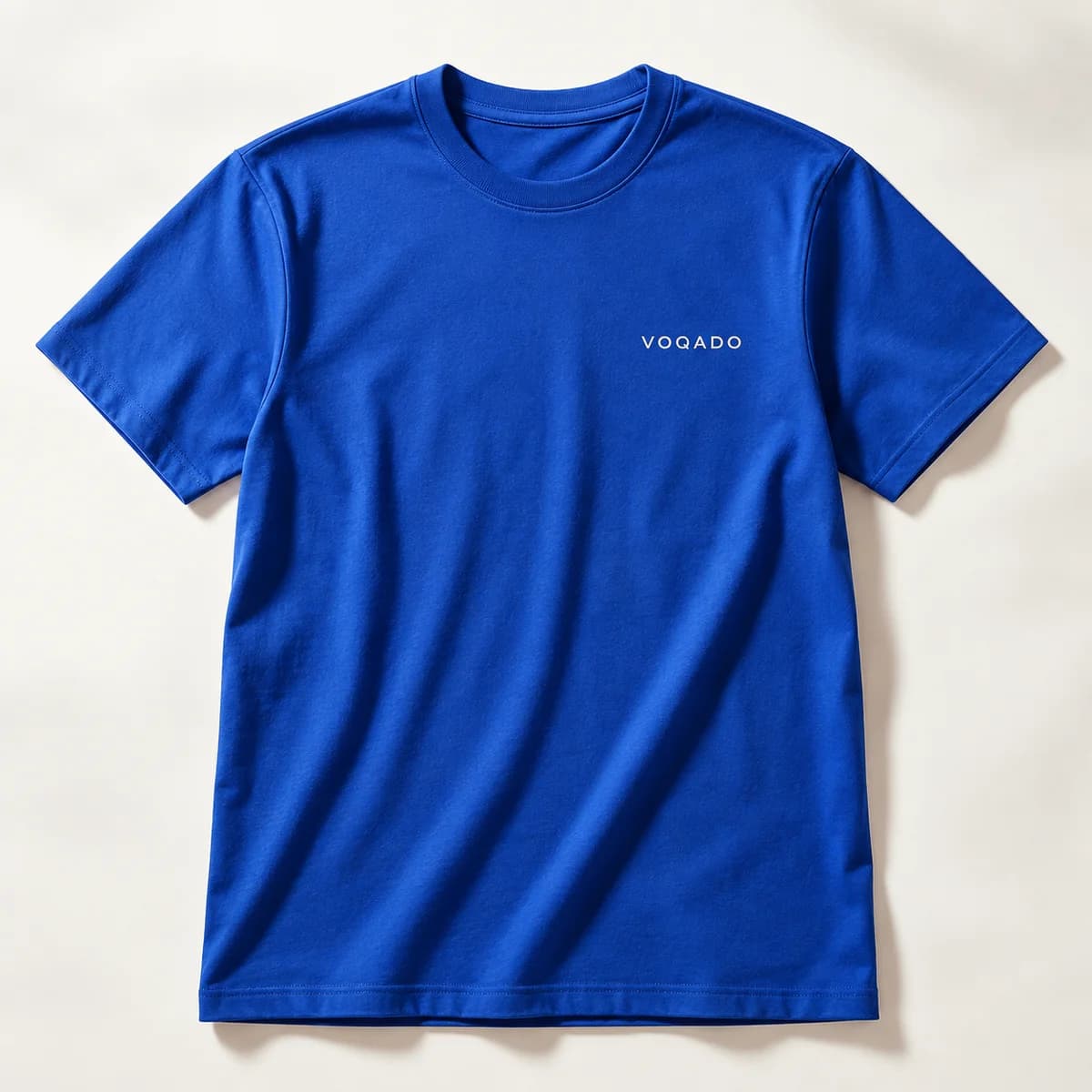
| 5 to 5.5 oz | 170 to 186 | The everyday mid weight | General purpose tees |
| 6 to 6.5 oz | 203 to 220 | Substantial, opaque, holds shape | Polos, workwear |
| 8 oz and up | 271 and up | Heavy, stiff at first | Sweatshirts, aprons, workwear |
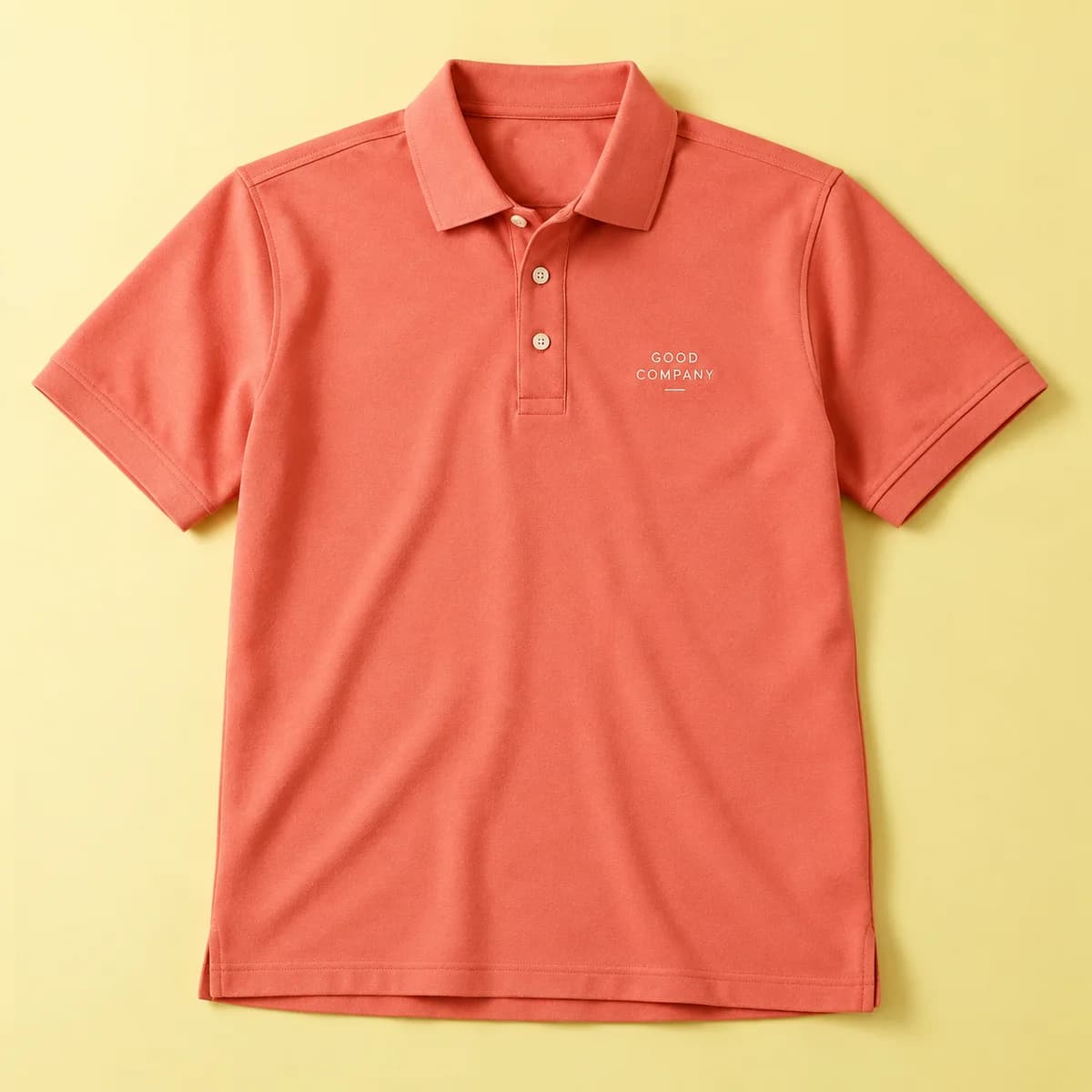
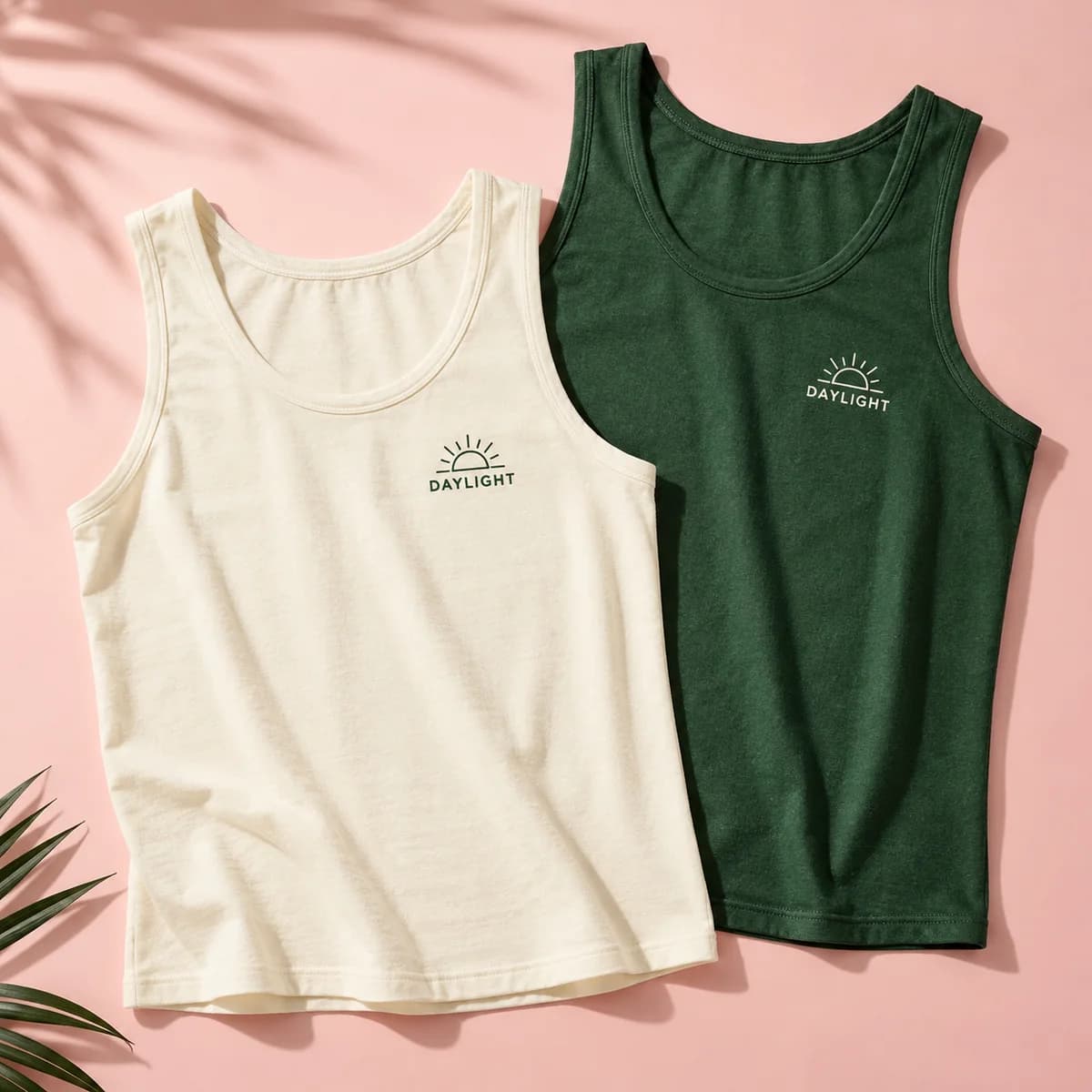
In this catalogue, tank tops are 4.5 oz ring spun cotton and polo shirts are 6.5 oz ring spun cotton. Dress shirts are a 4.3 oz cotton and polyester twill, which feels quite different from a 4.3 oz knit, because a woven twill is stable where a jersey stretches.
When is heavier better?
Heavier fabric earns its weight in three situations. It is more opaque, so a light colored garment does not show what is underneath it. It resists distortion, so a collar or a printed area keeps its shape through more wears. And it stands up to abrasion, which matters for aprons, workwear and anything that meets a counter edge all day.
It is worse in heat, worse for drape, and slower to dry. A 6.5 oz tee at an outdoor summer event is a mistake that people quietly take off. Match the weight to the wearing conditions before you match it to a sense of quality.
When is heavier just hotter?
A heavy shirt is often sold as a quality signal, and for a woven garment that is partly true. For a knit tee it usually is not. Softness comes from the yarn and the finishing, not from the mass. A 4.5 oz combed ring spun tee feels better in the hand than a 6 oz open end tee, and both figures are honest.
If you are comparing two blanks and one is heavier, ask what else is different. Yarn type, whether the fabric is pre washed and how it was dyed all affect the result more than a fraction of an ounce.
Does weight change the print?
It changes how the print sits rather than whether it works. On a light jersey, a heavy ink deposit stiffens a noticeable proportion of the garment, and the printed panel can feel like a separate piece of material. On a heavier knit, the same ink disappears into the overall body of the fabric.
Texture matters too. Heavy fleece and waffle knits have enough surface relief to break up a thin ink film. Direct to garment on a heavy textured fabric shows that texture in the image, which is sometimes the look you want and sometimes a surprise. For embroidery the relationship reverses: heavier, more stable fabric is easier to stitch into cleanly than light stretchy jersey.
Weight and shrinkage
Weight and shrinkage are separate properties, and neither predicts the other. What predicts shrinkage is whether the fabric was pre washed or otherwise stabilized, and how it is laundered afterwards. Dimensional change is measured by methods such as AATCC TM135, which defines wash temperatures, agitation cycles and drying procedures so that results can be compared.
Tank tops here are described as pre washed to minimize shrinkage. Where a product does not say, ask, especially if the garment is a uniform with a size run you cannot easily correct.
Choosing a weight in three questions
- Will people wear this in the heat, or indoors, or as a layer? Lighter, mid, heavier.
- Does it need to be opaque in a pale color? Add weight.
- Will it be abraded daily, like an apron or workwear? Add weight.
Then check yarn type and pre washing before you commit, because those two decide how the garment actually feels.
Fabric weight checklist
- Convert everything to one unit before comparing, at about 33.9 gsm per ounce.
- Treat 5 to 5.5 oz as the default for general purpose tees.
- Use 4.5 oz for hot conditions and 6.5 oz for polos and workwear.
- Do not read weight as softness; ask about yarn and finishing.
- Ask whether the fabric is pre washed if the size run has to hold.
- Expect heavy textured fabric to show its texture in a printed image.
Frequently asked questions
What is a good T shirt weight?
For general purpose tees, 5 to 5.5 oz per square yard, roughly 170 to 186 gsm, is the common middle ground. Drop to about 4.5 oz for hot conditions or a softer drape, and move up toward 6.5 oz for polos, workwear and anything that needs to hold its shape all day.
How do you convert oz to gsm for fabric?
Multiply ounces per square yard by about 33.9 to get grams per square meter. A 4.5 oz jersey is roughly 153 gsm and a 6.5 oz knit is roughly 220 gsm. Always convert before comparing two suppliers, because a number without a unit tells you nothing useful.
Is a heavier shirt higher quality?
Not by itself. Weight predicts opacity, stability and abrasion resistance. Softness comes from the yarn and the finishing, so a light combed ring spun tee can feel considerably better than a heavier open end one. Compare weight, yarn type and pre washing together rather than reading weight as quality.
Does fabric weight affect shrinkage?
No. Shrinkage depends on whether the fabric was pre washed or otherwise stabilized and on how it is laundered. It is measured separately as dimensional change after home laundering, across defined temperatures and drying methods. Ask whether a garment is pre washed if a size run has to hold after the first wash.
Sources & specification notes
The references below support the relevant technical or product details in this guide. Examples and checklists are not claims of practical testing or universal supplier requirements. Confirm the current specifications for your chosen product before production.
- ASTM D3776/D3776M: Standard Test Methods for Mass Per Unit Area (Weight) of Fabric ↗
Supports the statement that fabric weight is mass per unit area measured by a standard method with four options for full width, swatch and narrow fabric specimens.
- AATCC TM135: Test Method for Dimensional Changes of Fabrics after Home Laundering ↗
Supports the statement that shrinkage is measured as dimensional change under defined wash temperatures, agitation cycles and drying procedures.