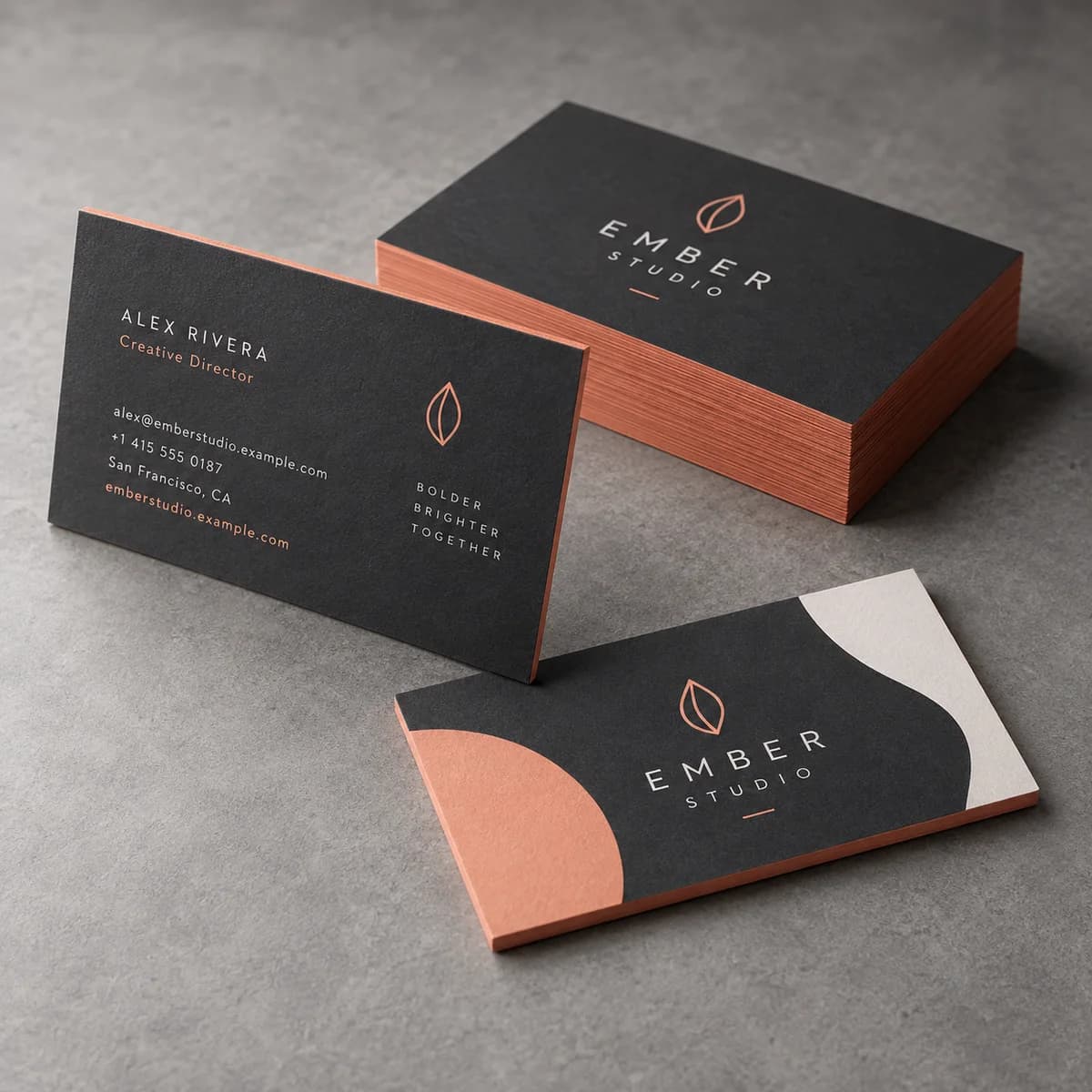
Painted edge business cards
From $39.9950 items
Color where you least expect it. A painted edge turns the side of your card into a brand moment.
Choose options Start without artwork · Tax and delivery shown before payment.Explore photo books, canvas prints, painted edge business cards, and framed prints for portrait, wedding, and commercial photographers.
A gallery link expires and a hard drive gets lost. A book on a coffee table gets opened by guests for twenty years, and every time it does, somebody asks who shot it. Print is how a photographer turns a delivery into an object worth what it cost, and it is also where screen color, paper choice and binding decide whether the work looks like the file you approved.
Color where you least expect it. A painted edge turns the side of your card into a brand moment.
Choose options Start without artwork · Tax and delivery shown before payment.A thirty two point card with brand color on all four edges and published HEX codes, so your card is the one a venue keeps.

Turn your favorite photos into a real book you'll actually open. Hardcover, full color, and made to be flipped through for years.
Choose options Start without artwork · Tax and delivery shown before payment.Twenty four to one hundred and twenty full color pages in a hardcover, with layflat on the large sizes when your edit has spreads that cross the gutter.
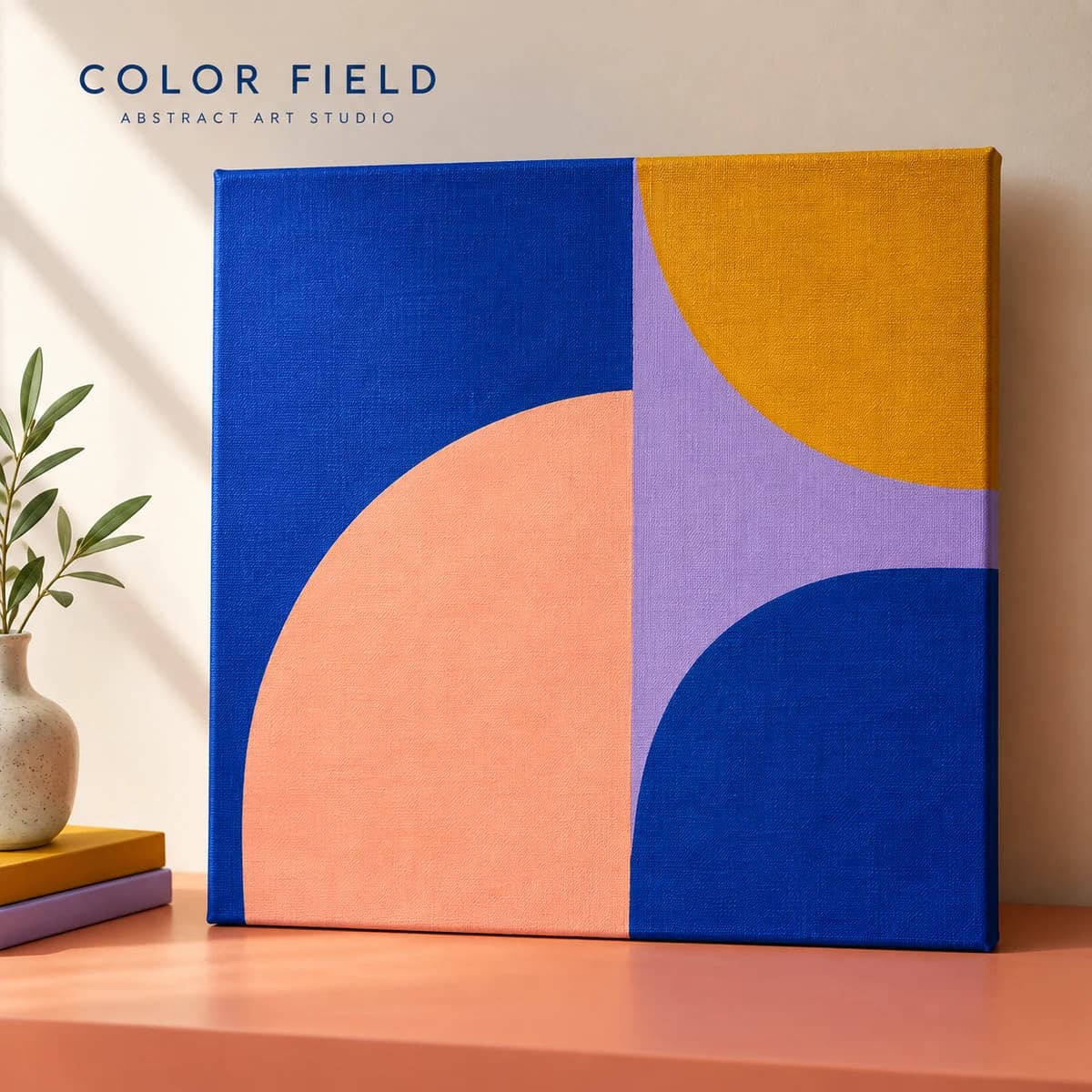
Give your favorite photo the gallery treatment. Vivid, fade proof printing on real canvas, wrapped and ready to hang.
Choose options Start without artwork · Tax and delivery shown before payment.Seven sizes and two depths on a textured surface with fade proof latex inks, arriving with hangers fitted so a client can hang it the day it lands.

Skip the frame shop. Your photo, professionally printed and framed, arrives ready to hang.
Choose options Start without artwork · Tax and delivery shown before payment.Matte paper under an acrylic cover in a white, black or walnut frame, sealed as one finished piece and ready to hang without a trip to a frame shop.
Clients regularly assume that paying for a shoot buys the copyright. Under federal law, copyright vests initially in the author of the work, and in a work made for hire the employer or commissioning party is treated as the author instead. The work made for hire route is narrow for freelance photographers: outside of employment, it reaches only specially ordered or commissioned works that fall into one of nine listed categories, and only when the parties expressly agree in a written instrument signed by them. Photography as such is not one of those nine categories, though a photograph can sit inside a collective work or a contribution to one. The practical consequence for print is simple. Decide in writing, before delivery, who may reproduce the images and in what form, so that a printed album and a client's own reorder do not become an argument later.
Your display emits light and paper reflects it, so the same file will never look identical in both places. Matte paper renders a shadow with less separation than a glossy sheet, and a canvas surface eats a little contrast in exchange for texture. That is a style decision, not a defect, but it has to be decided before a client order goes out. Work to a consistent viewing condition, keep one set of images you have printed before as a reference, and compare a new run against that reference rather than against your memory of the screen. When you deliver a book, order the first copy for yourself. It is cheaper to learn how your skin tones land on Standard Matte on your own money than on a wedding client's.
A photo book is a sequence, and the seam decides how the sequence reads. A standard hardcover holds a page well and suits single image pages and tight edits. Layflat binding, offered on the large and extra large sizes, lets a panorama or a wide group shot cross two pages with a barely visible center seam, which is the whole argument for spending on it. If your edit has no spreads, layflat buys you nothing. Page count runs from twenty four to one hundred and twenty, so build the edit to a page count that divides cleanly into spreads rather than padding the back of the book with frames you would not print alone. Pick the size before you start laying out, since size changes reflow the whole sequence.
Clients cannot picture sixteen by twenty inches. They can picture the space above their sofa. Sell wall pieces by taking a phone photograph of the room during the consultation and showing the size against it, then order the format that suits the image. Canvas suits texture, landscape and anything you want to read as art rather than as a photograph, and a one and a half inch gallery depth stands on its own without a frame. A framed print, sealed under an acrylic cover with a matte paper surface, reads as a document of a moment and suits portraits. Check the wrap preview on any canvas before you approve it, because a gallery wrap takes an inch and a half of your image around the edge and that is usually where an elbow or a hairline sits.
A client remembers the album long after the gallery link expires. Print is also how you set a price anchor, so let the physical object carry the quality you are charging for. Screen color is a preview, not a match, so review a proof and confirm the color workflow before delivering a client order.
Build your brand kit →Not automatically. Copyright vests initially in the author of the work, and a commissioning party becomes the author only through the work made for hire rules, which outside employment require both one of nine listed categories of commissioned work and an express written agreement signed by both parties. Photography is not among those nine categories on its own. Whatever the default, put the reproduction terms in writing before you deliver, so a reorder or a printed album never turns into a dispute.
It is a style call rather than a quality one. Glossy is coated, so color looks richer and contrast reads harder, which suits saturated work and strong light. Matte has a soft sheen and holds up better to handling and fingerprints, which matters for a book that gets passed around a family. Whichever you choose, choose it once and stay with it, so your books look like a body of work and you only have to learn how one surface renders your skin tones.
Work at three hundred dots per inch or higher at the finished size, and match the image shape to the print shape so you are not left with white margins or a hard crop. On canvas the gallery wrap takes image around the edge of the frame, so review the wrap preview and keep faces, hands and any text well inside the safe area. If a file will not hold up at the size a client wants, sell them the smaller size rather than the upsell, since the print is the thing they judge you by.
Because it survives the comparison. A photographer hands a card to a planner or a venue who already has a stack of them, and a thirty two point card with color on all four edges is the one that gets turned sideways and remembered. The matte laminate also takes a pen, so you can write a date or a referral name on it in the moment. Six edge colors are offered with published HEX codes, so your printed artwork can match the edge rather than clash with it.
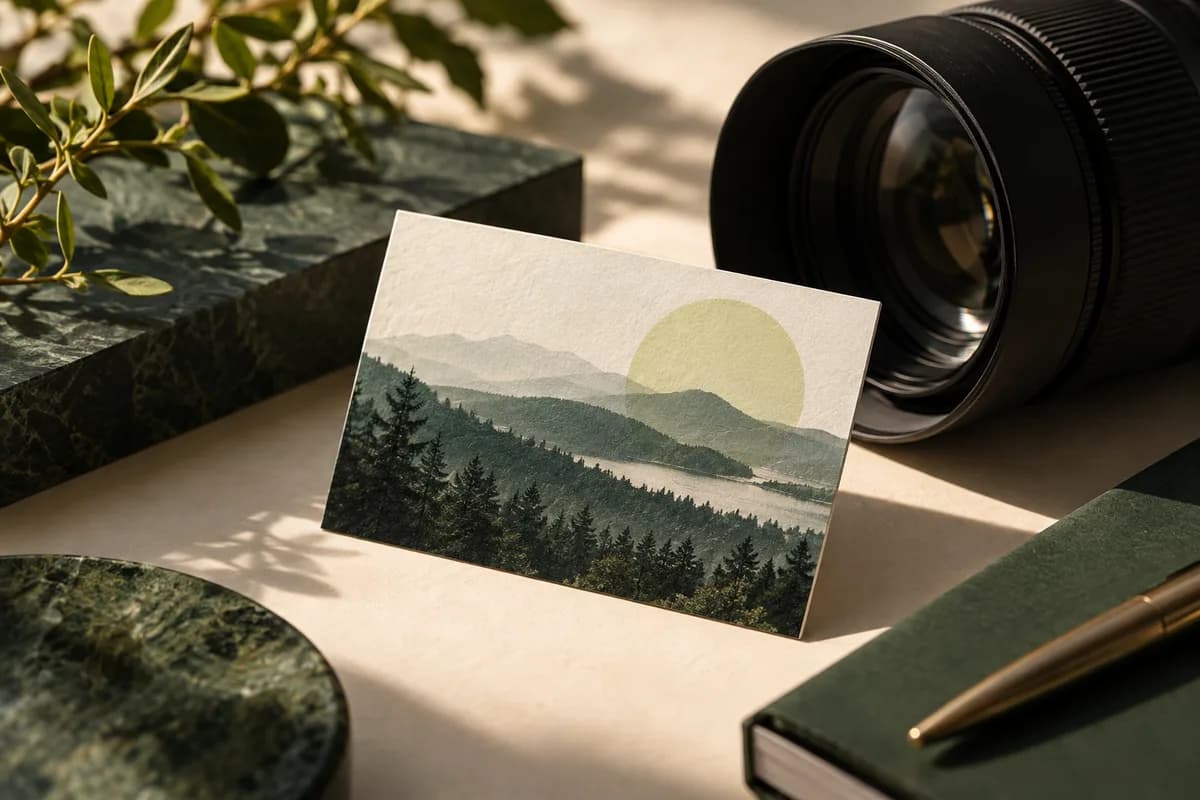
Business cards at work · 5 MIN READ
Photographer business cards work best with one representative image, a 300 PPI file at 3.5 by 2 inches, a readable contact side and a matching portfolio link.
Read the guide
Business card design decisions · 5 MIN READ
Put a photo on your business card the right way: who benefits, choosing the shot, resolution math, layouts that work, and the paper that keeps faces natural.
Read the guide
Business card paper & finishes · 5 MIN READ
What makes luxury business cards feel expensive: heavy stock, one hero finish such as foil or embossing, restrained design, and a smart way to budget the run.
Read the guide
Business card paper & finishes · 5 MIN READ
Painted edge business cards add a stripe of color around a thick card. Learn how they are made, which stocks work, how to pick an edge color and what to expect.
Read the guideHelp us improve Voqado with analytics? Details