What is the difference between 4x6 and 5x7 postcards?
| Spec | 4 x 6 | 5 x 7 |
|---|---|---|
| Area | 24 sq in | 35 sq in |
| Aspect ratio | 1.5 to 1 | 1.4 to 1 |
| Pixels at 300 PPI | 1,800 x 1,200 | 2,100 x 1,500 |
| With 0.125 inch bleed | 4.25 x 6.25 in | 5.25 x 7.25 in |
| USPS First Class Mail with stamps | Postcard price, within size and thickness limits | Letter price |
| Common uses | Mailers, reminders, handouts | Invitations, announcements, premium mailers |
The shapes are close but not identical, so a full bleed photo may need a slightly different crop. The postcard sizes guide compares every common format with bleed and pixel sizes.
Does a 5x7 postcard cost more to mail?
Yes, when you mail it with stamps. USPS Domestic Mail Manual section 101 limits postcards to 3.5 to 4.25 inches high, 5 to 6 inches long and 0.007 to 0.016 inch thick. A card outside those limits is not eligible for postcard pricing and is charged letter size prices instead. At a height of 5 inches, a 5 x 7 card is over the 4.25 inch limit.
The price gap is real. At the time of writing, the USPS business prices page lists First Class Mail stamps from $0.65 for standard postcards and from $0.82 for standard letters. Check the current page before you budget, because USPS updates prices.
Presorted commercial mail works differently. DMM section 201 lets a commercial First Class postcard run up to 6 inches high and 9 inches long at card prices, within the same 0.016 inch thickness limit. If a mailing service sends your cards, ask which price applies before you choose the size.
A 5 x 7 card still fits letter size mail, which runs up to 11.5 inches long and 6.125 inches high. Its 1.4 aspect ratio is also inside the 1.3 to 2.5 range that USPS uses for machinable letters.
Does thickness change the mailing rules?
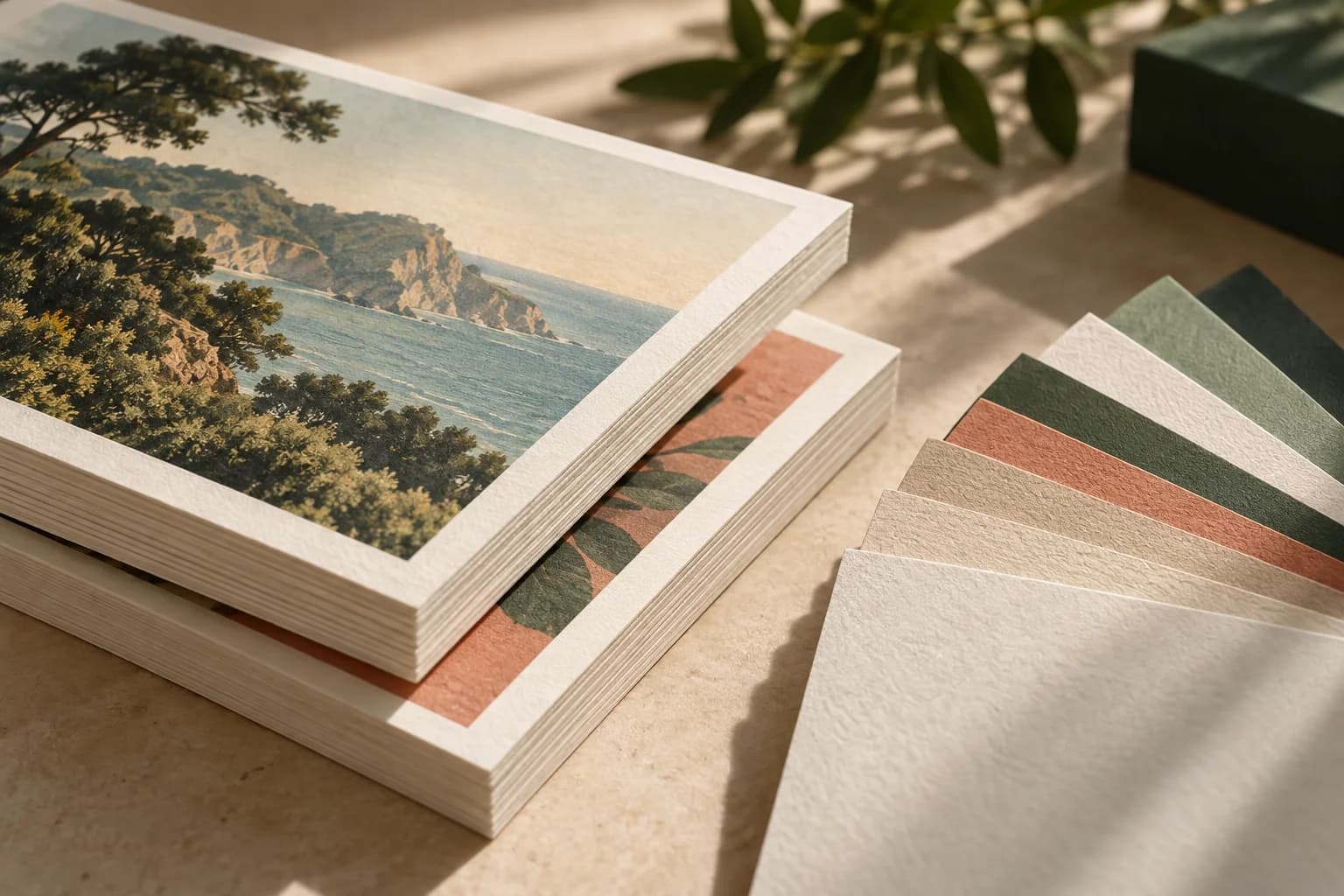
It can. A postcard must be no more than 0.016 inch thick for postcard pricing. For commercial mail, USPS DMM section 201 adds that pieces larger than 4.25 x 6 inches must be at least 0.009 inch thick. Standard postcard stock here is a nominal 0.4 mm, about 0.0157 inch, which sits just under the postcard limit, so confirm the finished caliper if you add a special finish. The premium 0.6 mm stock is about 0.024 inch, so even a 4 x 6 card on that stock falls outside postcard pricing. The postcard cardstock guide covers thickness in more detail.
When is a 4x6 postcard the better choice?
Choose 4 x 6 when you mail at volume and postage matters, when the message is short, or when the card is a reminder, coupon or handout. It fits racks, counters and bags easily. A tight, single offer often reads well on a small card because nothing competes with it.
The small format rewards editing. Give the front one image and one headline, and put the offer, deadline and next step on the back. If the copy does not fit at a readable size, cut words before you move up a size, because a shorter message is usually clearer as well as cheaper to mail.
When is a 5x7 postcard the better choice?
Choose 5 x 7 when the image or message needs room, such as a new listing, a menu highlight, an event with a date and map, or a wedding announcement. It also works well when cards are handed out or mailed inside envelopes, where the postcard rate does not apply anyway. A 5 x 7 card fits a standard A7 envelope.
How much space does the mailing side need?
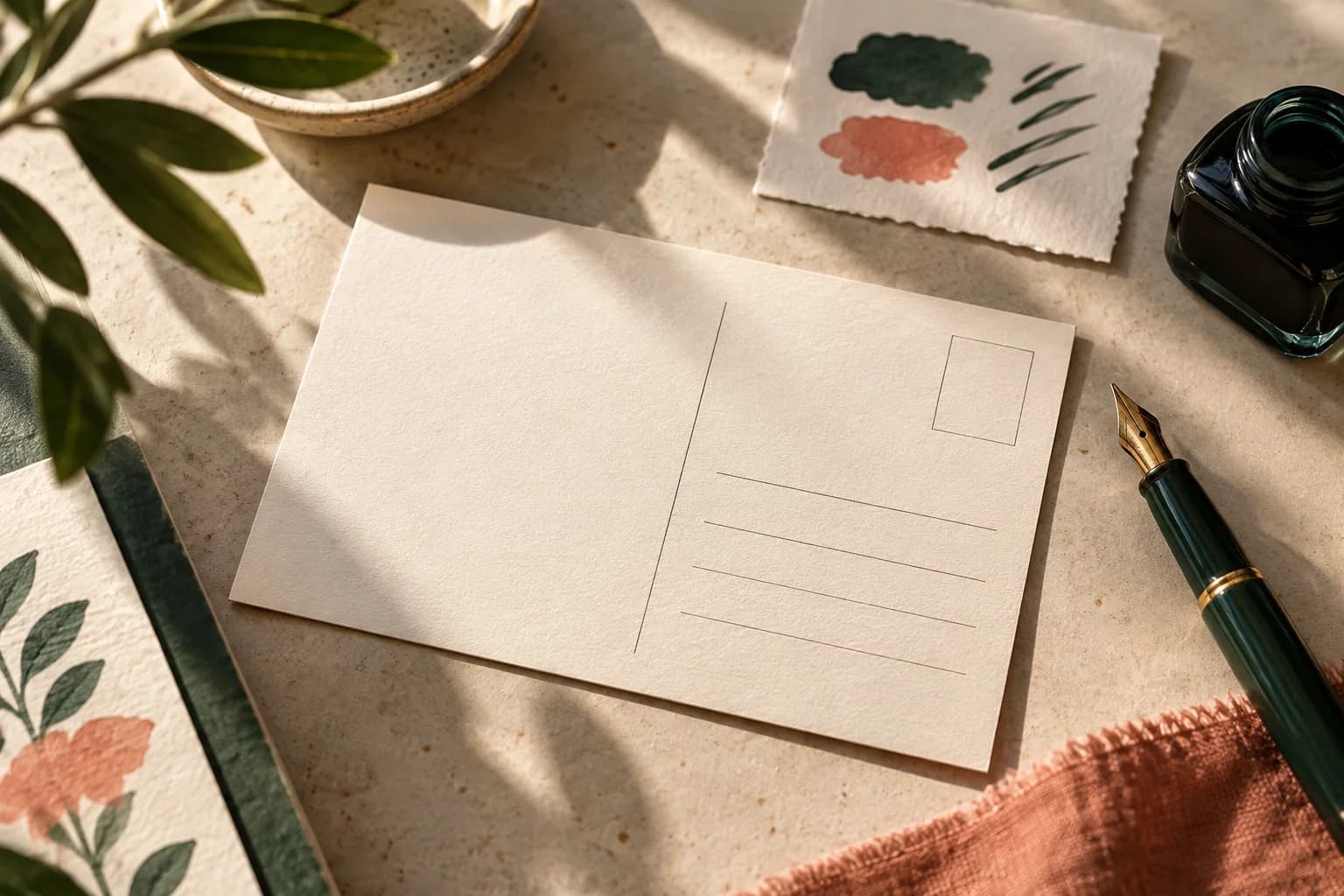
Plan the back before the front. The address block, postage area and return address take a large share of a 4 x 6 back, leaving limited room for copy. On a 5 x 7, the same mailing elements leave more space for a message or a map. The postcard address layout guide shows where each element goes.
Keep the address area light in color and free of busy patterns, since sorting equipment has to read it. Leave room for the postage in the upper right corner, and place the return address in the upper left. If you use a mailing service, ask for its template before you design, because some services add barcodes or an indicia block in a fixed position.
Can one design work for both sizes?
Only with adjustments. The 4 x 6 card is 1.5 to 1 and the 5 x 7 card is 1.4 to 1, so the larger card is slightly squarer. Scaling a 4 x 6 layout up leaves a band of empty space or crops the photo. Build a separate artboard for each size, keep the headline and offer in the same order, and recheck the safe area and bleed on both. The postcard maker starts either size from the correct template.
Which size costs more to print?
The larger card uses more paper, so it usually costs more per piece at the same quantity and stock. Standard postcards start at $21.99 for 100, with sizes that include 4 x 6 and 5 x 7, and the price updates on the product page as you change the size, stock and quantity. Compare the full cost, including postage, envelopes and mail preparation, not just the print price.
Checklist before you choose
- Decide whether the cards will be mailed bare, mailed in envelopes or handed out.
- Check the finished size and thickness against USPS postcard limits.
- Price postage at current USPS rates for the size you choose.
- Lay out the mailing side first, then the message side.
- Crop the photo separately for each aspect ratio.
- Print both sizes at actual size and compare them in hand.
Frequently asked questions
Can you mail a 5x7 postcard with a postcard stamp?
No. USPS postcard pricing applies only to cards from 3.5 to 4.25 inches high and 5 to 6 inches long, and from 0.007 to 0.016 inch thick. A 5 x 7 card exceeds the height and length limits, so it is charged letter size prices. Use a letter rate stamp and check current USPS prices. Presorted commercial mail is different, since it allows card prices up to 6 x 9 inches.
Is 4x6 the standard postcard size?
Yes. 4 x 6 inches is the most common postcard size in the US, and it sits right at the maximum size for USPS retail postcard pricing. That makes it the usual choice for mailers, reminders and handouts. Larger formats such as 5 x 7, 6 x 9 and 6 x 11 give more space, but with stamps they mail at letter prices.
What size envelope fits a 5x7 card?
A 5 x 7 card fits an A7 envelope, which measures 5.25 x 7.25 inches and leaves a small margin for sliding the card in. Mailing a card in an envelope follows letter rules, so the postcard size limit does not apply. Check the total thickness and weight if you add inserts.
Which is better for marketing, 4x6 or 5x7?
It depends on the job. A 4 x 6 card is cheaper to mail and suits short offers, coupons and reminders sent in volume. A 5 x 7 card gives about 46% more space for a strong image, a map or event details, but costs more to print and to mail. Test both at actual size with your real copy.
Sources & specification notes
The references below support the relevant technical or product details in this guide. Examples and checklists are not claims of practical testing or universal supplier requirements. Confirm the current specifications for your chosen product before production.
- USPS DMM 101: physical standards for retail mail ↗
Postcards must be 3.5 to 4.25 inches high, 5 to 6 inches long and 0.007 to 0.016 inch thick; larger cards pay letter prices.
- USPS DMM 201: physical standards for commercial mail ↗
Commercial First Class postcards may be up to 6 by 9 inches and 0.016 inch thick at card prices; cards larger than 4.25 by 6 inches need at least 0.009 inch thickness.
- USPS: Business prices ↗
Lists First Class Mail stamp prices for standard postcards and for standard letters, which differ.