What are the USPS size limits for a 6 × 9 postcard?
Section 201.1.2.1 of the Domestic Mail Manual sets the physical standards for cards claimed at card prices. A postcard must be at least 3.5 inches high, 5 inches long and 0.007 inch thick, and no more than 6 inches high, 9 inches long and 0.016 inch thick. Any card larger than 4.25 × 6 inches must be at least 0.009 inch thick. The piece must be rectangular, with a length divided by height between 1.3 and 2.5; a 6 × 9 card is 1.5, well inside that range.
| Rule | Current DMM standard | What it means for 6 × 9 |
|---|---|---|
| Maximum size at card prices | 6 × 9 inches | 6 × 9 is the ceiling; trim errors can push it over |
| Minimum thickness above 4.25 × 6 | 0.009 inch | About 9pt; thinner cards mail as nonmachinable letters |
| Maximum thickness | 0.016 inch | 16pt; heavier stocks leave card pricing |
| Aspect ratio | 1.3 to 2.5 | 9 ÷ 6 = 1.5, compliant |
| Corner radius | Up to 0.125 inch | Mild rounded corners are allowed |
Commercial pricing, retail counter pricing and the mailing class you choose each have their own conditions, so ask your mail provider to classify the exact piece before you print the full run. Postal rules change; check the current manual when you plan each campaign.
What cardstock thickness works for a 6 × 9 postcard?
Point thickness is measured in thousandths of an inch, so 14pt is 0.014 inch and 16pt is 0.016 inch. That puts common 14pt and 16pt postcard stocks inside the card range, while an 18pt or thicker stock exceeds the card maximum. Coatings and lamination add thickness too. If you want a heavier feel, confirm the finished caliper with the printer and the price class with the mailer before ordering.
Is a 6 × 9 postcard eligible for EDDM?
Usually not, if it is a standard thickness. Every Door Direct Mail Retail uses USPS Marketing Mail flats, and DMM 201.4 defines a flat as more than 11.5 inches long, more than 6.125 inches high or more than 0.25 inch thick. A 6 × 9 card meets none of those tests, so it is letter or card sized. A piece at least 6.5 inches high, such as 6.5 × 9, clears the flat threshold on height. The EDDM checklist explains the remaining requirements, including weight, indicia and bundling.
How do you set up a 6 × 9 postcard file?
Build the artwork at 6.25 × 9.25 inches when the template uses a 0.125 inch bleed on each side, and keep text at least 0.125 inch inside the trim. At 300 PPI, the finished card is 2,700 × 1,800 pixels in landscape and the bleed file is 2,775 × 1,875. A bleed calculator returns the exact trim, bleed and safe dimensions for any template. Export a PDF with fonts embedded, and check both sides at 100 percent on a printout before approving.
Where does the address go on a 6 × 9 postcard?
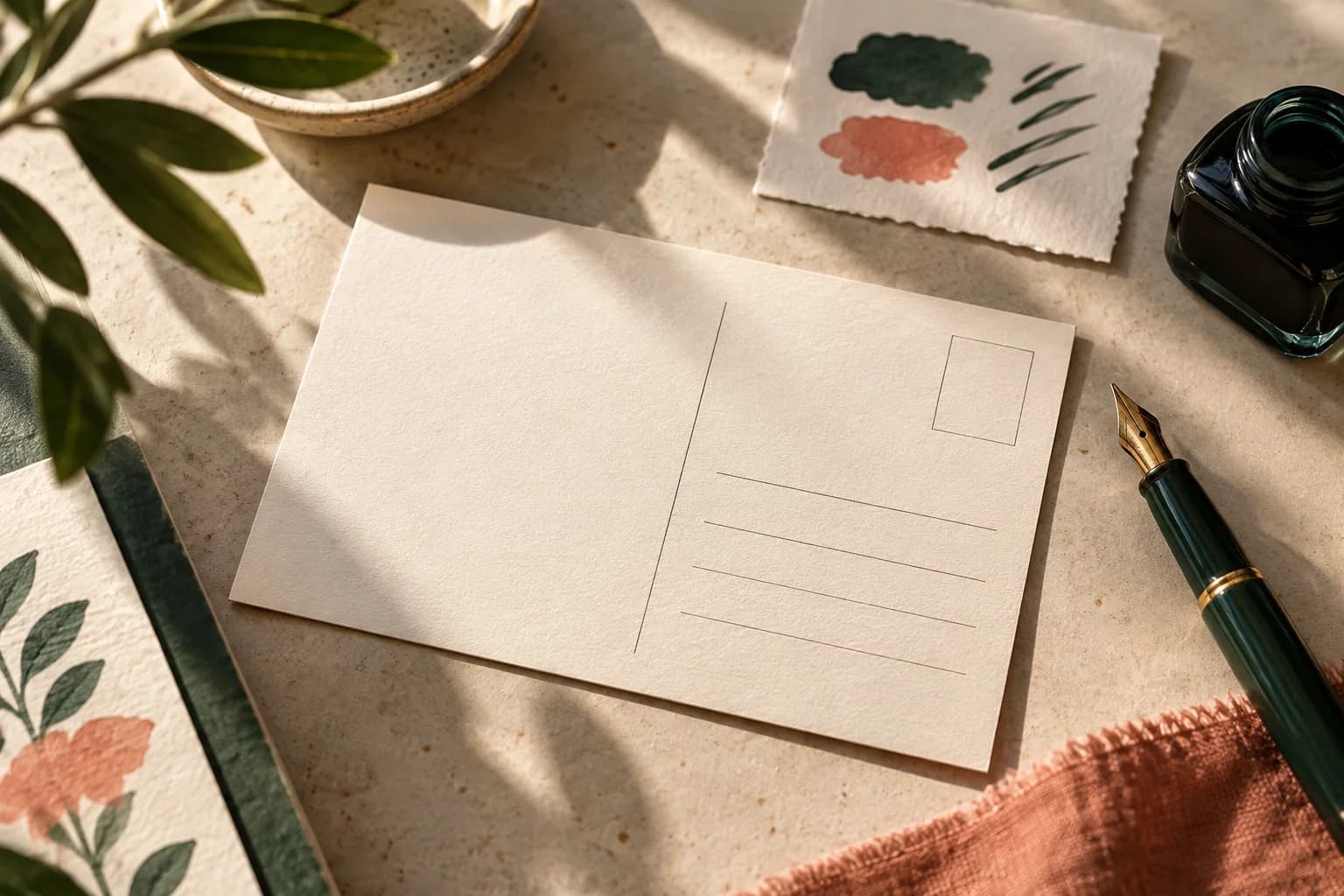
On the address side, the USPS optical character reader area runs from 0.5 inch inside the left and right edges, and from 0.625 inch to 2.75 inches above the bottom edge. Place the delivery address inside that band. Below it, DMM 202.5.1.1 reserves a barcode clear zone on machinable and automation price cards: the rightmost 4.75 inches of the bottom 0.625 inch, which must stay free of printing unless the address block already carries an Intelligent Mail barcode. Postage or an indicia goes in the upper right corner. Our guide to address layout shows how to divide the back so the message side and the mailing side do not compete.
What should go on the front and back of a 6 × 9 postcard?
At 54 square inches per side, a 6 × 9 postcard has room for a strong image, a headline and a short offer on the front, and supporting detail on the left half of the back. Keep one leading message. Readers skim, so the front should state what you offer and why it matters, and the back should say exactly how to respond: a web address, a phone number or a QR code with its quiet zone intact.
How much does 6 × 9 postcard printing cost?
The price depends on quantity, stock, coating and whether both sides print. Standard postcards start at $21.99 for 100 at the base size, and the price for 6 × 9 appears when you select that size. Postage is separate from printing, so budget for both. If you want printing, addressing and bundling for saturation mail handled together, direct mail postcards are built for that workflow, with postage paid to USPS separately.
What should you check before printing a 6 × 9 mailer?
- Finished size exactly 6 × 9 inches, with no oversized trim
- Stock between 9pt and 16pt after coating, confirmed by the printer
- Mail class and price confirmed by the mail provider
- Delivery address inside the OCR read area
- Barcode clear zone empty in the lower right corner
- Postage or indicia placed in the upper right corner
- Bleed on all sides and text inside the safe area
- Printed proof of both sides reviewed at actual size
Keep the approved mailing specification with the artwork. When you reorder, a change in stock, coating or trim can move the card outside the limits above without anyone noticing.
For a broader comparison of 4 × 6, 5 × 7, 6 × 11 and other formats, see postcard sizes for mailing, which sets each size against its postal class.
Frequently asked questions
Can a 6 × 9 postcard mail at postcard prices?
Under the current Domestic Mail Manual section 201.1.2.1, a postcard claimed at a card price may be up to 6 inches high, 9 inches long and 0.016 inch thick, and must be at least 0.009 inch thick because it exceeds 4.25 × 6 inches. Retail and commercial options differ, so confirm the class and price with your mail provider before printing.
What size file do I need for a 6 × 9 postcard?
With a 0.125 inch bleed on each side, build the file at 6.25 × 9.25 inches. At 300 PPI that is 2,775 × 1,875 pixels in landscape orientation. Keep all text at least 0.125 inch inside the trim line, and use the exact template from your printer, because some products specify a different bleed or safe margin.
Why can't I use a 6 × 9 postcard for EDDM?
EDDM Retail requires USPS Marketing Mail flats. A flat must be more than 11.5 inches long, more than 6.125 inches high or more than 0.25 inch thick. A standard 6 × 9 card fails all three, so it is treated as a card or letter. Choosing a size at least 6.5 inches high, such as 6.5 × 9, solves the height requirement.
Is 16pt cardstock too thick for a 6 × 9 postcard?
No. Sixteen point stock measures about 0.016 inch, which matches the current card maximum. Coatings, lamination and variation in the sheet can push the finished caliper slightly higher, so ask the printer for the finished thickness. If the card must stay at card prices, 14pt leaves a small margin below the limit.
Sources & specification notes
The references below support the relevant technical or product details in this guide. Examples and checklists are not claims of practical testing or universal supplier requirements. Confirm the current specifications for your chosen product before production.
- USPS DMM 201: physical standards for commercial mail ↗
Section 1.2.1 card dimensions and thickness; section 4 flat size definition.
- USPS DMM 202: elements on the face of a mailpiece ↗
OCR read area and the barcode clear zone for cards and letters.
- USPS: Every Door Direct Mail ↗
Confirms EDDM uses USPS Marketing Mail flats.