What is a payroll check?
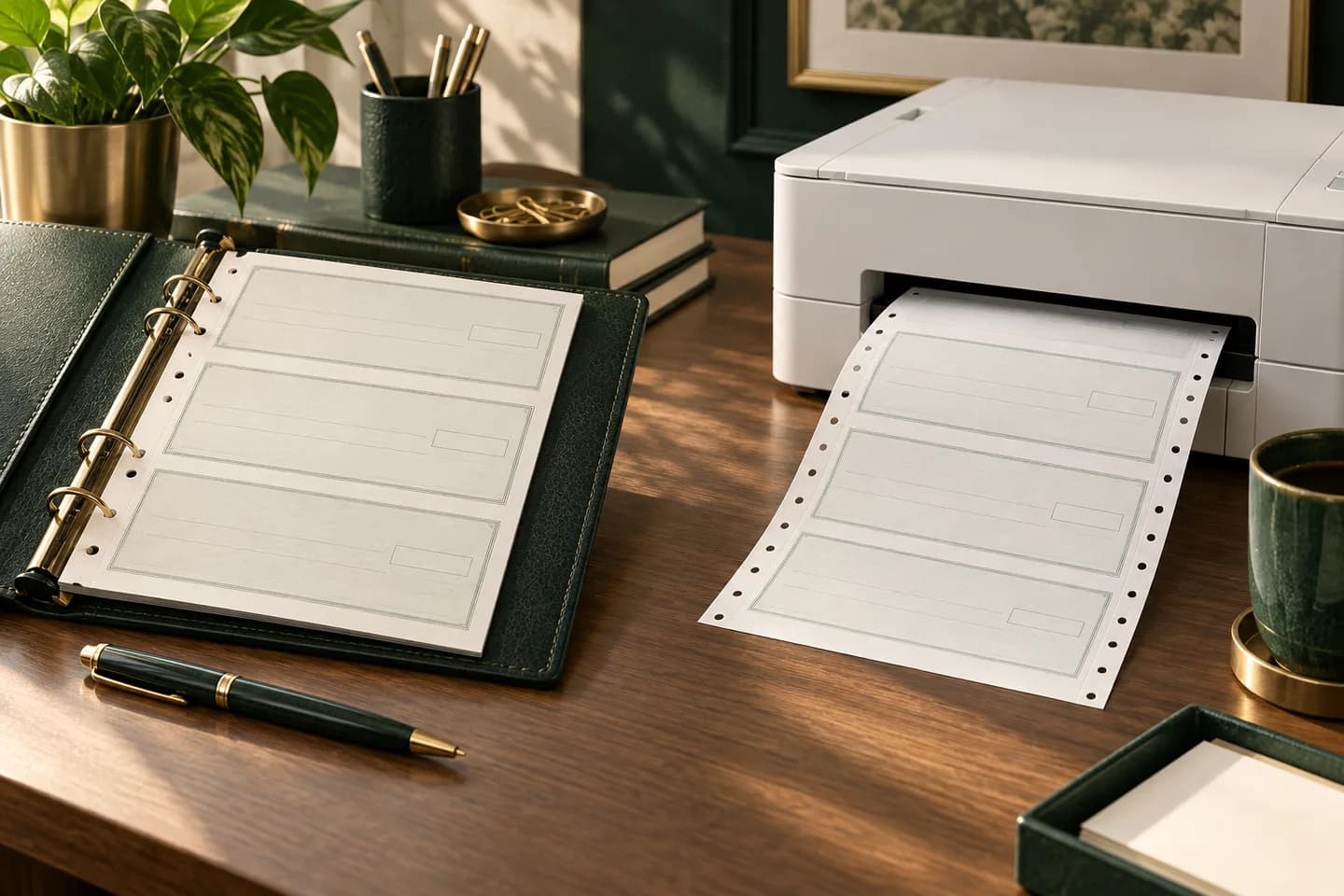
A payroll check is a paycheck issued to an employee from the business's bank account, printed by payroll or accounting software. Many employers who pay by paper check use a voucher layout: one check and one or two stubs on a letter size sheet. The employee keeps one stub as their earnings statement, and the employer files the other.
Payroll checks are ordinary business checks as far as the bank is concerned. The payroll part is the stub content and the controls around how checks are printed, signed and delivered.
What should a payroll check stub show?
The content comes from your payroll software, but you choose the layout that gives it room. These are the items payroll stubs commonly carry.
| Stub item | Example | Why employees look for it |
|---|---|---|
| Pay period and pay date | Sept 1 to Sept 14, paid Sept 19 | Confirms which days are covered |
| Hours worked | 80 regular, 4 overtime | Checks hourly pay and overtime |
| Rate of pay | $22.00 regular, $33.00 overtime | Confirms the agreed rate |
| Gross pay | $1,892.00 | Pay before any withholding |
| Taxes withheld | Federal income tax, Social Security, Medicare, state tax where applicable | Checks withholding choices |
| Other deductions | Health premium, retirement contribution | Confirms benefit elections |
| Net pay | Amount of the check | What actually reaches the bank |
| Year to date totals | Gross, taxes and deductions so far this year | Useful for loans and tax planning |
| Employer name and address | Legal business name | Identifies who paid the wages |
Which items are required depends on your state. Some states list specific fields, and some allow electronic statements instead of paper. Check your state labor department's wage statement rules and confirm that your software prints each required item.
Is a pay stub required by law?
Not under federal law. The US Department of Labor states that the Fair Labor Standards Act requires employers to keep accurate records of hours worked and wages paid, but does not require them to give employees pay stubs. State law is where stub requirements live, and they vary in which items are listed and whether employees can receive statements electronically.
Federal rules still shape how you pay. Under 29 CFR 531.27, wages owed under the minimum wage and overtime sections of the Act must be paid in cash or a negotiable instrument payable at par. In practice, that means a funded account and a check the employee can cash for its full face amount.
Which check layout works best for payroll?
A voucher layout gives the earnings statement enough room. The check can sit on the top, middle or bottom panel, and your payroll software decides which it expects.
| Layout | Fits payroll when | Notes |
|---|---|---|
| Check on top voucher | Your software prints voucher checks with the check first | QuickBooks voucher printing uses this |
| Check in middle voucher | Your software splits detail above and below | Some packages default to it |
| Check on bottom voucher | Your software supports it and you want the stub read first | Not supported in some software |
| Three per page standard | Rarely for payroll | Little or no room for an earnings statement |
Confirm the layout in print setup before ordering. Our guide to check on top, middle or bottom walks through the choice, and the stub format itself is covered in voucher checks and detachable stubs.
Should you pay by direct deposit or paper check?
Many employers offer both, and some employees prefer paper. Direct deposit removes printing, envelopes and lost checks, while paper checks work for employees without a bank account or who want a physical record. Whether you can require direct deposit is a state law question, and rules differ, so check with your state labor department before making it mandatory.
Keep a small supply of payroll checks even if most staff use direct deposit. You will need them for final pay, corrections and employees who have not set up their deposit yet.
How do you keep payroll checks secure?
Paychecks follow a predictable schedule and amount, which makes them an easy target. A few controls reduce the risk.
- Use a separate bank account for payroll, funded only with each run's total.
- Ask your bank about positive pay and upload each payroll run's issue file.
- Print on check stock with security features such as chemically reactive paper and toner adhesion.
- Lock unused payroll stock and log the check numbers used and voided.
- Separate duties: the person who runs payroll should not reconcile the payroll account alone.
- Hand checks to employees directly or mail them in security tinted window envelopes.
A separate payroll account limits the damage if a check is altered or copied, since the account holds only what the current run needs. Positive pay adds a second check at the bank: presented items that do not match your issue file are flagged for you to approve or return. Our guide to positive pay explains the service.
What do you do if a paycheck is lost or stolen?
Act quickly. Ask your bank to place a stop payment on the check number, confirm the check has not already cleared, then issue a replacement with a new number and record the original as void. Our guide to lost or stolen checks covers the full checklist, including when to file a report.
How long should you keep payroll records?
The IRS says employers should keep all records of employment taxes for at least four years after filing the fourth quarter return for the year. That includes wage payment amounts and dates, employee names, addresses and Social Security numbers, and records of tax deposits. File your copy of each stub with the payroll register, and keep voided checks with the run they belong to. State rules on wage record retention may differ, so confirm yours.
What should you check before each payroll run?
- Payroll account is funded for the full net pay total.
- Correct check stock loaded, layout matching the software.
- Starting check number matches the first sheet in the tray.
- Test page aligned on plain paper if the printer or stock changed.
- Stub shows every item your state requires.
- Issue file uploaded to the bank if you use positive pay.
- Voided or misprinted checks marked VOID and recorded.
Voqado laser business checks start at $34.99 for 50 and include a payroll layout for voucher printing. Bank details go through a protected form and a production proof is prepared before printing. For the broader format choice, see laser checks vs wallet checks.
Frequently asked questions
Are employers required to give pay stubs?
Not under federal law. The Department of Labor says the Fair Labor Standards Act requires accurate wage and hour records but does not require pay stubs. Many states do require a wage statement, with their own list of items and rules on electronic delivery. Check your state labor department's requirements before choosing a payroll check layout.
What kind of checks are used for payroll?
Many employers use laser voucher checks with a payroll layout, printed by payroll or accounting software. Each sheet has one check and one or two stubs, so the employee receives an earnings statement with the paycheck and the employer keeps a copy. The check position, top, middle or bottom, must match the software.
Should payroll have its own bank account?
It is a common safeguard. A separate payroll account funded only with each run's total limits how much is exposed if a paycheck is altered or copied, and it makes reconciling payroll easier. Ask your bank about positive pay on that account too, so only checks listed in your issue file are paid.
Can I handwrite payroll checks?
You can, but you still need a correct earnings record for each payment and the calculations behind it. Handwritten checks give no room for a detailed stub, so you would need to deliver a separate statement if your state requires one. Payroll software printing on voucher checks handles the math and the statement together.
Sources & specification notes
The references below support the relevant technical or product details in this guide. Examples and checklists are not claims of practical testing or universal supplier requirements. Confirm the current specifications for your chosen product before production.
- US Department of Labor: FLSA pay stub FAQ ↗
States the FLSA requires wage and hour records but does not require employers to provide pay stubs.
- Cornell LII: 29 CFR 531.27, Payment in cash or negotiable instrument ↗
Requires FLSA wages to be paid in cash or a negotiable instrument payable at par.
- IRS: Employment tax recordkeeping ↗
Sets the four year retention period and lists employment tax records to keep.
- Intuit: Print a check in QuickBooks Online ↗
Describes voucher checks as one check with stubs, the layout commonly used for payroll.
- FSB business banking: Positive Pay ↗
Explains how an issue file is matched against presented checks and exceptions are decided.