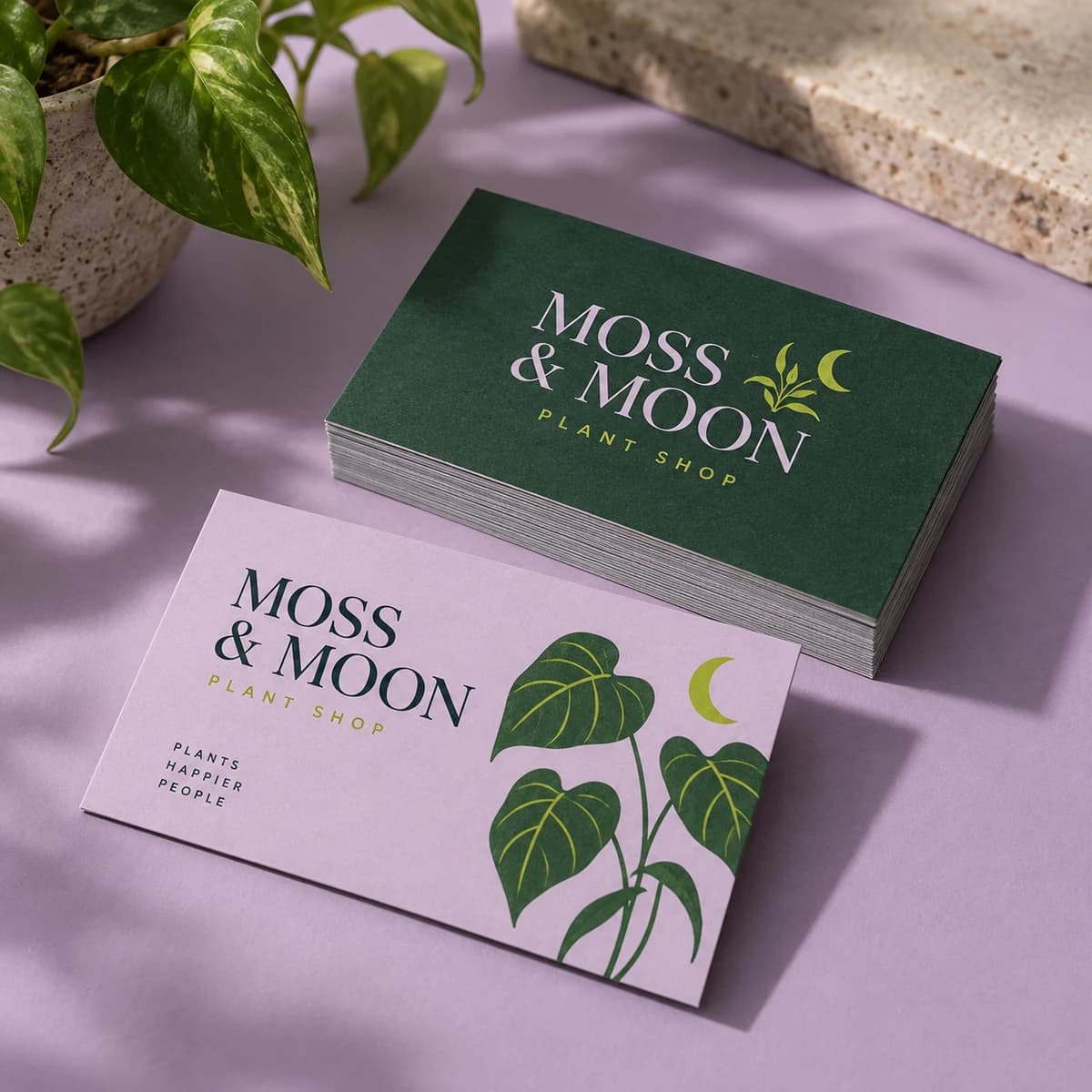
Matte business cards
From $10.0050 items
Smooth, understated, and all about your message. Matte keeps the spotlight on your words, not the shine.
Choose options Start without artwork · Tax and delivery shown before payment.Explore appointment cards, loyalty cards, salon posters, and matte business cards for hair salons, barbershops, and nail studios.
Almost every printed piece in a salon exists to do one job: bring the client back. The card you hand someone in the chair, the loyalty card in their wallet and the poster above the station all point at the next appointment. That makes writable stock and a clear next date more important here than finish or weight.
Smooth, understated, and all about your message. Matte keeps the spotlight on your words, not the shine.
Choose options Start without artwork · Tax and delivery shown before payment.A shine free surface that is easy to write on, so one card can carry both your details and the next appointment.
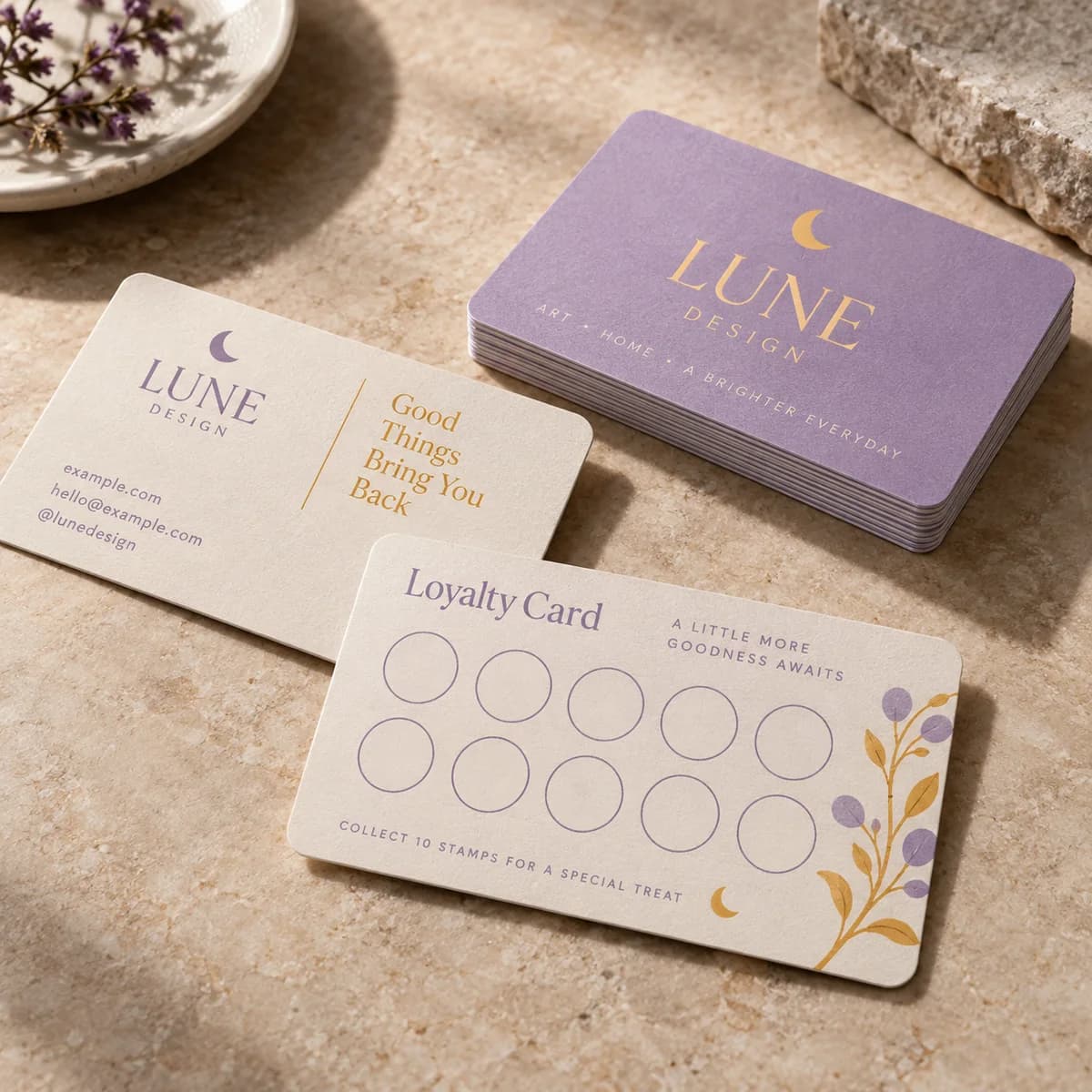
Give regulars a little reason to return. A loyalty card turns one visit into a habit.
Choose options Start without artwork · Tax and delivery shown before payment.A writable and stamp friendly surface with space for the marks, so a stamp lands cleanly and the rules stay legible.
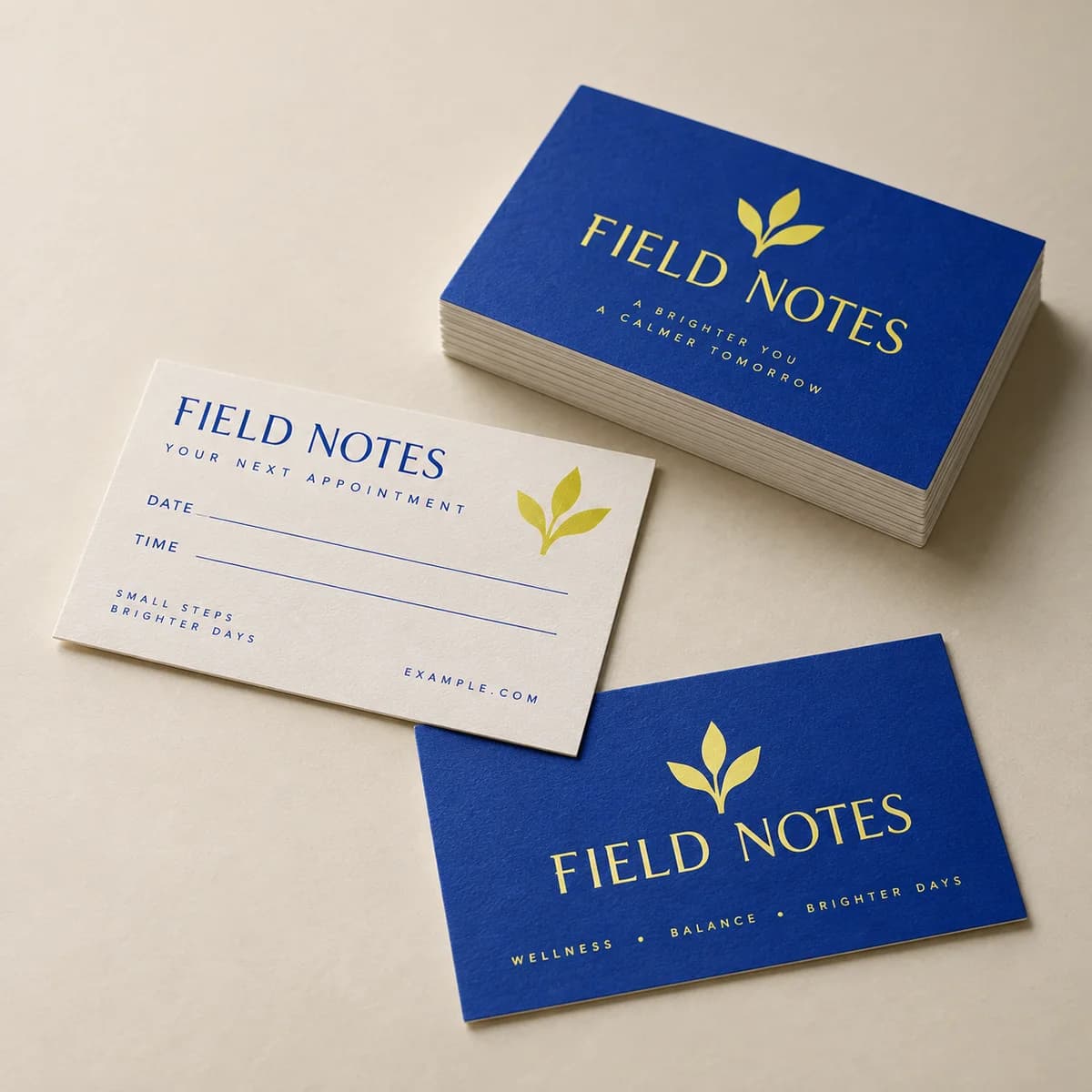
A useful little reminder, beautifully presented. Appointment cards make sure they come back.
Choose options Start without artwork · Tax and delivery shown before payment.Supplied double sided with room for a date and time, which is the piece that actually drives a rebooking.

Make the whole wall your canvas.
Choose options Start without artwork · Tax and delivery shown before payment.Eight sizes from 11 by 14 up to 24 by 36 inches, for the wall above a station or the window facing the street.
The moment a client stands up, the conversation turns to payment and the next date gets lost. Salons that rebook well write the next appointment while the client is still in the chair and the mirror is still in front of them. That changes what the card has to do. It needs a blank line big enough to write a date and time on with the pen you actually keep at the station, it needs to survive a handbag, and it should carry the stylist name so the client asks for the same person. Print the cancellation window on the back if you enforce one, because saying it out loud in the chair is awkward and printing it is not.
This is the one specification that matters most in a salon and the one most often got wrong. A gloss or soft touch coating looks good and beads wet ink, so a felt tip smudges and a gel pen sits on the surface. Matte and uncoated stocks absorb ink and take a stamp cleanly. Before you order a run of two hundred, test the exact stock with the exact pen from your front desk and the stamp from your loyalty scheme, and leave it a minute to see whether it dries or smears.
Salon and barbershop licensing is state law, and the display rules are more specific than most owners expect. Nevada requires each licensed barber and apprentice to display the license in a conspicuous place adjacent to or near the work chair, and requires a recognized sign at the main entrance indicating the premises is a barbershop. Georgia requires the establishment license to be displayed in a conspicuous place in the salon. Rules differ in every state, and several also govern how you may advertise services and prices, so check your own board before printing anything that states a license number, a price list or a service claim.
A stamp card works because the reward is worth returning for and the rules are unambiguous. Print what earns a stamp, how many stamps earn the reward, what the reward is and when the card expires. Ambiguity gets argued about at the desk, and the person arguing is usually a regular. Leave enough clear space that a stamp lands inside its box without overlapping the next, and pick a surface the stamp pad will not slide on.
Most of your rebooking happens in the sixty seconds after a cut. An appointment card with room to write the next date does more work than any other piece you can print. Choose an uncoated or matte surface so pen does not bead, and test the card with the pen you actually keep at the desk.
Build your brand kit →Most salons use the standard business card size of 3.5 by 2 inches, because it fits a wallet and a card holder at the desk. The size matters less than the back: leave a clear writable area with ruled lines for the date and time. If your stylists write longer notes, such as a color formula reference, a larger card gives them room, at the cost of it no longer fitting a wallet.
Matte or uncoated, if anyone is going to write on them. A gloss coating repels wet ink, so a date written at the desk smudges before the client reaches the door. Matte and uncoated stocks absorb ink and take a rubber stamp cleanly. Keep gloss for a card that carries only printed information and never gets written on.
It depends on your state, and the rule is usually about display at the premises rather than on handouts. Nevada, for example, requires each licensed barber to display the license near their work chair, and Georgia requires the establishment license displayed conspicuously in the salon. Several states also regulate how services and prices may be advertised. Check your own state board before printing a license number, a price list or a claim about services.
Work from chairs and visits rather than a round number. Multiply your stylists by the clients each sees in a week, then by the weeks you want the order to cover, and add a reserve so the desk never runs out. Running out matters more than the unit price, because an empty card holder removes the rebooking prompt entirely for however long the reorder takes.
Business cards by industry · 6 MIN READ
Hair stylist business cards built for rebooking: what to print, how to use the back for the next visit, which stock survives the salon, and examples.
Read the guide
Business cards by industry · 5 MIN READ
Plan barber business cards that bring clients back: what to print, how to set up a stamp loyalty back, which stock takes ink, and sample shop wording.
Read the guide
Business cards by industry · 5 MIN READ
Nail tech business cards that book the next set: what to print, finishes that survive acetone and lotion, a fill reminder back, and sample wording.
Read the guide
Business cards by industry · 5 MIN READ
Makeup artist business cards that win bookings: what to print for bridal and editorial work, travel and deposit lines, pearl finishes, and sample wording.
Read the guide
Business cards at work · 5 MIN READ
Salon appointment cards are 3.5 by 2 inch reminders with labeled space for date, time and stylist. Plan the fields, pick a writable stock and test the pen.
Read the guideHelp us improve Voqado with analytics? Details