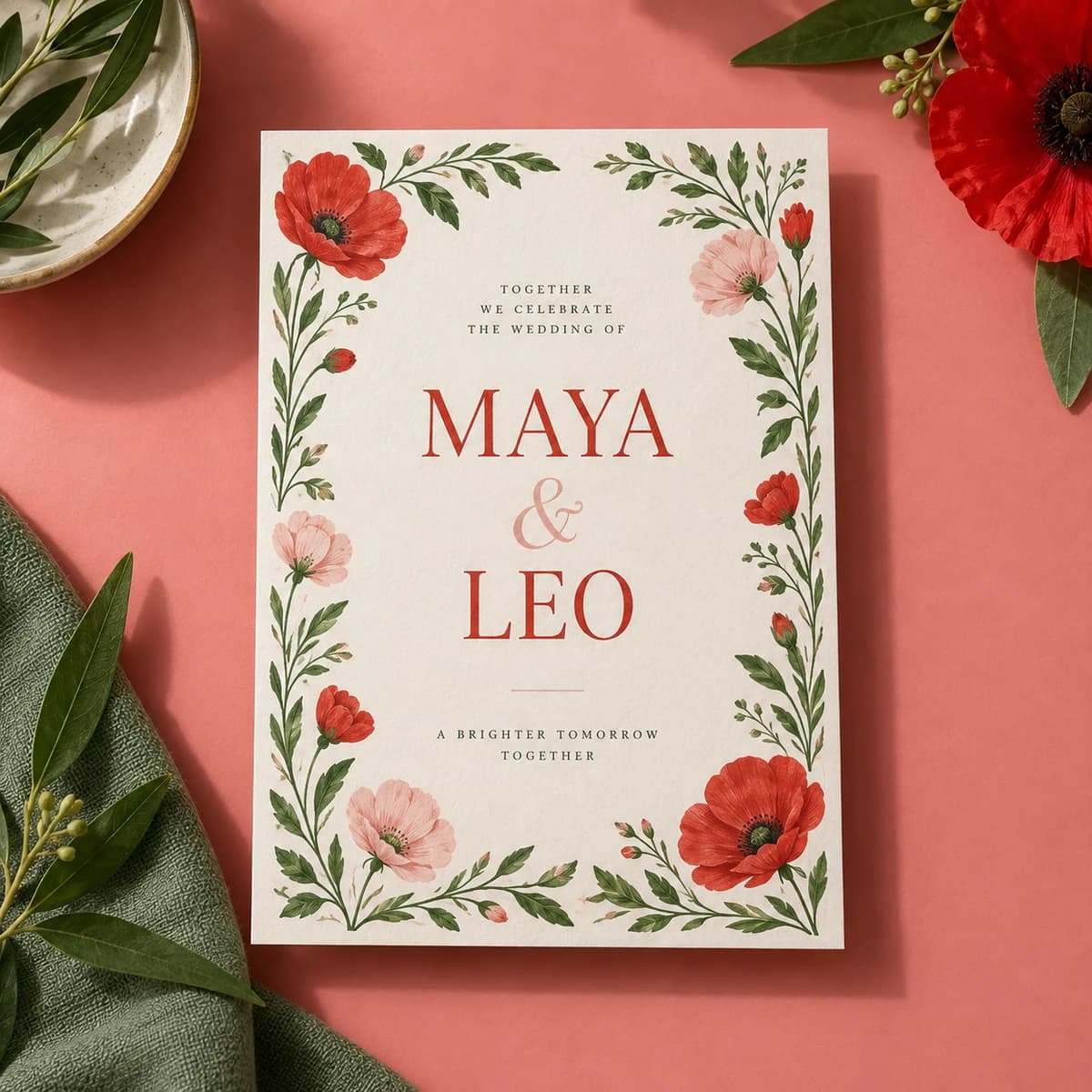
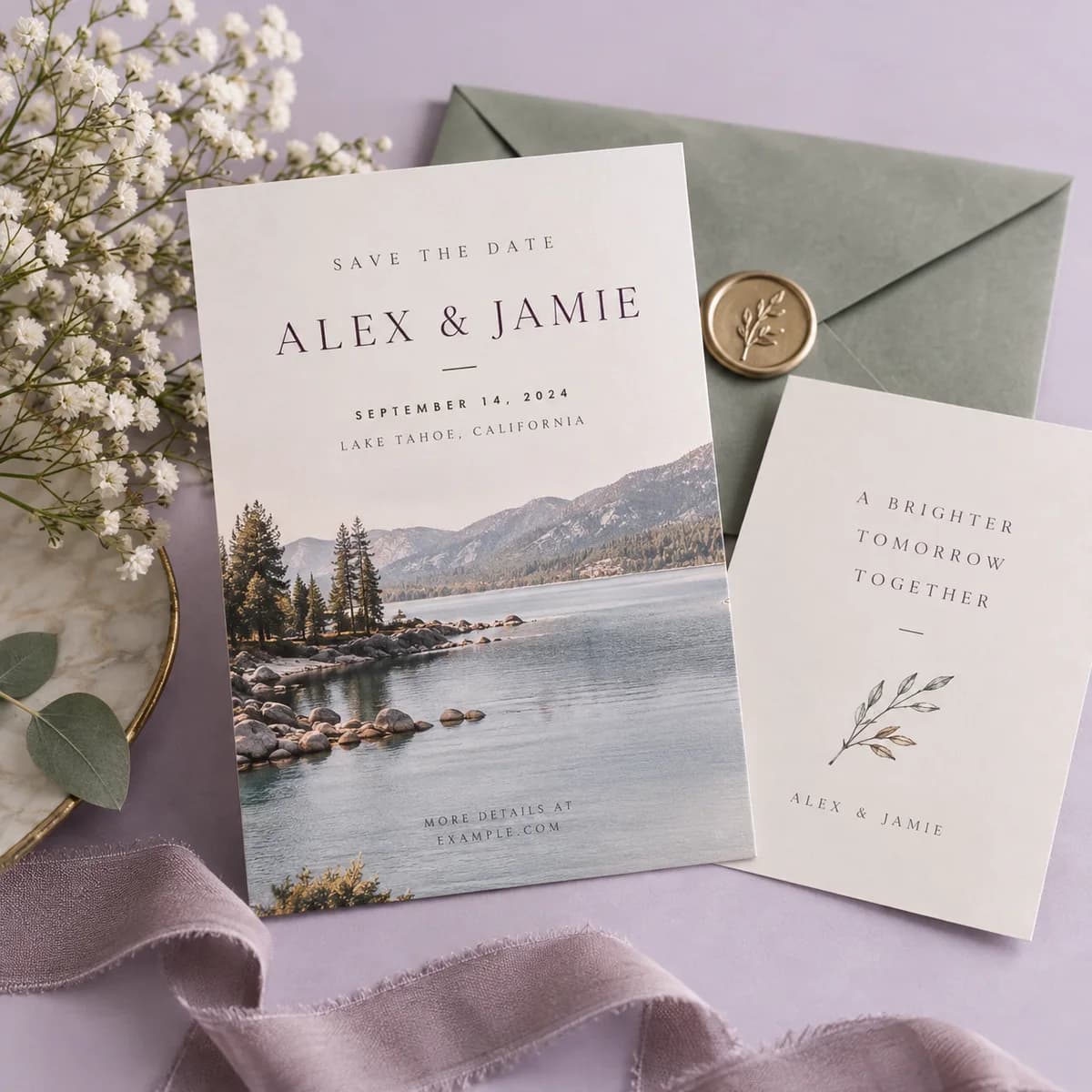
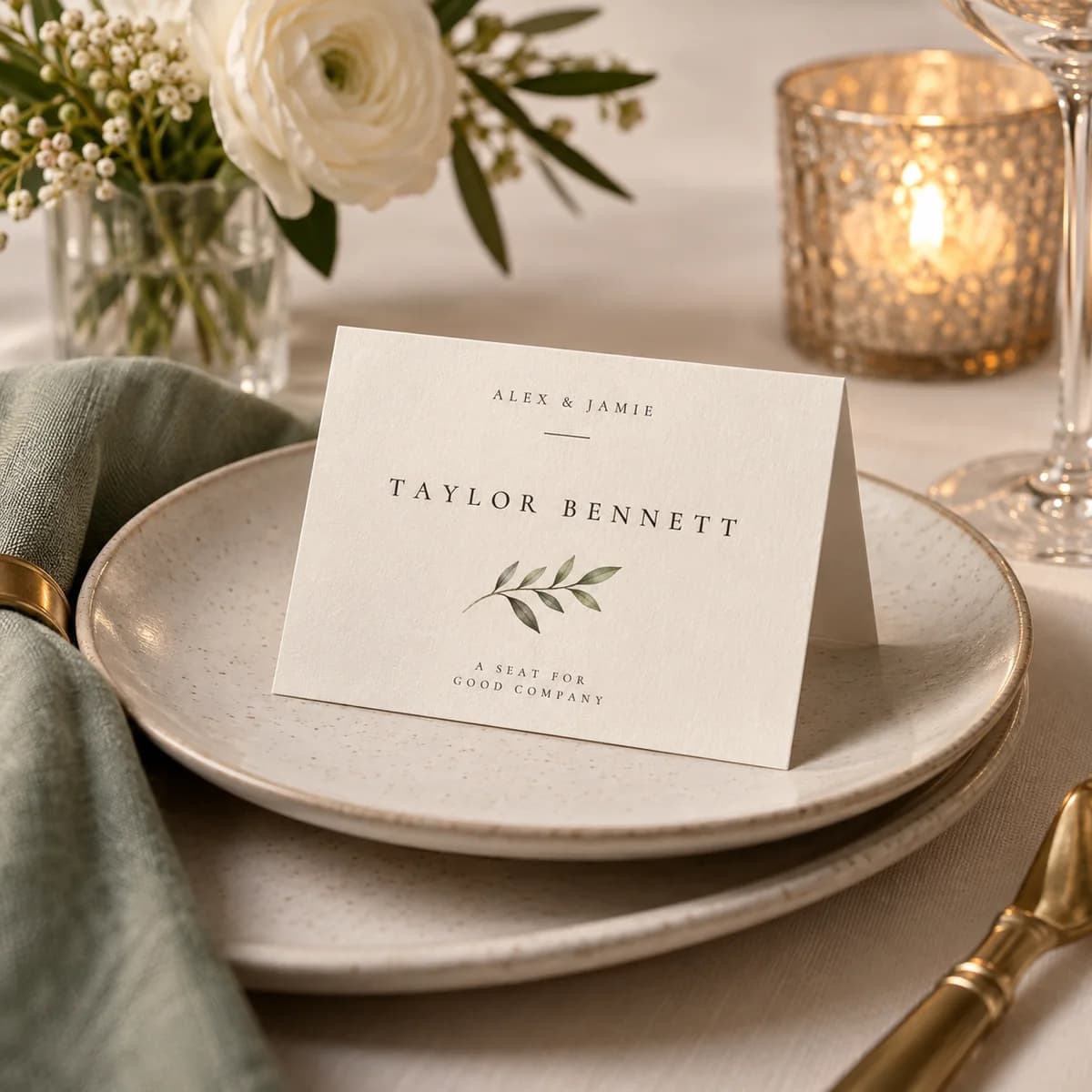
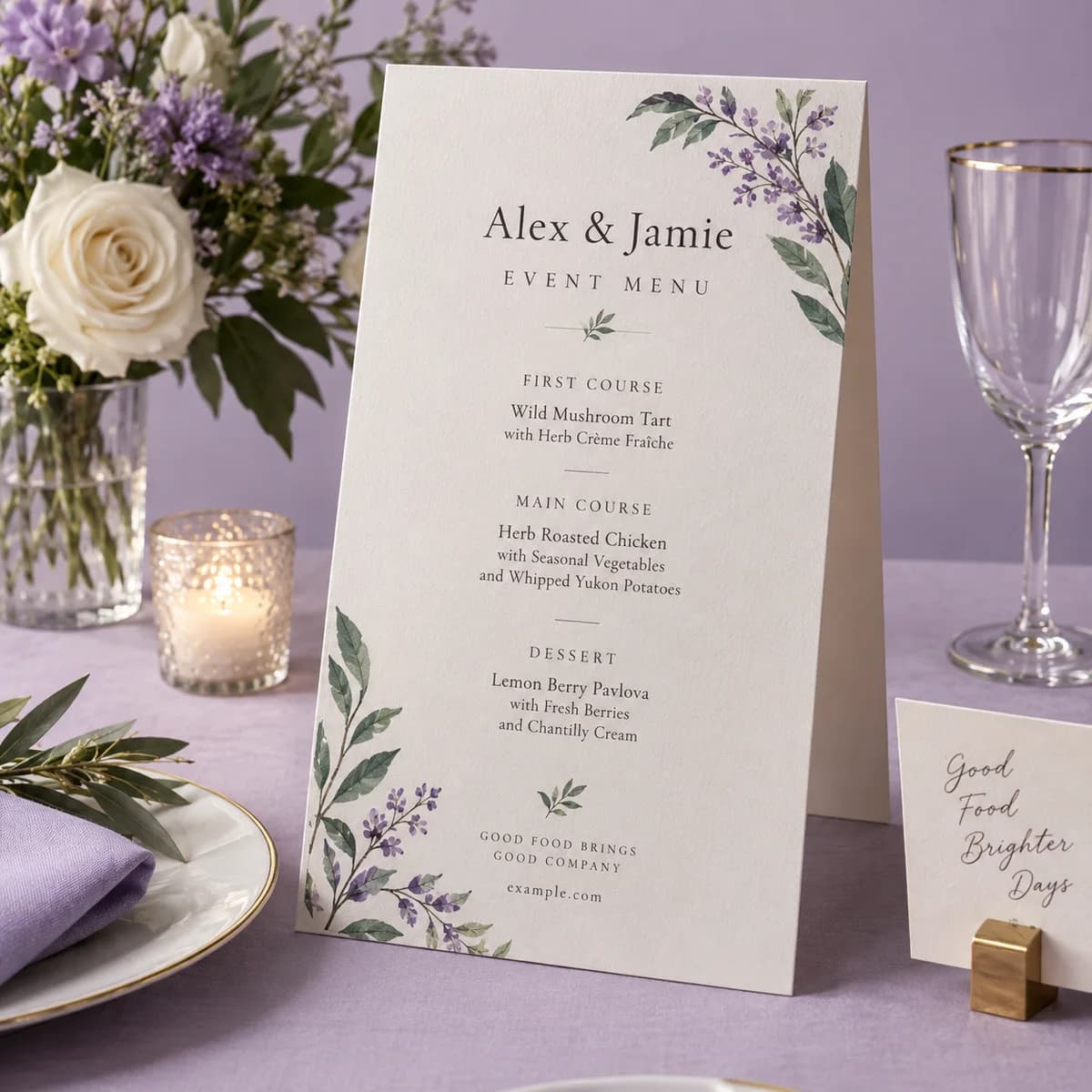
Explore wedding invitations, save the date cards, place cards, and event menu cards for couples, planners, and venues.
A wedding suite is a sequence with three different deadlines and one unforgiving quality: nobody wants to reorder any of it. Save the dates go out months ahead, invitations weeks ahead, and the table pieces are finished by hand in the final stretch. The two decisions that go wrong most often are the envelope and the proofreading, and both happen before the design is even interesting.
Photo friendly and double sided, which is the piece that carries the wedding website address six to eight months out while travel plans are still open.
Three sizes and three trims with a free PDF proof, so course descriptions and allergen wording get read before the run.
The envelope decides the postage before the design does
USPS machines accept a letter that is at least 5 inches long and 3.5 inches high, no more than 11.5 inches long, 6.125 inches high and a quarter inch thick, with an aspect ratio of length divided by height between 1.3 and 2.5. A square envelope has a ratio of 1.0, so it falls outside that window and carries a nonmachinable surcharge on every single piece. Rigidity, clasps, strings, buttons and uneven thickness from an enclosure do the same thing. The 5 by 7 inch invitation in a rectangular envelope stays comfortably inside the range. If you want the square or the wax seal, budget the surcharge deliberately rather than discovering it at the counter.
Weigh one assembled invitation, not one card
Guests receive the whole stack: invitation, reply card, reply envelope, enclosure card for travel or accommodation, sometimes a vellum wrap or a ribbon. Each of those adds weight and some of them add rigidity, and postage is set by the finished, sealed piece. Assemble one complete invitation exactly as the last one will be assembled, seal it, and take it to a post office counter to be weighed and measured before you buy postage for a list of a hundred and fifty. Buy the stamps after that, not before, and buy a handful more than the list so a returned piece can be resent without a second trip.
Menu cards are where allergies get handled
A menu card is not regulated labeling, but it is what a guest reads before they eat, and at a seated dinner nobody wants to flag down a server. FDA identifies nine major food allergens: milk, eggs, fish, crustacean shellfish, tree nuts, peanuts, wheat, soybeans and sesame. Sesame became the ninth under the FASTER Act and the requirements applied from January 1, 2023, which is recent enough that older menu templates and older caterer sheets still omit it. Write course descriptions that name the ingredient rather than gesturing at it, get the caterer to confirm the list in writing, and proof the dish names against that sheet rather than against the design file.
Place cards are the only piece you finish by hand
Guest names and table numbers are written in, not printed, which is exactly why seating can still move the week of the wedding. That hands you one specification decision: the stock has to take the pen. A premium glossy finish wants a permanent marker so the ink sets instead of sitting on the surface, while a matte or uncoated card takes a fountain or gel pen cleanly. Do the test on one real card with the real pen and let it sit a minute before you judge it. Folded tent cards stand on their own and read across a table, flat cards need a holder or a plate. Order more than your guest count, because the extras are the seating plan's insurance.
A suite that survives the mail and the table.
A wedding suite is a sequence, not a single piece: save the date, invitation, reply, then the pieces guests meet on the day. Keep one typeface and one paper family across all of them. Proofread names, dates and addresses twice with someone who was not involved in the design, because this is the one print job nobody wants to reorder.
Why do square wedding invitations cost more to mail?
Because postal sorting machines cannot handle them. USPS treats a letter as machinable when the length divided by the height falls between 1.3 and 2.5, along with size and thickness limits. A square envelope has a ratio of 1.0, so it is nonmachinable and carries a surcharge on every piece. Rigid envelopes and anything with a clasp, string or button land in the same category. A 5 by 7 inch invitation in a rectangular envelope stays inside the window.
When should each piece of the suite be ordered?
Work backwards from three different dates rather than one. Save the dates are sent roughly six to eight months before the wedding, and earlier if it is a destination or most guests are traveling. Formal invitations usually go out six to eight weeks before the day, so order early enough to absorb design changes, a proof round and shipping. Place cards should be ordered eight to ten weeks ahead so you are not rushing while the seating chart is still moving.
What should a menu card say about allergies?
Name the ingredients rather than describing the dish poetically and leaving a guest guessing. FDA names nine major food allergens: milk, eggs, fish, crustacean shellfish, tree nuts, peanuts, wheat, soybeans and sesame, with sesame added under the FASTER Act effective January 1, 2023. Ask the caterer for a written list per course, print the ones that appear, and read the free PDF proof against that list rather than against the design file. A guest who can see the ingredient does not have to interrupt service to ask.
Do I write the place cards myself?
Yes, and that is the point. Names, table numbers and entree choices are written by hand on a writable surface, so a seating swap two days out costs a pen stroke instead of a reprint. Match the pen to the stock: a premium glossy finish wants a permanent marker so the ink sets, and a matte or uncoated card takes most good pens. Test on one card, let it dry, and order comfortably more cards than guests.
FROM THE PRINT JOURNAL
Related guides
Practical planning notes for weddings & events, from the Voqado Print Journal.